


Vladimir Putin And Xi Jinping: Getting Rid Of “Bottlenecks”
The Orientalist reminded that the meeting of the leaders of Russia and the PRC is 43rd since the first visit of Xi Jinping to Moscow in March 2013. This meeting was also the 4th meeting after resumption of the string of personal meetings, disrupted by the coronavirus pandemic.
New talks of the leaders of the two countries are upcoming – in July at the SCO summit at Astana and in October at the BRICS summit in Kazan.
- Why, in your opinion, many Western observers called the May visit of President Putin to Beijing a failure?
- Indeed, there are some voices abroad screaming about failed talks in the PRC, but this is out of the question!
This is what Chinese experts say: “It is very important to raise issues that have accumulated with Moscow and Beijing, have a free discussion and gradually resolve these issues”. This strategy could be perfectly illustrated by the fact of a record trade volume between Russia and China – $240 bn early this year.
Every time during their visits Vladimir Putin and Xi Jinping hold hours-long conversations, defining long-term development of the whole set of the bilateral relations.
At the Beijing summit in May a lot of attention was raised by the joint statement on the results of the official talks. This document consists of two parts. In its international part, Moscow and Beijing presented Washington with a bill for “intolerable manifestations of hegemonism” and warned of their resolve to jointly stand against pressure both in Europe and in Asia.
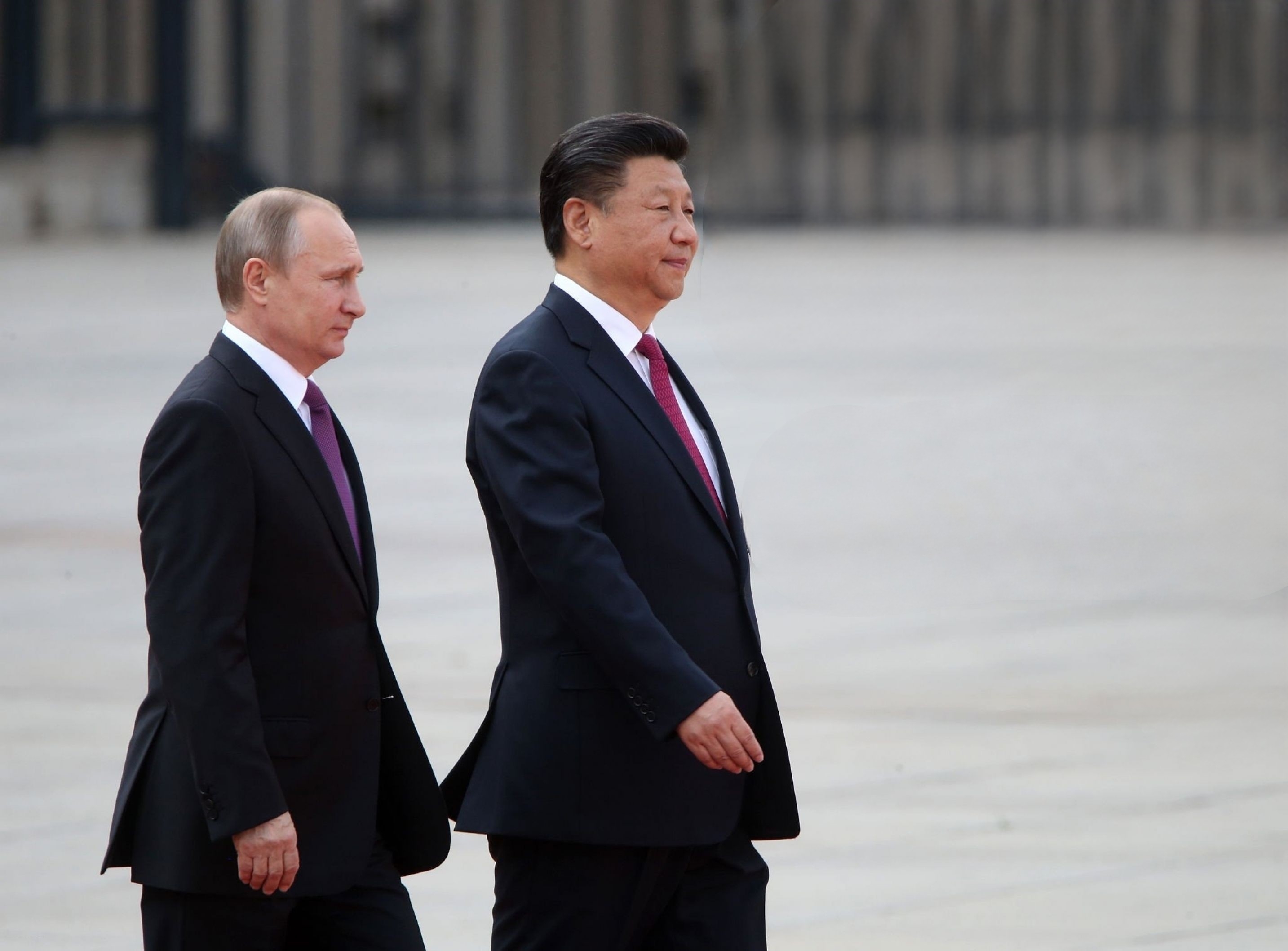
The second part lists the “bottlenecks”, holding back development of the bilateral relations, and states commitments to get rid of these bottlenecks. It is no chance that financial issues are on top of the list. Russian and Chinese banks still struggle to become “interconnected vessels”.
Under pressure from the Americans, Chinese banks are quitting operations with our banks. This would require both a political decision at the level of the country leaders and some specific actual moves.
In my conversations with Chinese colleagues I remind them, that the issue came up for discussion over 10 years ago at our Izborsk Club. We had sent delegations to China, Academician Sergei Glaziev met with Chen Yuan, head of an informal union of Chinese banking circles, who is also the Chairman of the Chinese-Russian Friendship Society.
Even back then there were discussions of a transition of settlements to roubles and yuan, about development of some joint financial institutions, but the Central Banks and the Finance Ministries of the two countries spoke against this, and the idea never materialized.
Now there are second thoughts, and payments only go through Vneshtorgbank in Shanghai. But there could have been institutions set up beforehand, which would be free of control from the SWIFT and the USA.
The second point was “free flow of goods”. The then existing infrastructure was not designed for the current volumes of goods and raw materials.
There are still idle freight trains with containers, coal, oil etc. sitting at the border. Once again, there were plans to build a new railroad through Xinjiang and Altai. These plans were discussed at relevant meetings with Glaziev, when he was an advisor to the President of Russia. Yet again, officials from various ministries of the two countries opposed these plans, and none of these ever came through.
Now there is an urgent need for new railways and highways, new oil and gas pipelines, including the “Power of Siberia-2”. All these issues were raised at the summit in Beijing.
- If we were to believe American CNN, Beijing decided to focus on “green” power and for this reason declined a new pipeline from Russia.
- Construction of the “Power of Siberia-2” is a delayed issue, which is not kept secret either by Moscow or by Beijing. This time Putin and Xi did not discuss construction of a new pipeline in their talks, but nevertheless, it is known that the issue was discussed by ministers from the delegations of the two countries.
There are indeed difficulties in this issue, which will be resolved in due course in line with national interests of Russia and China.
- Doesn’t the rapidly growing PRC economy need Russian gas?
- China still very much needs Russian gas, but Beijing would first like to diversify its sources, since the PRC is ramping up natural gas deliveries from other countries as well, and is also increasing its domestic natural gas production. And then Beijing would need huge budget expenditures to launch a project of the “Power of Siberia-2” scale.
The needs of the PRC industry are so immense that it could accommodate “green” and any other sort of power. But the Chinese have decided to phase out coal with time.
There is a mains gas pipeline between Siberian deposits and Xinjiang Uygur Autonomous District in the west of China being designed. The “Power of Siberia-2” is subject to future negotiations.
Let me note, that China is actively transitioning to “green” power. Its successes are obvious, you can see giant windmills and solar farms everywhere.
- Could we say that China is our main strategic partner today?
- This is the exact wording they used back in 1990s during the times of Boris Yeltsin. Since then our strategic cooperation has been developing, expanding, becoming comprehensive. But a quantum leap came exactly in last year’s March, during the visit of Xi Jinping to Moscow, when after completion of the leader talks, which had continued overall for about 9 hours, Xi made the following statement at the steps of the Grand Kremlin Palace in front of the cameras: “Now there are major changes going on in the world. There have not been changes of this scale for 100 years. And we are the ones making those changes together”. Putin said: “I agree!”
There is increasing economic pressure both on Russia and on China, which by all means brings our countries closer together. But “combat coordination” could be explained not only by the external pressure, but by internal processes happening in both countries as well, by economic issues. We have found out how much we need each other in terms of economy. The $240 bn number is no chance, but it is not a limit. Soon this number is expected to hit $300 bn!
- Some forecasts say that the turnover between our countries could contract due to anti-Russian sanctions. Would you believe this?
- By Q1 2024 results, there is ongoing bilateral trade growth by about 5%, despite the existing “bottlenecks”. If there were no bottlenecks, we could as well talk about $400 bn and even about $500 bn, because our economies are complementary. We need Chinese goods and they need ours. If the trade turnover of the Chinese with the Americans is $700 bn, with the Europeans it is at $800 bn, and with ASEAN countries — $900 bn, then as you understand, Russia could go forward till we hit these numbers. These numbers are real for us too.
- Would it not be possible to create an alternative financial arrangement like SWIFT?
- Under the Western sanctions companies cannot transfer money to each other, how can one trade under such conditions? This could have major aftereffects going forward.
The threat of financial sanctions has been looming since the first day of the SMO, when Janet Yellen, the US Secretary of Treasury said: “If China helps Russia, it would experience the same sanctions that would be imposed on the RF”.
During the recent visit of Yellen to Beijing she made a threat that the PRC would be shut out from SWIFT, a few state-owned banks first, and then possibly the rest of the banks. This is a serious threat and it is a major concern for China.
Of course, both Moscow and Beijing are working hard on solutions to this issue. Today some experts propose creating an alternative financial arrangement. Just as there are alternative imports, a parallel financial system should be set up, operating without any use of dollars, because when there are dollars, there is the SWIFT system, meaning there is the US Treasury and the White House behind it. Dollars need to be excluded, settlements need to be made in roubles and yuan, relevant financial institutions, meaning banks, need to be in place.
- Why are there still hardly any Chinese investments in the Russian economy, and you can’t see any Russian investments in China?
- We have been rather late to start our cooperation, because the Chinese lacked certainty about a stable situation in Russia. I think this is the primary explanation.
I think that the political will of the leadership of our countries is important both for China and for us. In any case, until recently there has not been a political decision in China to invest in the Russian economy, and now there is one. As far as I remember, it was during his March visit that Xi Jinping said that “some issues in the investment area will be resolved”. Obviously, this is why Moscow is now literally flooded with Chinese delegations, some of which are looking for major investment projects in the Russian Federation.
- Yuri Vadimovich, why do you call our country as the “rear support line” for the PRC?
- Our common border stretches for 4 300 km. Over the 400 years of our coexistence there were conflicts, but we have never gone to war against each other. Under current conditions, when China is being surrounded by enemies on all sides, Moscow secures a peaceful northern border. The Chinese are sure that no shots would be fired at their back from the Russian side.
From the military viewpoint, Russia is becoming a rear support area, and this is no exaggeration. Today the Chinese get up to 80% of their raw materials by sea – from the Middle East, Africa, and all traffic goes through the South-China sea, which is for now dominated by the 7th US Fleet. This means that this route could be cut off at any time. It is very easy to do for the Americans by blocking the Malacca Strait. And just next to China there is Russia, its oil pipelines, gas pipelines, railways out of control by the USA.
It turns out that the issue is not only economic in nature, but the question of survival. It is no chance that during recent communications between Vladimir Putin and Xi Jinping they focused on development of transport routes between the two countries.
The Chinese are only starting to emerge from the shadows. We can recall the will of Deng Xiaoping, who told his countrymen to: “Stay in the shadows, accumulate forces, wait for a favorable opportunity and never stick your neck out”.
The Chinese, who have stayed in the shadows for a very long time, do have forces, but they lack the military and international experience that Russia has. In this context Moscow is a very important partner and mentor for Beijing.
As a side note, I would say that if there had not been Chinese purchases of oil, gas and other sanctioned goods, other countries would hardly disobey orders from Washington and Brussels.
If there were none of Chinese secondary exports, we would be short of many needed goods.
- Is there a danger that Russia could become economically dependent on China?
- The Russian economy is 10 times smaller than the Chinese, our rouble is 10 times cheaper than the yuan, and nevertheless, Putin and Xi Jinping speak as equals. But this does not mean that Moscow always approved projects, proposed by the PRC, and takes part in them. There is just one example: the “Belt and Road” Chinese initiative, proposing a set of projects in various areas for promotion of Chinese goods to the global market, raised interest of 180 countries and 31 international organizations, but Russia refused to participate. Why? Because it obviously is not in line with its national interests.
From the very start Moscow said that the new Silk Way targets tearing the Central Asia away from Russia, and that overall the Chinese initiative contradicts our interests. In order to stop such discussions, an agreement was signed in 2015 to combine the Silk Way and the Eurasian Economic Community.
It turns out that Russia has no formal prejudices against the “Belt and Road” project, but we do not participate in it. We have our interests and the Chinese have theirs.
I think it is possible that now, given this new geopolitical situation, there will be changes – some joint infrastructure projects with the Chinese will kick off, but on a bilateral basis and not under this global “New Silk Way” initiative.
- One of the breaking news from the Beijing summit was the invitation to China to join the “Ice Silk Way”. What is this project about?
- First of all, I would say that Vladimir Putin described the near future in Beijing in “broad strokes”. During the talks he started out with the “North-South” international trade and transit corridor, which is being developed in the European part of Russia. Yet another North-South corridor will go through Asian lands – through the Urals and Siberia. This will require upgrading the central section of the Trans-Siberian Railway. Construction of the Northern Latitudinal Railway will improve access to the seaports of the Arctic Ocean and the Yamal Peninsula.
A new North Siberian Railway will connect to the Trans-Siberian Railway and to the Baikal-Amur Mainline. There is construction of railway tracks from the Central Siberia towards China, Mongolia, Indian and Pacific Ocean seaports underway.
Yet another transport corridor is being planned: from the Arctic to the South. A railway line will go from the BAM to Yakutia, bridges over Lena and Amur Rivers will be built. The short-term plans envision upgrades and construction of new highways, development of deep water seaports at the Eastern section of the Northern Sea Route.
The invitation to Beijing to join development of this “Ice Silk Way” also was a demonstrative one –just recently Moscow has evaded Chinese proposals for cooperation at this strategically important route.
- What do you think could be the role of North Korea in fulfilling strategic objectives of Russia and China?
- Today Kim Jong-un has a standing army of 1 200 thousand men. This is a bit smaller than in Russia or China. Koreans are armed with Soviet-design weapons. Moreover, they have nuclear weapons, their own ballistic missiles, hypersonic missiles. They are rather well-trained and very motivated, as they say today. The North Koreans are ill-disposed towards the USA, both in the East and in the West. This is a rather serious option, which could be used by Moscow and Beijing for their purposes.