


Cities with Character
VEB.RF (Russian state development corporation and investment company) supports the public corporation’s major infrastructure investments with socio‑cultural projects, taking into account the cultural hallmarks of a particular region. How is the cultural code selected for a specific area where infrastructure projects are being implemented? Do contradictions arise in the assessment of these cultural codes, especially if ethnic diversity marks and defines the region?
The cultural code of a territory is impossible to manufacture on your own since it already exists, it’s a kind of DNA of a certain place. Our task is to help it come forward, show how business and local creative industries can capitalize on it, and how to build on this platform products that will contribute to the development. Therefore, when we come to the region, we first meet local artists, musicians, researchers, entrepreneurs. It is essential to comprehend the territory’s spirit, what its inhabitants consider to be their specialty, what truly inspires them. Then, in collaboration with the local team with regard to the infrastructure project of VEB.RF, we are looking for a form and format that this cultural code can manifest itself.
This year, in the portfolio of VEB.RF will embrace 20 socio-cultural projects in 20 cities. In this terrain, we formed a team of major business partners - Rosvodokanal, SIBUR, "Movista", JSC "Sinara Group", GTLC. Together we have elaborated the socio-cultural accompaniment of infrastructure projects ranging from water supply and public transport upgrades to airport construction. For creative teams, this is an opportunity to contract a new assignment, implement their ideas, create products in demand. For businesses, it means becoming part of the city’s life, supporting its development not only through infrastructure investments but also by creating new economic opportunities. As a result, large investment projects, in addition to creating new jobs and tax revenues, become a kind of springboard for the development of local creative economies.
As far as multi-ethnic regions are concerned, I do not see any inevitable contradiction here. On the contrary, the cultural code is only more diversified. But it needs to be handled with special care. In Ulan-Ude, for example, the audio guides of the project "SAINUU!" were created in ethnic Russian and ethnic Buryat people. In Khabarovsk Krai, the musician deliberately traveled to small villages to record the voices of representatives of different peoples to get familiar with their languages and tonalities. These recordings have become part of a modern cultural product that will soon be played at the international airport terminal in Khabarovsk. Our local teams always have experts to help check names, titles, language, and historical details.
It seems to me that we sometimes underestimate the cultural richness of our country. For example, for many countries, Buddhism is something distant and exotic; for us, it is Buryatia, Zabaikalye, Tuva, where Buddhist culture has influenced art, architecture, and daily life for centuries. The challenge is not only to preserve this heritage, but also to highlight how it can be part of modern life and a source of development for the territory.
The infrastructure project has clear KPIs (passenger flow, entry deadlines). How is the success of the socio-cultural project evaluated?
Sociocultural projects also have specific KPIs. However, we value not so much the number of events as the project’s ability to engage residents, bring together local creative industries, and boost urban economies.
We highlight three levels of engagement. The first one is a local team incorporating representatives of different creative industries who often have met each other through the project for the first time. Secondly, it is the level of creation: residents participate in the creation of a product. Thirdly, it is the audience: spectators, listeners, visitors. For example, in Ulan-Ude in the project "SAINOU!" The creative team brought together 50 people, over 500 residents participated in the making of the project, and the audience for the first year amounted to about 380 thousand people, which is approximately one in three residents of the republic of Buryatia. Not every advertising campaign can boast of such a remarkable outreach.
As for me, there is another important indicator. What happens after funding is terminated. Do teams continue to work together, find customers, attract partners, and are the formats we launched in popular demand? Business very often perpetuates our project initiatives in the city. For example, in Chita after the completion of the socio-cultural project "Light in the city" local creative team continued cooperation with Bystrinsky GOK - one of the major mining and enrichment enterprises of the Transbaikal region. Together, they began to create new cultural products for the territory’s development. This is especially valuable for us: the sociocultural project of VEB.RF has already come to a close, and yet, the cooperation of local creative entrepreneurs with big business continues and receives an additional boost.
In Ulan-Ude and Saratov, we tested the urban lecturing format, and it was preserved despite the fact that funding expired. This is a very revealing story: the project was terminated, but the created format was demanded by residents and became part of urban cultural life.
Therefore, the success of sociocultural projects cannot be measured only by the number of events carried out or publications in the media. Of course, we are also taking these indicators into account. But it is more important when sustainable urban communities, new partnerships, and cultural initiatives emerge around infrastructure investment that can grow further on their own.
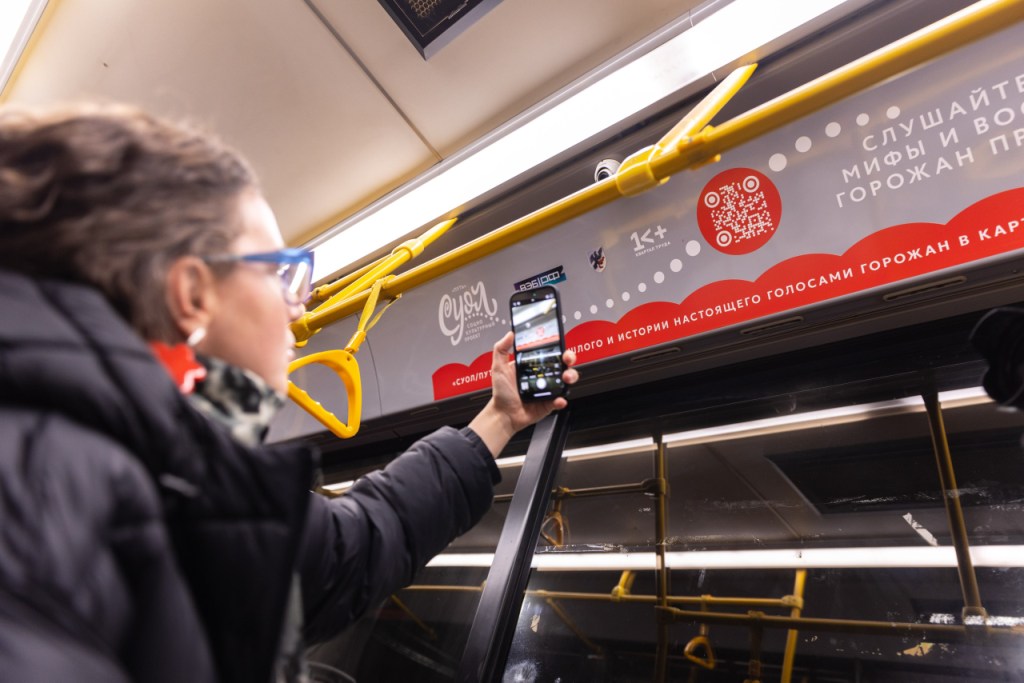
In the project "SUOL (PATH)" in Yakutsk, transport became a platform for audio guides with legends. Where would you draw the line between "investment accompaniment" and obsessive storytelling?
I think the borderline here is simple enough: you can’t impose a ready-made “interpretation” of your city on its inhabitants. That’s the red line we don’t cross. Our job is to give them a chance to tell their story about the city. Therefore, socio-cultural products are created together with local creative teams and residents rather than brought in a package from Moscow.
In Yakutsk, we did not try to explain through audio guides to passengers how good it is that they have a new transport facility. We suggested they look at the usual routes differently, and the residents accepted the initiative to do so through local legends, urban history, and works of Yakut artists. Public transport has become a cultural space where the city tells its own story.
And here is the fundamental criterion: a product must have an independent value, regardless of the infrastructure object from which it emerged. If residents want to use it, share it, develop it, it means that we found the right form.
The infrastructure project has a clear investment cycle and rate of return. Sociocultural accompaniment is essentially an expense that is not capitalized on the cost of an airport or tram line. What is your economic rationale for these costs?
I often like to repeat a phrase I once heard from a renown Russian businessman that confidence is a financial measure. Because it affects virtually all processes, including the implementation of large investment projects. When residents understand that businesses are not just building infrastructure, but are interested in developing their cities, when they themselves become participants in these changes for the better, a very different level of relationship emerges. For the company, this means a more sustainable work environment, reduced social risks, and the ability to build long-term partnerships.
There is also a very specific economic component. Our task is to ensure that large infrastructure investments create new opportunities for local creative industries and small businesses. This is fundamentally different from charity or one-time funding of cultural events. Artists, designers, musicians, entrepreneurs get the opportunity to collaborate with big business, create new products and find customers.
For example, in Chita, as part of the "Light in the City" project that accompanied the modernization of urban lighting network, local creative entrepreneurs not only became participants in the project, but also independently attracted additional funding, the amount of which exceeded the investment of VEB.
Therefore, I would not view sociocultural accompaniment solely as an additional item of expenditure. In the strategy of the VEB.RF Group until 2030, one of the key directions is the development of core settlements and quality of life improvement. Here, it is important not only to build new infrastructure, but also to create a set of opportunities for the city itself, its economy, and local communities. This is what our socio-cultural projects are focused on.
Yes, such investments do not increase the book value of an airport or tram line, but create additional economic value for the territory, new partnerships, and business opportunities. And if creative teams continue to work after the project is completed, new products and independent initiatives emerge, then investments have yielded long-term results. It simply needs to be measured not only by the financial performance of the infrastructure facility itself.
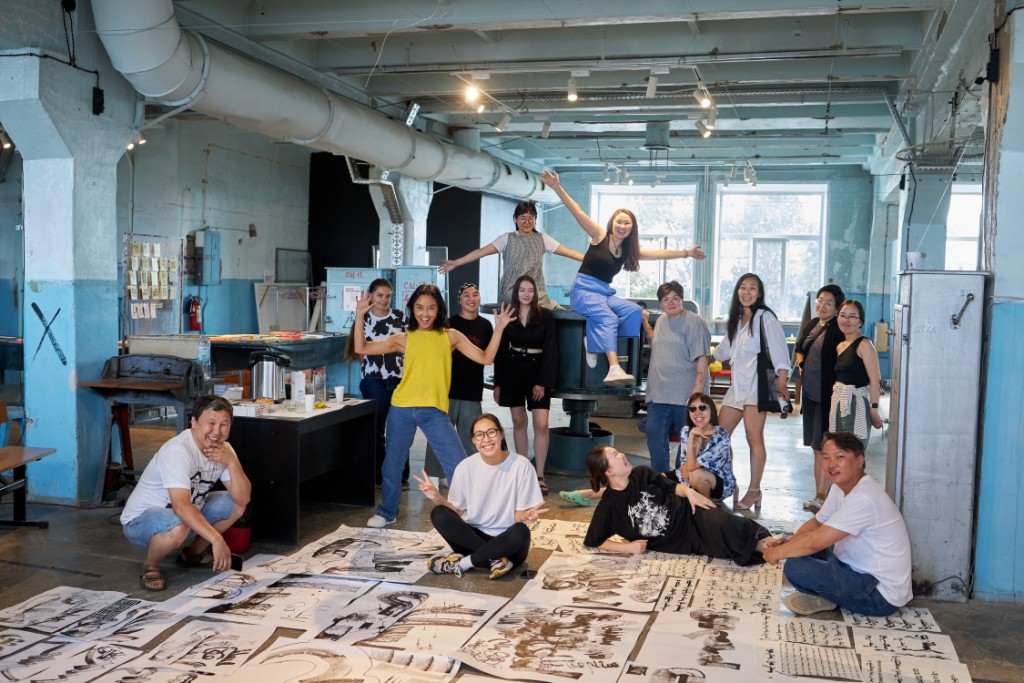
You actively attract local artists and creative clusters ("Labor Quarter" in Yakutsk, "Hab-Hub" in Ulan-Ude). What happens to these teams after the project funding ends?
For me, this is one of the key indicators of our success. We do not want to create teams that exist only as long as there is funding from the Russian Federation and its partners. We can help local creative industries find each other, create a joint product, learn how to work with big business, foster successful collaborations.
Here is a recent example from Yakutsk. After the completion of the project "SUOL (PATH)", the federal coffee chain Drinkit has independently joined the local team. The company liked the project, and it offered cooperation for its coffeemakers in the republic. In the spring of 2027, it is planned to place the works of the Yakut artist and QR codes on coffee cups, thus enabling customers to listen to urban legends voiced by local residents in Russian and Yakut languages. You buy coffee, and at the same time discover for yourself the historical legacy of the city. What is especially important, the initiative came from the business itself, without the participation of VEB.
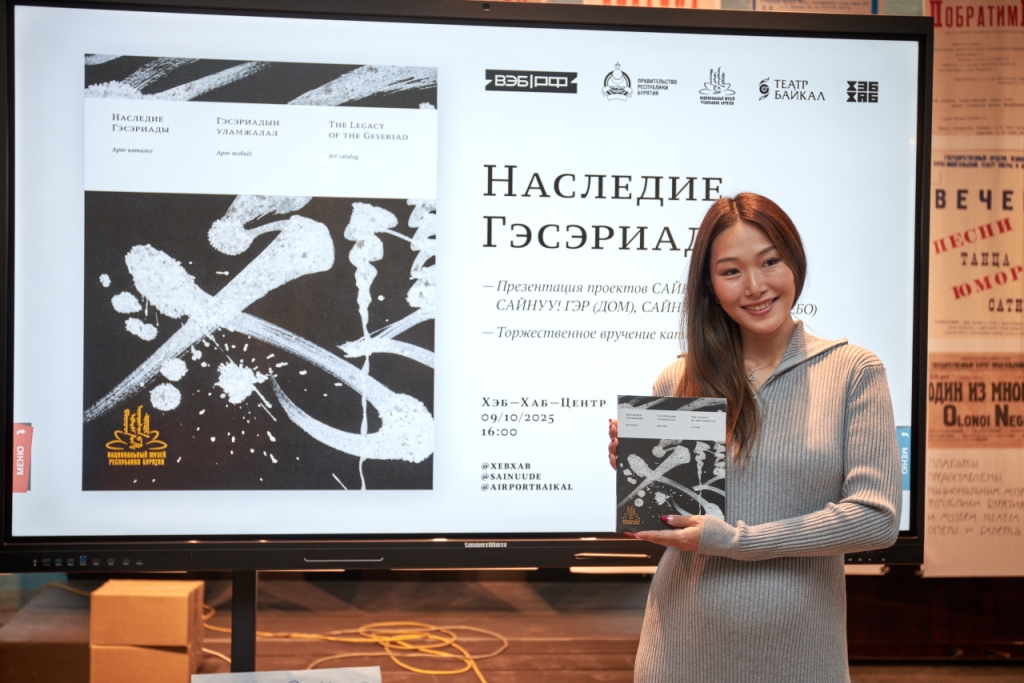
In Ulan-Ude after "SAINOU!" project, the local designer released a capsule collection of clothing, artists united, organized an exhibition and published a catalog of modern art in Buryatia. The lectures marathon, launched in Ulan-Ude and Saratov, continued to operate after funding was completed. In Nizhny Novgorod, the "First Tram Media" team, created by artists and journalists with the participation of the Center for Modern Art "Tihaya", after its first year of work with the support of the Russian Federation, was able to find funding from the city’s budget and continue the project.
Of course, not every team necessarily becomes an independent creative alliance or creative cluster. But if professional ties remain after the project’s completion, new customers, partners and joint initiatives emerge, we have managed to launch a much longer-term process.
Projects like "SYNUU! TENGARI" in Ulan-Ude or "First Tram Media" in Nizhny Novgorod create unique content. Do these products have the potential to monetize on their own, or are they originally intended as irretrievable investments into identity?
We have already touched on this topic a little. Such products certainly have the potential to monetize. But the original goal is broader: not just to create what can be sold, but to unlock the possibilities of local creative industries and show how a territory’s cultural code can become the basis for new products and markets.
The commercial perspective can manifest itself differently: in orders offered to local artists and designers, collaboration with brands, production of own goods and services. For example, the name "SAINOU!" became the basis of the local designer’s clothing collection. It is not required that each audio guide, art object or media format be sold by ticket or subscription. A free product for residents can also make the city more attractive and create demand for local authors.
So, I would not contrast and oppose monetization and identity investments. Somewhere the product becomes commercial, somewhere it remains a public good, and somewhere it combines both functions. It is important that it is needed by people and can develop further.
Quite often the cultural product creates the environment attracting investors. At what point does a business enter into co-financing of sociocultural projects?
There seems to be no one-size-fits-all. When it comes to large infrastructure or industrial facilities, businesses, in my view, should think about the sociocultural environment at the planning stage of investment. The company comes to the city or territory for a long haul, and it does not care where its employees and their families will live and how the territory will develop.
A good example is Vyksa in the Nizhny Novgorod region. The United Metallurgical Company has long supported the city’s development through culture and modern art. What started as the "Art-Orag" festival has gradually grown into a broader history with art residences, public spaces, and new opportunities for local entrepreneurs.
But there is a reverse sequence: first, a cultural initiative arises, and then business becomes involved. I like the example of Syserty in the Sverdlovsk region, where a local team began to bring the old factory back to life. New formats of leisure, cafes, tourist services, and partners gradually developed around the project "Summer in the factory."
Change does not necessarily come from a large corporation. Sometimes a few local entrepreneurs, united around cultural ideas, set in motion a process that attracts more substantial financial resources. Culture and business can be included in the development of territory in a different order. The main thing is that it doesn’t end with a one-time event.
Are there contradictions between socio-cultural projects aimed at attracting tourists and "local" projects?
I wouldn’t call this a contradiction; rather, it’s two different approaches to developing territory that can intersect but should not be replicated. The tourist project creates reasons to come to the city: new routes, impressions, recognizable image. The local residents' project addresses a different challenge: strengthening communities, helping people to see their city in new ways and feel part of its development.
It seems to me a mistake to measure the success of any cultural project solely by the number of tourists. There are cities where it is more important to create opportunities for the people themselves, especially the young, to be interested in staying, working, and realizing their ideas.
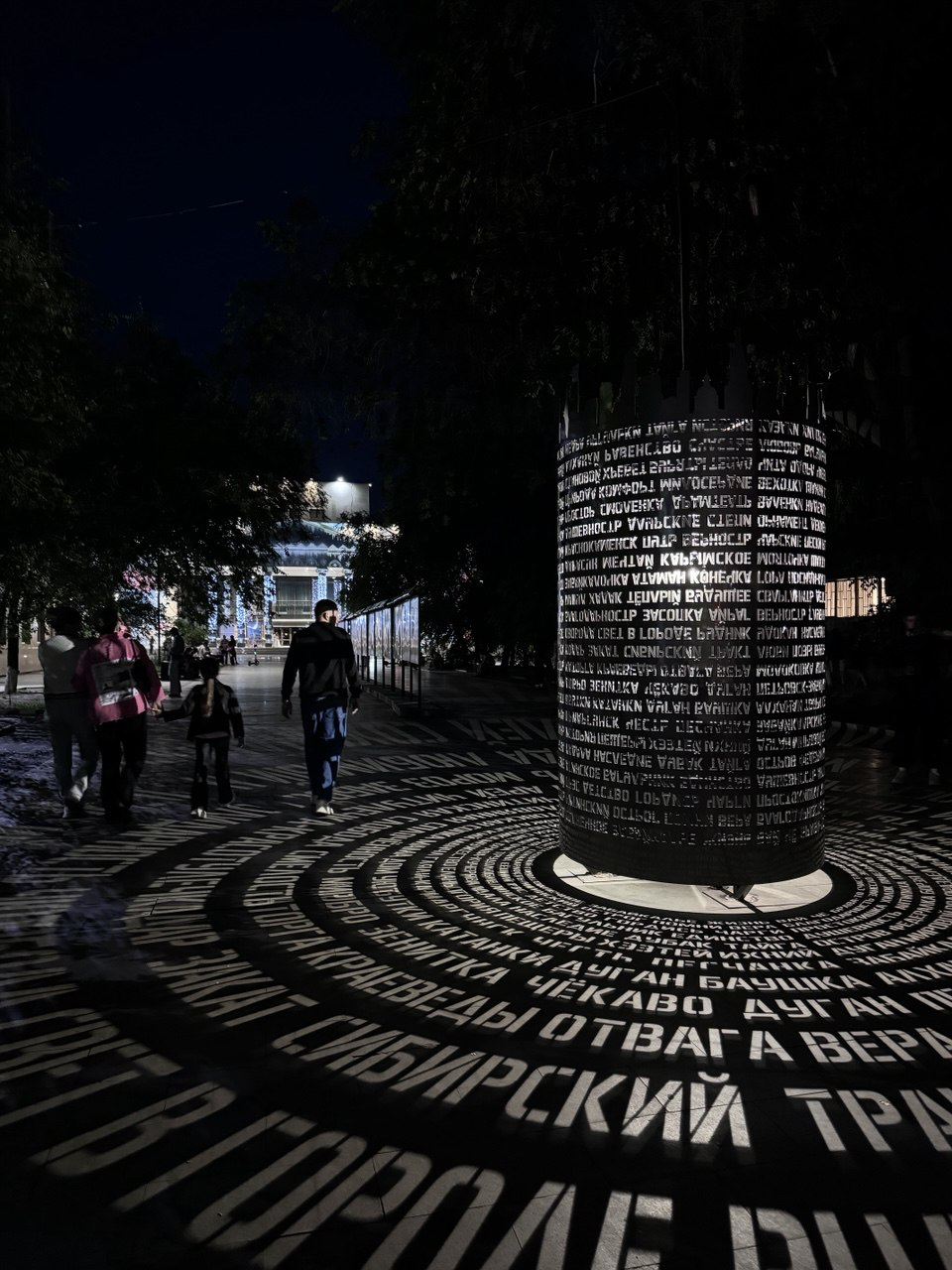
Contrasting approaches can complement each other, and our "Water Path" audio collection, which has already been implemented in five cities, is based on personal stories of local residents. But the result was an audio walking experience, interesting and for visitors as well: local stories became a new way to get acquainted with the city.
Therefore, I would always view the tasks separately but not place against each other. The main thing is that while seeking to attract tourists, we did not forget about the townspeople. After all, a city is first and foremost a place where local people live, and then a place where others come to visit.
*Photos provided by VEB.RF press service