

Russia and China: Coupling Opportunities
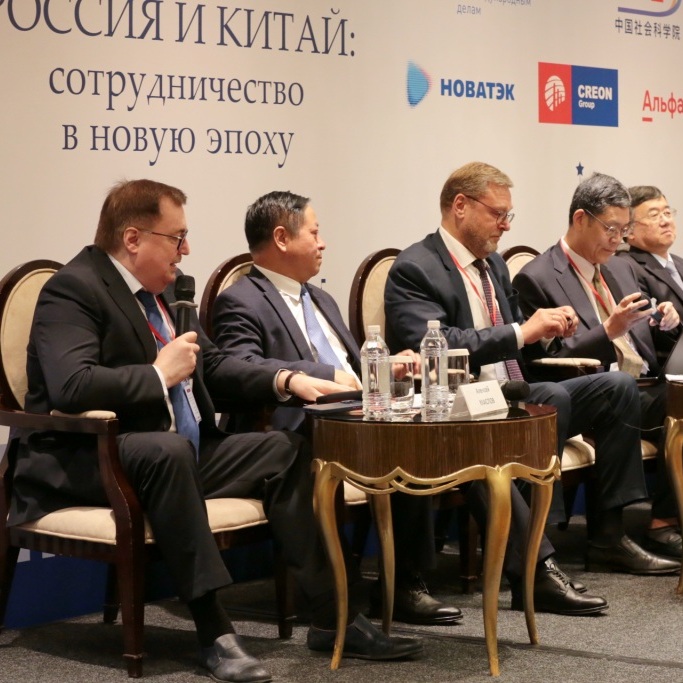
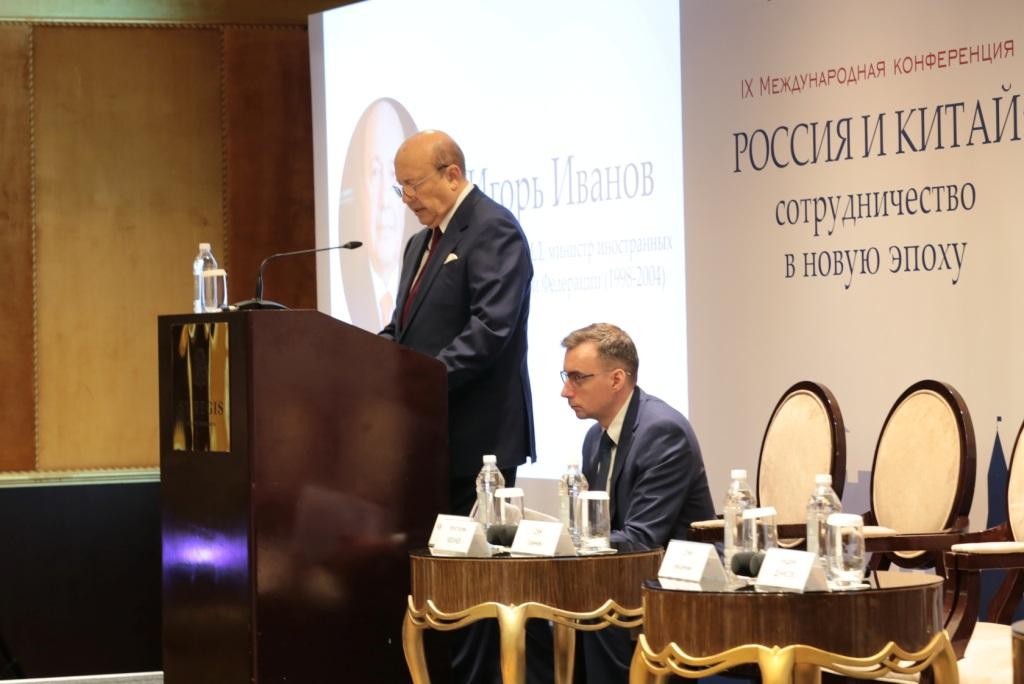
The issue of fair international order is being raised more and more often by the global majority countries at the background of simultaneous new global leader emergence processes, advanced by complex international context. Russia and China have stepped forward as initiators of development of a foundation for a more equitable world order. Representatives of the two countries shared their views on the format of new international relations at the IX International Conference of the Russian International Affairs Council (RIAC) and the Chinese Academy of Social Sciences (CASS) “Russia and China: Cooperation in a New Era”, held on May 30–31, 2024 in Moscow.
The Conference highlighted the most outstanding aspects of the ongoing global transformations, which Sergei Lavrov, Minister of Foreign Affairs of the RF, called “really monumental, tectonic shifts”. And the outgoing system was described by Xue Fuqi, Head of Strategic Studies Department at of the Institute of East European, Russian and Central Asian Studies, CASS. “The global rules-based order” – according to the Chinese expert, essentially means “inequality of sovereignties between states”. This system has yet to reach its bifurcation point, which, nevertheless, does not prevent us from building our desired image of the future, noted Xue Fuqi.
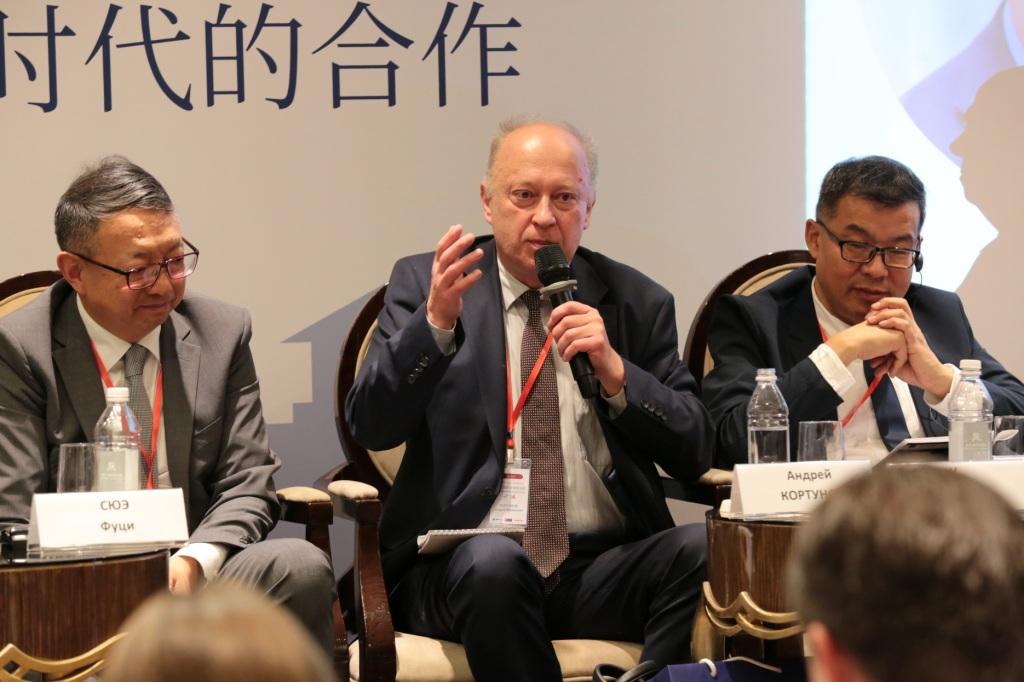
The speeches, naturally, emphasized factors, having an impact on Russia –China relations. It was underlined that despite the difficulties, created for us by our Western opponents, the relations of the two countries are developing at incredible rates. This is particularly evidenced by the trade turnover growth. If in 2020 the trade turnover amounted to $108 bn, then by 2024 results it has already reached up to $240 bn, having exceeded even the most positive expectations and increased by more than two times. Last year Russia for the first time climbed to the 4th position among the foreign trade counterparties of the PRC. Moreover, the trade between the two countries is becoming more balanced in terms of bilateral flows.
Special attention was paid to development at the level of international organizations. The Chinese experts insisted on the need to establish relations of a new type, expressed by the following formula “the community of the common fate of the mankind”. The representatives of China see the Shanghai Cooperation Organization (SCO) as a structure, capable of resolving the task of creation of a new security architecture in the Eurasian space. “All SCO members must set up such a union that could secure stability both in the world and in the region. It is necessary to create a geopolitical system, based on real cooperation principles, adhering to equal rights of all members of the organization. We must create a new security architecture, and the SCO must play a central role in the establishment of this system”, – says Xu Changzhi, deputy Secretary General of the Council for Strategic Cooperation Affairs of Russia and China. At the same time this is not about creating a military block. It is of interest to know, that many guests spoke of moving forward in the context of security in terms of the SCO. The Chinese side proposes to develop a consolidated position at a forum of the Organization on the Ukraine, Iran and other issues.
A lot was said at the conference about coupling Chinese and Russian initiatives: “One Belt One Road” (OBOR) and “Greater Eurasian Partnership”. Li Yongquan, Director of the Institute for Social Development of Europe and Asia at the Development Research Center of the State Council of the People's Republic of China, gave the following comment on the coupling: initially Russia essentially misunderstood our OBOR initiative and proposed its Greater Eurasian Partnership, which the Chinese in their turn also misunderstood, but nevertheless, started cooperation on coupling both of the projects. This step was based on the belief that strategic partners cannot work against interests of the other party. During the work process a common understanding of the goals and objectives was developed. Summing it up, the Chinese expert concluded, that any anti-Russian union would not function without China; and any anti-China union would be unfeasible without Russia; if we stick together, we are invincible.
But nothing ever comes easy. The trade between the two countries is severely limited not only by external players in the form of primary and secondary sanctions, but by internal barriers as well. For instance, the Chinese partners complain of the unstable investment climate in Russia and constantly changing rules of the game. A graphic example of this is introduction of a higher disposal fee on Chinese cars. Russia, on the one hand, is trying to protect domestic manufacturers, and on the other hand to fill up the market. The art of balance is being mastered on the fly. The conference participants did not come to a common opinion on the issue who would win or lose more if a free trade zone were to be introduced for the countries. Sergei Tsyplakov, Professor of the Faculty of World Economy and World Politics at HSE University, is sure that this zone must be established. He provided an example when Russia pays a duty, supplying coal to China, but Australia does not, because Beijing and Canberra have signed relevant documents, and there are no such documents between Beijing and Moscow. In his turn, Andrey Slepnev, Board Member (Minister) on Trade in Eurasian Economic Commission, is sure that making a free trade zone agreement between the EAEU and the PRC could be a risky step for the Russian economy, however, liberalization of specific cooperation areas should be considered.
Many speakers emphasized that the trade is the key form of economic exchange between the countries. At the same time there were concerns that the bilateral trade has reached its ceiling, because the current reality brings yet more new challenges: the countries are facing obstacles when making payments even in their national currencies. And this barrier cannot be regulated with classic tools for liberalizing trade. This is why a free trade agreement is fading into background. As Andrey Tochin, Head of the Institute for Development of the Integration Processes of the Russian Foreign Trade Academy, is sure “now any free trade talks are even less likely than they were 5 years ago”.
As it is, it turns out that dedollarization brings limited results. It cannot guarantee absence of sanctions. “China is facing the issue of primary and secondary sanctions, actively hindering China’s development. This is the exact reason why mutual trade settlements are complicated. Banks think in economic profit terms and cannot take the risk. This is why various measures to resolve this task need to be considered, including possible development of a common currency under SCO or BRICS”, says Li Xin, Director of Institute for Eurasian Studies, China National Institute for SCO International Exchange and Judicial Cooperation.
The BRICS, in general, was most often mentioned at the conference in connection with the pressing need to create a currency, alternative to the US dollar. One could assume that there is real movement in this direction, though it is not visible to a wider audience. Other solutions to the sanction pressure issues were: engaging new banks in payment flow management; offices of Chinese banks in Russia and offices of Russian banks in China; creation of new joint financial institutions and alternative settlement options based on modern technologies (obviously, a reference to digital currencies).
A few speeches specifically focused on industrial cooperation and mutual investment growth as options to overcome sanction barriers. It would be much easier to settle payments and supply equipment under joint enterprises, than under trade relations, which are one way or another controlled by the USA through international bank settlements. As Alexei Gruzdev, Deputy Minister of Industry and Trade of the RF, said: “We should acknowledge that our long-term partnership is based not on trade operations, but on practical implementation of cooperation and technology projects. These are our future cooperation formats. Trade is taking a back seat”.
Logistics is yet another sore point of joint cooperation. But here there are obvious solutions – upgrading the BAM and the Trans-Siberian Railway, improving the border crossing infrastructure.