

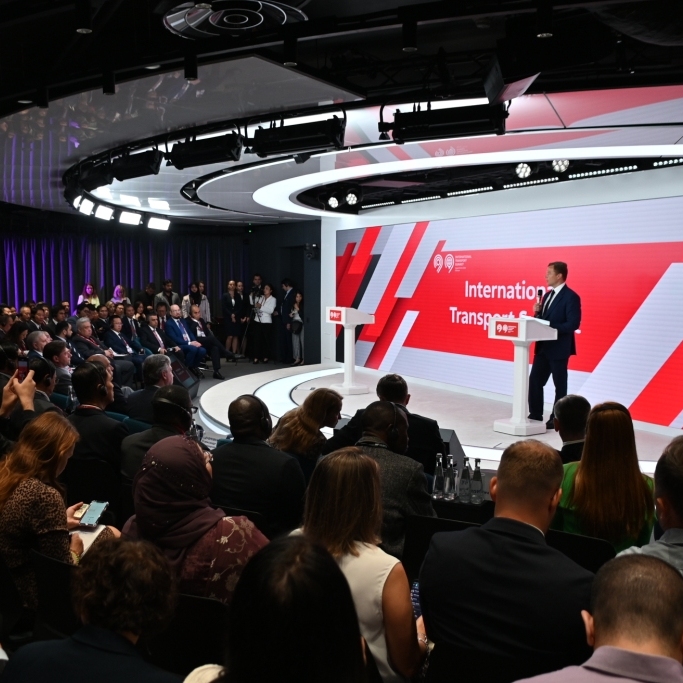
Transport Summit In Moscow: Convenience, Speed And High Service Quality
The Forum was organized by the Department of Transport and Road Infrastructure Development of Moscow jointly with the Department for External Economic and International Relations of Moscow.
The situational center gathered together leading transport experts from across the globe — from Brazil, India, China, Vietnam, Turkey, Laos, Thailand, the Philippines, Russia, Belorussia and other countries. “Despite differences between the cities, all passengers have similar expectations, no matter what language they speak: convenience, speed and high service quality”, - as Maksim Liksutov, Deputy Mayor of Moscow, Head of the Department of Transport and Road Infrastructure Development of Moscow, said in his opening address. This is probably the reason for a very broad range of issues, discussed by the summit participants. They discussed issues of construction and financing of high-speed rail lines, covered performance of digital services and ticketing systems, and also shared their innovative technology experiences. Many experts spoke not only of rail, but also of water transport and other modern modes of transportation.
According to Liksutov, Moscow Mayor Sergei Sobyanin is committed to building the world’s best transit system in the Russian capital. And this means that Moscow is carefully considering the experience of its foreign partners and is happy to share its own know-how.
The capital city has made its contribution to the common cause: three years ago the city launched its international UrbanTransportData analytical project. Participating cities supply the platform with current transport data. Why is this necessary? Collected numbers and facts enable comparing megalopolises in detail in terms of use of various types of urban transport and road traffic safety.
“Of course, we are very glad that many cities from various regions of the world have joined our analytical platform. Moscow, for its part, is continuously sharing all of its data, related to urban transport performance, road traffic safety without any exclusions”. – underlined the Deputy Mayor of Moscow.
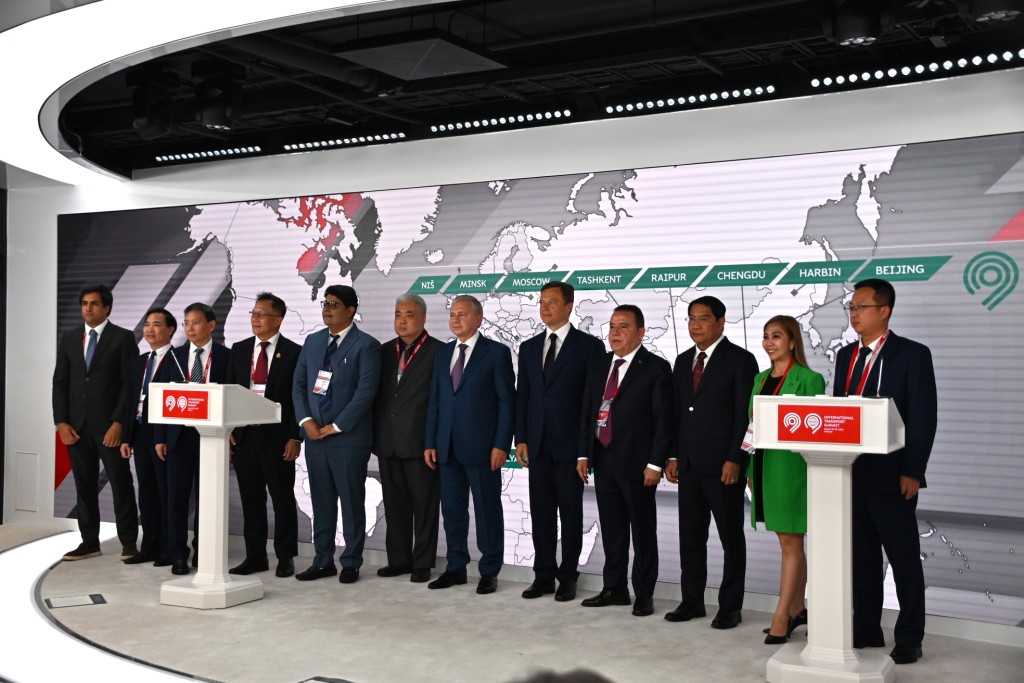
On the sidelines of the Forum joint statements on UrbanTransportData project participation were signed by nine metropolitan cities — Аntalya, Bangkok, Cebu, Chengdu, Hanoi, Harbin, Raipur, Sao Paolo and Vientiane.
Moreover, a memorandum to set up a transport development working group was signed at the Moscow Summit by the Government of Moscow and the People’s Government of Beijing. The document states that this step will allow for improved research of transport issues and for joint search of solutions to the tasks, faced by both countries.
Sergey Cheremin, Minister of the Government of Moscow, Head of the Department for External Economic and International Relations of Moscow, addressed participants of the Forum. He stressed that the International Transport Summit has become a regular event, with more and more partner cities joining it every year. Now Moscow has over 100 partner cities.
According to the DEEIR Head, today Moscow demonstrates outstanding results in transport system development. It is only natural that in 2022 UN-HABITAT recognized the capital city of Russia as a global leader in infrastructure development quality.
“This is high praise, and it could not have been achieved without the work of all Muscovites, of our colleagues from the transport and construction departments – said Minister Cheremin. – Every year hundreds of kilometers of roads are built in Moscow, dozens of new metro stations are commissioned, all transport modes are used in synergy, meaning they complement each other”.
Transport system development is a key development focus for a metropolitan city, because it enables capitalizing on city space, stressed Cheremin. According to him, opening high-speed railways raises interest of developers in territories, land prices rise, new residential areas spring up, business complexes and hotels are built. All these factors stimulate a thriving economy.
The DEEIR Head called the Intelligent Transport System (ITS) of Moscow a most sophisticated system for traffic management. In 2011-2013, when the project was still in its early stages, Moscow experts closely analyzed transport solutions of the world’s largest metropolitan cities, such as Singapore, Paris, London, Northern American and Asian cities.
“Using advanced international experience, our colleagues from the Transport Department have created a unique system, which not only efficiently manages all transport flows, but also ensures high mobility of residents and safer transport traffic, - said Minister Cheremin. – The system brings large revenue to the city budget and has paid off over several years. The development case of this project has once again demonstrated that infrastructure investments are efficient social investments”.
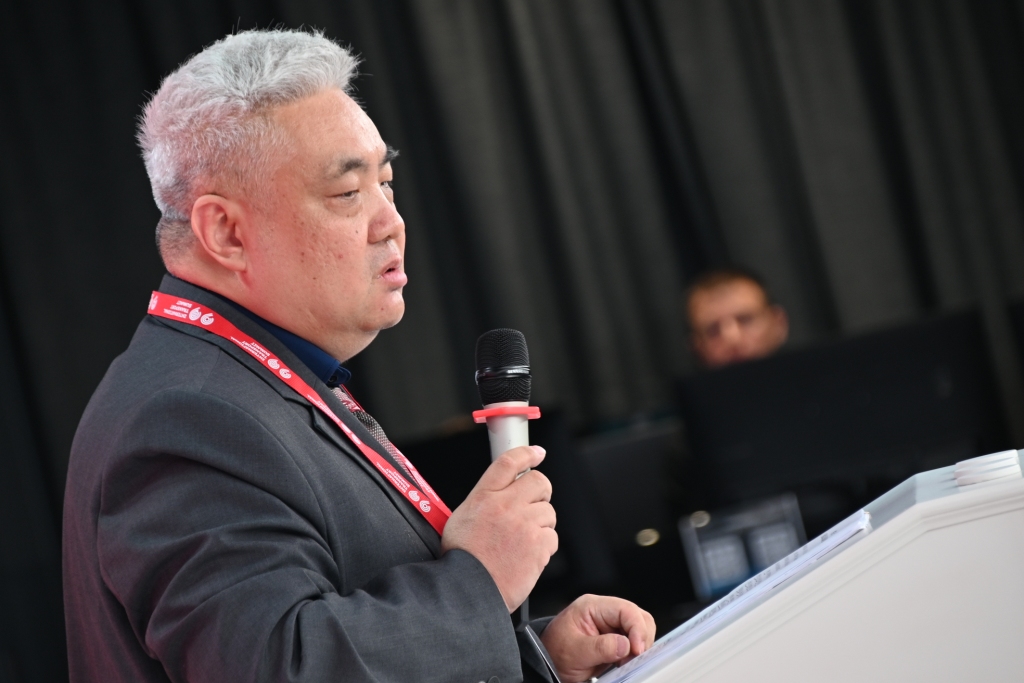
Guests of the summit shared their experience in implementing progressive urban mobility solutions. Over 80 Russian and foreign experts spoke at sessions and roundtable meetings.
Many experts are working on decongesting urban roads. Muhittin Böcek, Mayor of Antalya, said that there are two cars per every resident of the city. “To resolve the issue of rush hour traffic jams, often involving traffic accidents, we have, just like Moscow, started developing the so-called “railway framework”. It will enable passengers to get to any coastal city in the country without using any highways”, - said Böcek.
Mohamed Al-Ali, Intelligent Traffic Systems Department Director, the Road and Transport Authority of Dubai, pointed out that to reduce the number of traffic jams, the city started implementation of smart transit systems. For instance, all pedestrian traffic lights operate only on call by pedestrians.
Response centers have been opened in the areas with most accidents in Dubai, and it takes only six minutes for an officer of a center to get to the spot of any accident. Upon receipt of traffic accident or broken car information, the smart transit system of the city immediately redirects transport flows to other routes, thus minimizing traffic jams at highways.
Along with this, the summit participants focused on environmental concerns. According to Yang Yuliang, Deputy Director of Beijing Municipal Commission of Transport, many Chinese cities with multimillion population experience major issues with exhaust gases: people and the environment are suffering. This is why the city administration of Beijing is betting on environmentally friendly transport modes.
“We are accelerating construction of metro lines; we have facilitated fast transfers between overland and underground transport. We are trying to reduce duration of trips between neighboring cities to no more than 1,5 hours. Of course, the interesting experience of the Russian capital and other partner countries will be very helpful to us”, - said the Chinese official.
Along with the business program, organizers of the summit prepared three theme routes – “Moscow Railway Framework & Rolling Stock”, “Electric Transport” and “Digital Transport”. Guests of the event got a chance to see achievements of the Moscow transport complex with their own eyes.
Foreign participants of the summit visited modern transport infrastructure facilities of the capital city: the Big Circle Line, the Moscow Central Circle and the Moscow Central Diameters. Guests came to see river electric transport operations, unmanned tram test results and also visited the Sokolniki Car Repair and Construction Plant and “Manezh Station. Moscow Transport – 2030” Expo.