


Nikita Vysotsky: “Our Museum is designed at the confluence of old traditions and modern technologies”
- You were 16, when your father passed away. What are your memories of him?
- He was a man of incredible charm both in life and on stage. Vysotsky could banter, make jokes and just the opposite, could be very private. I know some people who had met him only once or twice in some settings and later wrote in their memoirs that they remember Vysotsky as an unsociable person, keeping people away from him and refusing to sing. But it could be just due to his specific mood at the moment.
Father read a lot. There were quite rare books in his library, for example, a well-worn anthology of philosopher Grigory Skovoroda or, let’s say, novels and short stories by Andrei Platonov, books, autographed by Akhmadulina, Voznesensky, Yevtushenko.
Vysotsky was one of those people who are hungry for knowledge. Everything he had read came in handy for him. I was surprised: father remembered many texts down to commas. He had phenomenal memory.
- Pleae tell us a secret: Do you consider yourself a fan of Vladimir Vysotsky’s creative work?
- I loved my father as an actor and as a performer. He used to take me to his concerts – these were spectacular, grand shows!
Could I say that I am a fan of Vysotsky’s creative work? Indeed, I could! But here, in the museum director’s office, I am an administrator. I must manage a team of like-minded people, preserving the memory of a great Russian poet and artist. We are doing everything we can so this cultural, scientific institution (for lack of a better word!) could function, fulfilling its direct purpose.
- How did it happen, when you, being a popular movie and theater actor, agreed to head the Museum?
- The first director of the Vysotsky Museum was Pyotr Leonov, literary manager at the Taganka Theater. We know each other well. He is one of those enthusiasts who had managed to collect, keep and physically save the creative legacy of Vysotsky: magnetic tapes, manuscripts – everything related to my father’s name one way or another.
But I was upset that in early 1990s instead of a museum it had come to something like a fan club, which was occupied, to put it mildly, by some strangers who had called themselves an “initiative group”. There was disorder, regular parties to deafeningly loud recordings of Vysotsky, not to mention the fact that some of father’s personal things, documents, rare photos had gone missing. But regular people used to walk right in and bring anything they had, and these were originals, not copies!
Dwellers of the Vysotsky House produced copies of father’s songs. They were seriously thinking that was what a museum was supposed to do. But they ultimately got an anti-museum!
One day the building, allocated for the Museum, was visited by my father’s parents – Semyon Vladimirovich and Nina Maximovna. They were shocked by what they saw – a completely dilapidated building lacked heating, no running water in winter, damp rooms of a former communal apartment, where unique documents were kept, and was in need of urgent repairs. There were fires too! The whole building had to be refurbished, requiring huge amounts of money. But Moscow officials of 1990s, obviously, had enough issues apart from Vysotsky.
Father’s relatives decided there was no way this could go on and wrote a letter to Yuri Luzhkov with a demand to set it right.
Luzhkov responded rather quickly: if the family was so concerned about the fate of the museum, then they should do it themselves! He proposed that one of Vysotsky’s sons headed the museum.
Essentially, Luzhkov actually denied financing for the museum, saying that the city did not have any funds to spend on culture, go and look for private investor money.
And then Semyon Vladimirovich and Nina Maximovna told my brother Arcady and me: “You must take over the Museum. He is your father and our son”.
The family council proposed me to become the director. But this is where I have to say something. The thing is, I opposed creation of the Vysotsky Museum from the very beginning, I thought it would be more proper to hand over photos and manuscripts, for example, to the collection of the Bakhrushin State Central Theatre Museum, because Vysotsky was a theater actor, or to the Russian State Archive of Literature and Arts (RGALI).
And generally, I was of the opinion that the idea of advertising Vysotsky looked rather ridiculous in the late 1980s, because despite the lack of any official recognition, Vysotsky was an extremely popular person in Russia. Nevertheless, being aware of the horrible mess at the Vysotsky House, I agreed to become its director and set things in order.
At the time nobody thought that this would go on for decades. It was about a year, two or three of my directorship, just enough to launch reconstruction, and that’s all!
- Having become the director, did you find any private investors?
- I had been thinking, where do I start? The building in Nizhny Tagansky alley, built in the XIX century, was 80% destroyed. First I decided that it urgently needed heating. I brought experts to find the best way to do this and realized that heating would require change of utility systems, roof reinforcement, meaning lots and lots of money. Someone said it would take 6 million euros, someone mentioned 8 million euros.
I, being the director, made a decision to reconstruct the building in phases, 200-300 square meters per year. Sometime by the year 2002 we had completely rebuilt the museum building.
We still lacked any financing whatsoever, and there was no way for us to get any. This is why the construction was supported by my friends, to their ability, and by friends of my father through the V.S.Vysotsky Charity Fund, co-chaired by the mother of Vladimir Semyonovich – Nina Maximovna, businessman Vadim Tumanov and cosmonaut Georgy Grechko.
- There were rumors in Moscow that the theater allegedly proposed to build a skyscraper at the spot of the dilapidated building in Nizhny Tagansky alley, and some even wanted to build a Vysotsky church…
- My predecessors used to run around with the idea of bringing the whole space from the museum to the Taganka Theater under one giant glass roof! This project, just as the proposal by Yuri Lyubimov to build a 16-story tower instead of the dilapidated building, were not fated to come true. The idea was to use three lower stories for the museum. This was a very expensive commercial project, never to be implemented due to lack of rich investors. We managed to resist implementation of this project, thank goodness! They have their life at the Taganka Theater, we have ours.
Still there are some people harboring yet another crazy plan for construction in Moscow of a street-church for Vysotsky. One of its authors keeps bombing various official bodies and the Moscow Patriarchy with letters. He is asking for allocation of several hectares in the center of Moscow for a church. This is manilovism of some sort!
- It is known that back in January 2018 the Museum was visited by Vladimir Putin and Sergei Sobyanin. Did this visit have any effect on improvement of financing of your cultural center?
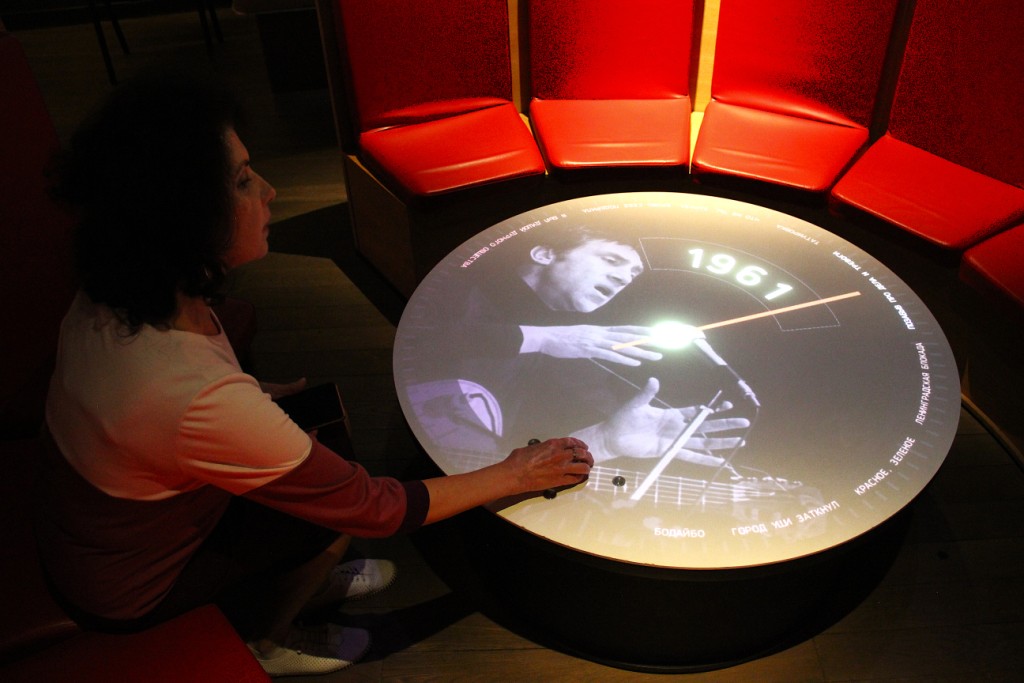
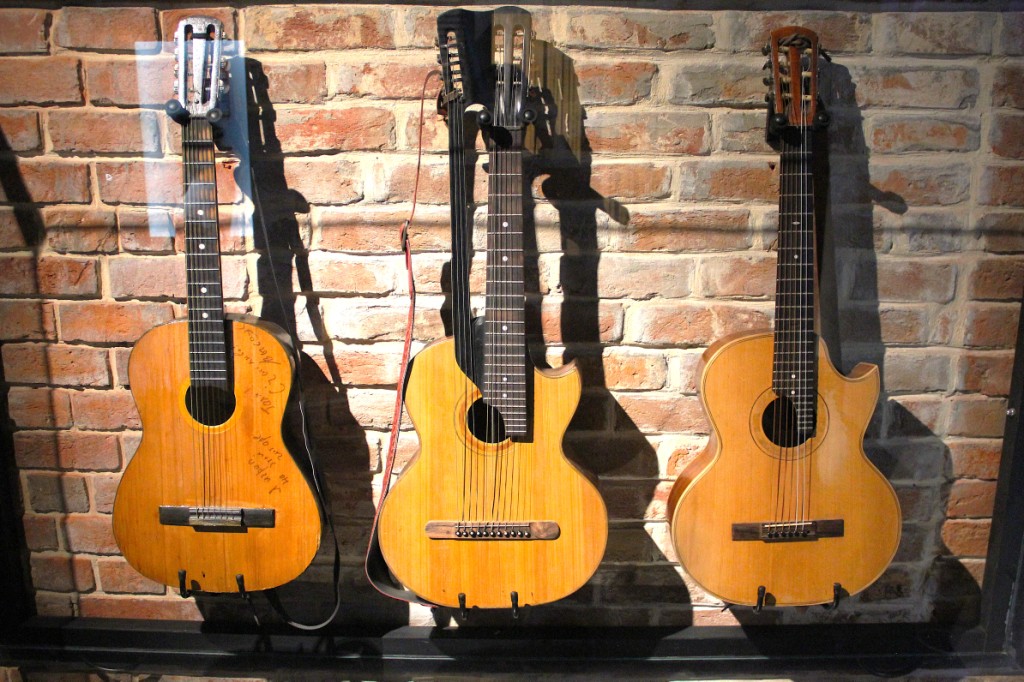
- We, just like other Moscow museums, received significant financial support from the head of state and the mayor of Moscow. We managed to create a major museum complex with the funds we had received. We set up a new permanent exhibition, counting 16 interactive installations, more than 320 unique art objects and also a thousand exhibits, including three famous guitars, owned by Vladimir Vysotsky.
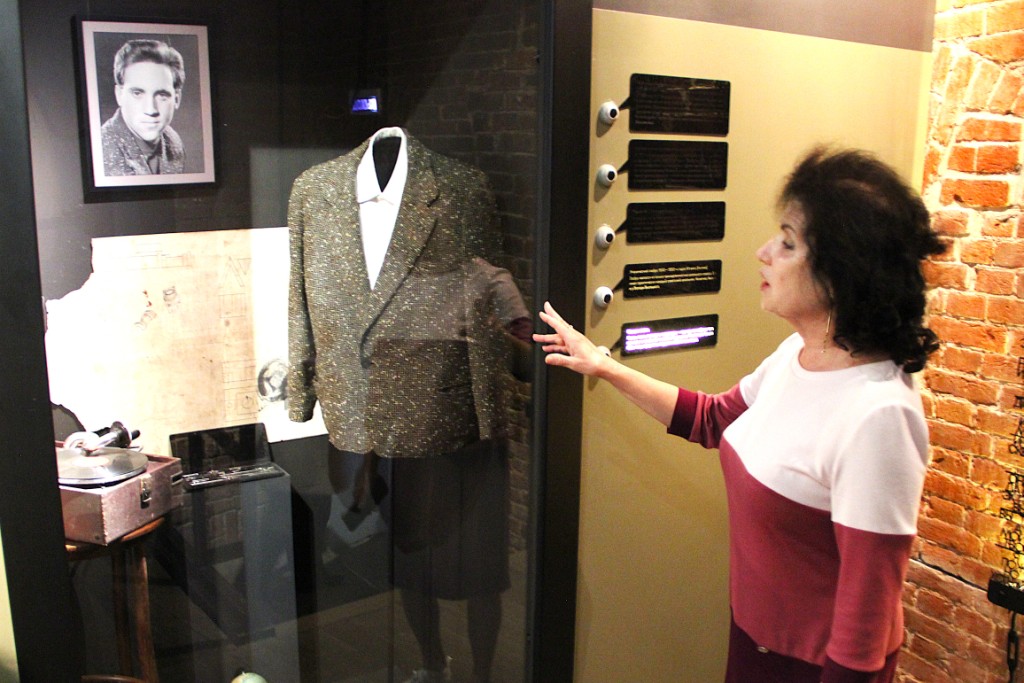
Many museums in Russia are still doing things the old way by hanging photos on walls and displaying clothes, dishware and other items behind armored glass. We have followed a different path. Our project brings together museum traditions and modern technologies.
The Museum offers an opportunity to listen to everything written by Vysotsky in the bard song genre or watch almost all of his movies and theater performances. A visitor puts on headphones and searches for his favorite song in game format, not bothering anyone, and then listens to on-stage shows or at-home concerts by Vysotsky.
Our Museum is visited by Vysotsky admirers, who spend many hours in the museum till closing time, and then they come back again.
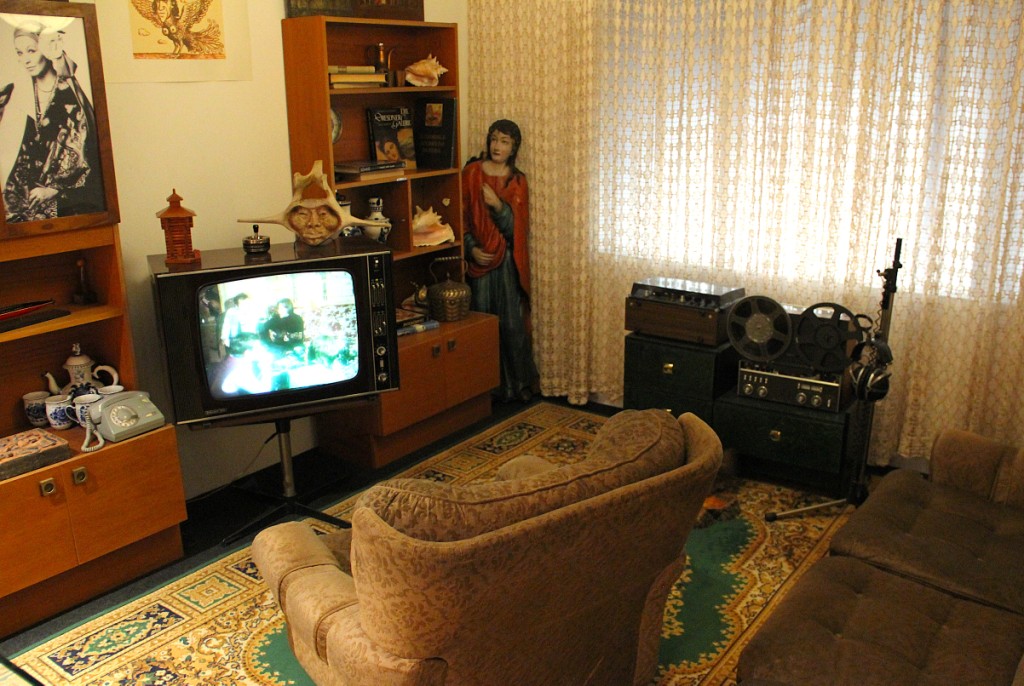
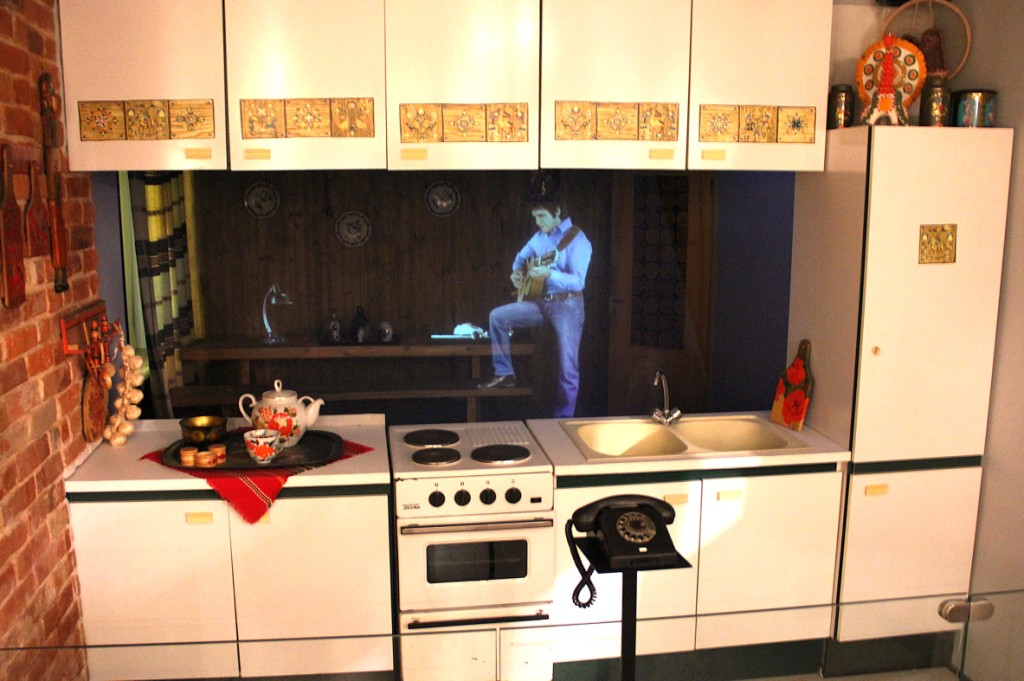
In one of the rooms of the museum visitors could see holographic projection, depicting a scene typical for the poet’s life. Here Vladimir Semyonovich calls his friend on the phone to present his new song. The design of this room accurately reproduces the interior of the poet's apartment, demonstrating the lifestyle and tastes of Vysotsky and Marina Vlady.
In my view, today we have one of Moscow’s best theater venues with 130 seats. Our theater and concert hall provides a stage for the work of creative youth, interesting directing experiments.
It is for a good reason that many experts name the upgraded space in the Vysotsky House the exhibition project of the decade. Naturally, all these novelties attract modern young people.
- And who is the author of this permanent exhibition?
- The creators of the exhibition - artists, designers, computer graphics specialists and many others – have done everything to transform the wonderful and rich life story of the favorite performer from a dusty archive exhibit into a bright, engaging and true-to-life narrative. Any modern young man could get to know the creative works and biography of the poet in an easy to understand and captivating way.
This was all conceived by Sergei Mironenko, a renowned Moscow artist and designer. He is a friend of mine. We have studied together at the School-studio at the Moscow Art Theatre: Sergei went to the producer department, and I studied at the acting department.
- Do you have any personal things or, maybe, books, records of your father at your home?
- As the grandparents wished, everything we had in our family, related to Vladimir Semyonovich Vysotsky, let me emphasize, everything down to the last nail, has been handed over to the Museum. These are documents, his library, his personal things …
- Nikita Vladimirovich, I recall talks that right after Vysotsky’s death some of his acquaintances took a suitcase filled with unique documents and manuscripts by the poet, from his apartment at Malaya Gruzinskaya …
- Indeed, some things were kept at father’s home, and some things were at the disposal of collectors, who handled his archive in his last years. They were preparing a samizdat “Complete Works by Vysotsky”. When father passed away, these guys refused to return the original manuscripts.
I should say, that father during his lifetime did not treat his archive too seriously, obviously thinking that his poetry would never be published.
There is a very funny story, recalled by one of the compilers of the Complete Works. According to him, when handing over a package of manuscripts, Vysotsky put it into a string bag and weighed it on a balance scale, while warning: “This weighs three and a half kilos, you are to return the same weight”.
Some of father’s friends were quite determined people, who threatened to take the manuscripts away from the perpetrators. But they gave them back of their own will. Though I admit that the collectors of the father’s archive may have left something for themselves. Today it would be impossible to identify which papers were given by Vladimir Semyonovich for samizdat.
It is known for sure that some manuscripts were secretly sent to the USA in the hopes of publishing them there. Sometime later a decent person asked some of his acquaintances to hand over the stolen papers to the Vysotsky Museum in Moscow, but they never did. I am aware that some of the original manuscripts currently circulate on the black market …
Most of Vladimir Vysotsky’s manuscripts are kept at the Russian State Archive of Literature and Arts and our museum collections.
- Nikita Vladimirovich, could you tell us whether you like the monument to Vladimir Vysotsky near the Petrovsky Gates?
- The monument was unveiled in the summer of 1995, 15 years after the death of Vladimir Vysotsky. It is considered to be authored by Nikolay Vasilievich Raspopov. But the bronze statue was cast by other craftsmen, who only used a sketch by the sculptor.
Raspopov created a figure of a man, walking towards people. And at the foundry, by someone's evil design the bronze Vysotsky’s head was tilted back, as if he were shouting somewhere up.
It is not about me liking or disliking the monument. Raspopov is a very, very good sculptor! But it was poorly executed, whatever they say …
- Is it true that they are tearing down Vysotsky monuments in the Ukraine?
- I know for sure that they removed the monument in Odessa. The sculptural composition, dedicated to Zheglov and Sharapov, near the police building, has not been touched, but they painted it in the Ukrainian flag colors.
The monument to Vysotsky in the war-torn Mariupol did not suffer any damage. It is not known whether they have managed to keep the memory of Vysotsky in Kiev.
- How many grandchildren of Vladimir Semyonovich are there, what do they do?
- I have five children - Semyon, Danila, Daniil, Victor and Nina. Arcady has four - Vladimir, Misha, Nikita and Maria.
Masha is the eldest, she is over forty years old. My Vitya is the youngest, he is six.
Volodya is a steeplejack, he does some sort of high-altitude work.
Nikita, Arcady’s son, has visited recently, he is in IT. Semyon is a painter. Misha and Maria are students. The rest of Vysotsky grandchildren are in business or go to school.
The grandkids have never seen their famous grandfather, but they know him very well through his poetry, songs, theater and cinema roles.