

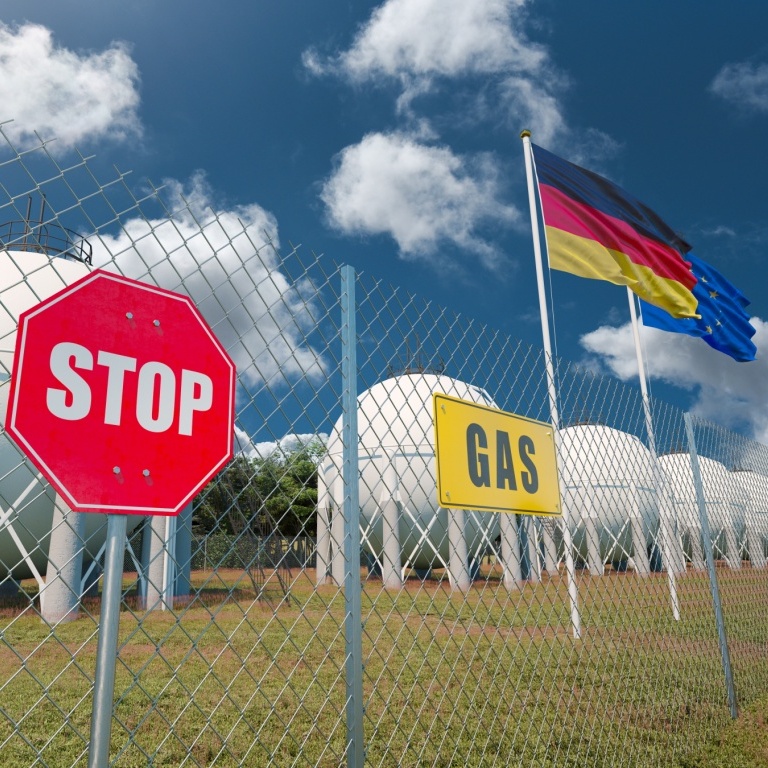
Global gas business: "Wild horse racing through a burning jungle"
The climate agenda "counter-revolution" spearheaded by the US President Donald Trump has produced significant shifts in the mode of thinking and flagged a return to realism. Many of the most "stubborn" opponents of carbon have adjusted their mindsets. Take the International Energy Agency (IEA), for example. However, its volte-face took place right after Trump threatened to cut off funding for the organization.
According to the new global consensus, neither oil, nor natural gas, not even coal will sink into oblivion. In the foreseeable future, all three will remain in the global energy mix until 2050. Despite the reduction in the total share of hydrocarbons due to the introduction of renewable energy sources, consumption of the cleanest fossil fuel, that is natural gas, is most likely to grow.
Since natural gas is destined to stay with us for a long time, the issues regarding its pricing model are of particular interest. What are the most important trends in the dynamics of global natural gas prices? This is what Russian energy expert Sergey Sergeev has to say on this matter.
- You have always emphasized the unique nature of natural gas as a globally traded commodity, and, to use your words, pointed out the "paradoxes" of the formation of global prices for this in-demand product. What kind of paradoxes are you referring to?
- To begin with, there is no clear-cut answer to the question of what should be the economically reasonable price of natural gas. In the case of oil, there is a limited historical range of price fluctuations based on the balance of supply and demand, as well as certain regional differences. However, the scale of these differences is completely different in the case of gas. The range of regional wholesale prices is truly vast.
According to the latest July review by the International Gas Union (IGU), in 2024, the highest prices were recorded in natural gas importing countries, and the lowest in those countries where it is produced. This is understandable, but look at the range of regional wholesale prices. The highest average wholesale price was recorded in Poland – $530 per thousand cubic meters, and the lowest in developing countries, where gas is a byproduct of oil production and it is customarily distributed almost free of charge. The price spread between these poles reaches hundreds of times.
Along with Poland, Austria, Germany, and Italy are the frontrunners in terms of high gas prices. These are followed by countries in Southeast Asia. Russia is at the bottom of the list of countries ranked by their wholesale gas prices. The IGU estimates that the average Russian gas price in 2024 amounted to $47 per thousand cubic meters, which is 9 times lower than the average price in Europe (including Turkey), where the average price oscillated around $405 per thousand cubic meters. Low gas prices, understandably, are an important factor in the competitiveness of the Russian economy.
I would also like to point out that the price difference is also a result of the European Union's deliberate policy of rejecting natural gas of Russian-origin. In other words, the Europeans have reaped what they have been sowing for quite some time.
And here's another point you should pay attention to. According to economic theory, globalization and the growing interdependence between regional markets should have been accompanied by a convergence of prices, just as it happened with the main commodities. But in practice, this is nowhere observed. It would seem that this should be facilitated by an increase in the share of supplies of liquefied natural gas (LNG), which breaks through regional borders and opens up new, previously inaccessible markets. But even with the growth of LNG supplies, there is no noticeable trend towards the formation of a single unified price.
Finally, there is the incomparable volatility of gas prices, both on a daily basis and in the short and medium term. As a reminder, the spot price on the European gas market has increased from $30 to almost $4,000 per thousand cubic meters in the time period from the spring of 2021 to the fall of 2022. Where else in the world of commodities have we seen such fluctuations? During the day, the price could fluctuate by double digits.
One foreign trader that I know personally once compared the unpredictability of gas prices to "racing a wild horse through a burning jungle."
- What are the reasons for such a unique price volatility?
- Difficulties with transportation and storage, as well as the conspicuous seasonal nature of consumption, may contribute to the unique pricing dynamics of natural gas, however, it cannot fully explain the hyper-volatility phenomenon. In the world of commodities, there are gases and commodities with seasonal consumption peaks, but these products do not have the same price anomalies as natural gas. Some argue that the volatility of gas prices is a result of speculative trading and algorithmic trading. However, the scale of speculation in the oil market is more substantial, yet the price volatility is significantly lower than in the gas market.
In my opinion, the explanation for the hyper-volatility of spot prices should be sought in the dominance of long-term contracts in international gas trade. With such a two-segment composition of markets in Europe and Asia, all market imbalances are concentrated in a relatively small segment of uncontracted, spot volumes. As a result, the concentration of imbalances in the volume of this segment grows disproportionately and has a multiplicative effect on spot prices.
- You emphasize the absence of a unified price for natural gas in international trade. What could be the reason?
- I attribute this to the simultaneous operation of two market pricing mechanisms in connection to natural gas, with each of them propelling prices in different directions, in various combinations. In addition, these two mechanisms may be subject to direct government price regulation. The presence of two pricing mechanisms is related to the existence of two types of market competition that shape the gas price, namely gas-gas competition and gas-substitute competition.
- What does "gas-substitute competition" mean, in simple terms?
- This type of competition determines the price of gas independently of supply and demand in the gas market, per se. It makes the price of gas dependent on the dynamics of the prices of other fuels that can actually or potentially replace natural gas.
The most popular substitute for gas is petroleum products, which compete with gas in the production of electricity, heating, and industrial processes. The mechanism of pricing based on inter-fuel competition is known as oil indexing. The formula for calculating the price of gas includes a conversion factor that reflects the relationship between the cost of a unit of gas energy and the equivalent unit of oil/petroleum products energy. Therefore, if the price of oil increases, the cost of gas also increases, and vice versa.
- Is it true that the oil-based pricing of gas and long-term contracts have long provided stability in European markets?
- Absolutely. Historically, since the 1960s, this oil peg has ensured comfort, predictability, and stability that both sellers and buyers needed. Believing that these qualities were inherent in the market, European buyers decided to "step out of their comfort zone." They began to resolutely reject long-term contracts. Oil price indexation has been branded as “insufficiently market-based”, as a vestige of the past, and the prices of trading hubs have been elevated to the status of "returned normality" in pricing. It should be noted that Asian buyers were not convinced. In 2024, 49% of global LNG was sold based on oil indices.
- The euphoria did not last long, right?
- That's right. For a while, the illusion of a gas surplus on the market was created by COVID-19, because the pandemic caused a decrease in global gas consumption. However, since mid-2021, the surplus of gas on the markets of our Western neighbors on the continent has turned into a shortage. This was largely due to their own actions, since they disrupted the investment cycle in the gas industry through their relentless efforts to combat fossil fuels.
The situation was exacerbated by the refusal to accept stable Russian gas supplies, the unwillingness to launch the already operational Nord Stream 2 pipeline, followed by sabotage of the Nord Stream pipelines and numerous sanctions packages. In 2022 alone, European buyers lost more on the difference between trading platform-based and oil-based prices than they had earned in a decade through the gradual decline in oil product prices.
- Has there been a wake-up call?
- I can't judge the transformation of the mindset of British liberal economists, with whom we have been discussing the "immortality" of oil indexation for many years without much success. However, at the corporate level, oil and gas companies have essentially restored the legitimacy of oil indexation and comprehensively use it when signing long-term contracts.
- What is the basic rationale and motive of the oil indexation comeback?
- There is a simple calculation behind it. In an overheated, deficit-ridden market, the price of oil-indexed gas is lower than the price of trading platform-indexed gas. In a surplus market, the opposite is true. Despite the apparent prosperity, the global gas market remains overheated, as evidenced by the high prices in Europe, which are rotating around $400 per thousand cubic meters, and the continued gap between trading platform-indexed prices and oil-indexed prices.
However, the market is expected to return to surplus after 2027, when the liquefied natural gas terminals currently under construction around the world will be operational. This will reverse the current situation, with higher prices associated with the oil index. In this context, gas suppliers have announced their intention to include oil-based price references in their long-term contracts. As we know, the path from rejection to acceptance of an ideology often lies through economic benefits.
- Will the new wave of LNG projects lead to an era of low natural gas prices?
- This is what the market watchers expect. We will see how it turns out. It should be noted that the global gas industry is facing a steep rise in costs. According to the IEA, new liquefaction projects can be profitable if the gas price is at least $280 per thousand cubic meters. Additionally, in the new climate paradigm, oil and natural gas will remain in demand for many decades to come.
It is quite obvious that the IEA's long-term forecasts reflecting the most radical green scenario, the one that predicts the price of oil dropping to $25 per barrel by 2050 and the price of gas going down to $158 per thousand cubic meters, are not based on any hardcore facts.