


MOEX Demonstrated Phenomenal Resilience To Sanctions Blows
The phenomenal success of MOEX with customers has not been swayed even by the blow, dealt to the exchange by representatives of the OFAC (Office of Foreign Assets Control — a US Treasury division), which imposed sanctions against the exchange and its structures on June 12. Since then dollar and euro trades have been suspended, and their rates are now determined in line with a special methodology by the Russian Central Bank.
Alexander Razuvaev, member of the Supervisory Board, Guild of Financial Analysts and Risk Managers, spoke in his interview to our magazine on how the exchange manages to survive and how much will our habitual currencies cost.
- Pessimists expected the Moscow Exchange to crash back in February of 2022. According to their expectations, the West was supposed to impose sanctions against the exchange. Pessimists asserted that sanctions would tank the FX market in Russia. There was supposed to be a record difference between sale and purchase of dollars: they expected, that Russian banks would buy the American currency for ₽40, and sell for ₽120 per dollar.
Nothing of the kind happened either in 2022, nor on June 12, 2024, when the OFAC imposed sanctions against the exchange and its structures — the National Settlement Depository (NSD) and the National Clearing Center (NCC), leading to suspension of dollar and euro trades. However, no dramatic events followed: the Bank of Russia, the Ministry of Finance and the overall financial system were prepared for the restrictions.
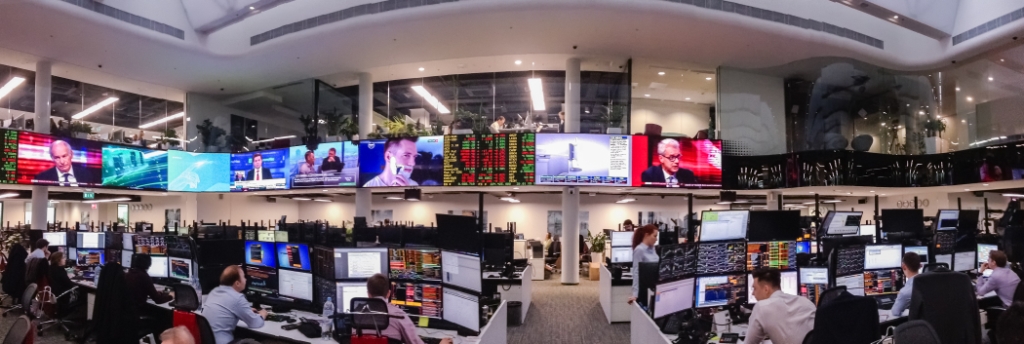
- How does MOEX operate under strong geopolitical pressure?
— The platform has displayed good results for the first half of the year, despite the imposed sanctions. Many financial companies recommend buying its shares. The reason for this is simple: the high key rate of the Bank of Russia, which is now at 18%, ensures good interest income on a money position with commercial banks.
Please note the growing number of users. Only in August the number of private customers of increased by more than 524 thousand people, and the total number of natural persons, registered at the platform, has exceeded 33,3 million.
In other words, the MOEX, as an issuer, never noticed the sanctions. At the same time the exchange is taking steps to defend its positions on the international arena.
Let me remind you, that on August 19 at a meeting of the Investor Rights Protection Club, a representative of a legal consultant of MOEX spoke about planned defense positions. Top management of the exchange will challenge the sanctions, imposed in June by the OFAC. Representatives of the exchange will apply to the Office for clarification on application of general licenses, used in unblocking assets.
- How can you explain the MOEX Index going down, which is a basket of major Russian corporate shares: in a little over three months it had plunged by 25% and started going up slightly only in early September. Financiers state that the reason for this is “expensive money” due to the high key rate. Since investors believe that the high key rate is here to stay for a long time, then they are dumping shares of those companies that, according to their forecast, will not be able to achieve profits, lacking cheap credit. At the same time analysts expect manufacturing to slide down to 2,2% in August from the May level of 5,8%. How can all these data be explained?
- The MOEX is going down for two reasons, with the key reason being tougher monetary policy by the Bank of Russia, meaning a high key rate. The market observes the decisive moves by the regulator, which will raise the rate, if necessary, as many times as would be required.
The second reason is aggravation of the geopolitical situation. Even though the platform is managing the sanctions against its infrastructure, it would be wrong to say that geopolitical risks have no impact on the Russian economy.
Reduction of industrial manufacturing is an expected effect from “cooling down” the overheated Russian economy, meaning it is a result of sequential actions of the authorities. And on the whole, this is moving in the right direction under strong external pressure.
I am sure that the authorities are closely monitoring the situation and the economy will not “cool down” too much. Forecasted GDP also inspires some optimism. Let me remind you, that at the recent Eastern Economic Forum (EEF) Russian President Vladimir Putin reported 4,6% economic growth in the first half of the year. Last year the GDP rose by 3,4%, and, despite an expected year-end correction, there is reason to believe these numbers will be again achieved at the end of 2024.
- After the sanctions were imposed on the NCC and NSD, which are MOEX structures, dollar and euro rates will be determined by the Bank of Russia, calculating them under a complex methodology. What will be the rates for these currencies over the coming months?
- The OFAC actions have led to the Russian FX market becoming less transparent and more volatile. Logistics issues of importers drive up prices for goods.
As I see it, to determine dollar and euro rates it would be correct to use the exchange rate of yuan and then the cross rate for the yuan to the dollar and the euro.
However, it is up to the regulator: it considers many more factors in its methodology. I assume, that at the end of the year the dollar will be within ₽93-95 range, and the euro will be around ₽98-101.
- What are the areas for prospective development of the MOEX in the near term?
- The exchange could get extra income from investments into shares under Islamic banking. Essentially, all securities of all companies are available there, apart from alcohol manufacturers. According to Bloomberg, only the Islamic financing area could bring the MOEX at least $10 billion a year.
Oil industry, financial and IT sectors will be a priority. Generally speaking, notwithstanding the sanctions, I would recommend buying MOEX shares. Moreover, the situation may change drastically after the US elections are over.
- Do you mean change after Donald Trump, the Republican party favorite, comes to power?
- I do not think he will unfreeze Russian reserves, but there is reason to believe that Trump will try to lift the sanctions against the MOEX. What was done by the OFAC is primarily disadvantageous for the Americans themselves. They are dealing a blow to the dollar, and the economic might of the USA is based on the strength of their national currency.
Besides, Americans always liked our shares. Now their investments are frozen, but they would like to continue buying them. It is not even about these investments being cheap, though our securities are indeed undervalued.
Foreign investors have a different view of the situation. Russian financiers look at the 18% key rate and at 10% dividend yield of the MOEX index. But for foreign investors 10% is a very good level of return on investment. Everything that is happening in relation to Russia and the West is a nightmare, which many investors could never have imagined ten years ago. But financiers are very clear-headed people. I hope the sanctions will be eased soon, and I am sure it would apply to the MOEX.