

Climate change as stimulus for power industry development
- The climate on the planet is changing. It’s debatable, whether it is getting warmer, or, if measured by thousand year cycles, it is getting colder. However, we can acknowledge and see with our own eyes not only more extreme weather, bringing unprecedented heat and floods, but also natural phenomena, previously unusual for the European part of Russia, for example, whirlwinds. Are Russian regional power systems prepared for changing climate conditions?
- Indeed, the climate is changing. But the issue of warming would be, let’s say, fifth or tenth priority by its significance. Climate change involves increased frequency and amplitude of extreme weather events: excessive rainfall, droughts, floods, hurricanes and/or strong winds, sudden heat or cold waves etc. In this case we have to listen closely to the organization that studies these issues directly: it is the Voeikov Main Geophysical Observatory. The observatory develops a baseline state report, which then could be used by the regions to prepare their own adaptation plans. In the Russian federation climate change adaptation plans are prepared and implemented at the federal and regional levels. The abovementioned events, their increased frequency pose a serious threat to industries of the economy and daily living activities of the population. For instance, almost a half of all technological disturbances in the power system facilities of Russia (though these numbers are actually going down) are direct consequences of extreme climate events. But the power industry keeps on working, and if 10-12 years ago ice rains led to severe consequences in Moscow region, now it is no longer an issue.
The goal for development of adaptation programs for regions was to identify which key climate changes occur in each specific economic region of Russia. For example, what is going on with droughts in the Black Earth region or what is happening in the Volga region with shallowing of the Volga River and Caspian Sea; what is the situation in Siberia and in the Urals etc. This is the very first part of the climate plan: regional authorities need to assess what is happening in their domain. But not all regions have resources and capabilities to develop such forecasts, for this reason they focused their programs on visible sites: urban parks, pest control, waste... Essentially, evaluation of adaptation of the economy to change is evaluation of what is impacted by major climate transformations.
And this totally has nothing to do with the “warming”. For instance, it hardly plays any role in Moscow. At the same time some researchers and scholars publish in reputable peer-reviewed magazines their scientific articles on how the warming would lead to lower consumption of fuel.
However, power industry professionals assert that in reality there would be no savings of power resources, things are much more complicated. So there is no point in emphasizing this climate change aspect. In regional monitoring it is important to observe reality and identify key trends. For example, extreme precipitation – rain and snow – in Moscow. This is what needs to be managed properly to avoid 4 months of snowfall gridlocks in the city, just like last winter. On top of this there are temperature steps, “zero crossings” (Celsius), a combination of “zero degree crossings” with magnetic storms, heatwaves … These are the issues our metropolitan cities are facing, and these issues overlap. Other regions have drought, whirlwind, fire and flood problems.
Is the power industry prepared for climate change? Not everywhere and not too prepared. This January, July and August have shown that the power facilities of a significant number of regions are absolutely ill-prepared for climate disasters. The latest case in point is the emergency outage at Primorskaya GRES, which left the Far East without power, stopping trains, shutting down traffic lights and store cash registers. Buryatia also has recurrent power failures. There is general unavailability of power systems (intrinsically prone to unstable modes), and climate operates as a trigger for emergency situations. How can this be managed? New balanced networks, base sources and accumulating systems need to be built, meeting the requirements of growing cities, real estate properties and production facilities. Heat and power supply layouts, water and gas supply layouts must be coordinated, and then they will serve as a foundation for a comprehensive adaptation development plan. We should be aware that cold and heatwaves are not going anywhere.
- Could you please tell us about successes and issues in Moscow’s climate adaptation.
- We started our work on comprehensive assessment of climate vulnerabilities of Moscow’s economy in 2017, engaging various experts from the Moscow State University, the Moscow State University of Civil Engineering, RAS institutes. This work was successfully completed in cooperation with the Department of Nature Management and Environmental Protection of Moscow, and a climate adaptation plan was adopted and approved last year. And if at that time we established that the city’s power sector was highly sustainable, then over the latest 3-4 years we have been sounding the alarms: wild real estate growth (which has happened over the latest years exactly on the back of successful power savings efforts, achieved in all areas, enabling connection of about 80 million m2 of real estate without heat consumption increases), leading to an imbalance of power capacity in the power sector. All energy savings and demand management reserves have been almost depleted. Now we either need to urgently build new power supply sources or to stop the breakaway growth of real estate, or use a hybrid option: if you want to continue major construction – you will be charged for network development and power source upgrades. The 20-million agglomeration of the Moscow region has to have at least 25 GW of its own power capacity.
This is a specific feature of the current time. The present situation raises concerns, because this issue has not been properly considered yet.
- Could renewable energy sources bring any benefits to Russia, given the country’s vast reserves of power resources?
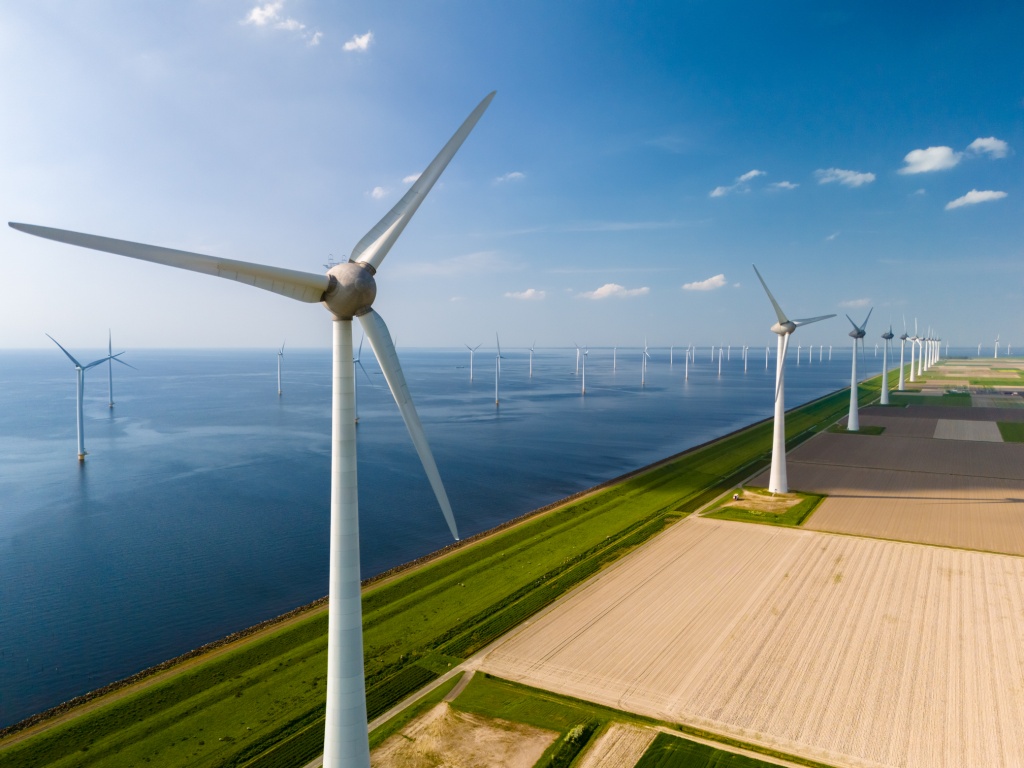
Of course they could! Let’s recall, that after the war our villages and small towns had small power sources, mostly mini hydroelectric power plants. The first geothermal power station, Pauzhetskaya geothermal power plant (Kamchatka) was built in the USSR in 1966, the first tidal power plant, Kislogubskaya tidal power plant, was built in 1969. The first wind power plant was installed at Ai-Petri in the 1930s. Moreover, if we presume that RES sources are represented by the so-called “noncarbon” power industry, which does not use combustible natural resources, then these make up for over 40% (as hydro and nuclear power stations) in our power balance. Only a few major countries could claim that they have this high share of noncarbon sources.
But I would break down the systems, that use RES, into three groups: large, small and medium. As mentioned previously, we have the largest systems in abundance (HPPs and NPPs). We do not need too many wind and solar power farms: we’ve got enough power even without these, but we would rather need more pumped storage power stations. Quite significant wind and solar power capacities have been installed in Kalmykia, Stavropol and Crimea, Ulianovsk region etc.
Medium power RES units, like rooftop photovoltaics and collectors on buildings, small hotels, production facilities are successfully operating in various regions of the country. Our book[1] features multiple cases of this use. In some cases, this is used in a technological process, in other cases it helps utilize secondary energy etc. These units are installed either due to extreme needs or as a matter of prestige. There are thousands of these power sources in the country. There’s little government stimulus behind these; their efficiency estimates vary a lot.
And the smallest RES stations (the so-called micro-generation), including heat pumps, are used at private residences, homes. There are several thousands of these in the Moscow region alone. This means we have niches for all types of RES. The only complication here is connection of large wind and solar power farms to the central power system, because of their unstable performance, depending on wind and sun. To ensure their stable performance in a power system, additional compensating, accumulating and peak sources need to be installed, and all of these are rather costly.
If your question implied the environmental aspect, then we could go to very simple and understandable numbers: Russia emits only about 4,5 % of global СО2 emissions and has over 20 % of the global areas, covered by forests, which absorb carbon dioxide. This to a certain degree defines the role of our country as a major global “green donor” — absorber of greenhouse gases. And if we make an accurate calculation of the so-called end-to-end “carbon footprint” of the alternative and renewable energy sources – from solar panel and wind unit production to their ultimate disposal, then the results would be rather disadvantageous for the renewable power industry.