

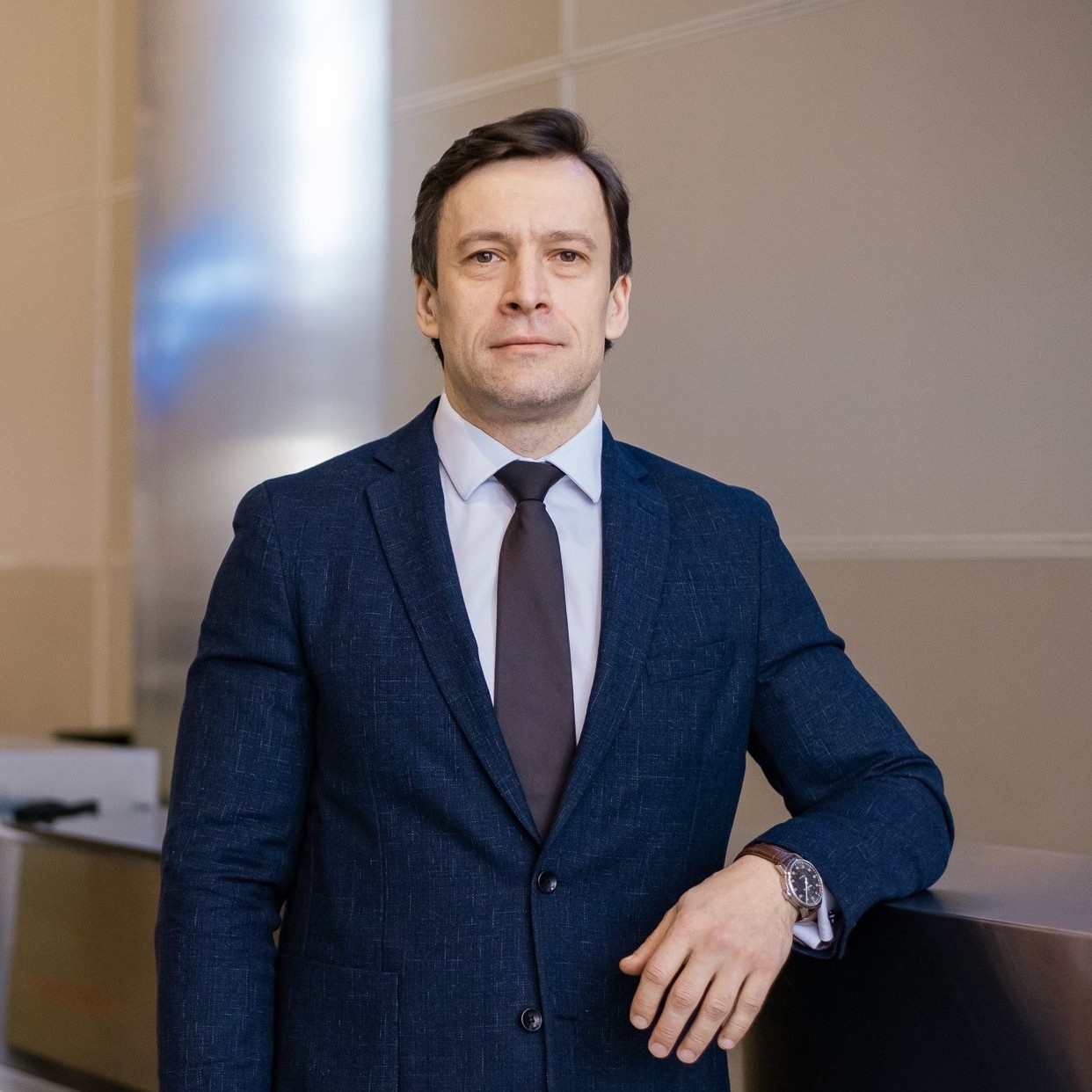
Mikhail Murakhovsky, CEO of United Industrial: “It Is Important To Have Equipment Operating In Fields”
Mikhail, how are things with servicing the existing imported equipment, how do dealers help customers in this area?
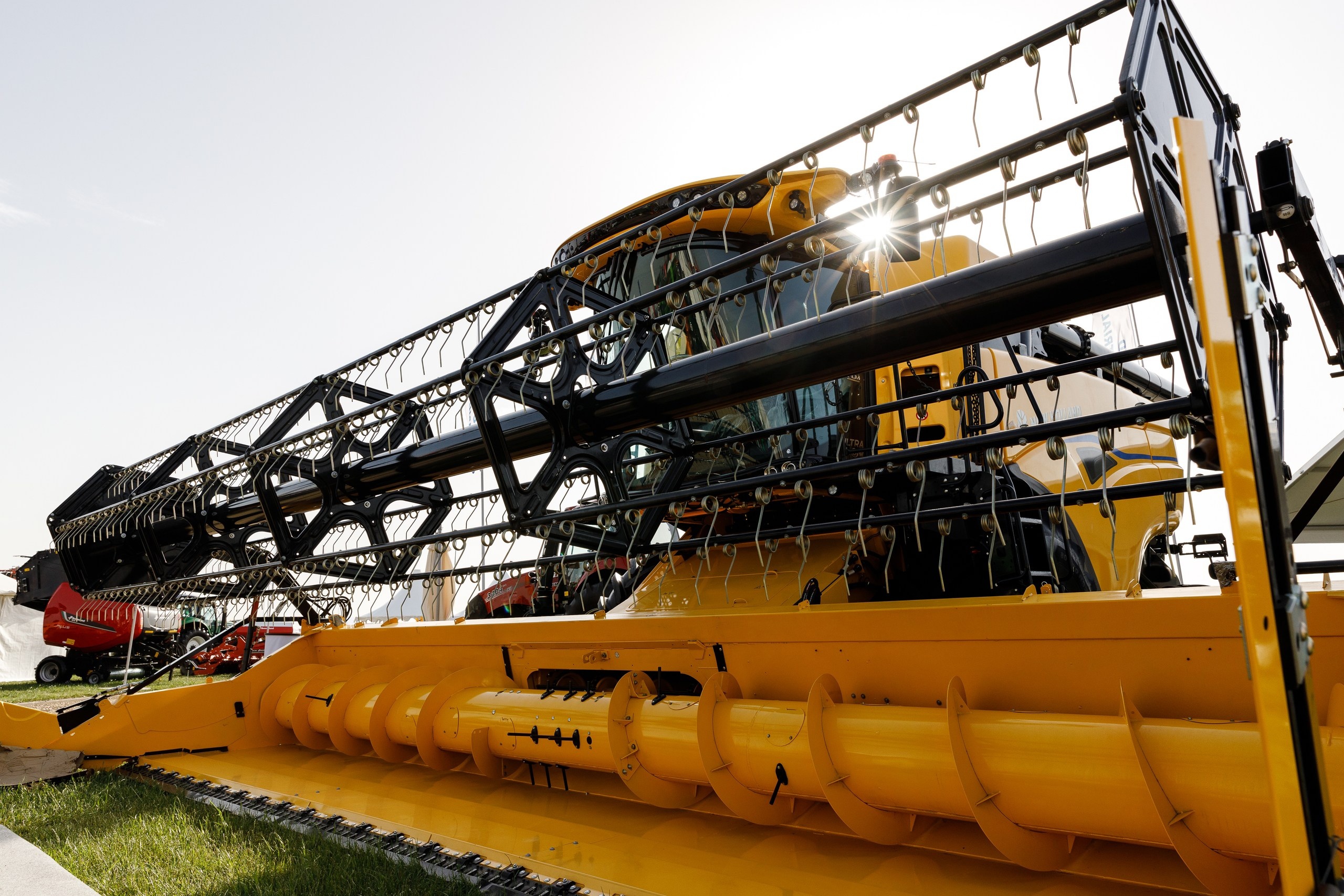
The issue of service, maintenance and spare parts supply has always been and will be a priority issue for our country. This is based on our track record and experience, and we support our products over their lifecycles. This year we have managed to resume deliveries of spare parts, and first and foremost, their availability in stock in the volumes we used to have prior to February 2022. Speaking of numbers, today at our central storage facilities we have over two million spare parts in stock, this is 75 thousand unique SKUs, enabling us to provide for needs of our customers on the market. This is high responsibility for us due to the fact that a large number of the equipment, manufactured and sold in the territory of the Russian Federation under New Holland and Case IH brands, is working in the fields today, including more than 12 thousand units of self-propelled equipment.
Well, the outlook is encouraging: if there are stocks, there is potential. Moreover, there is a clear trend towards repairs of the existing equipment instead of buying new units. When the fleet gets older, it needs to be repaired, and this requires spares.
Your statement is fully supported by statistics: today there is steady demand for the equipment which has been in use for over ten years. I think this trend will hardly change over the next two-three years, since, among other, there is ongoing redistribution towards the processing side. This means that investments are now going in a slightly different direction. And we understand the importance of having equipment working in the fields.
Apart from availability of spares, it is very important to help agricultural producers with automated systems, installed on units. There are also multiple issues in this area, because some companies have suspended their services, software updates. To what degree could users of precision farming systems be confident about their future?
Back in the day, when our company was still called CNH Industrial Russia, we had developed an alternative scenario as a solution for precision farming systems for our customers. And at the time we started talks with our Chinese partner on joint development of products on the market of the Russian Federation. The circumstances were such that today this is our only partner, with which we are successfully conducting our business. The Chinese colleagues are very quick to respond to all our requests, adapting products for our market specifics. Why? Because this also means development for them. Let me remind you, at the threshold of 2021–2022 the Russian precision farming market was one of the most advanced. And now we have guaranteed supplies, this equipment is always in stock at our warehouse. At the same time the equipment is constantly improved and upgraded.
Furthermore, our portfolio features solutions, enabling use of radio signal, satellite signal, which means a comprehensive set of tools, available globally. This area has been and still is a priority for us. Automation and digitalization are very important for us. We are perfectly aware that our customers face various issues in their businesses, including human resources issues. Precision farming technologies enable them to resolve these issues. Telemetry, which provides a clear picture of what and when is happening to a tractor or a combine, what are they doing, is a most important innovative element. Our customers, especially those running large businesses, are hard pressed to receive objective data on their equipment status.
And what is the situation with your dealership network, have there been any changes?
Only insignificant ones. We have got a new dealer — Tekhnika Major Agro, and by now we have managed to keep our almost complete dealership network. Moreover, from the viewpoint of the service network coverage of those territories, where our equipment is in operation, the situation has even somewhat improved. I am speaking of the number of dealers and service centers in the Central Federal District primarily, and also in the Southern Federal District.
What does the package of your brands look like now?
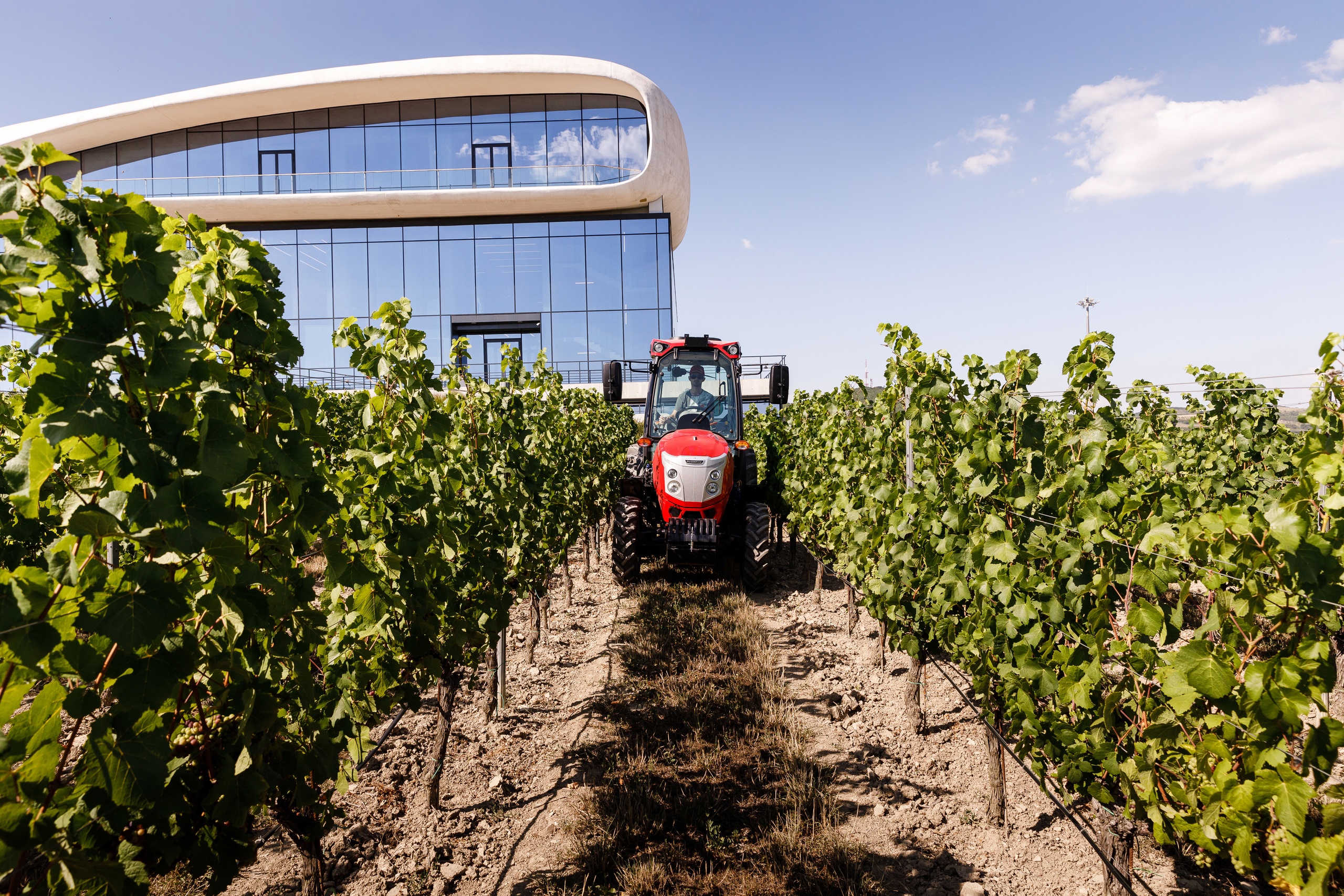
Naturally, we have kept our historic anchor brands, New Holland and Case IH. We still supply tractors and combines under these brands, plus we have a new brand — these are products by Argo Tractors, a well-known Italian equipment manufacturer, under McCormick brand. It has historic roots, connected, among other, with our anchor brands, where we present tractors in the power range of 60 to 340 horsepower.
How are things with localization, what is the percentage in Russia?
In this instance I would like to highlight an important point: despite the fact that there have been dramatic changes in the situation in terms of tractor production, we have managed to keep our production operations running. In 2024 we invested into development of deep tiller production under Ecolotiger brand, this is our Tiger Pro project in the Republic of Tatarstan, over ₽200 million. In this case, if we speak of localization, today its level is 90 %. And the remaining part consists of products from friendly countries. The spare parts business is also an important element of localization. Why? Because from 2022 till today we have been continuously implementing our import substitution strategy, including substitution of spares, and we have achieved notable success in this area. The numbers may look rather small in terms of the total volume, but keeping in mind that at the end of 2021 it was zero, I think we have achieved some success. As of today, the depth of spare parts localization is over 5%, and we are steadily developing in this direction.
Are you speaking of towed equipment? Or also of self-propelled ones?
Including self-propelled equipment. In previous years, working on localization of imported tractors, we have developed rather productive relationships with domestic manufacturers of some components. And today, looking at this past success of ours, we understand that Russian component manufacturers have great potential, that they are capable of quick and high-quality production of those parts that they specialize in.
The volume of new self-propelled equipment purchases is sliding today, this is obvious. Can you confirm there is a similar trend for towed equipment?
Unfortunately, this is confirmed by statistics. If we compare numbers to the same periods of the last year, then unfortunately, we will see negative dynamics. This is characteristic of the overall condition of the industry, primarily connected to financial resilience of the agricultural goods producers. This is true not only for self-propelled, by for towed equipment as well. I am referring to the overall slowdown in the investment activity of agricultural goods producers.
Sadly, your words are confirmed not only by expectations, but by numbers, shaped up by preliminary results of 2024. However, there are certain areas, where we, just the reverse, observe a surge — and this is processing. Let us hope that this is where all the investment has gone for now, and in the near term there will be reverse redistribution.
You have noted an important point: those agricultural companies that produce primary agricultural products, also operate processing. And the deeper the level of processing, the more financially resilient these companies are, and the more they invest into their development on continuous basis.
When we speak of the dealer network, this first of all means certain responsibility and certain expectations. Previously standards were dictated directly, and it was not an option to deviate from these. Now these strict requirements to standards are gone. How did this change the chain of relationships straight through to end customer?
Sometime around 2015–2016 we started applying rather strong efforts to standardize and format the dealer network. This whole volume of standards had things that had true value for end customers, and there were things of value to the global corporation. Over the latest two years we have done a major review of these standards together with the dealer network, in order to determine and identify, what is of top importance for our customers. And today I would say that the system and structure of these standards have become simpler, easier to understand and mostly focused on end customer needs, meaning those people that drive our equipment out into the fields every day, their critical needs. And this simplification has enabled redistribution of resources and efforts of the dealer network towards needs of our customers.
Which specific standards are important for customers and how many are there?
Well, for instance, service response time, the so-called downtime, this is a baseline top priority parameter. Then come spare part delivery timelines. When we speak of standards, we are not only setting them for our dealer network, but for us too. Why do we do this? Because this is our area of responsibility — to provide spare parts to our customers. Let me give you a vivid example from our past – what is really important to a customer and what is not. One of our dealer centers failed to pass our certification procedures under our standards just because its gate height, measured by a laser meter, was 5 mm below our standard.
This meant a car could not drive in there?
No, cars were driving in all right. But these 5 mm, which are essentially a clearance margin, prevented the dealer center from achieving a specific certification level. Now, of course, we are more flexible with such issues, and let me repeat myself: the key objective is to go from the parameters, set by us as baseline. For example, go from downtime. An important parameter is availability of an operational service car, complete with a set of spare parts for maintenance and repair.
Plus trained personnel.
Yes, this is a very essential point. We were at a crossroads of sorts and made a very clear decision: we have to have an in-house training center, and it has to focus not only on the dealer network. Now we are in a phase when we are implementing operator training for those people who directly operate this equipment regularly, and not only during field startup periods. Correspondingly, our customers can send their machinery operators for specific product training.
This is excellent, because anything can happen during fieldwork. Let’s say, communication is lost and it is impossible to report an equipment fault... Please tell what is the current situation in relationships with your partners, what is it that is important to communicate to an end customer?
Those changes that have been made over the latest two-three years, primarily concerned the external perimeter. During all this time our objective was to make this transformation path for our end customers here in Russia as hassle-free as possible. But speaking of the external perimeter, then here we are in a completely new reality. This new reality is primarily related to logistics, finance and payments issues. All of the previous times and up to this day we have always overcome those obstacles, that appeared before us, and we are now continuously seeking ways to make things even better. And we are successful. This is a priority objective, which we are considering and over which we are consistently working every day.
We have discussed your position. Under the conditions of changed external circumstances, have you had any feedback from your partners, from dealers? Have there been any attempts on their side to change the structure of interaction, let’s say, to have more freedom and independence to make their decisions? So that nobody makes any strict demands to do or not to do something.
Of course, there were such attempts, but lately our communications with the dealer network have got more points of contact, messages that are understood better. We are in a certain balanced environment, where interests of all sides are taken into consideration, this is extremely important. You have made a valid point, related to traditional dealer standards: things are to be done this way and this way only. But now things are different. Now it is a dialogue of two partners who share a common goal. And under this dialogue we are developing solutions, enabling us and our partners to achieve these goals. Both sides are going in the same direction, meaning the quality of discussion, the quality of dialogue with the dealer network has significantly improved.
Today the global market of agricultural machinery is leaning towards a trend that does not seem to be positive, it is actually stagnating. There are certain negative circumstances in our country as well. What is your current view of this issue, which global market processes are you tracking?
We are closely monitoring the situation at the global market as well and we see, that the latest forecasts by such mastodons of the agricultural machinery industry as John Deere, AGCO, CNH, are not as optimistic as their forecasts were at the start of the year. If at the time they spoke of the market sliding in the first quarter of 2024 by 7–10 %, then now this range is shifted to 20–25 %. It also needs to be said that the forecast by the renowned John Deere (20-25%) refers to the period till the end of their financial year, meaning till October 31. Correspondingly, the trend will continue in November and December, and this result will be displayed by the largest markets – the USA, Europe, Latin America. Judging by the information available to us, this is a general trend. It correlates to the issues on the Russian market, namely high agricultural production costs and low product prices. But the market of the Russian Federation has entered this turbulence a bit earlier under external pressure and is now somewhat ahead of its foreign colleagues.
We understand that there are specific circumstances which are draining resources now. But people always want to eat and will continue to need food. The only thing that could happen here is redistribution by crop types and needs: some would need products to satisfy their hunger and some would want tasty food. Minus 25% is a colossal number. If we could dream a bit, is there a possibility of these volumes recovering in, let’s say, over the period of the next five years?
I think there is. At least, the market of the Russian Federation demanded and continues to demand its fleet upgrades – in terms of all indicators, logically and mathematically justified. By all means, we will have the effect of deferred demand. This is inevitable. As for the global markets, there is a similar situation on the back of the growing population numbers, higher need for food products. The phase, the cycle that the agricultural producers and those, who make machinery for them, are currently in, will end in the near-term. As a rule, such crises go on for two-three years, and then there is the deferred demand effect. If we rewind the “movie reel” a little, we would see, that similar events have already happened, though due to different circumstances. And every time these events ended with recovery and then by a peak year, just like the year 2021 for us.
Today the world is actively searching for alternative food product sources. One of the obvious trends is industrial farming of edible insects. For now, this sector is still rather modest on the global market, but could it grow with time to an extent that agricultural machinery makers will need to shift to producing radically different equipment? Let’s say, ant or snail harvesters.
I don’t think so. Over many thousands of years, the mankind has been consuming a basic food product set, such as meats and grains. I cannot imagine that it would be possible to make such drastic changes in gastronomic habits in a foreseeable future. Now we are talking about agriculture, but we should keep the world ocean in mind, which has colossal protein reserves. This is why even if there is any replacement, it would primarily come from the ocean. Alternative food products (let’s call them that), these insects will ultimately require some water reserves and lands, suitable for such farming. In any case, we won’t see any explosive growth here over the next few years.
***
Company text box:
LLC United Industrial (prior to 29.05.2023 – LLC CNH Industrial Russia) was established in 2010 as a joint venture of KAMAZ and CNH Industrial Group.
In 2013 CNH Industrial Group acquired 100% in the charter capital of the Company.
In 2023 CNH Industrial Group sold its shares in the charter capital to the top management of the company, which was followed by the change of corporate name to LLC United Industrial.
Currently United Industrial operates as a distributor of agricultural equipment by McCormick, Case IH and New Holland in Russia. Along with self-propelled equipment, the company offers a broad range of towed and detachable equipment for tilling soil, sowing and forage procurement. The corporate portfolio also features equipment for precision farming technologies and telematics, original spare parts and lubricants. Service and maintenance are provided via a dealer network of more than 18 dealers, which have branches and service centers in all agricultural regions of the RF.