

Izmailovo Kremlin: The Most Russian Spot In Moscow
In 1998 Alexander Fedorovich Ushakov submitted to the city authorities for approval a Russian-style wooden tower, and soon after the Mayor’s Office issued its permit for a Russian Cultural Center construction project. This marked the birth of “Izmailovo Vernissage” small enterprise, and the first stone was laid into the foundation of the “fairy tale city”. The “Izmailovo Kremlin” cultural complex opened its doors to visitors in 2003.
Almost all of the territory, which is now the Eastern Administrative District of Moscow, three hundred years ago was described by foreigners as a most beautiful and attractive site in Europe. Alexander Ushakov, founder and CEO of “Izmailovo Vernissage” exhibition and fair, Cavalier of the Order of Peter the Great, told his story in an interview to BM. Moscow Foresight. And it was a beautiful site, where the Tsar Island featured palaces with 300 towers, and a Cathedral of Intercession of the Virgin and Prince Ioasaph church in the center, up on the hill.

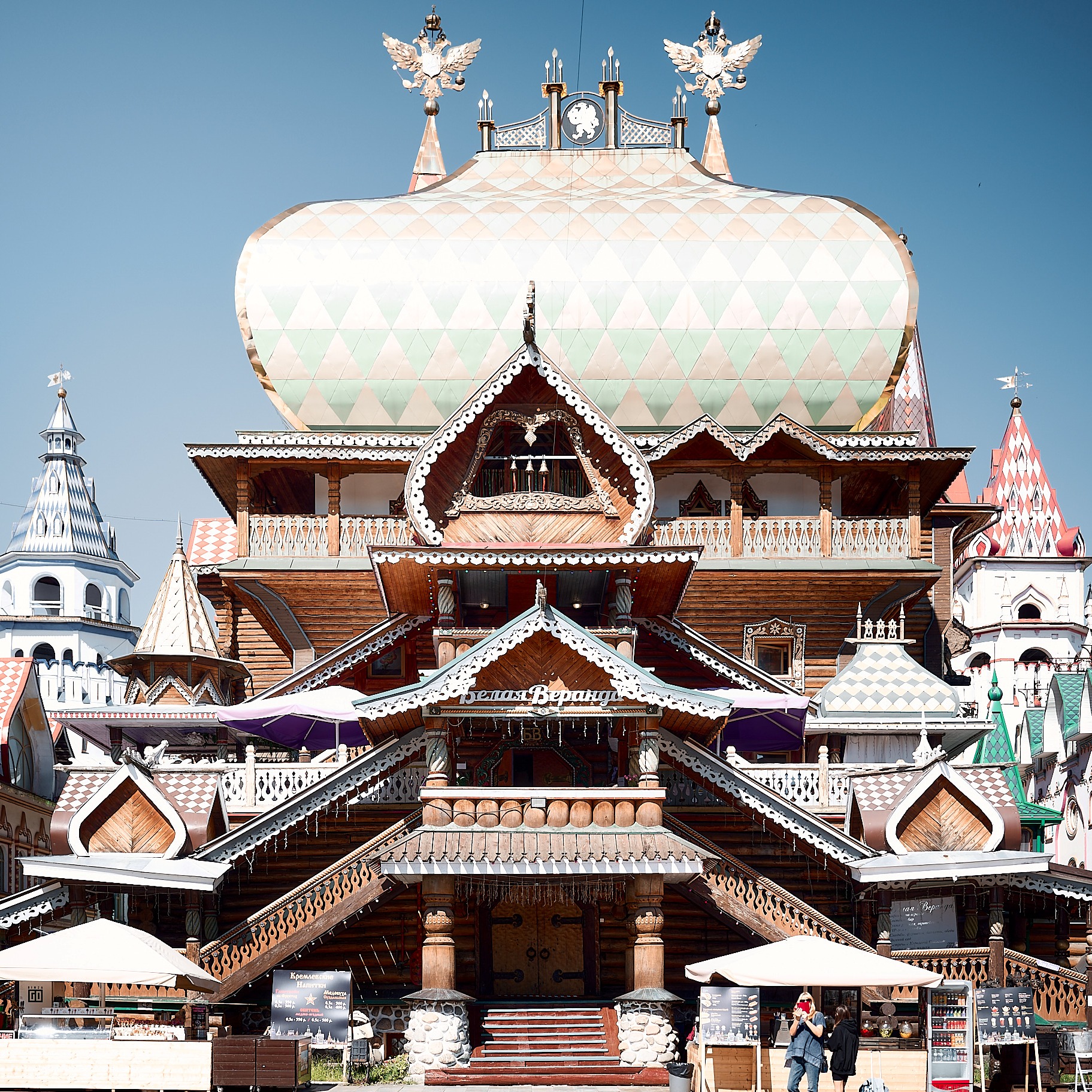
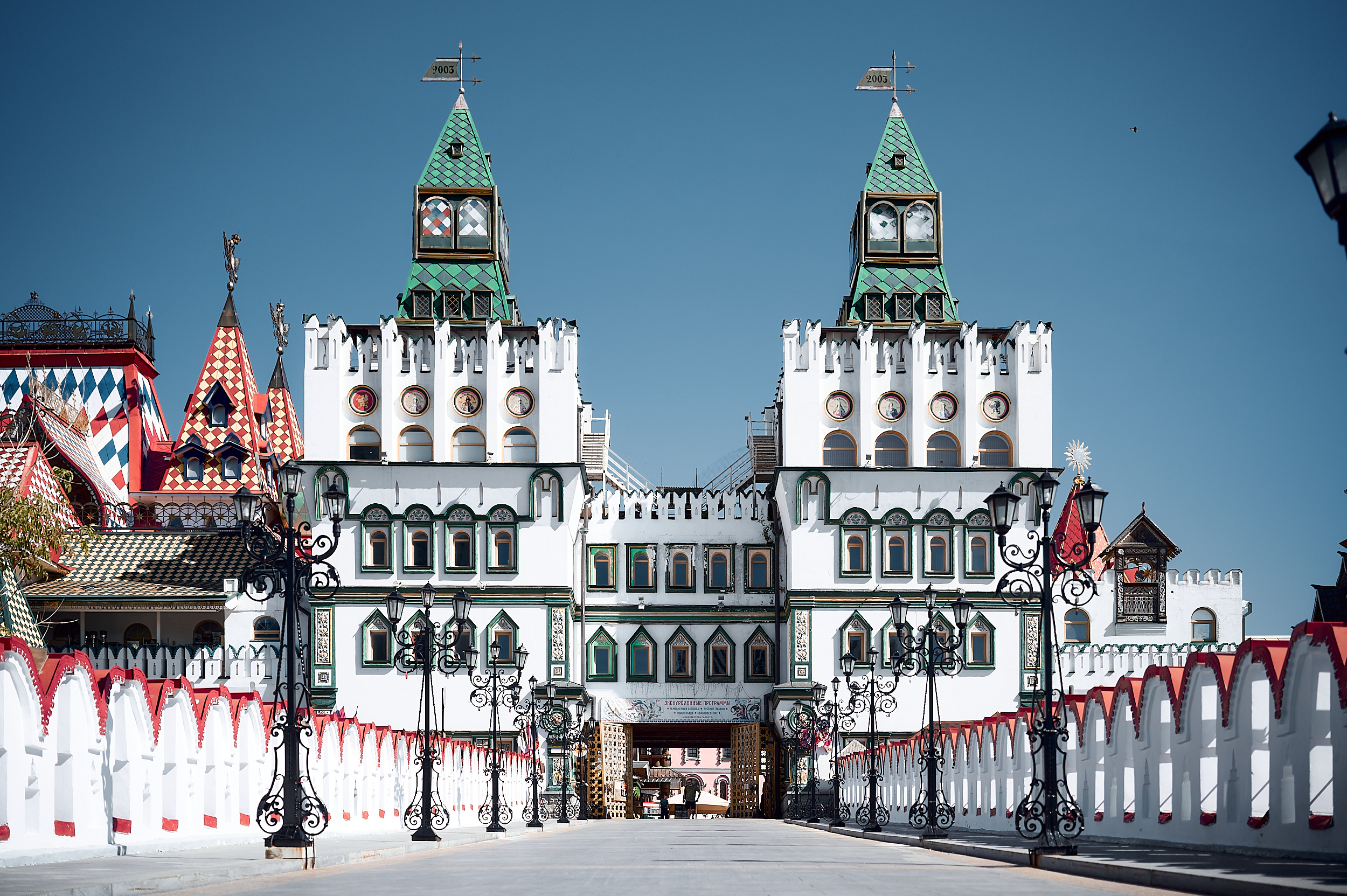
According to Alexander Ushakov, the site, which used to be the place of residence of the Romanovs, now once again is highly popular with tourists. Today it is a fortress, styled after the Russian architecture of the XVII century: decorated towers and walls, massive fortifications, carved windows. Many visitors of the Izmailovo Kremlin are attracted by a variety of themed museums and colorful features of the architectural complex.
Alexander Fedorovich, but the idea to build the Kremlin in Izmailovo did not just come out of the blue sky, did it?
I am a native of Moscow. I came to Izmailovo for the first time as a boy in early 1960s. We came to swim in the lake, which is joined by Serebryanka River.
I could not but wonder: why is there a round lake of a regular shape with an island in the middle? It turned out that back at the time of Tsar Aleksey Mikhailovich the river was dammed up to form an island. The rest was done by nature. These childhood memories have been with me forever.
Many remember the 1974 “bulldozer exhibition” in Belyaevo, where artists, unrecognized by the authorities, displayed their pictures. There were several thousand artists who were not members of the Union of Artists of the USSR. Rumors of the scandalous exhibition spread among Muscovites, and crowds rushed to see it in Belyaevo. The authorities got frightened by the rush. The exhibition was destroyed by bulldozers and all artists were chased away.
To resolve the issue, the executive authorities of the Pervomaisky district of Moscow proposed to “homeless” artists to gather in Izmailovo, at the Tsar Island. This was the establishment of an outdoors vernissage of sorts.
But things went sideways – on Sundays artists not only displayed and sold their pictures, and visitors did not just look at pictures and buy them, but drank vodka, littered, broke off tree branches and burned fires in winter. Naturally, it was completely unorganized and unmanaged, there were no public security arrangements whatsoever. This continued for a rather long time – from 1986 to 1988.
Ultimately, local residents rose up – they got sick and tired of crowds and ever-present litter everywhere.
What was to be done, who could put things in order? Someone at the executive committee proposed me as a candidate, hey look, he is a sambo athlete, a graduate from the Physical Culture Institute and the head of the Youth Center at the City Komsomol Committee. At the time I devoted a lot of my time and efforts to culture and sports issues.
I put together a team of like-minded people and friends, we collected and trucked away all litter and waste, installed trash bins and toilets. From then on artists had to pay rent for vernissage stalls. All of these things were managed by “Vernissage Service” small enterprise, established by the prefecture of the Eastern Administrative District (while it had the relevant authority), the Physical Culture Institute and by me as a representative of the Youth Center at the Moscow City Komsomol Committee. I was appointed director of “Vernissage”.
Later on organized artists were joined by artisans and craftspeople, wood and bone carvers. People came from Palekh, Khokhloma, Zhostovo, Fedoskino. This is how the street of Crafts, the alley of Paintings came to life…
Please tell, which buildings were still in place at the Tsar Island when you came to build the Kremlin there?
We inherited a waste lot from the Soviet era, with a hill left over from the construction of an unfinished “Izmailovo” hotel building. Both the Kremlin and anything else you can see in its territory are total newbuilds! This is my project, I conceived it and built it from scratch. Naturally, I did not do it by myself, but together with like-minded people, friends and best Russian engineers and craftsmen.
My ancestral memory awoke, I am thankful to Simon Ushakov, my great-great grandfather, who 300 years ago built and painted “three-roof” palaces on the island. At the time he also headed the Faceted Chamber, the Guild of icon painters, he did a lot for the Tsar Island.
Could you name the key buildings in the Izmailovo Kremlin territory that you are especially proud of?
Overall, the whole Izmailovo Kremlin, becoming a real open air museum, has become a sightseeing attraction of Moscow. But back at the start of a long journey to rebuild the Tsar Island we had to do a lot of things.
As per ancient Russian tradition, a church was the first building, erected in a new settlement. When we started out with the Izmailovo Kremlin cultural complex project, the first structure we built was the church consecrated in the name of St. Nicholas of Myra, the patron saint of crafts and trade. The church is 46 meters high and it is considered the highest building of its kind in Russia. The church is functional and operates as a metochion of the St. Daniel Stavropegic Monastery, it plays a very important role in the life of the Izmailovo Kremlin.
The Palace of Russian Meals, made in the image of a tsar palace on the Izmailovo island, is a gem of the Izmailovo newbuilds. The palace closely follows national style traditions and is considered a typical palace building of the XVII century.
The Kremlin’s territory is home to the Wedding Palace. Our craftsmen have built a splendid baroque style building. Many young couples come to us for their marriage registration ceremonies.
The Russian Courtyard is of special interest to tourists. Some of its buildings are made of wooden logs in the style of the northern regions of the country. Others are built from white stone and decorated with bright flowers.
The Kremlin has 18 museum sites – the Museum of Vodka History, the Bell Museum, the Russian Folk Toy Museum, the Museum of Bread, the Museum of Weapons, the Moscow Animation Museum and others.
The Flea Market is a landmark location for many Muscovites, where anything imaginable is sold: old gramophone records, pictures, rare furniture, tableware, vintage accessories, embroideries, books and many other items.
Flea markets still exist in France, Belgium, Spain, Mexico…
This is an interesting subject. The history of our flea markets dates back to the year of 1812, when the Russian troops left the city and the French troops entered it. The remaining population had to make a living, and they started selling anything they could …
As a matter of fact, our Flea Market was set up 10 years ago by Vladimir Nikolayevich Shoshin, a war veteran. He managed to get all “flea marketers” organized. By the way, I failed in this task (laughing). Now his efforts have come to fruition, people not only sell things here but come to communicate with each other and meet old friends.
Flea markets are a part of the common global culture. There are lots of those willing to sell here, and we do not have enough space – only 200 stalls are available. Still, the flea market is a part of our large business.
Are you saying that the Flea Market is registered officially?
Yes, there are 200 registered stalls. This is inked in a layout, approved by the Department of Trade and Services of Moscow.
You claim that Izmailovo was the birthplace of the Russian Navy. What are your arguments?
This is reported in the archives. Peter I, when he was but a teenager, made his first boat journey across the Prosyansky Pond in Izmailovo. The Tsar never forgot the experience and later on shipped his first “battleship” to Saint-Petersburg, naming it the “Grandfather of the Russian Navy”. A copy of Tsar Peter’s boat is exhibited in our museum.
Moreover, the Izmailovo Kremlin hosts the Russian Navy History Museum, which we had built for the 300th anniversary of the Navy, and a Sea Cadet School, attended by one hundred cadets. We had to build two buildings for them on the banks of Seryebryano-Vonogradny Pond. Seamanship is taught by professional navy officers. Boys study for further service in the Russian Navy.
“Vernissage” company also sponsors the Varyag Guards Missile Cruiser, stationed at a Far Eastern base. Now the battleship is on a tour of duty in the Pacific Ocean.
How many tourists visit the Izmailovo Kremlin every year?
Up to the year of 2019 the number was about 5 million visitors. Today the number is lower, we will have accurate reports by the year’s end. Over the latest years our culture and entertainment complex is mostly visited by Russians, lots of family couples with children. We do not see many foreign guests, especially from the Western countries.