

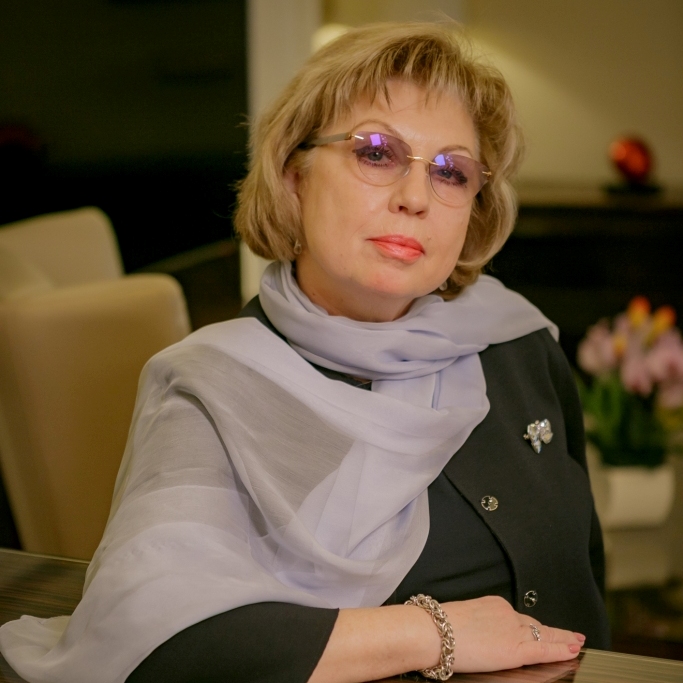
Irina Krylova: "Drivers of office real estate demand are Russian companies"
- Analysts noted the trend of recent years: prospective tenants’ focus is shifting away from large retail premises toward premises close to metro stations and located in business centers. How can this be explained and how does this tendency affect the World Trade Center?
- The trend is generated by retail decentralization. Muscovites, as of today, solve basic problems in the immediate vicinity of their place of work or residence. Each of us has experienced the extent to which our consumer habits have changed in recent years. We gradually shift our preferences to online shopping instead of going to a traditional store.
For the real estate market, this trend means less demand for large retail spaces and more demand for small office and warehouse spaces earmarked for e-commerce and customer service companies.
This trend is also reflected in the development of urban infrastructure. Residential areas and business districts are becoming more convenient due to the opening of new cafes, hairdressers’ salons and service centers, providing extra level of household comfort for city residents.
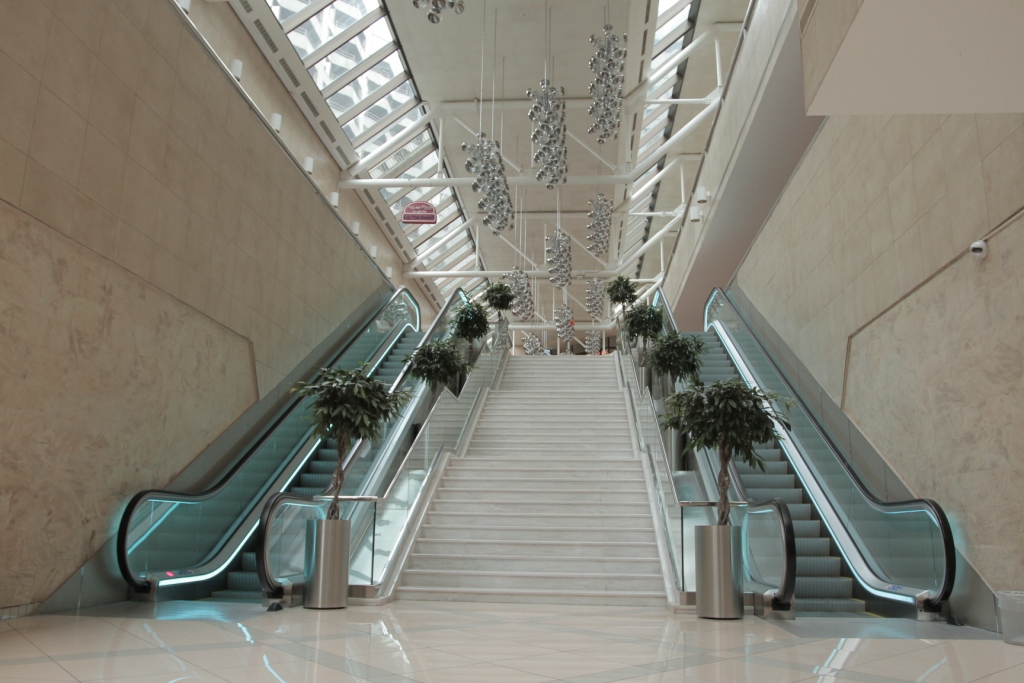
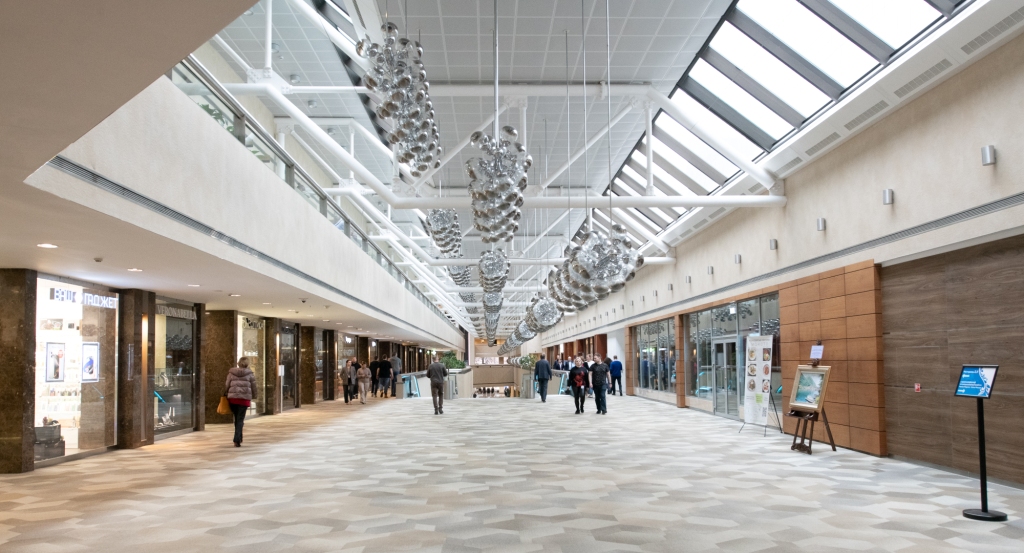
The International Trade Center (ITC) is a perfect example of this unfolding trend. There are offices and apartments for long stays, there are hotels where customers and business partners can stay during short visits, there is a vast selection of food outlets, including restaurants with national Japanese, Chinese and Korean cuisines, there is dry cleaning and laundry, a fitness club and even medical centers.
We understand that the consumers appreciate such an integrated approach to solving their demands and specific requests, so we continue to move in this direction. In recent years, the list of new tenants of the WTC shopping gallery has been enlarged by a mobile phones salon, the Lorenzo Faro men's and women's clothing boutique, the Natura Siberica cosmetic boutique, the NEOPHARM chain pharmacy, and the MIRATORG supermarket.
- How did sanctions affect business centers rental rates and occupancy?
- Prior to the sanctions, there was another happening that significantly impacted on the situation in the office market: the COVID-19 pandemic accelerated the transition of many companies to a hybrid job model, entailing a combination of office attendance and teleworking. People have been seduced by this mode of work, developed a liking for this arrangement, and many are not inclined to return to the previous model.
This trend has led to a decrease in the demand for large office space and lowered the occupancy of the existing premises. The next stage was linked to the introduction of economic sanctions against Russia, which were imposed following the negative consequences of the COVID-19 pandemic.
These occurrences had a substantial impact on the commercial space market, creating new opportunities for business development, especially among newcomers, the young Russian companies seeking to occupy the vacant market niches. At the same time, sanctions complicated developers' access to financial resources, slowing down the commissioning of new commercial real estate and limiting the supply of modern office buildings of different quality categories.
Vacancy in the office real estate market fell to a record 4.5%. It means that the choice for a potential tenant is somewhat limited. In other words, today it is problematic to find a free office in the capital that will be acceptable by such criteria as price and location.
As market players, we understand that we deal with complex demands from current and potential tenants, so our task is to be as open as possible and anticipate the whole variety of requests coming from our clients.
- Which industries remain drivers of office real estate demand, and which are reducing space?
- To put it on the record, Russian companies have become drivers of demand for office real estate, as of today. First of all, this is applicable to organizations implementing government projects and that are part of the public industry. Also, IT and telecommunications companies remain major clients in the rental market. Their dynamic development supports the growth in demand for high-quality office space.
Logistics and transportation companies show high demand for office space, too. Their growth is due to the principal demand of the economy in Russia: the country is prioritizing expansion of logistics networks and development of transport hubs.
- Are you waiting for the return of international players to the commercial real estate market?
- International companies are cautious about re-entering the Russian market due to geopolitical tensions and economic risks. The return of foreign companies will be a protracted process associated with the revision of strategies, new formats of operations, and adaptation to the changed conditions. Among the factors that could stimulate foreign players to come back to the Russian market are the possibility of building supply chains and lifting restrictions on international payments.
- In your opinion, how will real estate investments change against the background of a decrease in the key rate of the Bank of Russia and interest on deposits?
- If the key rate begins to decline in the near future, the investor’s appetite for real estate will grow. So far, it is up to the regulators to resolve this issue.
In the short term, rent pay for office spaces will continue to climb due to the increase in the cost of construction and a shortage of ready supplies.
In addition to the key rate, experienced investors are also pressured by the current risks of investing in office real estate. For example, they might face delayed commissioning of a facility and unstable demand after launch for specific facilities. Here, in addition to cost parameters, you need to take into account the locations.
- What are the key trends in the Moscow office and retail space market that you consider when managing your facilities?
- There is a surge in the shortage of high-quality commercial real estate in the central areas (downtown) of the city. Almost the entire fund of offices in the capital is booked for a long time well ahead, and it pushes up the rental rates. At the same time as the cost goes up, tenants' expectations regarding the quality of service from property owners are becoming more diversified.
WTC stands out precisely for its high-quality offers and convenient location. For more than four decades, the complex has maintained a leading position in the commercial real estate market and intends to keep it that way. The modern WTC is the intersection of many key business processes, which accommodates a high demand for rented space and high demand on the part of tenants.
We are aware of this trend and are actively finetuning comfortable working and leisure conditions for all customers and guests, introducing advanced services and technologies, such as digital transformation of facility management processes.
- What are the prospects for apart-hotels in Moscow in the context of a decrease in the flow of foreign business tourists?
- We expect that intensive contacts on the government level within the framework of BRICS, promoting cooperation and strengthening ties with Southeast Asia will ensure the influx of business visitors. The task of hospitality players is to ensure a consistently high quality of services provided for this category of guests.
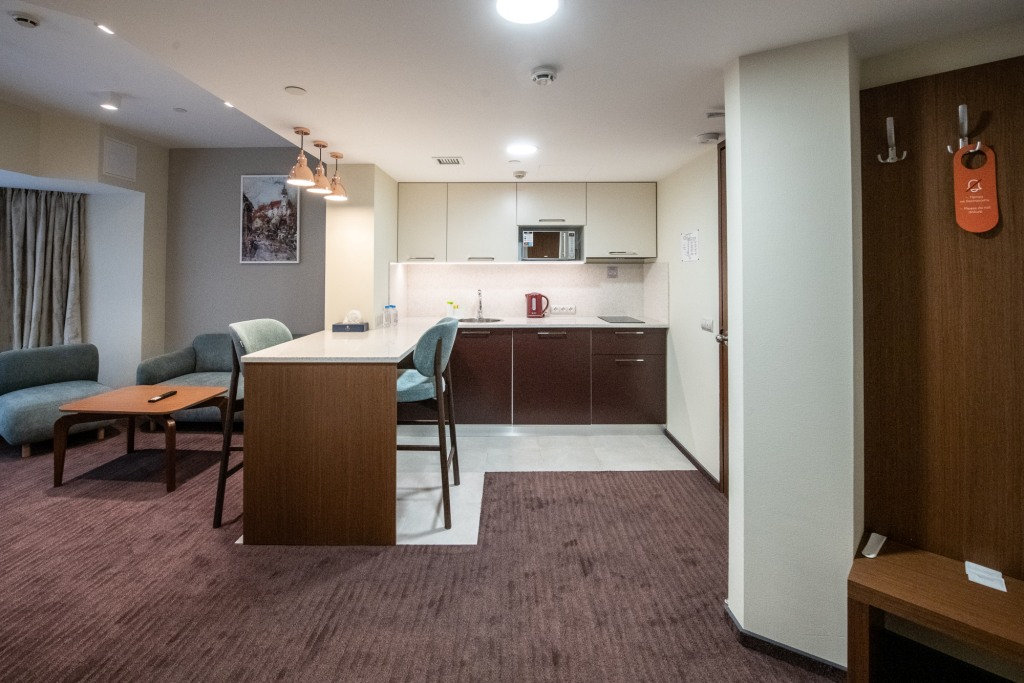
Our apartment hotel "International" (Mezhdunarodnaya) is popular with foreign guests. Many of them choose long stay accommodation. The quality of services, ITC infrastructure and security that the ITC management pays great attention to, make the apart-hotel especially attractive for visitors.
We expect that in 2025 the flow of business travelers will rise, and they would appreciate the offered chance to rally work and leisure. For them, the Mezhdunarodnaya apart-hotel, a step away from Moscow City and a short drive to Red Square, with utmost convenient transport accessibility, is the best option.
Of course, now the share of domestic Russian tourists is growing in the apart-hotel embracing not only those who came to Moscow for business purposes, but also leisure travelers from the provinces who come to the capital city, for example, for rest and recreation on a family trip with children.
In recent years, the Moscow authorities have done a great job turning the capital into an attractive destination for tourists. Today, Moscow provides a wide selection of opportunities for a fascinating vacation: in addition to the "mandatory list" of cultural attractions, there are forums, fairs, exhibitions, concerts and even wedding festivals included in the must-do list. So, in sum, we invite travelers from all countries to visit us and to combine business and pleasure.