

Russia’s Aliies — Army, Navy And Sustainable Finances
Let us remind you, that after more than two and a half years of tight monetary policy the course had been changed this summer. The Bank of Russia held the key rate at a record high level of 21% for almost the entire first half of 2025, but in June it started bringing the rate down, acting very cautiously. But at the same time the economy started sliding as well. Why did this happen?
Inflation Figures Upbeat
According to Rosstat data, released on the eve of the September key rate meeting of the CBR Board of Directors, in August the annual inflation in our country slowed down from 8,8% to 8,14%, and the monthly figure after the July surge to 0,57% had changed to -0,4% deflation. The data turned out to be better than forecasts, and many experts had expected more palpable policy easing by the Bank of Russia — lowering the “key” (this is a shorter name for the key rate, used by financiers) by 2% at once, down to 16%.
- But ultimately, the CBR made a more cautious decision, - explained Natalia Milchakova, lead analyst at Freedom Finance Global. - As subsequent events showed, this caution proved justified. “Most likely, the Board of Directors of the Bank of Russia decided not to take any risks, since in August the current price increase, adjusted for seasonality in July-August, as reported in the cover note of the regulator, amounted to 6,3% YoY versus 4,8% in Q2 2025. This indicates the impact of the rise of utilities tariffs on July 1 on the dynamics of current inflation.
Moreover, the expert noted that population's inflation expectations started to grow again in August, rising from 13% to 13,5%, though these had remained stable for two prior months”. Previously, a mid-term outlook by the CBR stated, that the average key rate in 2025 will be 18,8-19,6% per year, which could indicate either further downward adjustment of the key rate outlook or a certain strong signal to the markets that the September “key” reduction decision could be followed by a pause in monetary policy easing till the end of the year.
The cover note by the CBR says that the non-inflationary effect of the budget policy, due to the sharply increased deficit this year, had never materialized, and accordingly, the regulator will make further key rate decisions with consideration to the budget policy parameters. This could mean that in October the Bank of Russia may either once again reduce the key rate by 1%, down to 16% per year, and then take a pause till 2026, or, if the inflation picks up speed, put the monetary policy easing on hold in October.
Milchakova pointed out that the rouble reacted to the CBR key rate reduction decision by rising against quite strong global reserve currencies, and the MOEX index plunged by more than 1,2%, which probably reflected the disappointment of market players, who had expected a more visible easing. However, the situation may change in the future.
- The key rate reduction cycle is likely to continue, and this will provide support to bonds and stocks in the mid-term, — assumes Mikhail Vasiliev, chief analyst at Sovcombank. — We expect that over the next few months the deposit rates and bond yields will be going down, following lower inflation, therefore, it is now reasonable to lock in the current high rates for a long period. It is also reasonable to hold a portion of the portfolio in stable corporate bonds with a fixed coupon, long OFZ bonds and stocks.
In this regard, the development of the geopolitical situation remains the main factor of uncertainty this year, warned the analyst.
For the FX market, the CBR decision was not a surprise at all, that’s why its reaction was quite expected.
- It’s a mixed impact for the rouble, — explained Vasily Girya, CEO of GIS Mining. — The very fact of the rate reduction is putting pressure on the rouble, but this is not an instant impact, and it has been largely priced in by banks and major investors. In the foreseeable future, the base range for the dollar remains at ₽82–86, for euro — within the ₽94–98 range, for yuan — within ₽11,45–11,7 limits. Further dynamics will be determined by the balance of flows: activity of importers, sales of revenue by exporters and external background with the limelight on geopolitics”.
What’s To Be Expected For Wallets?
The key rate reduction will have a dubious effect on the lives of regular Russians — mortgages and consumer loans will get cheaper, but not by much, and deposit interest rates will continue sliding, but over a month or two these will remain two-digit, and depositors will still have a chance to make good profits.
Banking products are transforming at different rates. Deposits usually demonstrate faster response. So, according to Finuslugi service, after the CBR brought the key rate down on September 12 to 17%, the overall profitability of savings has decreased by 0,3–0,4%. Deposit yields have since gone down at 11 major banks of the Top -20.
It is curious, however, that two banks have raised their rates: one of the banks raised its three-month deposit rate, simultaneously reducing it for other terms, the other bank increased its half-year deposit rate by 0,2% and 0,4% correspondingly, and at the same time the level of rates for these deposits remained 1,3–2% lower than the key rate.
Ultimately, as per the data for September 22, the average rate for a three-month deposit at the 20 largest banks by retail deposit portfolio size amounted to 15,25% per year, for a six-month deposit— 14,33%, for a year deposit — 13,06%. Given the official inflation a little above 8%, these are still pretty beneficial conditions for savings.
The impact of the regulator’s actions on loans is stretched out: for short-term and working capital loans it will be felt over 3–6 weeks, for new consumer and car loans — on the average, a 0,5–1% reduction is possible over 1–2 months, for mortgages— selectively and gradually, because a lot depends on subsidies and bank programs.
In the opinion of Milchakova, at the same time lower interest rates on loans can improve financial resource accessibility for businesses and boost creation of new jobs, which is also an obvious consequence of the regulator's actions.
Caution, exercised by the Bank of Russia in its decision, is explained by the risks to the sustainability of the current trend of slowing price growth, against the backdrop of the seasonal factor of falling fruit and vegetable prices and, consequently, by lack of certainty that the fall dynamics will reduce the inflationary pressure.
“ - More specifically, the pace of price increases for most non-food goods that are sensitive to the exchange rate is already picking up, — stressed Natalya Pyrieva, lead analyst at Cifra Broker. — In addition, significant price growth for non-regulated services persists due to continued population income growth in a historically low unemployment environment”. Therefore, the balance continues to be skewed towards pro-inflationary risks — from the budget, labor market, higher inflationary expectation, rouble rate dynamics, - says the expert.
Moreover, further actions of the regulator may be influenced by a change in the Finance Ministry’s policy. On September 24 Anton Siluanov’s Ministry presented to the Government a new draft budget for 2026, proposing a few important taxation changes. One of the key changes is to raise the value added tax (VAT) from 20% to 22% starting from 2026. It is also expected that the tax burden on small and medium enterprises (SME) will increase too, and the preferences, introduced during the pandemic, will be canceled. It is also planned to raise fees from the bookmaking business. In addition, it is proposed to change the approaches to the simplified taxation system (STS) for individual entrepreneurs and SME. If these proposals are approved, then they will come into force on January 1 of the upcoming year.
The actions of the Finance Ministry immediately gave rise to a lot of public speculation that prices for everything would at once go up by at least the very same 2%. And though Elvira Nabiullina, Chairman of the Bank of Russia, dispelled these fears by stating that a VAT rise will not cause sustainable inflation pressure, now many experts believe that further on the key rate will be reduced at a pace, slower than expected.
Recession-Free And With Three Allies
The government's financial policy was discussed by the authorities after almost a week since the decision to reduce the key rate — during the X Moscow Financial Forum (MFF-2025) on September 19 in Manezh. According to Prime-Minister Mikhail Mishustin’s video address to participants of the event, Russia continued moving forward despite major external challenges.
“Our country has been maintaining leadership in Europe by the economy size for several years, and consistently ranks fourth in the world”, — emphasized the head of the government.
“As for financial sovereignty, it is being reinforced along the two lines — these are performance of the responsible macroeconomic policy institutions and improvement of domestic independent infrastructure, capable of providing sustainable interaction with partners from other countries and in Russia under any conditions”, — reported Mishustin.
The day before, during a meeting on economic issues Russian President Vladimir Putin asked whether the ministers considered our country's economic growth of 1,1% from January to July to be sufficient, or whether other values were required? And back in August economists from the Center for Macroeconomic Analysis and Short-Term Forecast (CMASF) stated, that the Russian economy was at risk for going into recession in 2026. The Western media every so often report about the risk of technical recession in our country, so it's not surprising that the plenary session discussion at the MFF started with this issue.
According to Elvira Nabiullina, there were no signs whatsoever of any recession, including a technical one, in our country. Making this “diagnosis” would require consideration of a broad range of factors, including the national demand and labor market status.
“Summer data shows that the economic growth continues, — underlined the CBR Chairman. — Indeed, at a more moderate pace. And it is natural, unfortunately, following a period of the economy overheating”.
Finance Minister Anton Siluanov shares this view. According to him, the economy is in “planned cooldown” mode. He reminded that Vladimir Putin had asked to avoid overcooling the economy, while simultaneously curbing the inflation by increasing disposable incomes of the population. “The main thing here is, on the one hand, not to overdo it, but also not to underdo it”, — noted the Finance Ministry head.
Commenting on the state budget status, Siluanov pointed out the importance of its sustainability. “Russia’s allies are its army, navy and sustainable finances”, — he said. And to increase the stability of state treasury revenues, it is necessary to reduce the dependence on various restrictions, “both price and volume ones”, including oil and gas. However, progress has been observed in this area for several years now. The share of oil and gas revenues next year will be around 20–22%, and it used to be about a half of the revenues. “Budget sustainability equals financial sustainability, financial sustainability equals the basic foundations for economic growth and the growth of people's well-being”, — Siluanov delivered a formula. Because of this, and in spite of the external pressure of sanctions, the government will be able to fulfill all its obligations to citizens, pensioners, large families, and other recipients of budgetary funds.
Myths And Realities Of Megacities And Labor Productivity
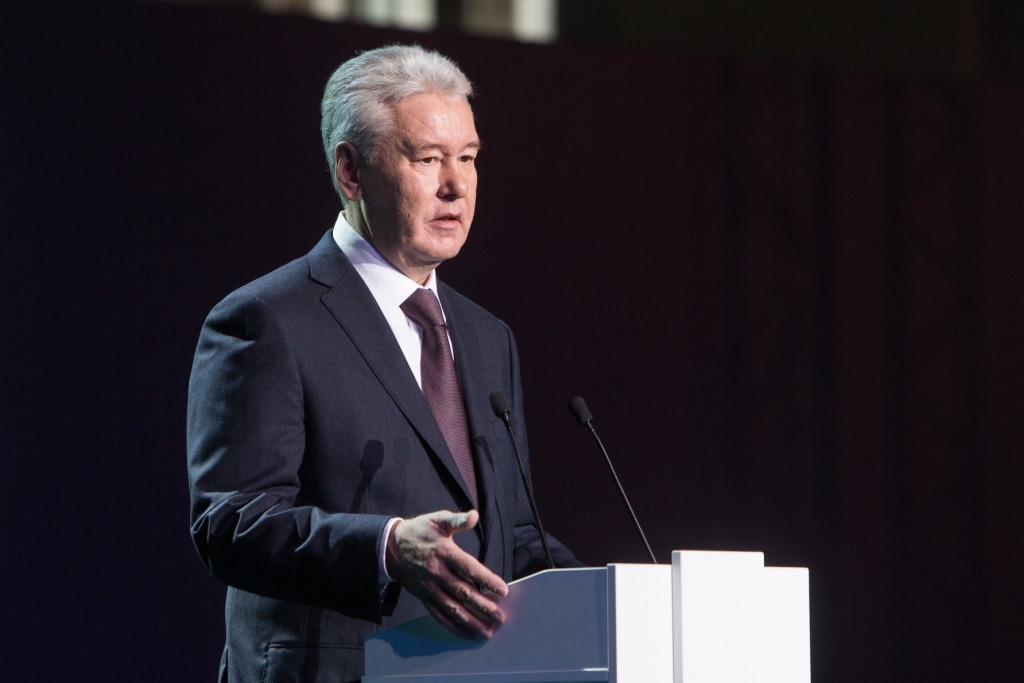
Moscow Mayor Sergei Sobyanin, who took part in the plenary session at the MFF -2025, underscored the importance of megacities for boosting labor productivity, strengthening the economy, fostering technological innovation, and enhancing global competitiveness. And leadership is gradually changing in this sphere as well: there are growing challenges in European capitals, and Chinese and other major Asian cities are moving ahead to flagship status.
- By all means, one could say: Look, European cities are stagnating, their security situation is getting worse, they have economic issues, why would we follow their example! — said Sergei Sobyanin. — This is indeed so, this is why we have to look at other leaders: Southeast Asia, Singapore, Hong Kong, Beijing, Shanghai, and so on,— they are the growth leaders of today. Keeping up with them, given their huge economy, is not so easy, this is why we in Moscow will continue to move forward as quickly as possible in all directions: social sphere, education, industrial development, transport, creative industries. As our country's economic frontrunner, a flagship, and as the last bastion in the fight for human capital, we should fight for people, so that they even after leaving their home regions do not feel themselves in a completely foreign country, so they would stay here with us. Moscow should be competing not with Novosibirsk, Yekaterinburg, Nizhny Novgorod, but with the leading megacities of the world, - stated the Mayor of Moscow.
A lot of what was said by the capital city’s mayor at the MFF-2025 is a reflection of the modern reality contradictions and myths that are widespread even in the economic science. Particularly, Sergei Sobyanin highlighted the misinterpretation of the factors behind high labor productivity across various nations. Russia is often compared to Europe in this respect, and our country has been lagging behind for many decades. However, the secret here is not that Europeans work more, but in the concentration of the population.
- Germany's labor productivity is higher than in our country by 1,7 times, — reminded the Moscow Mayor. — Have you ever seen overworked Germans? Can you imagine that our Ivan Ivanovich, a factory worker, works less than they do there? Especially in Italy with their pizza and afternoon naps? So, it's not about the amount of labor, but about high population density. Germany and most European countries have very high population density. This is why in large cities, in Moscow, labor productivity is as high as in Germany and significantly higher than the average for Russia.
Sergei Sobyanin added, that of course, Russia should not concentrate in just one megacity. In our country there are also border towns of great importance and strategically significant cities and one-company cities, however, without concentrating the population in large centers, it will not be possible to increase labor productivity. And this issue does not relate to Moscow only: there are 16 cities with the population of over a million people in Russia, noted the Moscow Mayor.
“We can come up with different activities and introduce CNC machines — we won't be able to solve this problem without population concentration anyway, —Sobyanin is sure. — But concentration must be different from crowding, people must live in a small area, but at the same time feel comfortable in terms of environment, services, and so on. Life itself and practice show that this is our main route, most likely, despite the vast territory, our objectives for preservation of this territory etc.”
- At the same time the GDP growth recipe will not change for Russia, if the country is committed to maintaining its leading positions in the global economy going forward and reinforcing its technology sovereignty, - believes Sobyanin. - Concentration of population in cities makes high-tech production possible, because megacities have the relevant institutions for personnel education and professional development, for science-intensive production.
Anna SOLNTSEVA