

International Transport Corridors: Russia Rearranging Eurasian Logistics
When There Is Strength And Opportunity
Why does implementation of this plan, comprising about 150 large projects, today seems more realistic than decades ago? Back then the need to create a national transport system for its comprehensive development, especially in its Siberian and Far Eastern regions, was all too obvious. Even some specific steps were taken back in the day – they built the Baikal-Amur Mainline, constructed highways, seaports and airfields.
There are several drivers, that make the implementation of large-scale logistics projects particularly relevant today. The primary driver is significant growth of Russia’s technology and financial capabilities
Second, further progress of the country is no longer possible without the development of the regions of Siberia and the Far East. Ultimately, the demand for the transport system of Russia for international transit is visibly growing, especially in the fast-growing Greater Asia.
National Transport Framework Strengthened
According to Rosstat, the total freight traffic volume by all transport modes in Russia in 2024 amounted to 9,4 billion tons. As compared to 2023, the traffic volume rose by 5,5%, and the volume of freight transit through the territory of the RF has been growing for several years in a row.
The growing demand for Russian transit is explained by the fact that the existing transport framework of the country has been significantly upgraded over the latest six years.
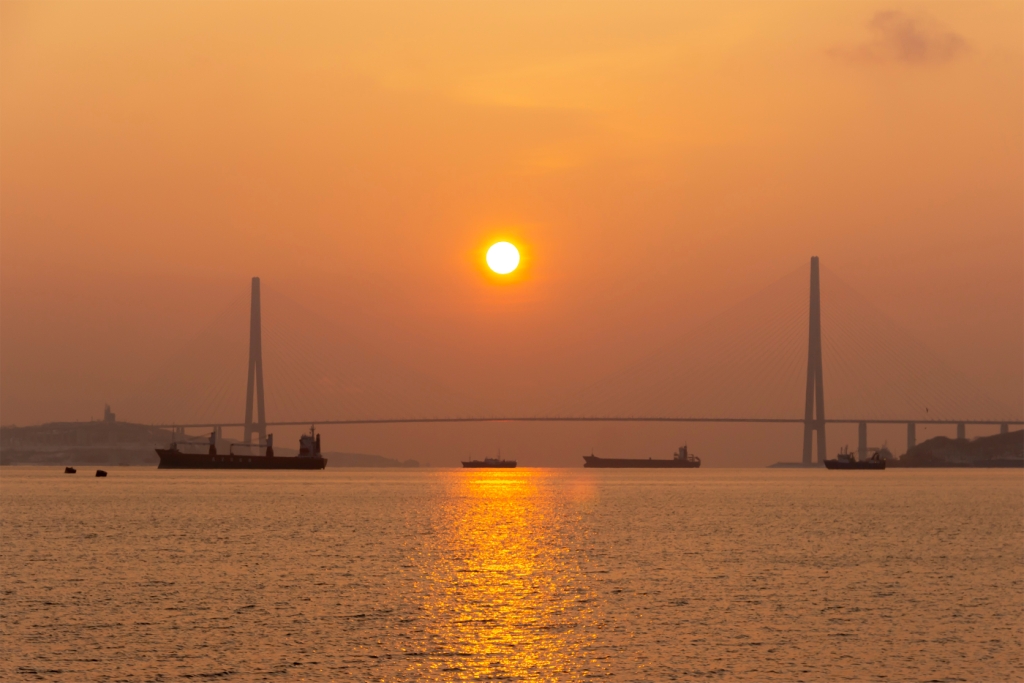
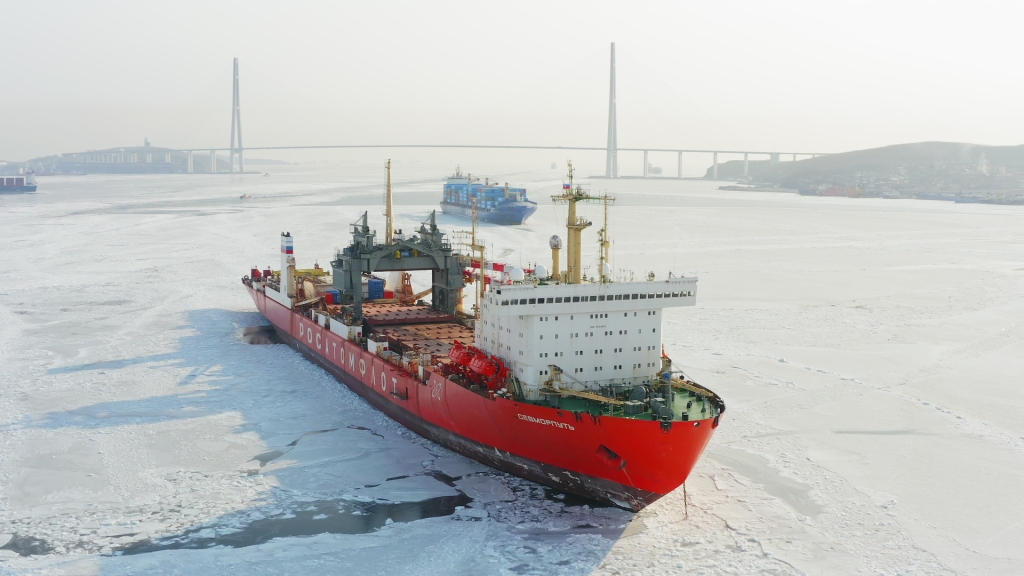
In the past few years Russia has implemented several major infrastructure projects, including construction of M-11 Neva highway from Moscow to Saint-Petersburg (669 km, ₽520 billion), M-12 Vostok from Moscow to Kazan (800 km, ₽900 billion), the Tavrida Highway across the Crimean Peninsula (250 km, ₽166 billion), the Crimean Bridge across the Kerch Strait (20 km, ₽228 billion), the Russky Island Bridge in Vladivostok across the Eastern Bosphorus Strait (3,1 km, ₽32,5 billion).
New seaports have been commissioned: Sabetta in the Arctic, Ust-Luga, Vysotsk and Bronka on the Baltic Sea, Novorossiysk and Taman seaports in the south of Russia.
The Baikal-Amur Mainline and the Trans-Siberian Railway are being upgraded. The railway infrastructure of the Sakhalin Island is being rebuilt to the Russian standard gauge.
Completion of the work resulted in higher throughput of transport arteries and improved quality of services.
Logistics companies also note a reduction in the cost of transportation in various directions and for various types of cargo. The most noticeable rate reduction was registered in the Asian direction. The cost of transportation, let’s say, of containers from China to Russia both by sea and by rail has plunged by 30–35% since the start of 2025.
“Russian transit” is also becoming increasingly popular due to higher risks at other routes: piracy, armed conflicts between countries, unjustified border closures. The Houthis are shooting rockets at ships in the Red Sea. Poland has sealed its border with Belarus shut without any warning. The explanations are ridiculous – an alleged threat from Russian-Belorussian military exercises. These exercises are held every year, and anti-tank hedgehog fences at a checkpoint won’t stop an army, should it choose to cross the border.
In the meantime, it is the Polish-Belorussian border that is used for the cargo transit by China to the European Union countries for the amount of over €25 billion per year, and this includes goods for Polish consumers. Over the two weeks of the Polish-Belorussian border shutdown, more than 130 trains from China, carrying goods for billions of euros, got accumulated in Belarus.
Warsaw failed to consider its own and Chinese losses, when it had closed down the border. They had to issue their apologies a little later, after a series of negotiations of Beijing with Polish authorities.
So, the obvious advantages of “Russian transit” would include reliability, security, cargo transit times between the West and the East, shorter than for other routes, improved quality of logistics services and ongoing implementation of digital technologies.
It is for a good reason that the transport subject was discussed at a recent meeting of the Supreme Eurasian Economic Council (SEEC) in Minsk, and at the Summit of the Shanghai Cooperation Organization (SCO) in China’s Tianjin.
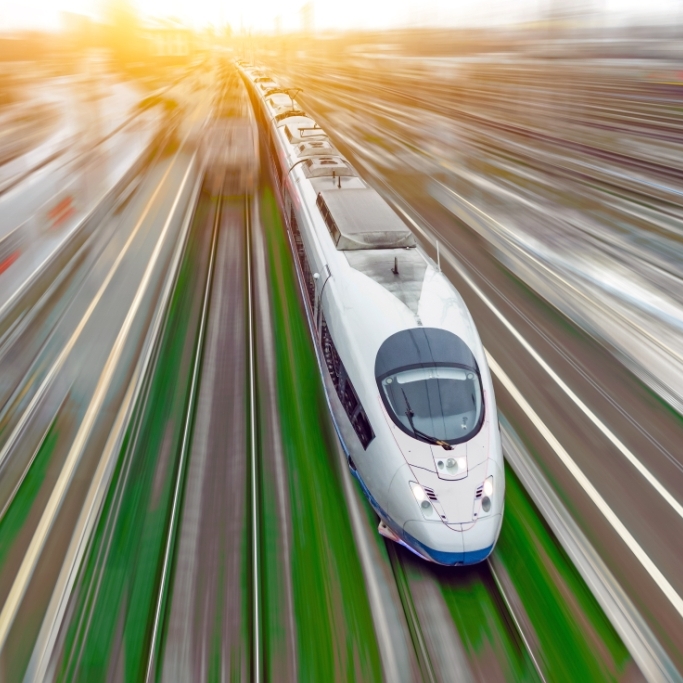
Currently Russia is focusing on its megaprojects, such as the Trans-Arctic Transport Corridor (TATC), of which the Northern Sea Route is a part; the North-South International Transport Corridor (ITC), the Power of Siberia-2 gas pipeline and the "Eurasia" High-Speed Railway between Moscow and Beijing.
These are designed to be the backbone for an integrated Eurasian transport network, including through sea and air routes, high-speed overland corridors, pipelines. These will become the supporting elements of the future Eurasian transport framework.
North To South And Back
The North-South International Transport Corridor is the shortest and most cost-effective transit route, connecting Russia, the countries of the Caspian region, the Persian Gulf, Central, South and South-East Asia.
Essentially, we are talking about three routes that are parts of the ITC.
The eastern branch goes from Russia through Kazakhstan, Turkmenistan to Iran. This railway connects with the Iranian railway in the city of Incheh Borun.
The western branch follows the Caspian Sea coastline up to Astara border point in Azerbaijan. From there, cargos are trucked to Iran and further on.
Last spring engineering surveys commenced at the Iranian Gilan Province, bordering Azerbaijan, for construction of 166 km long railway between Astara and Rasht. When the construction is completed, the route will provide for uninterrupted transit of at least 15 million tons of cargo per year from Ust-Luga to the port of Bandar Abbas in the Persian Gulf and on to India.
The third branch is the Trans-Caspian route. It uses the Russian seaports of Astrakhan, Olya, Makhachkala and Iranian ports on the Caspian Sea. Russia has invested significant funds into upgrading its seaports and dredging of fairways.
When the North-South International Transport Corridor reaches its full capacity, delivery times for goods from Moscow to the port of Bandar Abbas will be reduced from 30-45 days, if the route around Europe is used, down to 15-20 days.
Late last year Russia provided a loan for construction of the Astara – Rasht railway. The total project costs are estimated at about $1,6 billion.
Path Through “White Silence”
A transport corridor along the Arctic coast of Russia is important primarily for the development of vast territories of the country with limited access. The well-known Northern Sea Route (NSR) has recently become an integral part of a larger comprehensive project, named the Trans-Arctic Transport Corridor (TATC).
The Corridor will stretch from Saint-Petersburg to Vladivostok and will connect about a dozen of existing and new seaports into a single transport network. The TATC will give a boost to development of many remote Russian regions and could also become an interesting route for international trade.
The TATC is 40% shorter than the way from Europe to the Asia-Pacific region countries through the Suez Canal. The corridor spans over 14 thousand kilometers, and the way through the Suez Canal is over 23 thousand kilometers long. According to the Investment Portal of the Russian Arctic Zone, going through the TATC will take from 7 to 15 days, depending on the starting point and the destination point. However, taking the southern route from Hamburg to Shanghai will require 30 -35 days.
Logistics companies, using the Trans-Arctic Transport Corridor, get an opportunity to reduce transit times and save on ship chartering, ship crew payroll and fuel costs and be sure that their ships will not be attacked by anybody.
But the Arctic route still has its flaws. Cargo transit through the TATC is more expensive than via the Suez Canal. The costs involve required payments for icebreaker services and use of Arctic class vessels in winter. Cargo insurance rates are also high.
However, these appear to be temporary challenges. Russia intends to increase its icebreaker fleet up to 16 ships, thus taking care of the capacity shortage problem. There are currently eight icebreakers operating the route. Along with these, there are 45 Arctic class year-round cargo ships, with 40 more under construction.
The Rosatom State Corporation and the Chinese NewNew Shipping company have established a joint company, Northern Sea Route Shipping Line. It will build Arctic class container ships.
Insurance rates will also go down. Russia is actively developing its emergency rescue infrastructure along the TATC. Last year a new response center was opened in Pevek, and this year a similar center was launched in the year-round port of Sabetta. In the foreseeable future there will be rescue stations in Dikson and Tiksi, complete with all required rescue equipment.
The volume of investment into the Trans-Arctic Transport Corridor is forecasted at about ₽20 trillion by 2035. This amount includes costs from the development of the route’s infrastructure and its integration with the North-South ITC.
The current activities are raising interest in the TATC across the globe. First non-Russian commercial ships went through the NSR back in 2009. Today the Chinese Hainan Yangpu NewNew Shipping company regularly carries container cargos through the TATC.
In September 2025 Istanbul Bridge, a container ship set off on its first TATC voyage from the port of Ningbo-Zhoushan to the port of Felixstowe in the UK. The whole voyage took 18 days. It is assumed that these will become regular. Beijing views the TATC as a strategically significant route.
Capabilities and advantages of the TATC have also raised India’s interest. Delhi has set up a special subcommittee together with Russia. This body manages issues of development of the Trans-Arctic Transport Corridor and India’s participation in the project.
In 2024 there were 37,9 million tons of cargos delivered through the NSR. This is 1,6 million tons more than in 2023 and almost ten times more than in 2014. It is noteworthy that over 3 million tons of cargo were carried in containers, these were redirected to the North from the Suez Canal.
Way Out For Yamal
The negotiations with China on the construction of the Power of Siberia-2 (the project was initially named “Altai”) main gas pipeline have been going on for over 10 years. Last September the Russian Gazprom Corporation and the China National Petroleum Corporation (CNPC), and also Mongolia, signed four legally binding documents on construction of the pipeline. The delivery agreements will span 30 years.
The Power of Siberia-2 pipeline project is designed to connect gas fields of the Yamal Peninsula with the Xinjiang Uyghur Autonomous Region. The pipeline will go near 11 Siberian cities through 16 districts with the total population of 2 million people.
Communities in these districts have very little access to pipeline gas. For example, only 19% of Krasnoyarsk region have access to natural gas. The average figure for Russia, for comparison purposes, is 73%. The new pipeline will provide an opportunity to supply gas for housing and industrial needs. According to current estimates, this will require 6 billion cubic meters of gas per year.
Moreover, the pipeline will open a large Chinese gas market for the gas from Yamal, replacing the Western Europe’s market, shut off for the Russian pipeline gas back in March 2022. Every year Western Europe got about 32 bcm of gas via the Yamal-Europe pipeline.
Some experts estimate the costs of the Power of Siberia-2 project at $4-5 billion.
Travel Speed of 400 Kilometers Per Hour
During the summit of the Shanghai Cooperation Organization (SCO) in Tianjin Russian President Vladimir Putin and Chairman of the PRC Xi Jinping reached an agreement to launch a “Eurasia” High-Speed Railway megaproject, which will connect Moscow and Beijing. The construction costs for the high-speed railway are estimated at $150 billion.
The idea of creating a high-speed railway between the neighboring states was born quite a long time ago. Back in 2014 a relevant memorandum was signed, and it was thought that implementation of the project would take about eight years. At that time Beijing intended to invest about a third of the project’s cost.
Activities under the project were suspended in 2020, the reasons for this were huge costs, financing issues and doubts about sufficient passenger traffic.
In February 2023 President Putin revisited the project. He proposed to link Moscow and Kazan with a high-speed railway, later to be extended to Yekaterinburg, Chelyabinsk and on to Beijing through the Chinese city of Hohhot.
Currently the Russian Railways together with the Chinese Railways are preparing a feasibility study for the project.
For the time being, Russia has to try its hand in building a high-speed railway from Moscow to Saint -Petersburg. After the construction of the section from Zelenograd to Tver is complete (129 kilometers), it is planned to test new rolling stock, built by Sinara Group. The train will be capable of going as fast as 400 km/h.
The new train is also expected to be used at other future high-speed railways in Russia: Moscow – Minsk, Moscow – Adler, Moscow – Ryazan and also on Moscow – Kazan route. It is planned to go into construction in 2028 right after commissioning the Petersburg railway.
The Kazan route construction is estimated at ₽7 trillion. It will be a part of the route to Beijing. It will take the Sinara Group train 15-20 hours to get to the capital of China instead of the current 6–7 days.
Construction costs for the Eurasia HSR have not been made public, which is quite understandable, given the geological complexity of the project, unfinished design work and extended timeframes – the first train is supposed to get going in the middle of 2030s. But back in 2014 the discussed figure was $245 billion.
Despite the high costs and technological complexity of the HSR construction, the strategic importance of the railway is beyond doubt. This construction project of the century will bring orders to construction corporations, machine building and metals industries, it will turn Siberian cities into major logistics hubs, making them economic growth centers.
Construction of this scale will require operation of scores of plants, thousands of experts and building new production chains. Ultimately, the Russian economy will get a long-term growth multiplier, Russian regions will get new jobs and investment. Moreover, this is a chance to build a new logic for Russia’s spatial development. Eastern regions of the country will no longer be peripheral ones.
Alexander Chertkov.