

From Dollar to QR Codes: New Greater Eurasia Architecture Under Development
- The Shanghai Cooperation Organization (SCO) summit in Tianjin discussed the development of alternative payment systems and the use of national currencies. What projects are being focused on?
- The issue of alternative payment systems has been discussed for a long time in various formats. Russia, under the impact of large-scale sanctions against it, has already done a lot to diversify its settlements with key partners. But now the bar is raised to create a multilateral system that goes beyond bilateral trade and financial relations. The need for such a system has objectively become urgent given the weaponization of global finance by the USA and their allies. New payment systems will arise not only as a tool against the West, but rather as a way to diversify the existing means of settlement. The US dollar could still be used, but in the event of unfriendly actions there would be an alternative system available. We see a similar line of thinking among our partners in the countries of the global majority. In a similar spirit, the issue is being discussed at various venues, including BRICS and the SCO.
- QR code- based settlements, mentioned by VTB Head Kostin in his interview about the outcomes of China meetings, are viewed as a good solution for payment issues of Russian tourists in China. Can this experience be scaled up in international trade?
- Overall, VTB could be viewed as a source of creative ideas that had appeared long before crisis situations, and later turned out to be in demand. For instance, back in the day it was VTB’s top management, as far as I remember, that had promoted the idea of dedollarization, and it had been long before the “sanctions tsunami” of 2022. The idea was partially implemented, which helped soften the impact of the sanctions after the start of the SMO. QR code- based settlements seem groundbreaking, especially if scaled up to a wide range of financial and trade deals. There are some functional issues here that need to be addressed, but the idea itself could be a hit.
- The SCO summit demonstrates a growing circle of members and partners. Isn’t the multilateral cooperation of the SCO and BRICS to a certain degree “diluting” the exceptional depth of the bilateral relations between Moscow and Beijing? Do Russia and China face competition for influence over new members of the organizations?
- I don't see such competition; it is not noticeable in BRICS. Yes, there is a core of "old" members of the association, but they are not fighting for influence over new ones. BRICS itself was created as a multilateral format. Yes, bilateral relations can be discussed on the sidelines. Leaders of member countries use summits for face-to-face meetings, however, the international agenda remains key and covers an extensive range of issues. It is sufficient to review the declarations from the summits; they concern many dimensions of international life.
- How do you assess the prospects of a tripartite alliance between Russia, India and China, and which maneuvers could be expected from India, given its multi-vector policy?
- It's premature to speak about a union. Though the idea of a partnership of Russia, India and China (RIC) was voiced by the patriarch of Russia's foreign policy, Yevgeny Primakov back in the 1990s. The ongoing differences between Delhi and Beijing pose a challenge. Moscow's role here is constructive. Russia is interested in preventing any escalation of Sino-Indian tensions. In many ways, it is our country that acts as the cementing link of the RIC. The troika has serious political potential in the future.
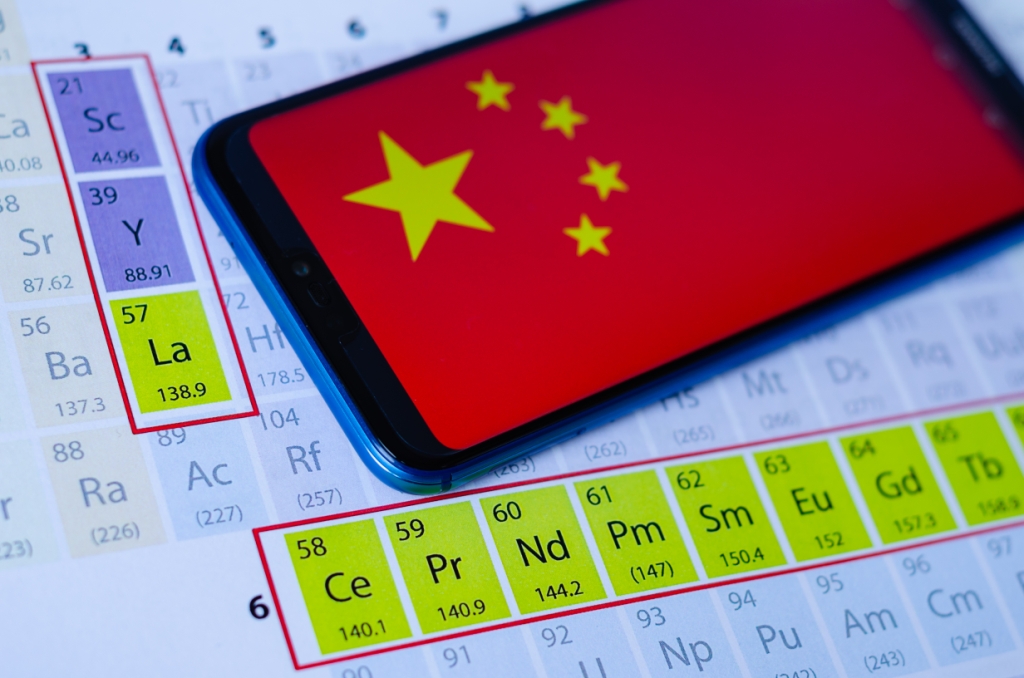
- Russia possesses vast reserves of rare-earth metals (REM), and China dominates their processing. Can this be the foundation for a common technological space?
- REM are a crucial element of economic security. You are correct, we have our own REM reserves, this is a significant resource base. Russia and the PRC can cooperate here. However, it is important to understand that the profitability of REM mining and processing is dependent on the scale of production. China is effectively the only country that has achieved a high level of production scalability, making it profitable due to production scale. There is a lot to learn from them.
- Officially, the relations between the two countries are described as an “unlimited partnership”. However, against the backdrop of a growing gap in the scale of economies and technological potential, isn't the asymmetry in this connection amplified under the model where China is an investor and a technology hub, and Russia is a supplier of resources? Where is the line where complementarity turns into dependence?
- This asymmetry has existed before, it has been highlighted by our experts. The state officials understood it well, but however, there are subtleties. Russia has a number of critical technologies, a scientific school with a long history, and a production base, including nuclear and space technologies, the military-industrial companies. It will be difficult for us to achieve leadership in all areas. Where modernization tasks can be solved with the help of Chinese investments and goods, this should be done, but at the same time, it is of critical importance to maintain leadership in the sectors that are vital to the nation's security and development.