

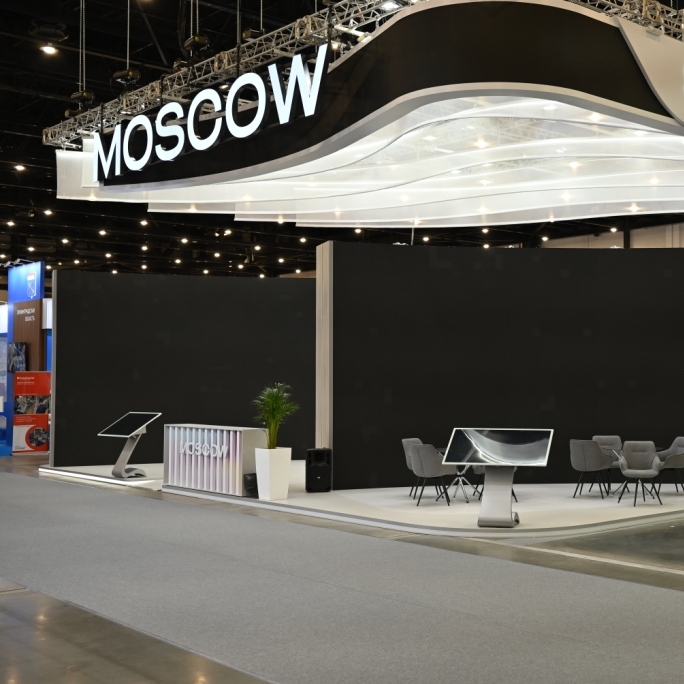
2025 BRICS International Municipal Forum
The main intrigue of the forum was not only sharing the experience on “smart cities”, but also a transition to practical integration mechanisms: a Program for Cooperation between the Government of Moscow and the Provincial Government of Havana, and also a Memorandum of Intent to establish friendly relations between Moscow and Zhengzhou were signed in Saint-Petersburg. These documents consolidate direct ties between megacities, establishing for them the same level of interaction previously available only to nations: infrastructure, transport, digitalization, culture, urbanism.
City As Economic Actor
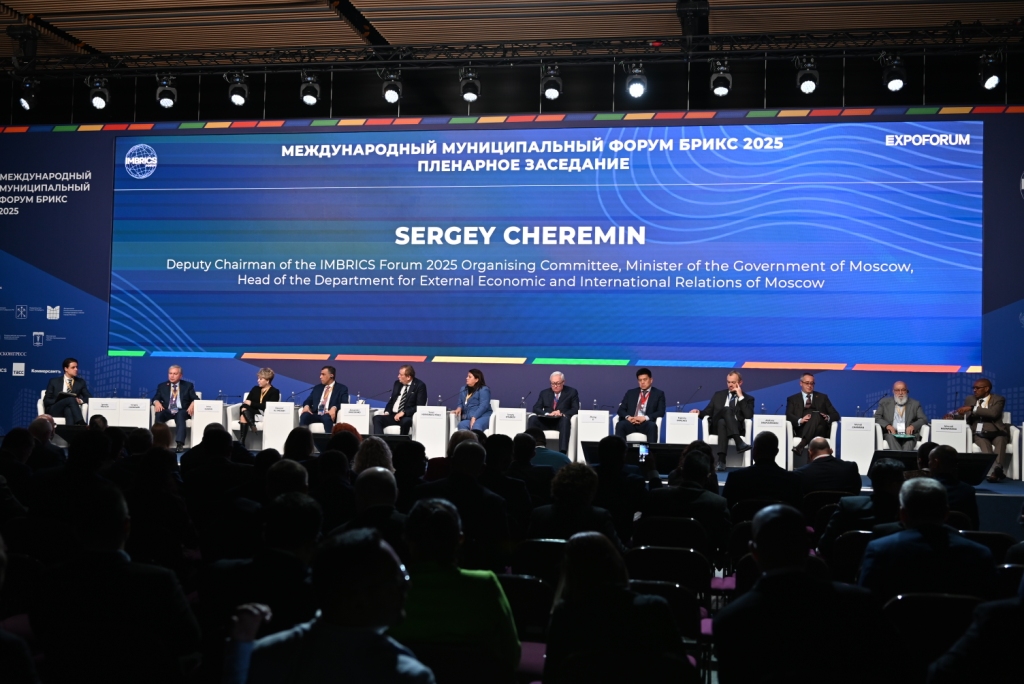
Sergey Cheremin, DEIR Head, in his speech voiced the key idea of the forum: the largest cities by scale of their economies are now comparable to individual states, and therefore, they should have their own foreign economic tools. “Moscow has over 150 partner cities and over 100 running cooperation programs, including with the capital cities of BRICS and those, who have only recently joined the organization”, — he pointed out. In fact, Moscow is building a network of municipal counterparties in Eurasia, Latin America, in the Middle East and Africa, using municipal diplomacy as a tool to support Russia’s foreign economic ties.
For Moscow's partners, the attractiveness is determined not only by the volume and solvency of the capital city's market, but also by the quality of urban policy. In recent years, Moscow has been able to demonstrate several “package” solutions at once: a comprehensive territorial development program, an accelerated transport infrastructure construction model and a powerful suite of digital services. Since 2011, the capital of Russia has commissioned more than 120 metro stations, and the Big Circle Line has become the world’s largest line. Electric buses and electric river transport are being developed in parallel. These are illustrative projects that can be transferred as a technology and as a management model.
E-Government For Exports
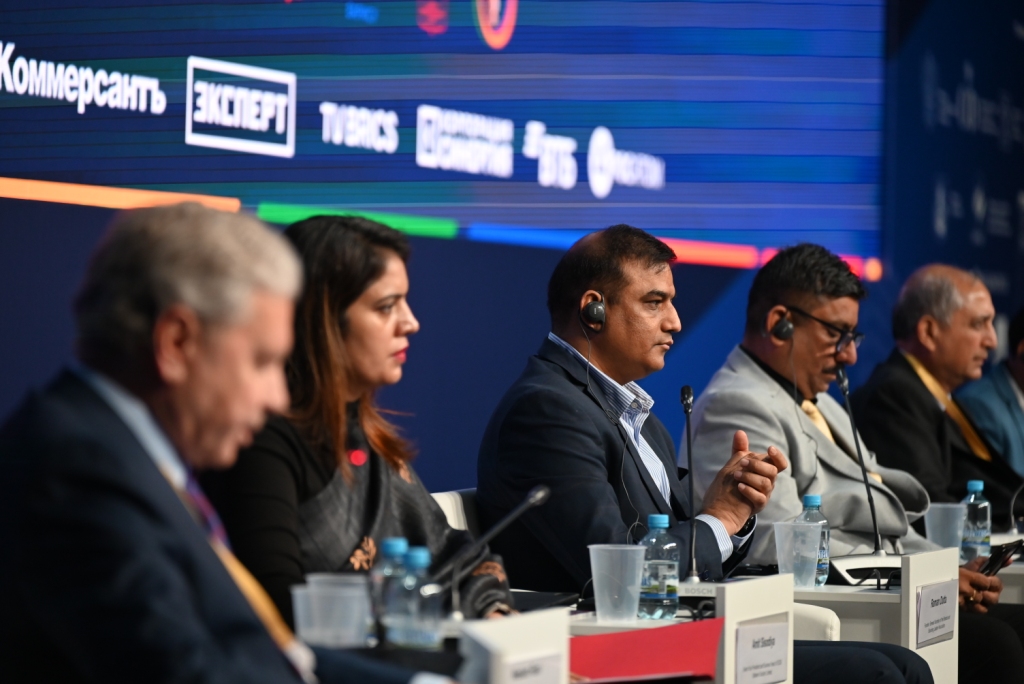
The digital part of the Moscow case attracted particular interest from partners. Moscow is a world leader in digital services, ranking in the top three, and, according to Cheremin, today provides about 450 online public services in all key areas— transport, healthcare, education. The key development is the “digital twin” of the city with over 6 thousand layers, allowing for planning of development, utility networks and social infrastructure in an integrated configuration. For BRICS cities facing chaotic urban expansion, this is a ready-made tool to reduce development errors and costs.
Alexey Shaposhnikov, Chairman of the Moscow City Duma, supplemented the technology agenda: Moscow already operates over 100 AI-based projects, and the transition to e-services has already saved about 100 million hours per year for residents. But what is important for an international audience — the capital city is simultaneously developing a regulatory framework and is ready to share it. For this purpose, a Parliamentary Movement for BRICS Capital Cities was created on Moscow's initiative, it is a forum for exchange of legislative decisions, without which the implementation of AI services and digital platforms in cities would simply bog down.
India, China, Latin America: Expanding Geography
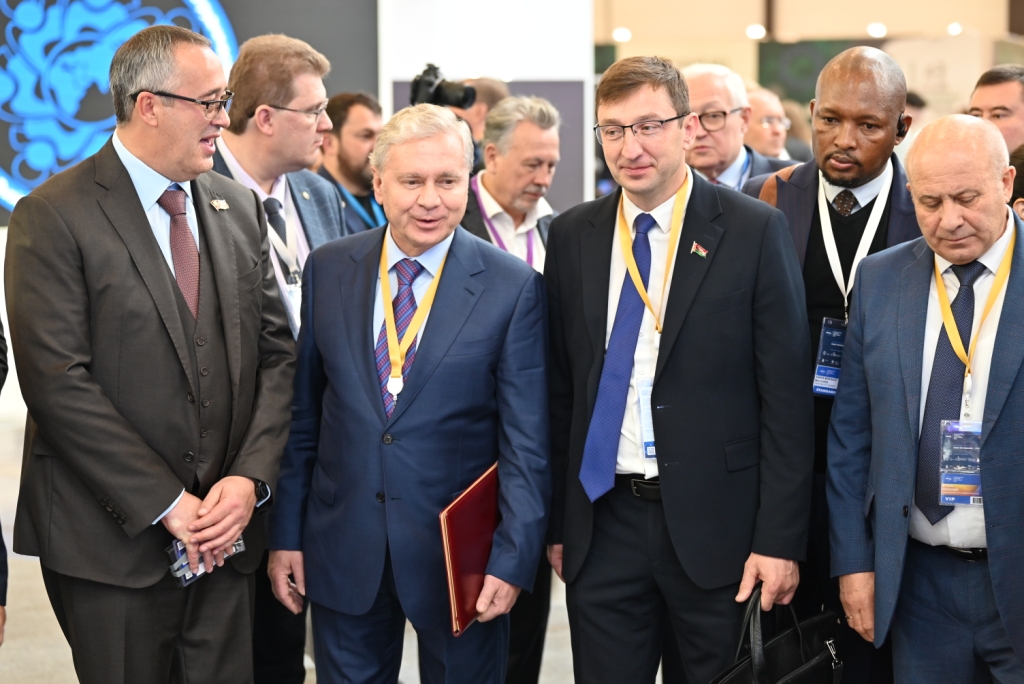
The forum also showed a shift in the geography of Moscow's priorities. At the “Russia – India” session, Sergey Cheremin noted that the trade turnover between the countries has already reached $70 billion, and India is a regular top-three foreign economic partner of Russia. At the same time, both parties recognize the imbalance in their trade structure and are looking for new avenues — tourism, textiles, machine building, pharmaceuticals. The Indian side specifically mentioned its interest in Russian IT solutions for "smart" cities and the transport agenda — Moscow is not only a technology supplier here, but also an example of a large-scale roll-out.
Cooperation with China was discussed at a special session. Moscow spoke of the landmark "Huamin Park" project, Chinese-Russian healthcare initiatives and pointed out that the foreign trade cooperation of the capital city with its Chinese partners has exceeded $104 billion. An important point for the economic magazine: over the latest years, China’s direct investment in Mosсow has gone over $2 billion, more than 300 large Chinese companies do business in the city. This suggests that municipal diplomacy here has already been converted into real investments, and wasn't limited to cultural exchanges only.
Latin American cities also expressed their interest in Moscow’s experience. Execution of a Program with Havana and participation of Governor Yanet Hernández Pérez proved that for countries of the region, BRICS is not only a political support venue, but also a way to access Russian and Chinese urban technologies. The Cuban side openly spoke about the need for "democratization of international relations" and saw city alliances as a tool for circumventing global restrictions.
Municipal Diplomacy As Response To High Funding Costs
The forum was set against the backdrop of a high key interest rate and a slowdown in some infrastructure projects at both the federal and corporate levels. Under these conditions, as emphasized by Sergey Cheremin, cities become more autonomous economic players: they have their own budgets, clear priorities and a fast management chain of command. Municipal cooperation is a way to maintain international activity, even when large business projects require more time for financial closure.
One of the forum's key sessions was aptly named "Municipal cooperation as a driver of regional integration and international economic ties." The session was attended by representatives of Havana, Tehran, Ankara, Tshwane, AIM Congress. The key message of the session was that cities are better positioned to expediently create transparent terms for investors through simplified regulations, entry points, industrial and technology park sites. And Moscow, judging by the level of interest, is perceived as a city that can quickly establish these terms.