

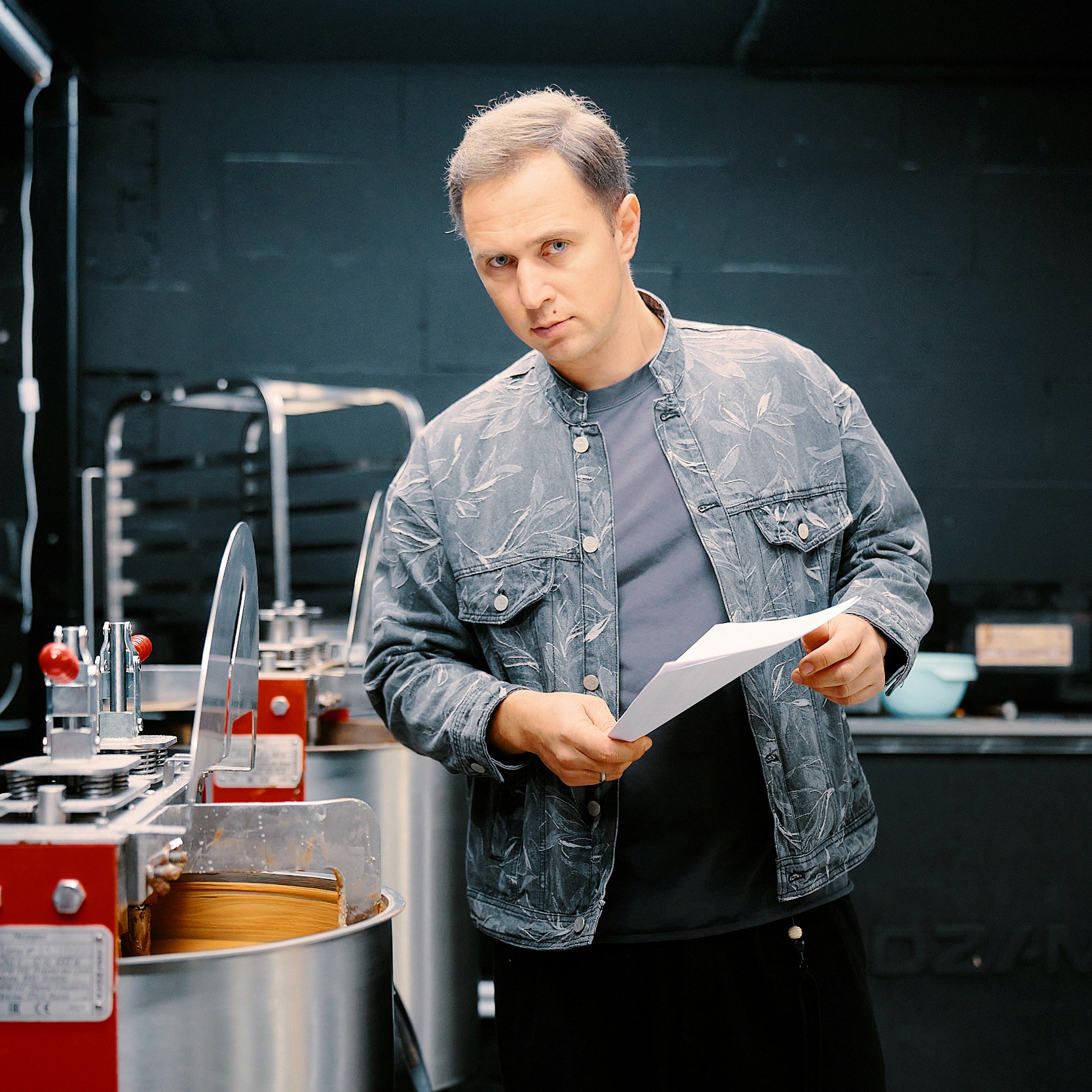
Dmitry Mateychik: “I'll spill the beans about the secrets of chocolate making”
- Is there any specific meaning to the name of your company?
- The name KADZAMA is derived from “kaizen”, a Japanese word, and completely reflects the system of our corporate values. Kaizen is a Japanese business philosophy, focused on continuous improvement. Apart from this, KADZAMA is just catchy and beautiful!
- A question for you as a professional chocolatier: is it true that "good chocolate should be expensive"?
- I cannot agree with this, since the price is still determined by the manufacturer. You can make chocolate from mediocre raw materials, but once you pack it in an expensive, beautiful wrapper, there will be no shortage of buyers. Crafty sellers make a lot of money on this, though it could happen the other way around. For example, I know small producers and artisans who buy very high-quality raw materials, and they sell their product cheap just because they haven't invested in packaging, marketing, or advertising. Such mini-factories usually survive only thanks to regular customers, perfectly aware of high quality real value of such chocolate.
- Is chocolate good or bad for you?
- Like any other product, if consumed in moderation, chocolate does not harm human health. They say that chocolate contains sugar, and that it is especially harmful for diabetics. The problem with diabetes is not the sugar itself, but the amount of its consumption and with attitude towards one's body and health. So chocolate is not to blame for anything.
- For some reason, many people believe that chocolate producers themselves do not consume it. What's your favorite kind of chocolate?
- I eat chocolate all the time, but mostly out of professional curiosity, and it could be both cheap and expensive chocolate. I often come across counterfeit and low-quality chocolate, but I taste it all with just one goal in my mind – to get to the bottom of it, to the limits, and to find the summit of the art of craft chocolate making.
- Where do you think the best chocolate in the world is made today?
- I wouldn't risk naming specific addresses. Of course, today there are such well-known industry leaders as Lindt & Sprüngli, Ritter Sport, Mars, Nestlé, Ferrero, but the world’s best chocolate could be made by a regular craftsman or confectioner, living somewhere in Africa, Belgium or in Russia. His name would be known only to a few professionals and those who love sweets. He does his job without fanfare, using high-quality raw materials and natural ingredients, and he does not shout out “I am the best!”
Chocolate is a delicacy, therefore, as international experts believe, it is mostly consumed in areas with a high standard of living and a cool climate.
Russia occupies one of the leading positions in this conditional rating. Our standard of living is quite high, and most of the country is located in cold latitudes.
- And what about the legendary chocolate bars, such as Alyonka, Gvardeisky, Zolotoy Yarlik, Vdokhnovenie, which were exported and glorified the USSR?
- Soviet chocolate was high quality, but not the best in the world. First, they had very high quality standards back then, strictly observed at such factories as Rot Front, Red October or Spartak. All of these enterprises were state-owned. If a chocolate factory made poor chocolates, consumers blamed the state for it.
The second point was the access of Soviet manufacturers to high-quality raw materials. A lot of cocoa bean growing countries supported socialism, and that’s why Moscow had guaranteed access to high-quality raw materials. Roughly speaking, machines and equipment were sent to Cuba, and the USSR got high-quality raw materials for chocolate production.
- Where do chocolate factories buy their raw materials today?
- Cocoa beans grow on cocoa trees, which are plants cultivated in the tropics of both hemispheres. The origin of cocoa is the Amazon rainforest, but today the trees are grown in subequatorial countries with a warm and humid climate.
Cocoa beans are supplied to the global market by Ecuador, Nicaragua, Uganda, Nigeria, Cameroon, Ivory Coast and many other countries with poor economies located near the equator. During the Soviet era our factories had strong ties with these countries.
- Is the equipment you manufacture capable of processing nuts??
- Our equipment allows us to make chocolate and nut pastes. The nuts are ground into a filling, which is then used either for candies, or as a standalone product like Nutella.
- You produce mini-factories for artisans. And who are those artisans?
- Craftsmen today work in small workshops in the small business sector. They have firmly established themselves, let’s say, in blacksmithing, sewing, pottery, chocolate making.
Craftsmanship is almost always about handmade products, with high-quality ingredients and small quantities of products. An artisan shoemaker will never make two identical pairs of shoes.
Any reader of your magazine, if they want, could learn the craft of a confectioner in two years and even make the best chocolate in the world. You just need to set this goal. There is nothing super complicated about producing a delicacy that meets world standards. It's much harder to make money selling chocolate.
- What does your product range look like, which equipment has the highest sales volume? Why is it unique?
- KADZAMA focuses on equipment for the production of chocolate, candies, dragees, and nut pastes.
Our products are used at all stages of chocolate production. Businesses can buy everything they need – from cocoa roasters to chocolate bar templates. New products feature cocoa bean crushers with glass viewing windows. The equipment by the company is in high demand with Russian craft chocolate makers and is exported to over 60 countries.
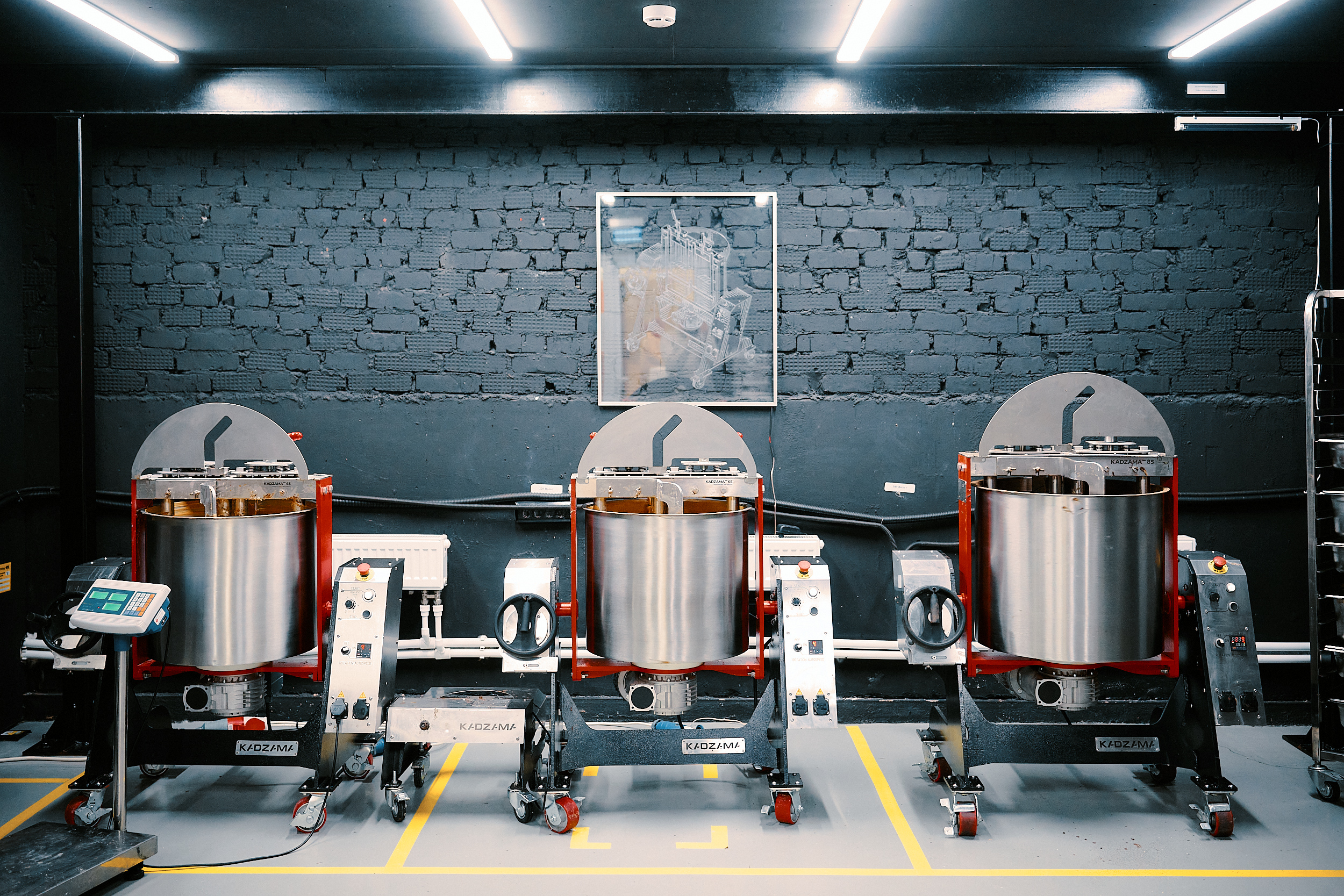
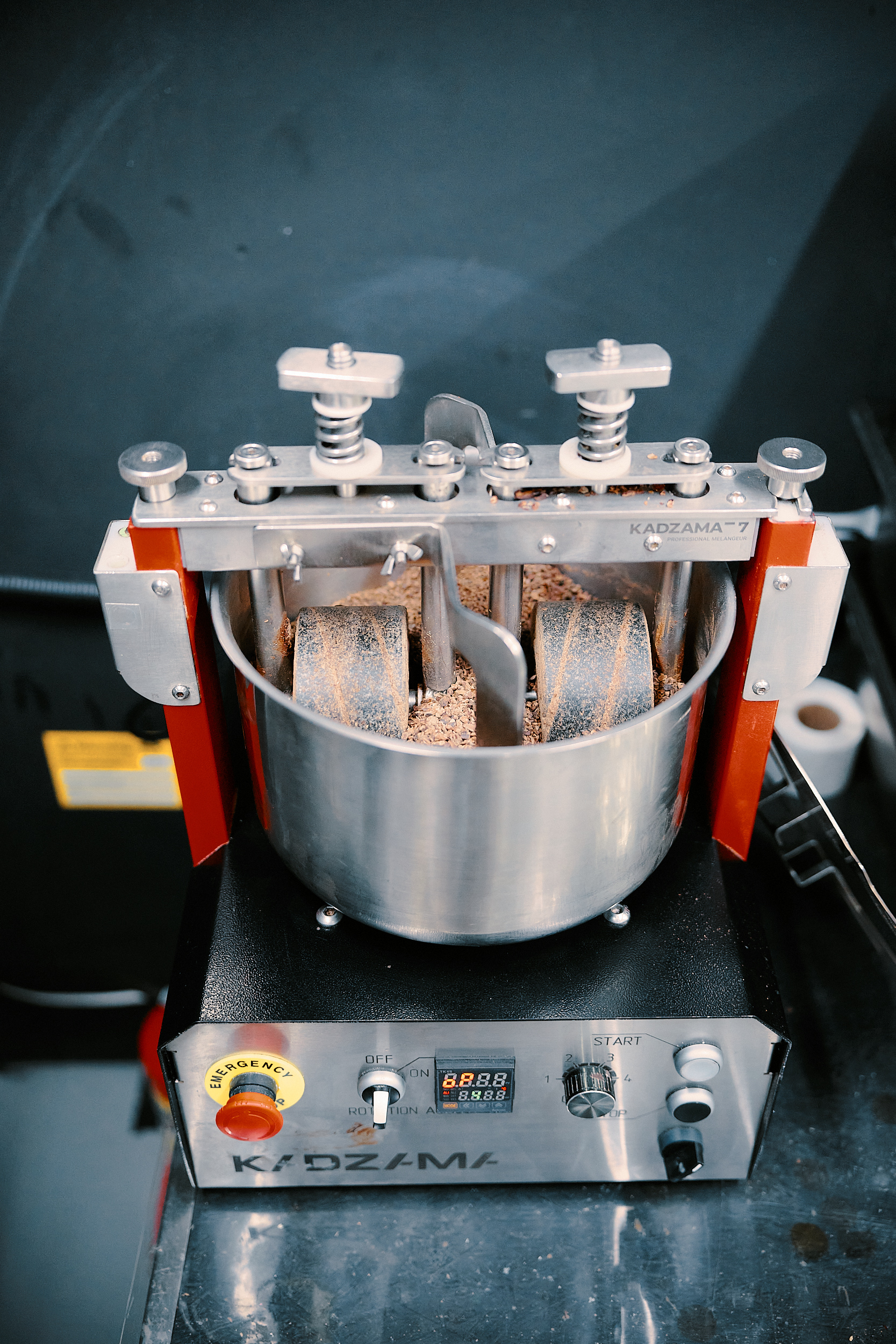
Our main product, by which we are recognized in the world, is called melanger – this is a stone mill with granite millstones. This is a standard operation: a bowl rotates, inside there are two granite millstones, grinding cocoa beans or nuts. This simple machine was invented over 100 years ago in large European factories. But since modern factories have gone far ahead in terms of equipment, and this seemingly obsolete technology is no longer viable for major chocolate factories. Nevertheless, it is of use to our mini-factories and brings hefty profits to their owners. This is what our achievement is about.
The global chocolate equipment market itself is small, so there aren't many competitors for us there. It so happened that today KADZAMA is the best company in the world, manufacturing this equipment.
- You have said that the equipment under the KADZAMA brand, made in Russia, is supplied to 60 countries. So it turns out that chocolate has not been subject to Western sanctions?
- No, it hasn’t. Literally all of Europe continues to buy our equipment - Germany, France, Holland, Belgium, Czech Republic, Spain, Poland, Finland, Norway … KADZAMA has customers in North America, the Middle East, Asia and Africa.
Our mini chocolate factories operate in Hawaii (USA) and even on the island of Reunion (an overseas department of France) in the Indian Ocean.
In Russia, small businesses are also showing growing interest in chocolate equipment by KADZAMA.
- Isn't anyone in Russophobic Europe alarmed by the fact that the equipment was made in Russia?
- Those small business representatives in the West who are doing business, working their fingers to the bone, have no time for political intrigue and insinuations. They need to feed their families, pay for education of their children and healthcare of elderly people.
- Dmitry Vasilievich, it is still unclear, why would small businesses in Belgium, France or, let’s say, in Germany, where they reputedly make the best chocolate in the world, purchase equipment from a Russian company?
- Because our equipment for mini-factories is better and more reliable in operation than that of others. These are not my words; this is what our clients all over the world think.
- You produce not only equipment for chocolate production, but also chocolate itself?
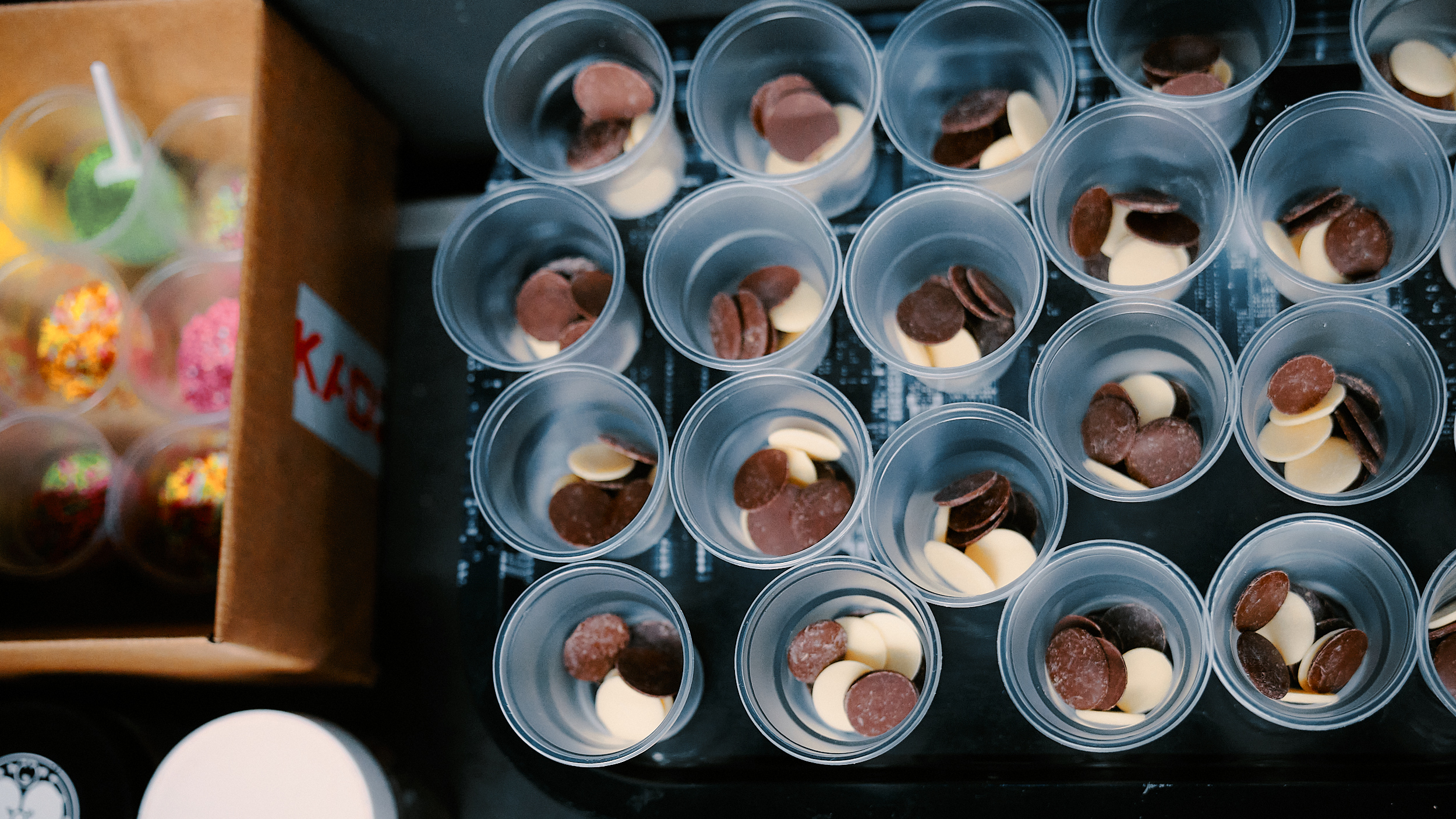
- Indeed, we call it Chocolat Frais. It has an unusual taste - a mixture of traditional cocoa notes with a hint of bitter absinthe. Chocolat Frais became a real pleasure and enjoyment for true gourmets, as did the ritual of tasting the best varieties of chocolate, which we offer during our interactive tour of our Moscow factory for children and adults.
- Where are KADZAMA’s assembly shops located?
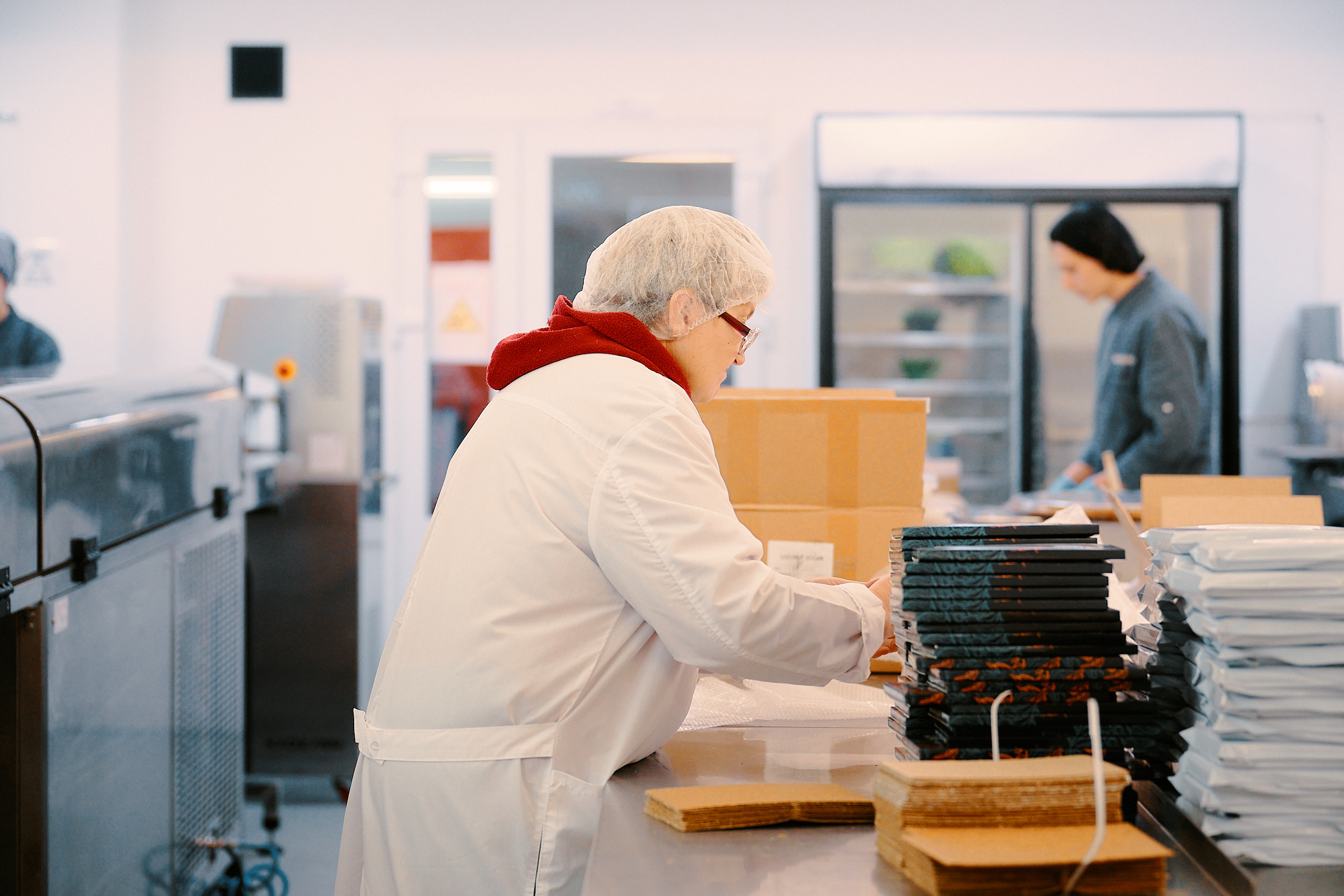
- Our production facilities are located in Tula, where we assemble melangers, crushers, tempering machines, freezers and other equipment.
The total floor area of the shops and warehouses is about 1000 m2. All in all, KADZAMA is a small business.
In our Shosse Entuzuiastov office in Moscow, we provide services to our customers and develop, conceive new equipment. We also have a small chocolate production shop, where we, without bothering anyone, conduct master classes for schoolchildren, their parents and teachers.
- You have more than once mentioned your idea – to create a global network of mini-factories under the common Frais brand. Could you please expound on this?
- My idea is that our mini-factories are not so much for producing chocolate as they are for introducing people in different countries to how it is made, which equipment and raw materials are used.
At our operating Moscow mini-factory our specialists conduct master classes and teach everyone the basics of the profession. This is a place where history, science and of course magic of the most popular treat on the planet. In other words, I want to lift the veil on the secret of chocolate making.
50 and more kids, mostly aged 6-12 y.o., arrive to us by buses, together with their parents and teachers. You know, we have not had a single adult say “It was boring!” It turns out they want to try out for themselves how to operate a crusher, a melanger, and how you can make chocolate out of cocoa beans.
We also have yet another adult audience – members of the "Moscow Longevity" club. Older people are also interested in our tours and master classes, where they could process cocoa into chocolate with their own hands.
We are becoming popular. KADZAMA is making good money on factory tours.
A similar establishment, the Chocolate Museum, has for more than 30 years remained one of Cologne's top tourist destinations, greeting more than 600 000 visitors every year.
As for setting up 400 mini-factories across the world, I believe we will do this in partnership with local businessmen in about three years. And they will operate under Frais, a common brand. Let's say there was a company in Brazil that liked our idea. We will supply them with chocolate mini-factories, and they will have to manage production and delivery of master classes. We plan to conduct online trainings for future professionals.
- What name have you picked for your “chocolate houses”?
- They will have a common name – “Frais Distributed Confectionery Factory”.
- How many of the 400 factories do you plan to open in Russia?
- At least more than half of the mini-factories will be in Russia. The territory of our country is vast and it will be easier to negotiate with entrepreneurs here than in Europe or Latin America. In any case, we have already opened the first spot in Moscow.
- How does KADZAMA intend to build its cooperation with the Government of Moscow?
- KADZAMA is young company that is not large. We have limited experience communicating with representatives of Moscow departments and the Moscow Innovation Cluster, which facilitates the development of high-tech product exports. But the fact that the MIC brings together Moscow companies ranging from start-ups to major corporations and research institutes, gives our business more confidence in the future. KADZAMA would like to be useful to Russia and Muscovites.
Andrei Sokolov.