

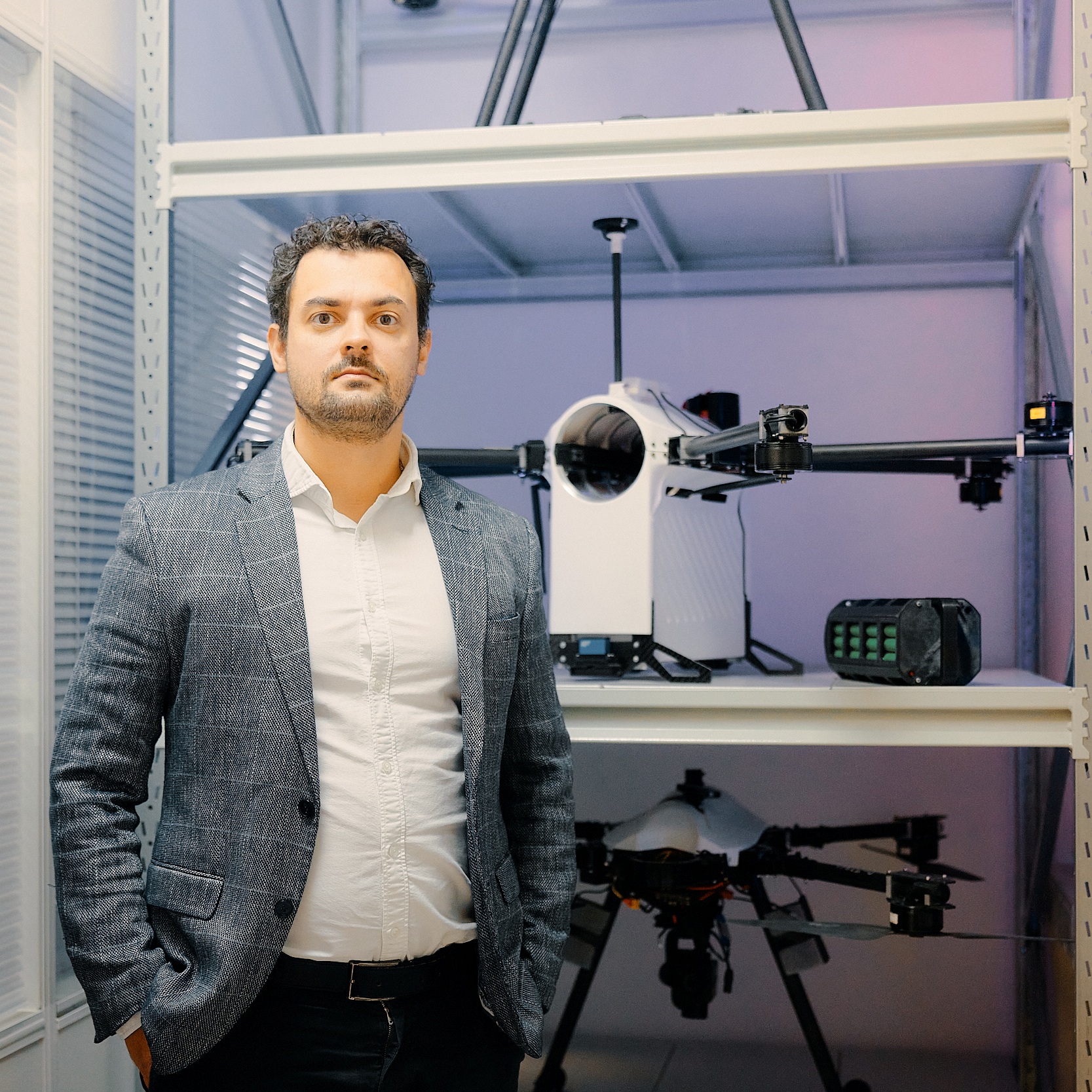
Evgeni Grankin: “There are no analogues to warehouse drones by UVL Robotics anywhere in the world”
- How did it happen that, having started a successful career in Royal Dutch Shell oil and gas corporation in 2006, you took to developing warehouse inventory drones?
- At British Shell corporation I worked my way up to the position of the head of project logistics for Russia and Eastern Europe cluster, simultaneously operating as head of the inventory committee.
Let me point out, that any major company, whether it's a manufacturing or retail company, has its own warehouse space of thousands of square meters. Goods have to be counted on schedule, and reports have to be filed with a tax office, as required by law.
Shell had six warehouses under management: cycle count was performed weekly, and full inventory, when the warehouses were shut down for three days, was conducted quarterly. Goods were stacked right up to high ceilings: to look at an item number, you had to climb to a height of more than 10 meters using a forklift and then write down the number and location of containers. It took a lot of effort and nerves.
Manual re-counting invariably resulted in mistakes. Shell multi-tier warehouses stored crates, boxes, barrels. Any inventory controller would feel very tired after two or three hundred containers and could easily register a crate or a barrel instead of a box.
One day it occurred to me that the quite tiresome inventory process could be performed by special-purpose drones. I dreamed of creating something like a remote-controlled drone, climbing up to the ceiling and using a video camera to record goods on multi-tiered racks. Back then it was a rather futuristic idea – UAVs, frankly, were not as widespread as they are today.
In 2016 I started implementing this idea of mine in Moscow, simultaneously working at the Central Scientific Research Automobile and Automotive Engines Institute (NAMI). I founded UVL Robotics two years later.
To tell the truth, it was the coronavirus pandemic, the start of which was announced on March 11, 2022 by the WHO, that helped our business grow. Starting from that day, many warehouse workers were forced to quarantine. The coronavirus caused personnel shortages: warehouse clerks were beneficially replaced by our drones. And then e-commerce got a strong development boost.
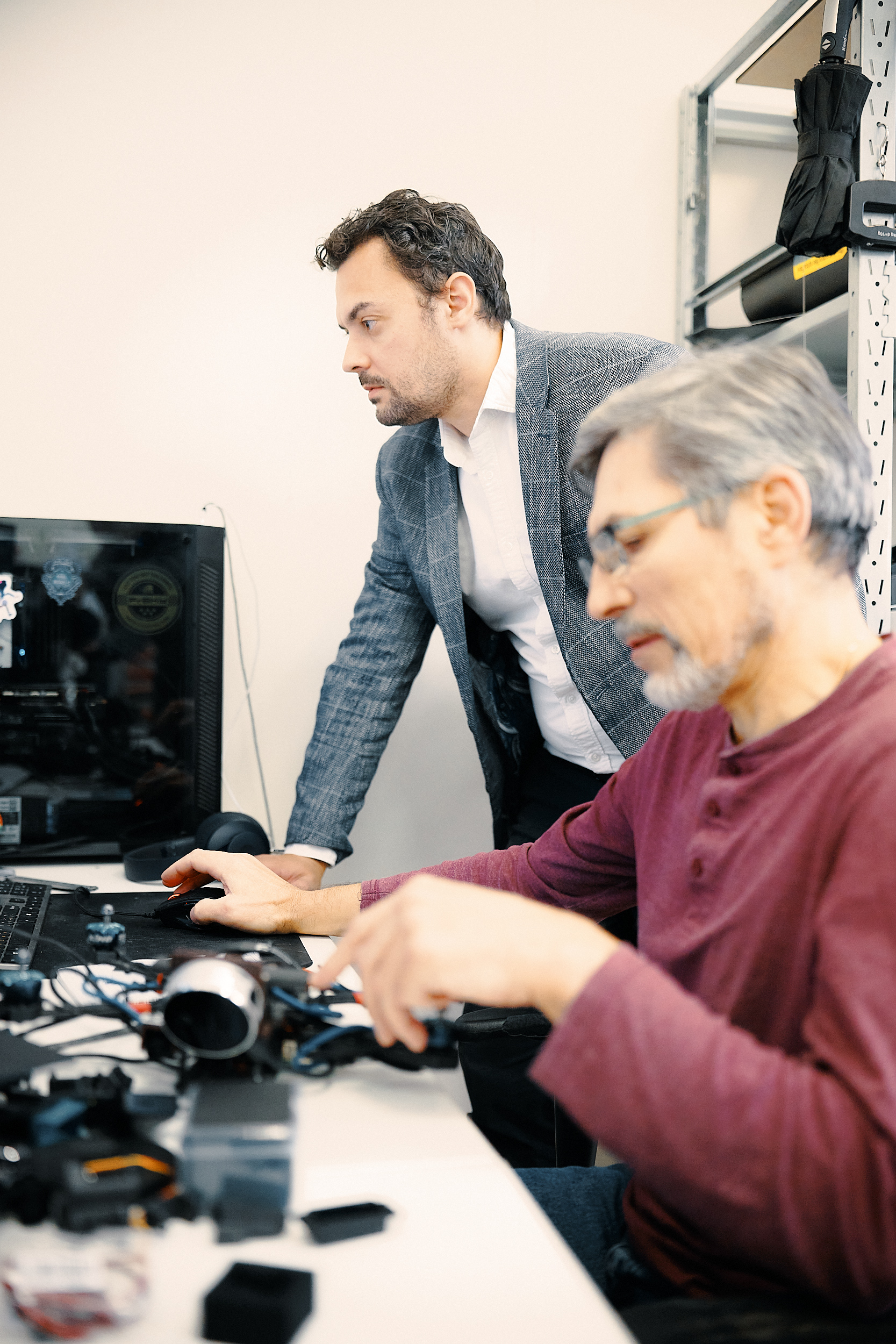
– Why did UVL Robotics decide to develop its own production of warehouse drones?
- Even today, we have to make our own drones, platforms and software (SW) due to the fact that there are still no analogues to our drones on the world market.
- Could it really be that after ten years of UVL Robotics’ operations, your company still has no competitors on the global market?
- In parallel with our proprietary drone development, I closely studied foreign markets, thinking that there were other companies in the world manufacturing warehouse UAVs. However, even in the USA, it seems, the issues of warehouse inventory never aroused interest of any developers. Though, in South Africa and France there were companies working in the area of interest to us. But by early 2020s UVL Robotics had already had at its disposal a more advanced technology, our warehouse drones had proven themselves in practice in Russia and abroad. The company got major investors, we participated in international exhibitions, received awards, and signed contracts.
Today, when the products by UVL Robotics became known far beyond Russia, our company has competitors in the West. For example, several start-up companies have been established in the United States. But, according to their customers, Americans are rushing out “half-baked” products and are not yet ready to widely introduce their solutions into production.
- Before February 2022, UVL Robotics, a small start-up company, had managed to gain recognition in America, Europe and the Middle East. If it's not a secret, what original technologies were used to create the UVL Robotics drones?
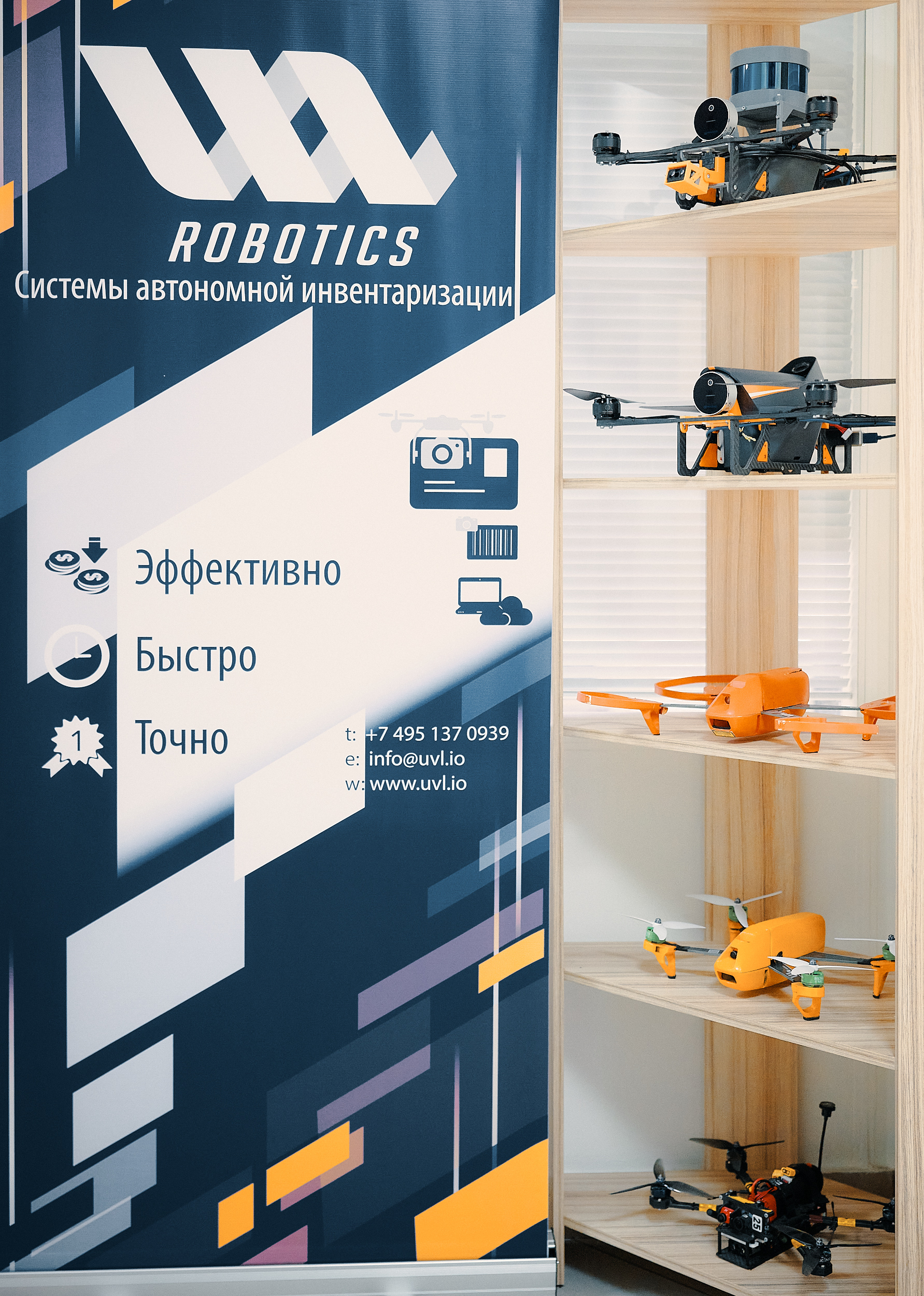
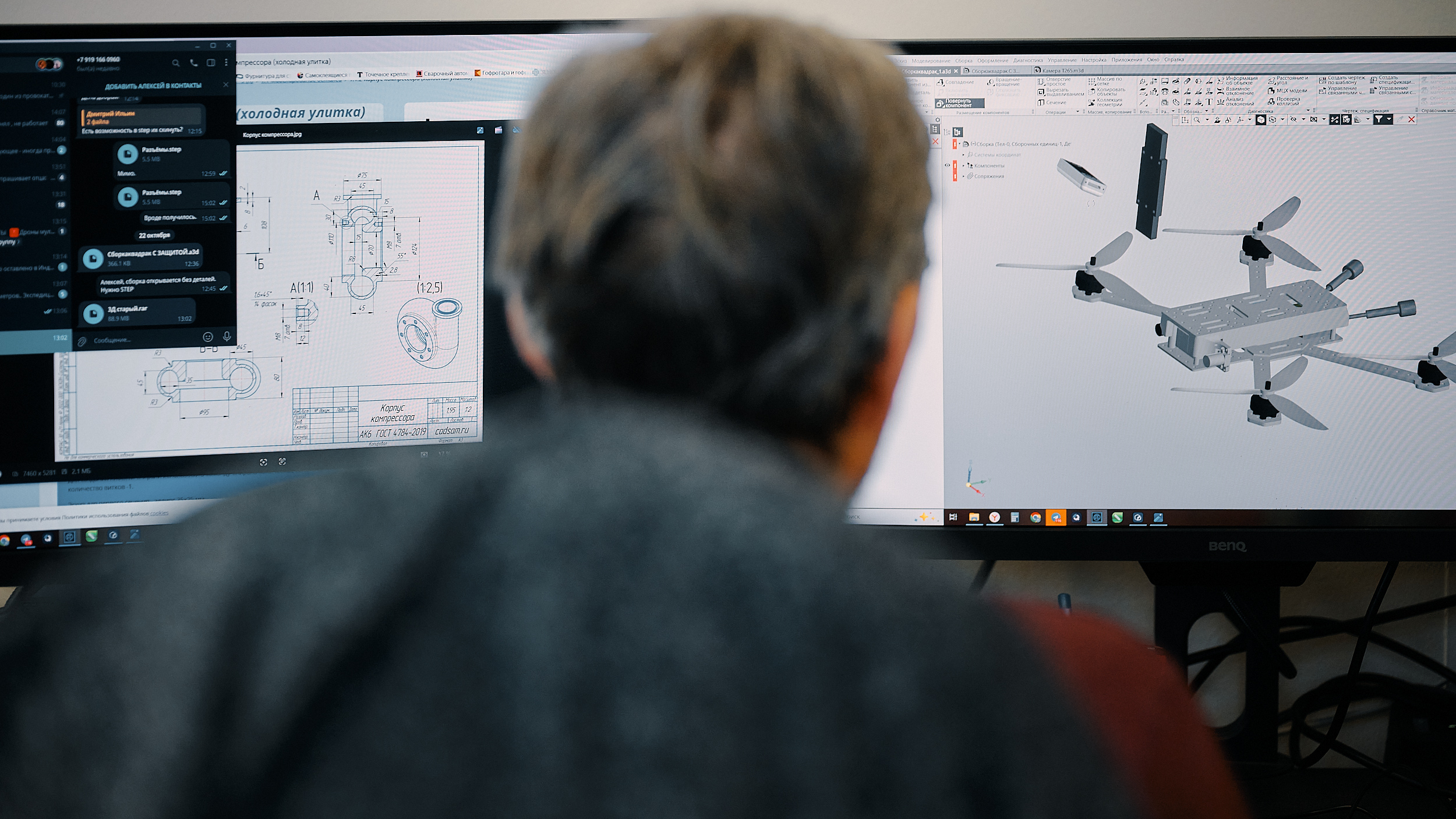
– Our warehouse drone is a multi-rotor type unmanned aerial vehicle powered by rechargeable batteries. Each UAV features a code scanning system, a high-resolution camera, an autonomous positioning system and blade protection to avoid damage to goods.
UVL Robotics’ specialists developed a neural network-based detection system, which can find a label, marking, or barcode in a camera's frame and scan it with a laser scanner in real-time. The software puts these into a single file. The file, after a drone route is completed, is exported into a warehouse management system, verifying the collected information against the database to identify any irregularities.
The second technology is local navigation. GPS navigation does not work indoors, this is why we have developed our own system, building a warehouse map for flying along warehouse racks in line with preset algorithms.
UVL Robotics offers its customers a reduction of their inventory count timelines by 50 times, improving work safety by eliminating the human factor, improving inventory count accuracy up to 99,9% and significant cutting of costs for the process.
– Which companies or organizations might find your drones interesting and useful?
–UVL Robotics classifies its customers into four groups. The first major group are logistics operators with large warehouses, providing cargo handling and storage services to end customers.
The second group are FMCG companies. For example, PepsiCo (owned by Russian Wimm Bill Dann), which prioritizes continuous improvement of their process productivity because they ship large quantities of goods to retail chains every day. Correspondingly, inventory management is a headache for PepsiCo: in routine operation mode, when no drones are used, the company is forced to stop warehousing operations for a few days.
The third group are industrial corporates, such as Gazpromneft and SINTEC, a manufacturer of motor oils. Both corporations, generally, have large product volumes, and this is why they value both fast and safe operations.
And the fourth group are retail chains or e-commerce companies. Since they have huge warehouses, high turnover of goods, fast and accurate stock count is very important to them.
- Can your drones operate outdoors?
- About five years ago we entered the inventory market for property, located at open storage sites. These storage systems are actively used by many commodity and manufacturing companies.
The solution, developed by UVL Robotics, comprises an autonomous drone with replaceable antennas, software for autonomous navigation and warehouse layout generation. The UAV is equipped with an RFID reader, capable of automatic identification of objects.
The main advantage of implementing RFID technology is that a customer can track the entire product lifecycle from manufacturer to end customer, and it is not limited to local warehouse inventory management only.
- Could you tell us how many customers in Russia use UVL Robotics drones in their warehouses?
- Today we provide services to more than 30 Russian customers. Our key customers are major logistics corporations, retailers and FMCG (Fast Moving Consumer Goods) companies.
Apart from the well-known brands that I have already mentioned, these are the Kraft Heinz Company food corporation, Kimberly-Clark corporation, specializing in healthcare products, TechnoNICOL, an insulation product manufacturer, Royal Canin, L’oreal, Dixy, owners of major food retail chains, Metro Cash & Carry, FM Logistic company and others.
- Despite the sanctions, are you continuing to successfully develop your business abroad?
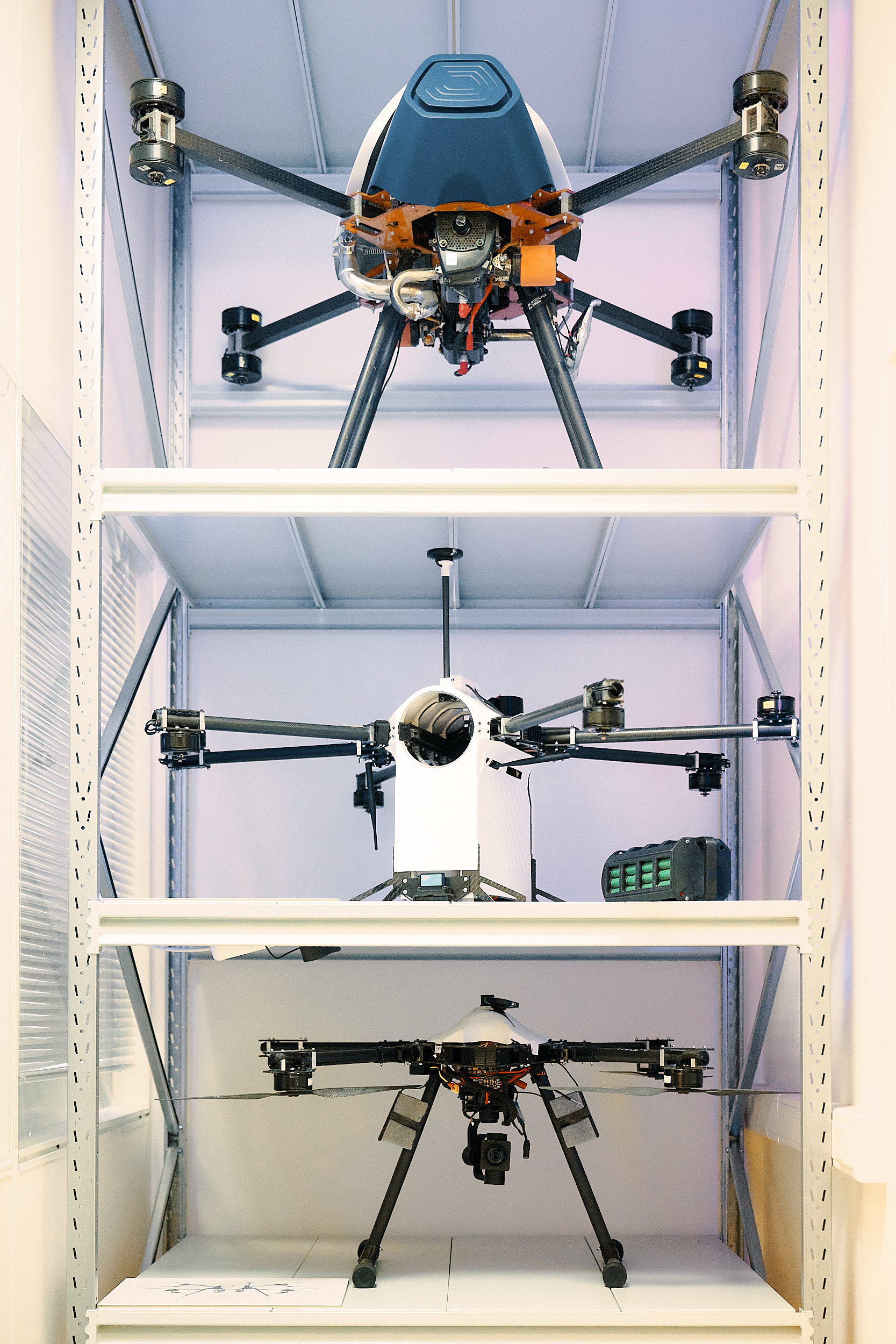
- For obvious reasons, UVL Robotics does not work directly with the USA and Europe. But we have made great progress in the Middle East, particularly, in Oman, where our company is developing a new line of business: autonomous delivery of cargo and mail using drones, as well as transportation of spare parts for industrial equipment to hard-to-reach areas.
I would like to note here that in many Western countries we have encountered severe restrictions from regulators, for example, bans on overflying cities, flights near airports and highways. Then we decided to go a different way and turned our attention to the Sultanate of Oman, where the government and the business did not mind changing the existing standards to implement autonomous delivery to remote regions of the country.
In 2018 we were able to provide unprecedented support to the people of Oman after a natural disaster – we had managed to deliver medicines to locations inaccessible to any standard means of transport. UVL Robotics turned out to be the first company in the Middle East to be granted an official permit for delivery by drones in the Sultanate of Oman.
We performed drone test runs in the Arab Emirates – in Abu-Dhabi and Dubai, and also in Saudi Arabia. A prospect of working in warehouses in India and Brazil has emerged, major companies from South Africa, Ethiopia and a number of other African countries, are interested in cooperating with us.
Recently Skolkovo hosted an “Unmanned Systems” international forum. On the sidelines of the forum, we signed a memorandum of cooperation with a number of major Ethiopian companies, interested in implementing the same technologies by UVL Robotics that are used in Oman.
During my latest trip to the PRC I had visited 10 large plants and it turned out that the Chinese do not have any warehouse drone technologies. So, I believe that great opportunities are opening up for our company at the domestic market of China.
- How successful is your company in the CIS countries?
- UVL Robotics operates in the CIS countries through its partners. These are small markets for us, though there are warehouse logistics customers there. But delivery prices are very low and there are significant restrictions on drone operations. This is why investors are reluctant to risk their money on development of this business. So let me be frank: it would be inexpedient to set up a whole drone fleet in Kazakhstan or Uzbekistan.
- How much weight can your drones carry?
- Now they can carry up to 100 kilograms. But we have started focusing on the most mass-market segment: parcel delivery and e-commerce. If we look at the statistics of international express delivery companies, UPS, DHL and FedEx, for goods and documents, then 80% of all deliveries are packages up to five kilograms.
- Do your technologies provide for any special drone landing and takeoff pads? What can you say about safety of the drones?
- Another advantage we have is that we have created a special drone landing pad, which is also a smart parcel station (or a parcel locker). High-precision sensors guide drone landing, and then a parcel is automatically unloaded. Then it sinks into the locker and into a relevant section. Then an end customer comes to pick it up at a convenient time and retrieves his parcel in three minutes at the most. And we are also not wasting any time on recharging – a robot would automatically replace the battery, and that’s it, the drone can fly along.
Our second advantage is that we have learned to make safe drones. There are three most important concerns in the Middle East: privacy, reliability and safety. Privacy means no cameras on a drone, so you do not violate any personal space when flying over houses and villas. This concern is of the utmost importance in the Middle East, though many companies disregard it while chasing profits.
UVL Robotics’ developers take the safety issue very seriously: a drone, flying over a city, over mosques, over people should not create any issues, noise or discomfort in an urban environment.
- World practice shows that drones around the world crash for various reasons. The question is, how do they fall? How do your drones fall down?
- Our drones fall down too, but with a parachute and a soft landing system, in a special designated area. Even if a motor locks up or the electronics malfunction, our drone would land within the closest perimeter in a safe zone, away from people. These safe waypoints are input in a drone’s mission.
- The New Scientist, describing American drone operations, reported that developers had an idea to set up a collision avoidance system for UAVs …
- This is where Americans are lagging behind Russian developments! Each UVL Robotics drone is equipped with a collision avoidance system. When the global airspace will be buzzing with thousands of UAVs, making deliveries every day, it should be understood, how these drones would communicate between themselves, interact with small aircraft, fly around skyscrapers. We are working in this area now.
- The weather in the Arabian Peninsula is hot. How are Russian drones doing there? Are UVL Robotics’ drones designed to operate in cold conditions?
- June to September is the hottest season in Oman. During the day, the air temperature can reach +40–45 °C, and the humidity increases significantly. Of course, the developers were immediately faced with the task of adapting the drones to work in tropical desert climates. First of all, we had managed to solve the issue of cooling the device. Today our drone with a pre-cooled battery can fly a pre-set distance and land on a smart parcel station, which has a cooling system, enabling the drone to restore necessary conditions and fly further on. In addition, due to the heat, flights have to be limited to 15-20 minutes.
Just recently UVL Robotics has conducted a demonstration inventory count at a METRO warehouse in Noginsk, where drones operated in spaces with varying temperatures, down to -24°C in a deep freeze warehouse. Our drone tests had shown that they could withstand even lower temperatures.
- Evgeni Dmitriyevich, your company is constantly expanding. Where do you plan to get a whole army of skilled professionals, capable of controlling drones?
- In Oman UVL Robotics local representatives select local Arab candidates. No special IT education is required for candidates. They will be trained to operate our equipment.
Today we already have the employees whom we consider our partners. The local staff are very enthusiastic about performing their duties and they like their job.
I'll tell you about Said, just one of our technical managers, who is an Omani. Said is the head of the drone fleet service team – workers repair and tune up UAVs. You can count on people like him.
- How successful is the cooperation of your company with the Government of Moscow?
- The results of our cooperation are clear. Since 2018 the company has been a resident at Skolkovo, which is currently managed by Moscow. They know UVL Robotics technologies and products very well and trust us.
In 2021 the company got a large grant for the development of a hardware and software system for warehouse inventory control. This money helped us to create the warehouse drones that currently operate at many indoor and outdoor sites in Moscow.