

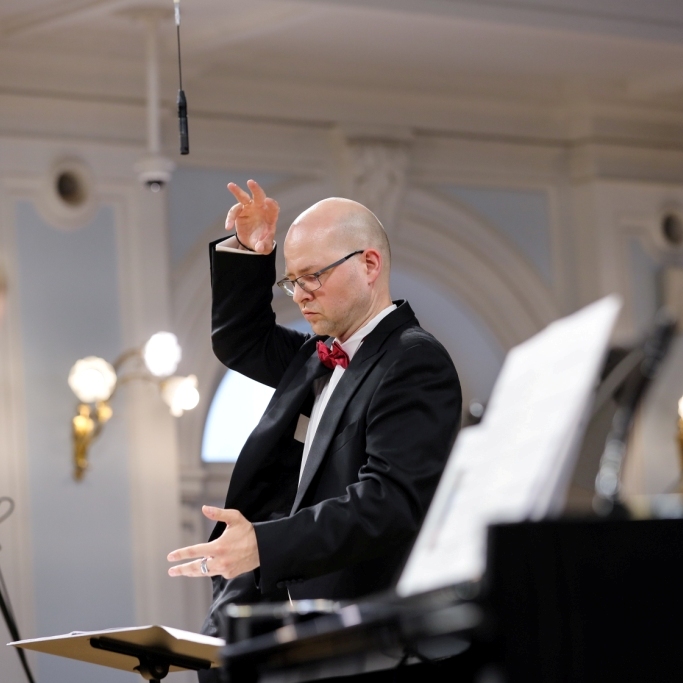
Vladimir Naumenko: “Choral Singing Is Beneficial For Human Health”
Here is the question that has been torturing me since childhood: do choir singers, when they sing in Italian, just memorize words, or do they try to understand what they sing about?
It all depends on their professional skill and conscience! Naturally, if we speak about art, then performers must understand what they are singing about and what they should convey to viewers and listeners. “In the beginning was the Word!..” – it is an all-encompassing quote…
Art, especially choral art, is rich in meaning and has always had a beneficial effect on people. I am still shocked when some students even in Russian language sing a set of notes and letters, rather than a piece of music.
As I see it, the key task of a teacher is to ensure conscious engagement of students with music. A composer puts a part of his soul into each piece, his experiences and feelings at the time of creation. And we as performers have to try to convey all of these to our listeners.
Does it seem to you that people in Russia have been singing less lately? Previously songs would sound from every window …
I totally agree with you! Now people express their emotions in a different way. And singing used to be a natural thing, this was the general popular culture. During the Soviet era almost any plant, any organization would have its amateur choir. People got together, sang songs, got acquainted, communicated, made friends. Singing used to unite, support and develop the society. And there also were amateur talent shows, which had the spirit of competition. The country was singing away!
Lately, of course, there have been some positive shifts towards development of the choral singing movement in Russia: the All-Russian Choral Society has been reestablished, there are all-Russian choir festivals now, many non-music universities have their own choirs, the “Movement of the First” All-Russian Public-State Movement of Children and Youth has its own choir now. But there has to be more support for collective singing. Singing is the most popular and accessible form of musical creativity.
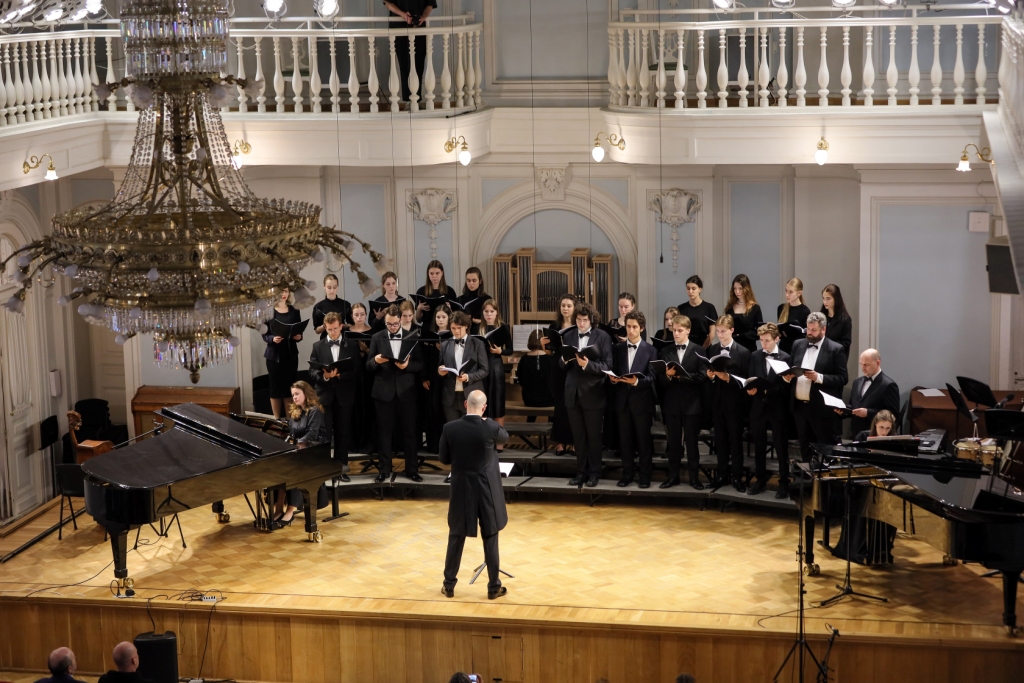
Vladimir Nikolayevich, you graduated from the Ippolitov-Ivanov GMPI, Choral Conducting Department. You know choirmaster trade very well. Now you are Vice-Rector for Academic Affairs at the GMPI. Who do you consider yourself to be by calling?
On top of everything you have mentioned, I also teach choral conducting classes. I have been trying to convey my skills, knowledge, and experience to new generations of conductors for almost 20 years.
A conductor is a musician who has to be able to manage a group of musicians, it is a must-have… This is why my creative professional skills enable me to perform administrative activities at the institute.
And I believe that my calling is my work for my alma mater – the Ippolitov Institute. When I completed my secondary professional education within these walls, I had a choice whether to stay or to go to other universities, including the dream of most musicians – The Moscow State Tchaikovsky Conservatory. But I made a well-considered decision to stay and to contribute to the department and the institute as a student, and then it so happened that I had started working there. This is how I've spent over a half of my years here.
People often have only a vague idea of what does a choirmaster do, what are his duties and how is this different from choir director?
A choirmaster performs a wide range of responsibilities, starting from review of new works to honing performance nuances, highlighted by a conductor. This is very painstaking and important work, crucial for success of the entire project. In a way, a choirmaster is like an apprentice.
The master is a choir director (conductor), who determines the global vector of working on a concert program, interpretation of pieces and then performs it together with a choir on stage.
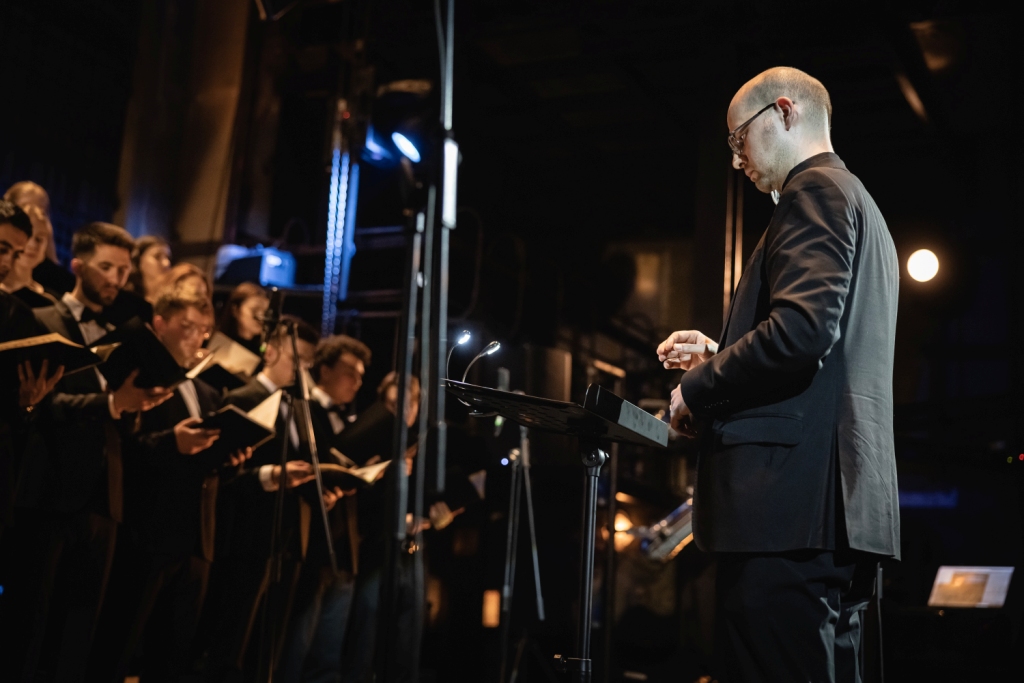
Where would one go today to study to become a choirmaster? You hardly dreamed of becoming a choirmaster when you were a kid?
Almost every music college and institute has a relevant field of study, but people follow different paths to get to it. Some consciously aim for it, others choose it out of hopelessness, and some initially know very little about this occupation.
When a child, I just loved choir singing and never even thought of getting to a conductor’s stand. I started out with accordion, and it had been the choice of my parents. In high school I realized that after the 9-th grade I would not go on to the 10-th, but would follow my elder brother and enter a music college to continue doing what I liked. This is how it all played out. And then, prior to applying to the institute, there had been several meetings and events that turned not only my professional, but my inner world upside down, and here I am – choirmaster and conductor!
Can a choir exist without a conductor? It seems that professionals only need to be at several rehearsals, learn a piece and then they could perform on their own. Is this true?
So many men, so many minds. That’s the same with music: some performers understand and feel a piece one way, and others would perceive the very same piece differently. A choir is a team of like-minded people, applying their music abilities in a common direction. It is the conductor who determines this direction and convinces the team that it is the right direction. If there is no conductor, then it would not be a choir, but a hapless trio from Krylov’s fable…
You are Vice-Rector for Academic Affairs and professor of the GMPI. What do you like more – the administrative or the teaching role?
- You bear certain responsibility for each of these activities, and it differs for these. Maybe, it would be easier to be responsible for teaching your class only, due to fewer people you are in charge of. And being vice-rector of the institute is harder, but it brings me more satisfaction from resolving more global and complex tasks.
I like being able to contribute to the most of my ability.
What can you say about the level of training of Ippolitov Institute students? Did you ever expel anyone, let’s say, for inaptitude?
The basic level of student training is always different, most students strive to develop and even get ahead of those who had been better at the start of their training.
I have never had to expel anyone from my class, but I have done this at the institute level.
Have you ever met people with perfect pitch? And what is perfect pitch?
Yes, I have, moreover, this year a student from my class, who has perfect pitch, completed her education.
There is this tool – a tuning fork that defines the reference pitch of a specific sound and is used by a conductor to set the key for a choir to sing a specific piece of music. So, there you have it, these people actually have this tuning fork integrated into their hearing, and they can identify the key with absolute precision.
Please tell us, how was the GMPI Chamber Choir established.
In 2003 Stanislav Gusev, leading choir conductor, artistic director of the Yurlov Russian State Academic Choir, People's Artist of the RSFSR, professor, called professor Galina Bogdanova, Honored Artist of the Russian Federation, head of our student training choir (at the time she was the Vice-Rector for Academic Affairs at GMPI) and proposed the choir to perform together with the Academic Choir in philharmonic concerts. This was a traditional practice to bring professional and student choirs together, used by Alexander Yurlov himself. The Choir got young voices, and students got priceless experience of professional performance with outstanding symphony and choir conductors, singing monumental masterpieces by domestic and foreign composers.
We needed to give a name to our choir to be printed on concert posters. Our team was small, only about 30 people, and it was decided to name it the Ippolitov-Ivanov GMPI Chamber Choir.
Back in the day I was the choir leader and assistant to Galina Bogdanova. The choir’s repertoire was significantly expanded, and rehearsal timelines for joint concerts were rather tight, the choir director needed help from the most experienced senior students, and I was one of them. This is how I became the choirmaster of the team and we still continue our joint creative activities with Galina Bogdanova.
This meeting with Stanislav Gusev turned out to be fateful for me in creative terms: having immersed into the professional choir performance, I had realized I would not be able to live without it, I continued my education in the field and entered Gusev’s class at our institute, who later on guided me through my postgraduate studies.
The choir is made up from students. We also have graduates, who we invite to our most high-profile and important shows.
One of your choirmaster colleagues once said that “Music is not only sound production, but also an emotional experience”. This means that a choirmaster has to get his artists prepared so that they are able to express their best qualities, both human and professional, on stage. Would you agree with this?
I would absolutely agree! I would say that music isn’t dots ant lines on stave, but this is life on stage. A life, written down by a composer, which has to be lived by performers. Only then this would be art, and only then artists will be musicians.
Does your choir repertoire feature only classic and spiritual music? What is the repertoire policy of the choir directors? Do you have the right to choose pieces for the choir?
Classic and spiritual music is the foundation of the choir’s repertoire. It helps build and reinforce the pillars of the Russian artistic school in the choir. Since the choir consists mostly of our students, the team is continuously changing (graduates leave, new students join the team).
However, the choir’s repertoire is not limited to classic and spiritual music only. The choir often performs music by modern authors, including composers-students of our Institute.
A lot of repertoire depends on specific projects, participated by the choir.
This year the choir performed in the Grand Hall of the Institute for the 80th anniversary of the Great Patriotic War Victory and sang choir versions of pieces by A. Pakhmutova, K. Molchanov, V. Soloviev-Sedoy, S. Tulikov etc.
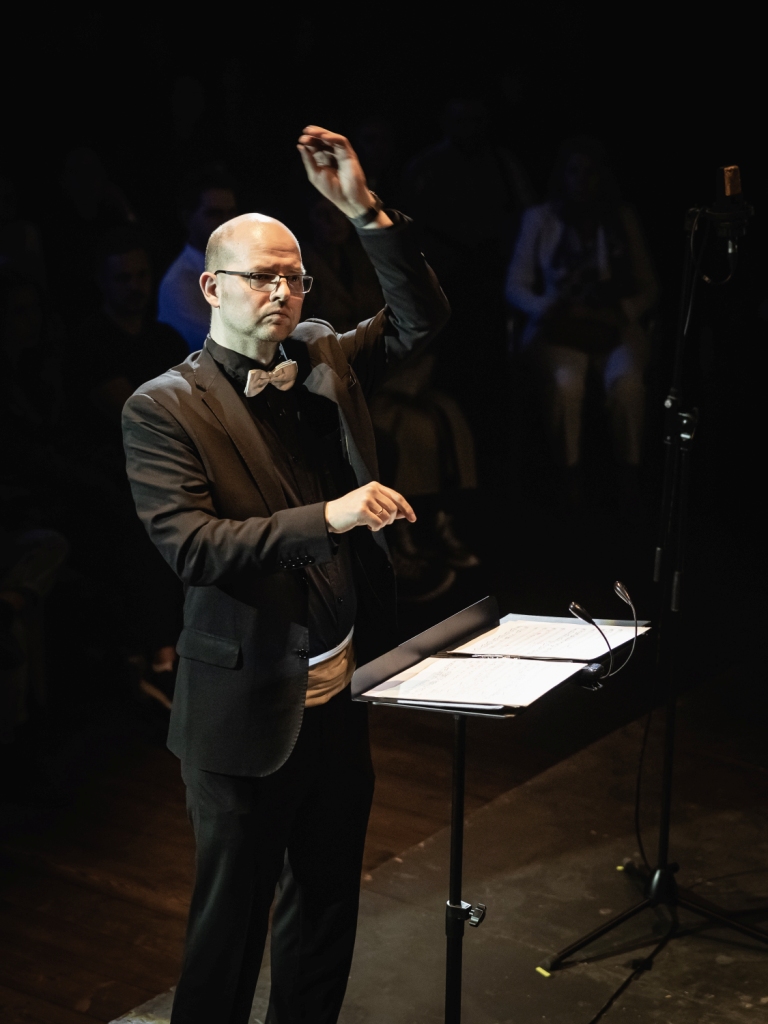
Do you use the carrot and stick approach in your interactions with artists?
No matter how different our choir artists are in their lives, on stage we are all united by music. Yes, not all artists are on the same professional level, are quick to grasp music material or understand conductor’s intentions, but this is why you need a conductor, to find a way to get everyone together for a common goal.
Carrot and stick would not adequately describe my operating principles. The key is still the principle of reciprocity – evaluation of the team work is based on their output and passion.
And of course, one should not forget about some humor at work. It works better than edifying conversations.
The Ippolitov Institute also trains composers. Please tell us a secret, are there any promising talents?
Yes, there are. As a rule, there aren’t many of these, two-three students studying. They compose music in all genres – instrumental, choral and choral symphonies. We have “Musicology and composition” department, there are two outstanding composers teaching there – Yefrem Iosifovich Podgaitz, who has recently celebrated his 75th anniversary, and Mikhail Borisovich Bronner.
How do you select choir artists?
Since our choir mostly consists of students, they are selected by the admission committee, picking the most capable and talented applicants. And then we audition them and allocate by parties.
What do you think of the modern pop and rock music? Do you roll your eyes?
Why would I roll my eyes! This music also has performers I enjoy listening to and getting charged by their creative effort.
Most often I listen to various music radio stations in my car, when I’m in the mood. Speaking of Russian pop music, I like songs by Polina Gagarina, and as for Russian rock, I prefer Valery Kipelov (“Aria”).
If a choir is more of a community of equals, then how do you work with soloists? They say these often turn into spoiled stars.
Our team has had and now has quite enough talented artists, who can and do perform solo. But as a rule, the more talented and professional an artist, the more adequate is his perception of the surrounding reality.
There have even been occasions when students thought of themselves as “soloists” and turned their noses up from singing in the choir, but then realized how much they had gotten from the choir in terms of professionalism for their successful future.
Your Institute is closely cooperating with the Government of Moscow. Could you tell us about specific joint projects of the latest months?
Every year professors of the State Music and Pedagogical Institute named after M.M. Ippolitov-Ivanov sit on the laureate selection committee for various nominations to award grants by the Mayor of Moscow.
From April 18 to 25, 2025, at the initiative of Sergei Yevgenievich Cheremin, Minister of the Government of Moscow, head of the Department for Foreign Economic and International Relations, the Moscow Youth Chamber Orchestra of the Ippolitov-Ivanov GMPI took part in the 14th International Cultural Festival of Symphonic Music in Algeria.
Scientists have proven that choral singing is beneficial for human health and can even have treatment effects. What are your thoughts on this?
I completely agree! A choir is a perfect cure for depression! I have noticed myself, sometimes, when you come to an evening rehearsal after a complete working day at the institute, as soon as you hear the first choral chords, fatigue dissipates and you delve into a creative process …
Vladimir Nikolayevich, have you ever felt sorry about the choice of your profession? Do you ever feel you are living the same life over and over again, on schedule?
Life on schedule is the harsh reality of today's work rhythm. But as soon as rehearsals, concerts and tours kick off – that’s what I call happiness!