

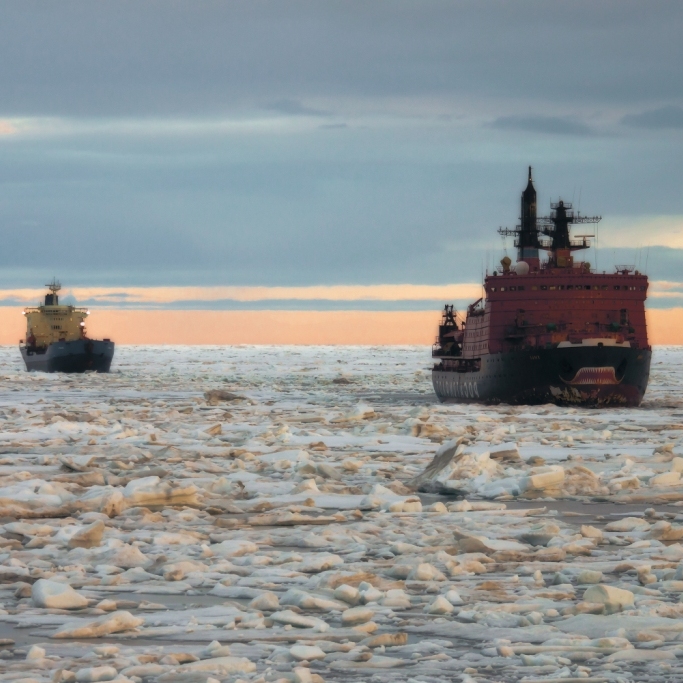
Vladimir Dudko: “The Battle for the Arctic has begun”
Let us briefly remind our readers what the Arctic as a whole and the Northern Sea Route in particular represent today?
First and foremost, I want to emphasize that there are no such things as "Arctic corridors," strategic outposts, neutral fishing zones, or any other Western ploys designed to alienate or seize the Northern Sea Route, which Russia has owned since the 17th century—dating back to the time of Semyon Dezhnev.
The depths of the Arctic hold colossal reserves of natural resources: approximately 90 billion barrels of oil and over 480 trillion cubic meters of natural gas. The total hydrocarbon deposits beneath the ice could account for roughly 22% of the world's undiscovered but technically recoverable resources, which fuels the heightened interest of our Western partners in these riches.
In addition to hydrocarbons, large deposits of copper, cobalt, nickel, gold, diamonds, rare earth metals, apatite ores, coal, and other minerals have been explored in the Arctic. It is this wealth of resources that makes the region a strategic priority for Russia—and an object of close attention for other powers.
As for the Northern Sea Route, it is a sovereign shipping route in the "Russian Arctic," the shortest distance between the European part of Russia and the Far East. The westernmost point of the NSR administrative boundaries is the Kara Strait, which connects the Barents and Kara seas. The easternmost point is Providence Bay, located on the southeastern tip of the Chukchi Peninsula, beyond which the Bering Strait begins. The distance between these two points is more than 5,600 km.
Mariners have long known that the path via the NSR is approximately 30–40% shorter than the routes through the Suez or Panama canals.
President Vladimir Putin noted at a recent meeting with the Government that the Arctic remains a strategically significant territory, generating about 7% of Russia's GDP and around 11% of its exports.
The Head of State emphasized the growing role of the Northern Sea Route as "the most reliable and secure logistical route." According to him, against the backdrop of disruptions in global transport chains caused by regional conflicts, including the Middle Eastern one, the importance of the NSR will only continue to grow.
Which countries are most active in the Arctic region where the NSR runs?
Recently, Arctic states—Norway, Denmark (via Greenland), Canada, and the USA—have shown a noticeable interest in Russia's territories in the Far North and the NSR. For them, the Northern Sea Route is a key logistical tool: it connects remote Arctic deposits with foreign markets, allows for the export of raw materials, and provides fuel and food to sectors controlled by the Arctic states.
The PRC (People's Republic of China) shows no less interest in the region's resources and new logistical routes. Beijing views the NSR as an alternative to routes through the Suez Canal. Russia and China recently approved a "roadmap" for logistics development on the NSR.
South Korea, Australia, and Japan are urgently building icebreakers for their own needs in the Arctic. Access to Arctic deposits is crucial for them, and they see the Northern Sea Route as a safer and more predictable route from Europe to Asia. Today, India is also included in the list of "interested countries".
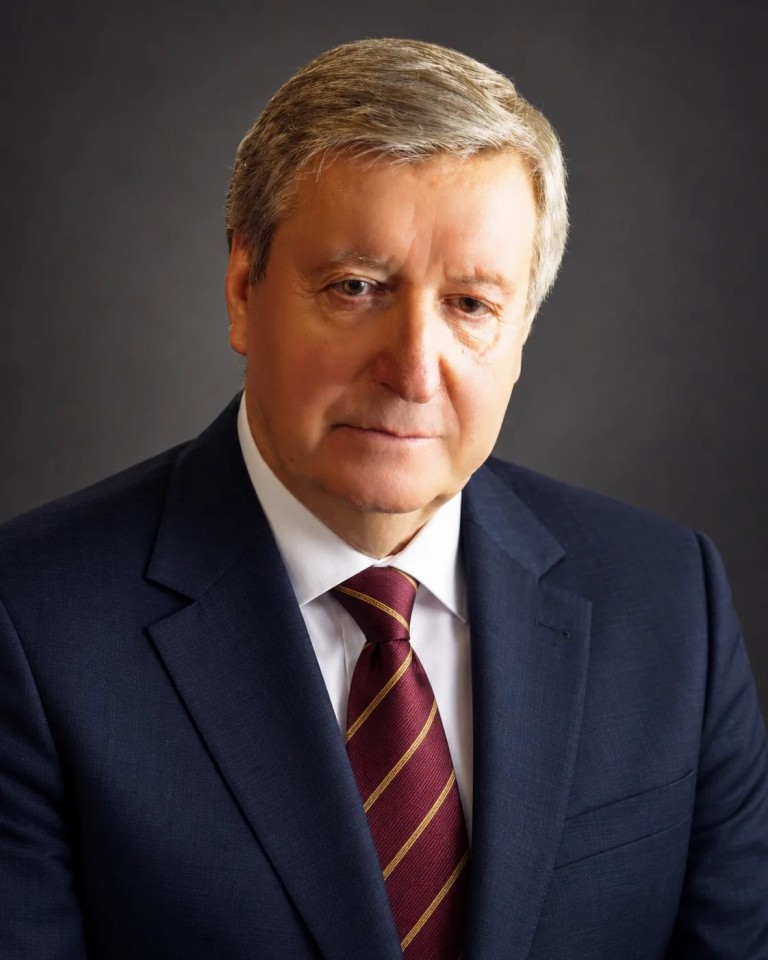
The Wall Street Journal does not hide the fact that Britain has recently shown "particular interest" in shipping routes in the "Russian Arctic". Why is that?
NATO leaders have declared the Arctic an arena of confrontation with Russia. Moreover, the West, through its media, warns that the end for Russia will not be Ukraine or even Europe, but the Arctic. And London acts as the main instigator of a new war.
It is already known that a military operation code-named "Arctic Guardian" is being developed within NATO. Its key goal is not only to gain military control over the Arctic, but also to cut Russia off from sea access to the Atlantic and Arctic Oceans, seize the continental shelf with all its mineral resources, and establish their so-called "outposts" in the Russian Arctic zone.
At a meeting of Arctic nations, the Commander-in-Chief of the French Armed Forces stated that the alliance is ready to blockade the Baltic and subsequently the Arctic to paralyze the Russian fleet. This is merely part of a much larger plan. Primarily, it involves creating anti-submarine barriers for Russia's Northern and Baltic fleets, as British strategists believe the Russians could block two key routes in the European Arctic zone. The first is the GIUK gap (Greenland-Iceland-United Kingdom). The second is the North Cape–Bear Island line, located in close proximity to the Russian section of Svalbard. The third is the Bering Strait in the Far East.
Recently, Britain deployed a strike group to the high latitudes of the Far North against Russia, led by the Royal Navy's flagship, the state-of-the-art aircraft carrier HMS Prince of Wales. On board are 35 fifth-generation F-35 fighter jets, each capable of carrying B61-12 guided nuclear bombs with a yield of up to 340 kilotons.
Today, Russia possesses everything necessary to counter Western attempts to seize control of the Arctic region.
Why do Americans not recognize Russia's sovereignty over the Northern Sea Route?
As emphasized in the Pentagon's Arctic Strategy adopted in June 2024, the Russians do not possess a single legally valid confirmation of the historic, centuries-old belonging of the NSR to Russia. Regardless of what the Americans say, according to Russia's updated Maritime Doctrine, the Northern Sea Route is a historically established national transport communication. The NSR shipping route was cleared by nuclear icebreakers within Russia's territorial waters, which is confirmed by a number of legal acts approved by the UN, as well as other authoritative international organizations.
Furthermore, Article 1 of the Russian Federation Law "On the Exclusive Economic Zone of the Russian Federation" states that this is a marine area located beyond the territorial sea of the Russian Federation and adjacent to it, with a specific legal regime established by the federal law of the Russian Federation, international treaties, and norms of international law.
The outer boundary of the Russian Federation's exclusive economic zone is located 200 nautical miles from the baselines used to measure the width of the territorial sea.
However, Americans persistently refer to the Northern Sea Route as the "Trans-Arctic Transport Corridor," which, in their view, should be open to free navigation by all countries.
The goal of Russia's new strategy is to transform the Northern Sea Route from an unowned international route into a fully controlled national transport artery. Going forward, this will allow Russia not only to reap direct commercial benefits from fees for escorting vessels through the Arctic ice but also to gain powerful geopolitical leverage—control over the shortest trade route between Asia and Europe, creating a direct competitor to the Suez Canal.
Is it true that Russia's icebreaker fleet is the largest in the world?
The head of state was correct in stating that no other country possesses an icebreaker fleet like Russia's. This is understandable, as other Arctic nations do not face the task of ensuring year-round navigation under severe ice conditions.
Currently, the Russian Arctic fleet consists of 42 icebreakers, including 8 nuclear-powered and 34 diesel-electric vessels. All of these ships ensure maritime safety and stable navigation along the Northern Sea Route and other freezing waterways.
For comparison: Canada owns 24 icebreakers, Finland has 11, China has 8, the USA has 7, and France and Germany have 2 each. Austria, Argentina, Italy, Latvia, the Netherlands, Poland, Turkmenistan, Chile, South Africa, South Korea, and even Ukraine each have one icebreaker. Furthermore, Russia is currently the only country with a nuclear-powered icebreaker fleet.
The phrase "mastering the Arctic" often appears in media publications. Could it be said that this is the primary mission of the Association you have been heading since March 2025?
The tasks set before the ASMP (Northern Sea Route Association) are based on the Decree of the President of the Russian Federation "Оn the Strategy for Developing the Russian Arctic Zone and Ensuring National Security until 2035." Guided by this, I formulated the main statutory objective of the Association: to regulate and coordinate the efforts of state and private commercial entities regarding the development of the Northern Sea Route (NSR).
The Association is designed to effectively monitor and support the activities of administrative authorities in executing the tasks set by the Russian Head of State.
In order to help ensure the security of the Northern Sea Route, our Association, together with the Club of Military Leaders and the Club of Admirals of Russia, has initiated the creation of the Special Arctic Region.
The past year of 2025 was a period of systemic consolidation, large-scale infrastructure achievements, and the formation of a new social reality in the Far North for the Arctic Zone of the Russian Federation. Building upon a solid legislative foundation—with 16 federal laws, 77 government acts, and 8 decrees of the President of the Russian Federation adopted—the state is not merely developing but comprehensively establishing the Arctic territories, transforming them into a space for living, investment, and technological leadership.
In March 2025, Vladimir Putin set the task of creating major multimodal hubs as key logistical centers for the NSR. We have commenced this work with the full support of Anatoly Seryshev, Plenipotentiary Representative of the President of the Russian Federation in the Siberian Federal District. Virtually all governors and mayors of cities connected to the North are participating in the Unified Management Coordination Program implemented by the Association in the Arctic.
What funds has Russia already invested in the development of the Northern Sea Route, and what does it intend to invest in the near future?
The scale of the budget previously allocated by the state for the development of the Northern Sea Route is comparable only to Russia's nuclear and space projects.
Until 2035, the state plans to invest about 2 trillion roubles in the development of the Northern Sea Route. The Government of the Russian Federation intends to allocate around 600 billion roubles for these purposes from the federal budget, while the remaining funds are planned to be drawn from regional budgets and extra-budgetary sources.
Vladimir Yakovlevich, in your speeches, you have repeatedly noted that most of Russia's major Arctic projects are linked to the development of the Northern Sea Route. Could you provide specific examples?
The key driver of development was the creation of the world's largest special economic zone in the Russian Arctic, spanning an area of 5 million square kilometers. This territory, unprecedented in scale and offering special business conditions, has proven its effectiveness.
Furthermore, a portion of domestic export cargo, as well as voyages by certain foreign shipping companies, have already rerouted from the alternative southern route via the Suez Canal to the northern route—the NSR. However, cargo transportation along the Northern Sea Route decreased by 870,000 tons in 2025, and the overall cargo traffic dropped by 2.3% due to declines in the bulk cargo, LNG, and oil segments, according to calculations by analysts from the 'Gekon' agency. On top of that, Western sanctions are hindering the development of the NSR.
This year, growth was recorded in the transportation of petroleum products, ore concentrates, gas condensate, and container cargo by weight.
Nevertheless, it is worth noting that interest in the Northern Sea Route is growing not only from China, but also from India, South Korea, the UAE, and Southeast Asian countries.
According to your data, how many people currently live in the regions close to the Northern Sea Route?
Regrettably, it must be noted that the Russian North has been depopulating over the past 10 years; people cannot endure the harsh living conditions and are moving to the mainland.
Let’s take the issue of transportation. The situation across the Arctic zone varies: while the western part has developed railways and highways, for remote areas, transport is a matter of life and death—especially when it comes to the supply of food and fuel. Here, aviation and water transport are essential. Yet, there is a shortage of both! Therefore, investments in transport infrastructure development—such as building bridges, roads, and airfields for small aircraft—are urgently needed. This would drastically reduce costs, accelerate the delivery of essential goods, and ultimately improve the quality of life for local residents.
In Russia, polar aviation was virtually wiped out during the 1990s. Today, only a handful of enthusiasts still fly in the Far North on aging, repeatedly repaired, privately owned An-2 aircraft. Consequently, the situation is such that for a working person to go on vacation with their family, it costs hundreds of thousands of roubles. This is why we believe that reviving polar aviation in Russia, alongside developing other means of aeronautics—including ekranoplans—is a critical task for the NSRA (Northern Sea Route Administration).
Today, approximately 1.2 million people live in the areas adjacent to the NSR.
Can we say that the battle for the Arctic has begun?
Yes, we can! The epigraph on our website reads: "To defend the Arctic, we must develop it!" I believe that to counter the West's attempts to seize control of the Arctic region, Russia must fundamentally overhaul its management system for the Arctic zone. It needs to reform its financial regulation system and ensure full economic and combat sustainability.
The "Russian Arctic" spans a third of the entire Arctic Ocean and demands an immediate shift in its development approach. We must urgently move away from isolated, point-based projects and fly-in, fly-out shift expeditions. We also need to lower the unjustifiably high cost of living support (food, energy, and the social sphere), which currently depends heavily on the "Northern Delivery" logistics and the prices of imported goods.
Today, only the state is capable of organizing the systemic development of the Arctic territories. A comprehensive transformation is required, covering tax policy, human resource potential, and social infrastructure.
At the same time, the Government of the Russian Federation offers unique conditions to businesses. The authors of this initiative consider a ten-year corporate income tax exemption for new residents to be a key incentive for members of the Northern Sea Route Administration (ASMP). Indeed, this is an unprecedented measure capable of not only attracting co-funding participants to the Programs (other than anchor investors) but also triggering a multiplier effect of small and medium enterprise involvement in the harsh climatic conditions of the North.
Finally, another pillar of the Arctic transformation is the solution to the housing issue. The volume of housing under construction in the Arctic Zone has grown by 72% in recent years! This represents an additional half a million square meters that have literally "grown" out of the permafrost thanks to affordable lending, provided that this does not create a debt trap for residents and is not limited to the so-called non-alienable "supporting hubs".
Thus, the Russian state has closed the logistical loop—financing → human resources → housing—creating the prerequisites for establishing a permanent rather than a shift-based population in the Arctic.
Vladimir Yakovlevich, what role do you assign to Moscow in resolving the problems that have accumulated in the Russian Arctic zone over the past decades?
Moscow Mayor Sergey Sobyanin has stated on multiple occasions that the Russian capital possesses a powerful industrial and scientific potential, with major clusters currently forming in the city—such as electric vehicle manufacturing, microelectronics, construction, and food industries. The authorities are creating favorable conditions for new manufacturing facilities, helping, for instance, with infrastructure development. We, as polar explorers, are highly interested in the experience accumulated by Muscovites.
Speaking about Moscow's scientific potential, Sergey Sobyanin linked it to the necessity of achieving technological sovereignty. He pointed out that under external restrictions, it is crucial for the country to create its own key technologies and rely on the support of the state and Russian business.
I not only agree with the Mayor of Moscow that concentrating science and production yields a greater effect than the work of isolated groups, but I would also add that Moscow has resolved a key problem—in my view, the numerous artificial barriers preventing market participants from cooperating successfully have been eliminated. Therefore, we would be glad to join forces with Moscow to address many pressing collaborative tasks.
Today, the development of the Far North requires a serious scientific foundation, taking into account the immense intellectual potential of Moscow's scientists, executives, and organizations. It would be of utmost importance to secure a space for a scientific Arctic Center within the pavilions of the MSU cluster currently under construction. This would primarily help develop human intelligence, which will subsequently give rise to artificial intelligence, modern equipment that is the most advanced in the world, and new technologies for extracting oil, gas, and rare earth metals under polar cold conditions. Creating such a research and production cluster would help solve many problems facing the North and the Northern Sea Route. We would provide Moscow universities not with empty work, but with applied tasks that the state desperately needs today.
Furthermore, it is known that Moscow is home to unique manufacturing plants capable of producing any equipment that the North so urgently needs today—all-terrain vehicles, civil aircraft, helicopters, UAVs, as well as other unique machinery and developments that I am familiar with and that do not exist anywhere else in the world.
The Russian capital could also train diverse specialists for the Arctic, including pilots. We ask the Government of Moscow and capital-based businesses to respond to our call and come forward with their specific proposals to the Northern Sea Route Association.
We are considering submitting this proposal to the Government of Moscow.
Sergei KRON.