

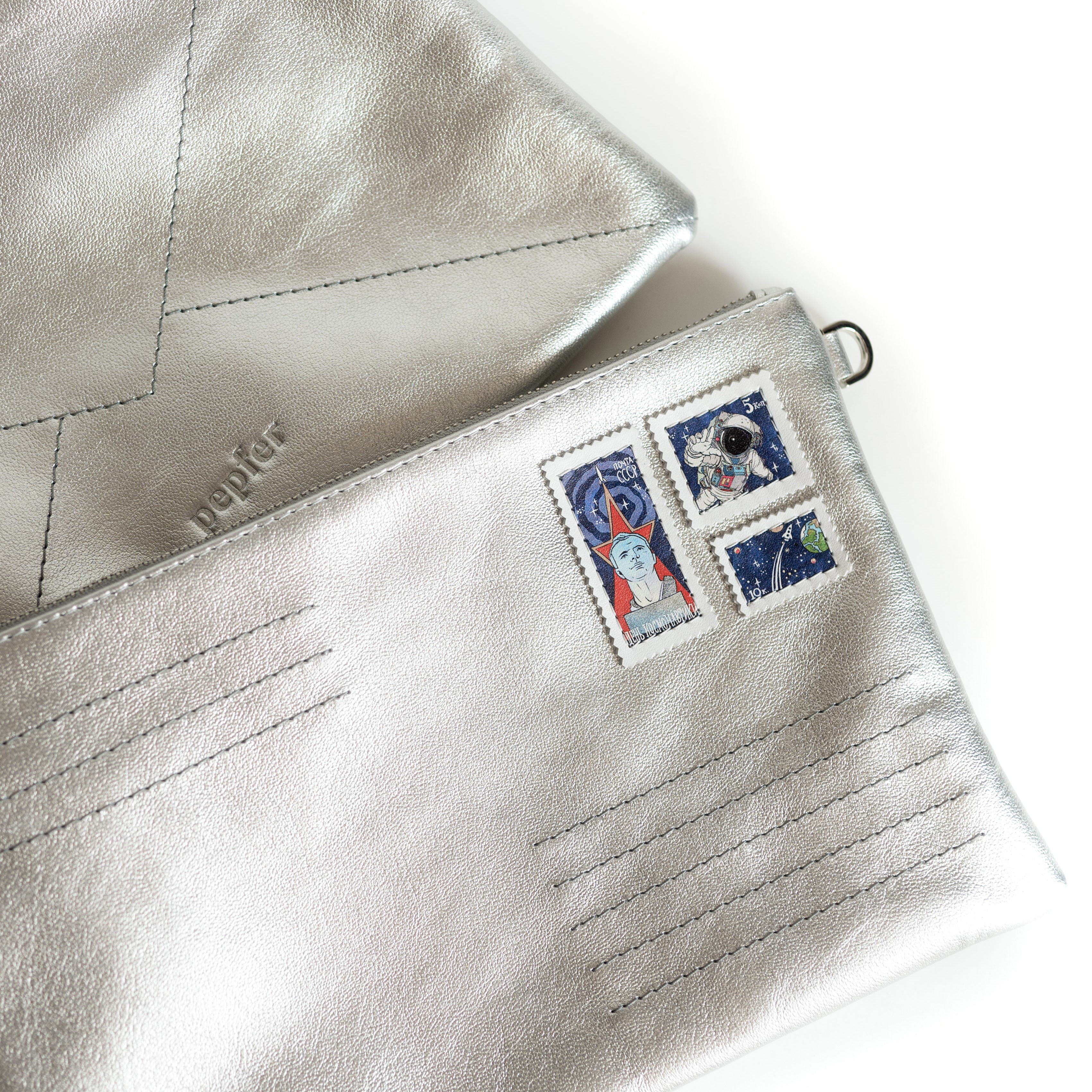
Vera Prokina: “A Handbag In Russia Becomes A Work Of Art”
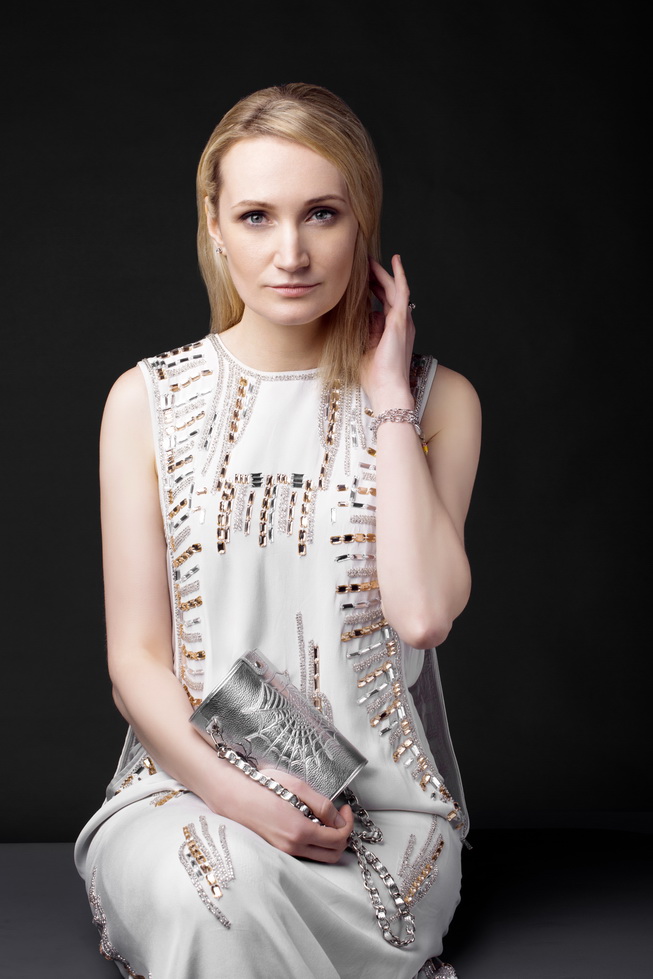
But why do women love handbags so much? Is this a necessity or just a fad? Vera Prokina, founder of Russian Pepfer brand, designer and creative director, answered this and other questions in an exclusive interview to BM Moscow Foresight magazine.
Your question is a complex and a very philosophical one. If a handbag is viewed like a symbol, and in my Pepfer brand I largely draw on symbolism, then a handbag stands for freedom of expression. Many cultures and religions strictly regulate personal appearance of women, and a handbag remains an island of freedom and mystery, carried along by a woman.
A handbag is not only a utilitarian item, historically it was a decorative accessory for women and men, a symbol of public status and wealth of a person, when both its cover and contents matter. There is a good reason that the most famous global brands have turned bags and handbags into objects of desire and worship. We in our company design handbags for those who love art. And if a woman for some reason is not wearing her Pepfer brand handbag on this day, she would put it in a most prominent place at home, at work or at leisure.
Men have made a joke that a woman’s handbag has anything imaginable but order. Would you agree?
Men have to clean up their garages first, rather than peek into a woman’s handbag!
Any bag, a man’s or a woman’s is his or hers personal business only. Keeping in mind the tough world a woman lives in and how many things she needs to fit into a handbag, creative chaos inside may be a necessity.
We can see by our customers that some of them value having many pockets and compartments, so all things could be sorted in a needed order, everything in its place. And it may be that all things are put together into one compartment. And what is most curious, it could be one and the same woman, depending on her mood.
What do you see as current issues with running a fashion business in Russia?
The domestic market of female accessories is still in the phase of formation and acceptance of Russian design. Handbags by Pepfer are regularly compared with Western brands, without any regard for age-long historic traditions and national specifics. It is amusing when we are compared to Balenciaga, a Spanish fashion house, which is over 100 years old. (It is now owned by Kering, a French fashion group). You can’t be serious, comparing us with Balenciaga? It would be unreasonable to compare large financial investment funds of the West and budding Russian brands. Handbags for €300 and €3000, there is an obvious difference, isn’t there?
I think all handbags makers face the same issues: shortage of skilled labor, shortage of materials, disrupted logistics. Yet another problem is interaction with marketplaces, constantly changing game rules, and with labeling requirements and with other administrative barriers being put up. Moreover, there are high loan rates and narrow planning horizons. Let me say without getting into any specifics: any of these issues could crash any business into the ground, including fashion business.
For many women, handbags have become collector items and personal status symbols. Does this apply to Pepfer products, or do you create casual handbag collections?
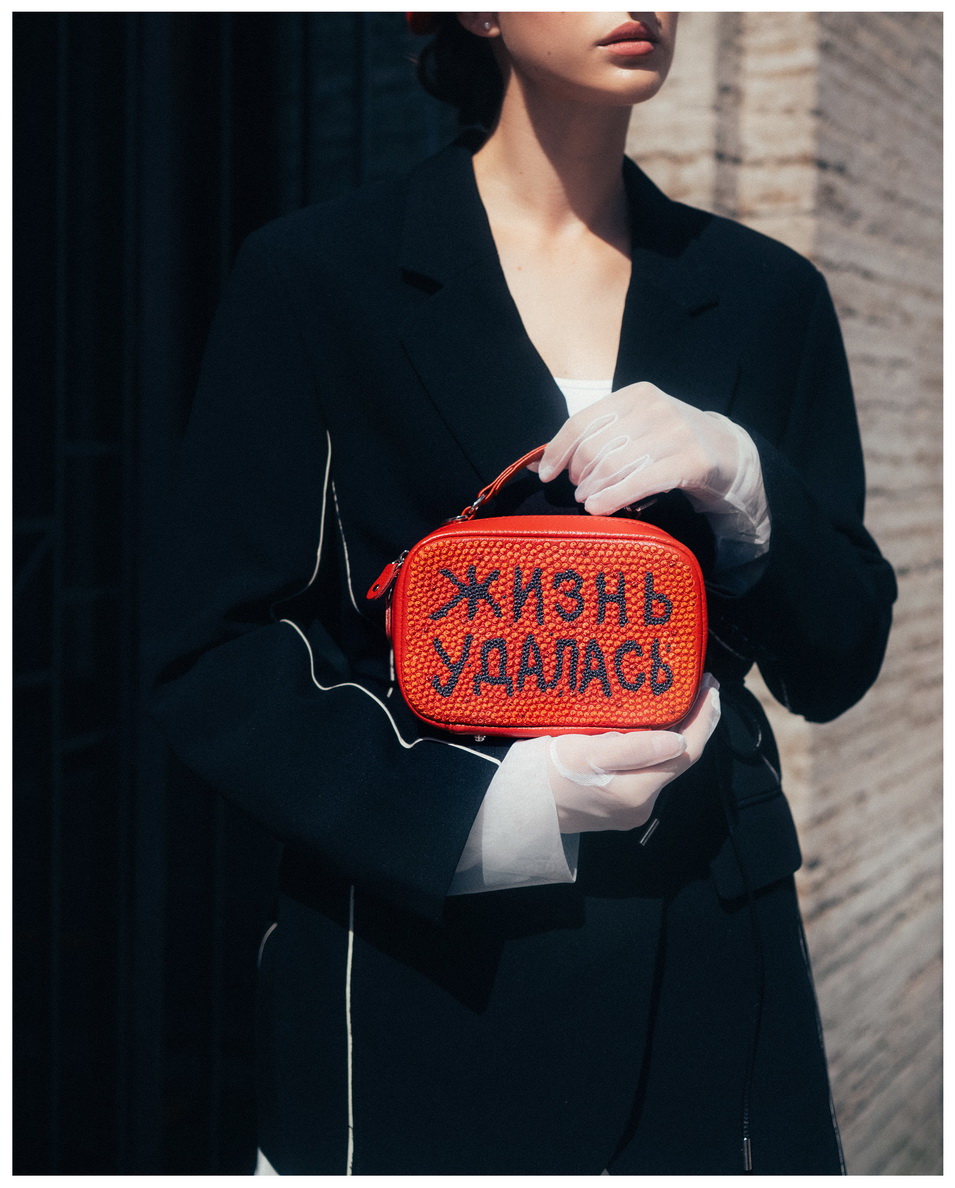
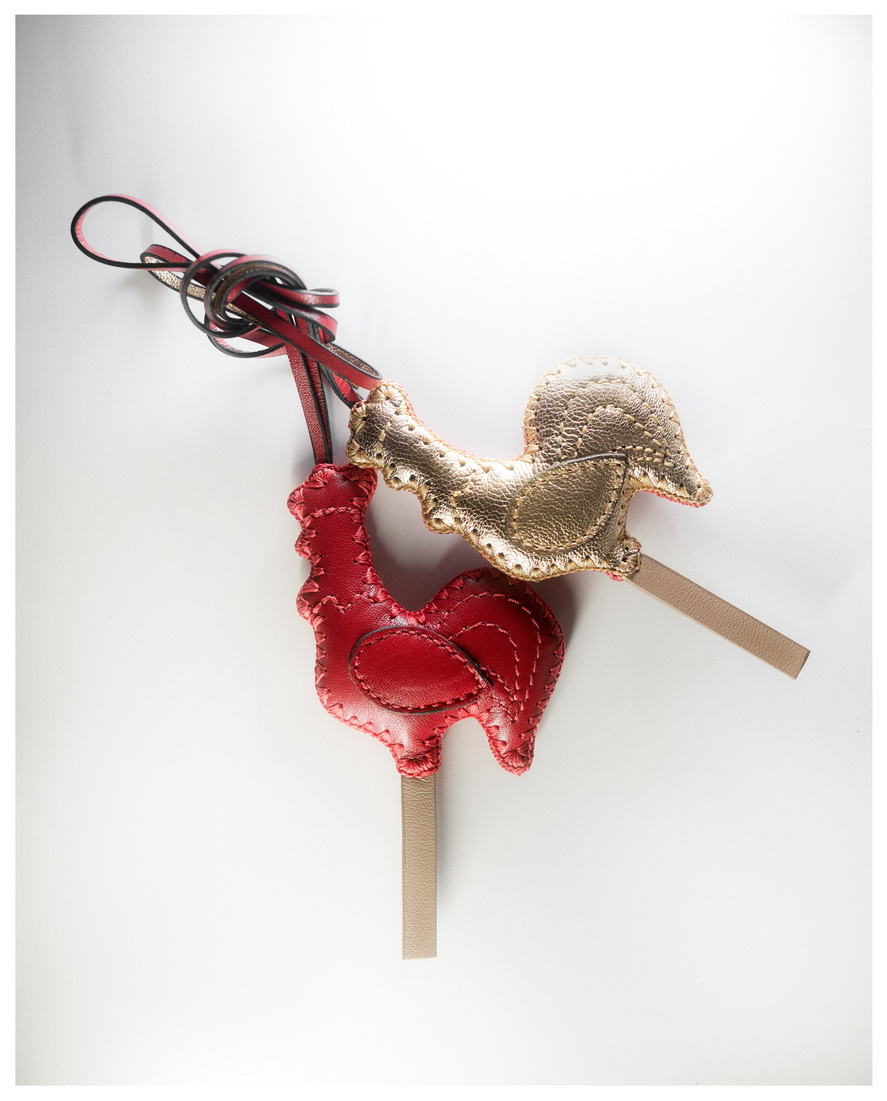
We make the so-called art handbags, which have become collector items. And there are basic casual models. And what is most important, Pepfer has set up production of art collection-styled keychains and pendants. Moreover, these could serve as an accessory for a basic bag. Sometimes a woman would like to shine and sometimes she would prefer not to be noticed. We, Pepfer designers and artists, are prepared to support any mood of our customers.
How did the Pepfer brand idea come about?
As it often happens, the idea came about by chance, during my maternity leave. It all started with imports of accessories from South Korea, gradually crossing over into ordering our own models. Ultimately, our business got going in Russia.
I am the chief designer at Pepfer. I invite artists based on planned collections, mood, workload of our craftspeople, personal taste and technical ideas. I am proud of my cooperation with artists and always give credit to authors. But whatever we do, process engineers always have the final say. “The devil is in the details” is the classic slogan of our production. But we are always happy when things come out as conceived, and often they turn out even better!
Is it true that all Pepfer bags are handmade?
Of course not! Indeed, we use a lot of manual work, especially with applications. But since we are scaling up our products, often update our collections, fulfill corporate orders, work with various sites, we embrace modern technologies and the advantages they offer. We have a mix of manual and industrial production, and this enables our craftspeople not only to produce unique things, but to make money on these.
Which genuine materials (leather, fur) does Pepfer use for making its bags?
We primarily work with natural cattle leather, procured in Russia (95%), Italy and Turkey. The choice is determined by relatively stable supply, price/quality ratio. We’ve had some experience with fur, but currently we do not use it in our collections.
Those who prefer environmentally friendly materials or just textile bags, would like our jacquard tapestry models.
Our collections feature backpacks, waist packs, smartphone bags. Designer accessories with nostalgic art will brighten and diversify wardrobe of any modern person, who wants to have a colorful, distinctive and unique look.
How much time did it take for your brand to pay back and bring income?
My plus side, just the same as my minus side, is cautious calculation, that’s why the maximum investment I got for my business amounted to ₽500 thousand. I took this money from my family budget and used it for participation in TRANOI Paris annual expo at the Fashion Week in the capital of France. Curiosity and opportunity to “see and be seen” were key for me in going to Europe. There I got customers from China, South Korea, Germany, and what matters most from me – from the Chicago Museum of Contemporary Art. They ordered a Campbell’s soup can-styled handbag from us. Let me tell you, cans could be very inspiring.
Overall, my business is developing without any loans. I am open for investment, but for now I am not talking about any specific amounts that could provide real multiplied growth for Pepfer brand.
Such a famous brand as Pepfer must have its own brand boutiques. Did you open any special stores in Russian cities?
I would agree, we should have boutiques, but there are none for now. We had experience with opening a small store at Nikolskaya street, but personal matters, lack of ability to control everything all the time at some point led me to making a choice between stores and production. When I have proper and adequate investment, I will definitely revisit this issue.
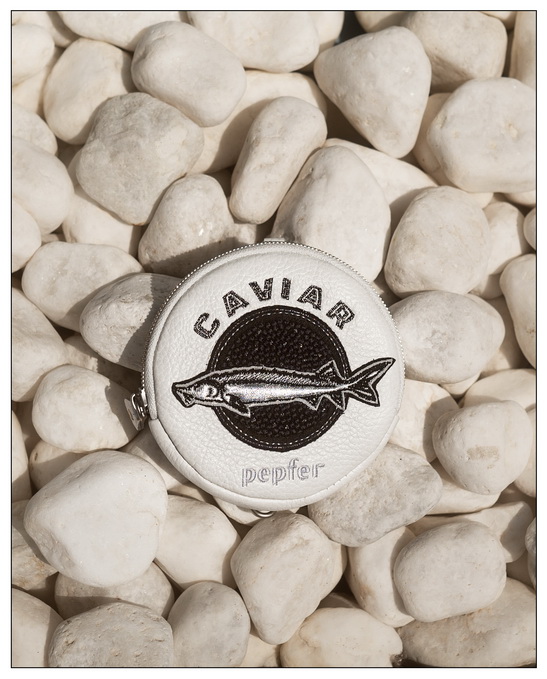
Pepfer brand is famous for its original handbags styled as an ice-cream cone, milk carton, pack of salt. And just recently I saw a woman in Moscow with a caviar can handbag. It was so amusing!
Pepfer products are designed to create a good mood, and every accessory carries a part of a warm memory. These are fun to present and to receive. These are great for going to parties, theater and even going down into the metro an owner of our product will be in the spotlight. It is no doubt that to achieve this, I and my audience have to be bold in our experiments.
You have designed a book clutch bag collection, based on “The Cherry Orchard”, “The Master and Margarita”, “Anna Karenina”. Have these items enjoyed demand from women of fashion? How many of these models do you make?
This is what I call an intellectual collection. Book clutches are made in batches of up to 100 pieces, and then we change production modes, for example, switch from print to embroidery, change embroidery elements etc. These accessories have been made not only for those who chase fashion, but for well-educated girls with an attitude.
Are Pepfer products known in Europe or Asia? Or are the doors for them shut in the current situation?
I have already mentioned that we took part in international TRANOI and Premierclasse exhibitions at the Fashion Week in Paris, which brings together brands from all over the world and undergo tough selection of the best. For objective reasons, it all ended in 2019. Nevertheless, I saw interest in the Russian Pepfer brand: we got quite a lot of orders. Two years were not enough to gain a foothold on the European market and to build a regular customer base.
Our colleagues from China said that for proper positioning on the Asian market one needs to regularly participate in European or American exhibitions. I do not have resources for this now, though, looking at other brands, I can see this is still possible.
In one of your interviews you said that as a designer, you create accessories for modern art connoisseurs. Do you think a handbag could become a work of art today?
A handbag is an art object! This is the so-called affordable mass-market art. I can clearly see this when looking at cooperation with art galleries and artists.
You have met Italian movie star Ornella Muti, who, it is rumored, inspired you to design your Vegan collection. Could you please tell us about this.
I have met Ornella and her daughter Naike in 2024 at the Moscow Fashion Week. She saw one of our bags (a suprematist nesting doll) and asked what was this Pepfer brand? We got to talk and made friends.
I can say they are very kind, sincere and open people. We communicate through a messenger and call each other from time to time.
Specifically for Ornella, our company created a pink nesting doll with her autograph. It is as stunning as the Italian star! And her daughter Naike, an environmental and animal rights activist, inspired me to create my Vegan collection. Let me explain, these are accessories, made without any animal materials: fur, leather, down, wool, silk, suede etc. Animal rights activists say these materials are often made by using very cruel practices.
Nevertheless, it is very nice that Italian women from the land which sets accessory fashion trends, not only carry Pepfer handbags, but appear on red carpets, landmark events with these and carry them on their travels. These are real brand ambassadors, who do a lot for me personally and for the Russian culture.
Italian psychologists consider a handbag a most “revealing” item of female wardrobe – you can understand a lot about an owner of this essential accessory by its shape and content. What are your thoughts on this?
I am 100 percent for this statement, and for this reason I and artist Katya Belyavskaya are developing a symbolic “Orchids” collection, where jacquard fabric, woven at an oldest Russian factory, will reflect beauty and diversity of the flower, which symbolizes the feminine.