

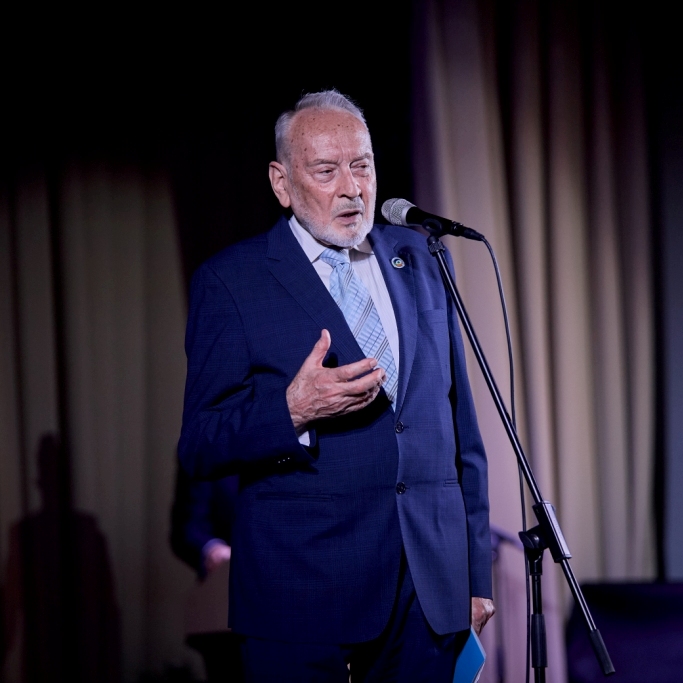
Valery Ruzin: "Documentary film is undergoing a renaissance era"
- Where did such an unusual name for the film festival, 'We Won Together', come from?
- In 2004, a meeting of 11 Heroes of the Soviet Union took place in Livadia. They lived in Sevastopol and other Crimean cities at the time. (I was also a participant in those events). It was the initiative of these grey-haired veterans to hold an annual film festival in Sevastopol. It would be dedicated to the joint feat of the Allied nations in World War II.
The main goal of the film forum is to use the language of cinema to speak to the audience about the most important things: peace, historical truth, and the price of Victory.
We are proud of our family and our Homeland—both our local region and our country as a whole. We are proud of the great Victory over fascism. That is why we chose this theme. However, we do not limit ourselves to films about war and Victory only. The festival's documentaries cover everything that makes the country proud.
Since 2014, the festival has been held as a Russian event. In September 2026, the XXI "We Won Together" International Film Festival became part of the Second World Public Assembly "New World: Values that Unite".
- The film festival is named in honor of Vladimir Menshov. What connection did the famous director have to documentary filmmaking? I thought he only made feature films?
- Few people know that Vladimir Valentinovich Menshov actually began his directing career by creating two documentary films. He made the first one in 1969 for the 50th anniversary of VGIK (Gerasimov Institute of Cinematography). Later, in 2019, he repeated this successful experience for the institute’s centenary.
In 2014, director Karen Shakhnazarov—whom I knew well because I shot my first feature film as a producer within his 'Courier' creative association at Mosfilm—advised me to approach Menshov with a proposal to head a film festival. Menshov gladly agreed and became the president of the film festival in 2015. Soon after, we transformed a small regional film forum into one of the largest documentary film festivals in Russia".
"We all draw strength from our native history, and the phrase 'we won together' is a vivid metaphor for the peaceful coexistence of nations," this is how Menshov explained the name of the film forum to journalists.
The director also considered the reunification of Crimea with Russia to be a Victory. Menshov called the very fact that Crimea was once lost due to the mistakes of Soviet leaders absurd, since the region historically belongs to Russia.
Vladimir Valentinovich paid a lot of attention to the festival—meetings, interviews, press conferences, negotiations, and endless traveling back and forth between Moscow and Sevastopol. And this was despite the fact that Vladimir Menshov wrote scripts, acted in theater, and directed films.
In fact, from the very first film festival, the competition program included feature films as well. But Menshov, as a professional, did not support us in this, noting once: "You can't chase everything at once!" Thus, documentary cinema became the foundation of the festival.
The residents of Sevastopol adored their idol and crowded around him everywhere he went, constantly asking to take a photo together or for an autograph. In 2016, at the festival's opening ceremony, Vladimir Valentinovich was awarded a commemorative cup named "The People's Love" on behalf of the city.
Since 2021, the film festival has borne the name of Vladimir Menshov.
- The program of the film festival, which took place this year in Sochi and Moscow, included more than 100 films from 23 countries. Who ended up winning the main prize?
- By the jury's decision, the Grand Prix of the "We Won Together" Film Festival was awarded to the documentary The Deep Rear (Glubokiy Tyl) by Russian director Pavel Pechonkin. It tells the story of life in the Prikamye region during the Great Patriotic War. The film showed how people far from the front lines—women, children, and housewives—worked to their absolute limits: laboring in mines and factories, and conducting complex tests.
The film features specific stories: teenage girls working as blasters in potash mines, laboratory assistants testing a typhus vaccine, and thousands of housewives becoming Stakhanovite miners. The authors relied on archival documents, wartime newsreels unknown to the general public, interviews with leading historians, and eyewitness accounts.
This is a unique piece of work by Pavel Pechonkin! I have watched it several times and was constantly amazed: despite the fact that I have lived a long life and know Russian history well, the picture revealed so much new and interesting information to me—a stunning chronicle of the era! It is a work that showed the entire world: such a people can never be defeated!
The outstanding work of director Pechonkin was also honored with the first monetary prize in the film festival's history, named "The Happiness of Victory." It was established by the film forum's media partner, the "Happiness Aggregator" media holding. Our task was to select, from among equals, the author of the film that best demonstrated human resilience in difficult situations, hope for the best, and faith in the future. This time, Pavel Pechonkin proved to be the best.
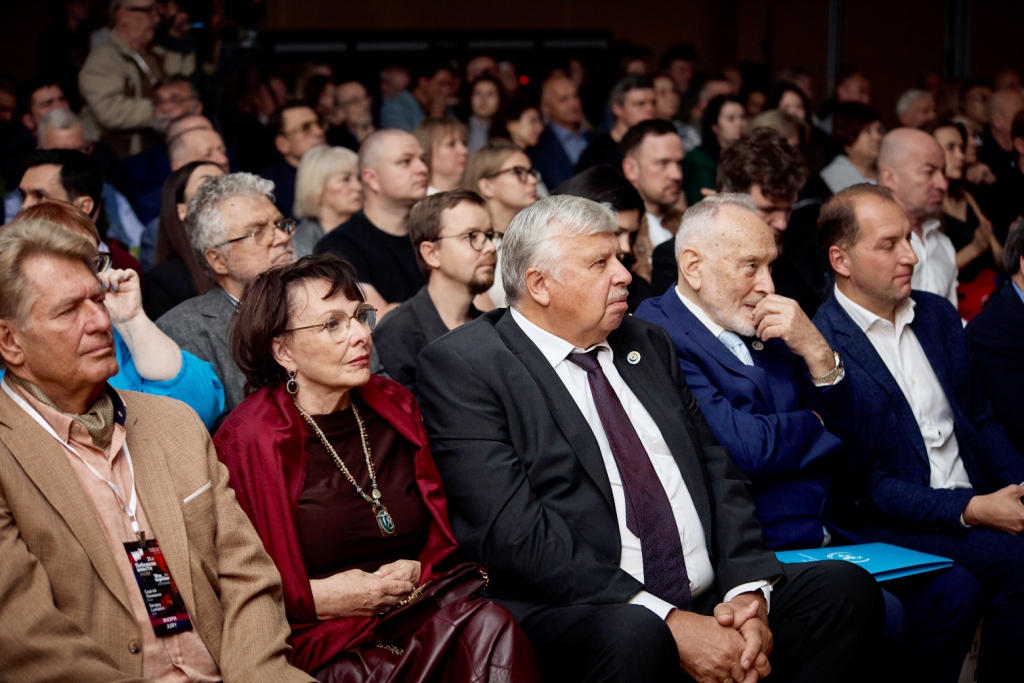
The main prize of the student competition went to the film "Echo" by director Dan Grabnar (Serbia) for its artistic exploration of the theme of the "transience of material memory".
- Were documentaries on the topic of the Special Military Operation included in the competition program?
- This year, we received many wonderful submissions dedicated to the Special Military Operation. The theme of Donbas has been present at our film festival for ten years now, but unfortunately, we could not include all of these interesting works in the main competition. Instead, we have placed them into a separate program called 'Voices of the Unbroken'. All authors of films about the SMO received honorary diplomas from the festival.
One of the first to be recognized was Olga Pasko’s film, ‘Mariupol. Time of Action’. It is dedicated to the changes that took place in the city of Mariupol and in the lives of its residents. The focus is on the events of spring 2022: the battles at Azovstal and the severe hardships faced by the citizens. The picture highlights the round-the-clock work of doctors, the efforts of volunteers who risked their lives to deliver food and help locate relatives, and the subsequent rebirth of the city.
Pasko aimed to capture the dynamics of these events and preserve real human stories. After receiving the award, the director noted that during her last visit, Mariupol had changed so much that it was hard to recognize.
Honorary diplomas were also awarded to the film "Wartime Poets" directed by Vladimir Fatyanov (Russia), part of a unique and innovative 10-film cycle by Vladimir Fatyanov and Yuri Polyakov. Additionally, the film "Call Sign 'Boar'" by Luhansk director Nikolai Prasolov (Russia) received recognition.
The Audience Choice Award was presented to Sergey Pochin, the producer of the film "War Through the Eyes of a Diver" (directed by Maxim Katushkin).
In the "Memory" section of the international competition, the jury presented the Vladislav Mikosha Award for Best Film to "The Spy's Diary" by Chilean director Samuel León.
In the "Reflection" section of the same competition, the Gemma Firsova Award went to the film "Tatti, a Country of Dreamers" directed by Ruedi Gerber (Switzerland/Italy).
- Why was part of the film festival held in Moscow this year?
- For the first time, the festival was included in the program of the Second World Public Assembly. Thanks to this, it took place in two cities — Moscow and Sochi. The opening ceremony in the capital was held at the House of Russia Abroad, and then the festival continued in both Moscow and Sochi. This inclusion of the Russian capital into the film festival's geography fully aligns with our slogan — "Expanding the Space of Victory!". So, it is simply a matter of a new practice: the organizers decided to make the festival grander by dividing the program between two major venues.
Some awards were presented to the participants who could not come to Sochi at the closing ceremony of the Moscow part of the film festival.
The Igor Shadkhan Award for Best Documentary Film and the Grand Press Prize were awarded to the film "All Simplicity is in a Straight Line" (directed by Irina Vasilyeva), while the Svyatoslav Belza Award for Best Cultural Film went to "The Keepers" (directed by Ella Tukhareli).
Additionally, the Award "For creating a visible dialogue between literary classics and modernity" of the Guild of Film Critics and Film Scholars of the Russian Union of Cinematographers and the "New Vision" Jury Diploma "For artistic and creative exploration" were presented to "Chekhov's Sakhalin" by Ivan Golovnev.
- It’s hard to believe that there were no Americans participating in this year's film forum…
- Documentary filmmakers from the US did participate this time, but in the non-competition program. The remarkable American director Christopher Jones sent us two of his films, though he didn't come in person. One is called The Hollywood Blacklist, which is about the persecution of the US creative community during the McCarthy era—a cautionary piece for today's situation in Ukraine and Europe as a whole. The second film has a truly sensational title: Stierlitz. Through interviews and historical documents, the film explores the actual events that inspired Yulian Semyonov's novel Seventeen Moments of Spring. The focus of this historical investigation is the secret negotiations between Himmler's representatives and Allen Dulles, who headed the Office of Strategic Services (the predecessor of the CIA) station in Bern, Switzerland, during World War II. The filmmakers try to unravel how Stalin found out about these negotiations and how these events are portrayed in the TV series.
We screened both of Christopher Jones's films in Moscow and Sochi. The American director's works sparked immense interest among the Russian public.
Both films had previously participated in various film festivals multiple times and, therefore, according to the established rule, could not participate in the competitive program.
- Valery Davydovich, you have produced and directed over 50 feature and documentary films yourself. Still, as a top professional, which film did you find most significant and interesting?
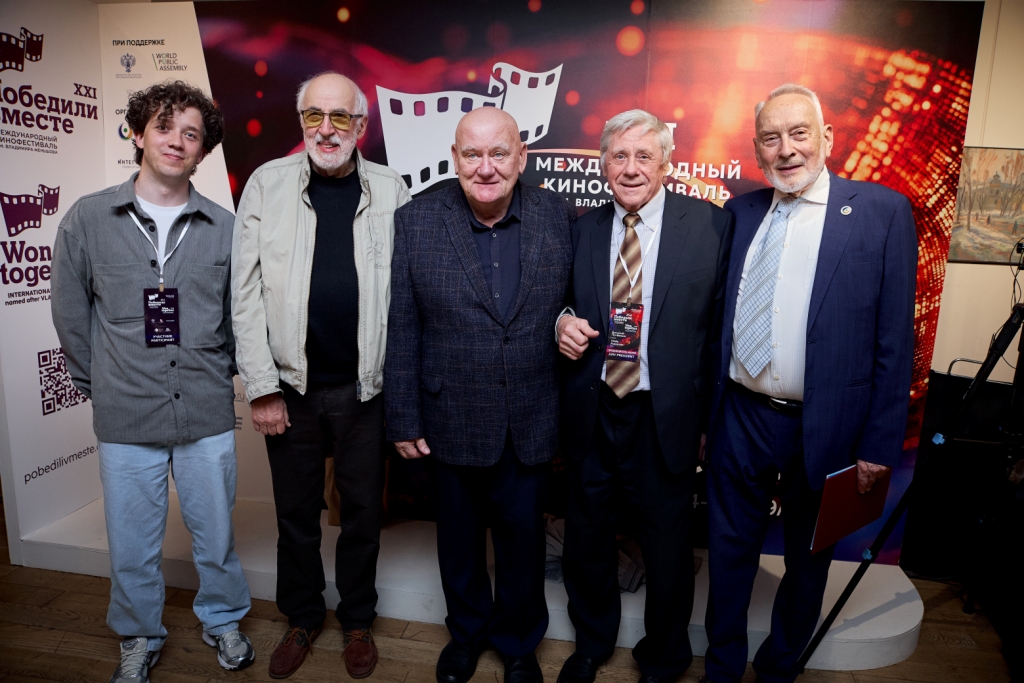
- A remarkable eye-opening film for me—and, I suppose, for everyone present at the festival's opening at the House of Russian Abroad in Moscow—was Crocus. Unbroken by director Vladimir Khrapovitsky. It is about the terrorist attack on March 22, 2024, at the Crocus City Hall. However, the film speaks to us not so much about the tragedy itself, but about the young people who did not panic and saved Muscovites caught in harm's way.
I have to watch a lot of films, and to be honest, I don't easily succumb to emotion. But this time I let my feelings run free; I was deeply moved and simply couldn't tear myself away from the screen. In my opinion, this is an outstanding work! The film, produced by ANO 'Integration' with producer Gleb Shagun, was awarded a special prize at the XXI ‘We Won Together’ International Film Festival.
- From your point of view, which countries are making good documentary films today?
- At our festival this year, directors from Bangladesh, Mexico, Greece, Serbia, Slovenia, and Israel received prizes and diplomas. The Spaniards brought a quite good picture. Iranian cinema is very strong. It is important that despite the war, they are filming about life. Chinese filmmakers deserve a special mention.
We actively cooperate with the China Documentary Film Academy. For instance, I have made five joint films with them. Moreover, the films we present there have already been recognized with awards several times.
Vyacheslav Krasko's film I Am Che Guevara was named Best Foreign Film in the China Documentary Film Academy competition. Meanwhile, The Holy Archipelago, a film about the Solovetsky Islands by the well-known St. Petersburg director Sergey Debizhev, was met with genuine delight in the PRC.
- According to a study, the number of documentary content viewers in Russia more than doubled in the summer of 2026 compared to the same period in 2025. How would you comment on this fact?
- Back in Soviet times, when I was still a teenager, a short documentary film was always shown before the main feature. Many viewers truly loved this genre. However, with the development of television, and especially the internet, movie theaters began to empty out. After all, why leave the house when you can just watch an action movie, a detective story, or a romance drama on the tube?
In 2024, the tetralogy "At the Edge of the Abyss" by Maxim Fadeev won the Grand Prix at our film festival. The producer approached distributors, counting on the film being a massive success. However, the project failed completely; audiences just didn't show up to the theaters. On the other hand, the film sparked unprecedented interest on streaming platforms, racking up millions of views! Fadeev gained an entire army of 25-year-old fans, whom the director likely didn't even know existed.
The rising popularity of documentary filmmaking in Russia is, in my view, the result of several interconnected factors. In an era of information overload, people are increasingly looking for context rather than just facts: they want to understand why something happened and what the cause-and-effect relationships are. Documentary cinema helps make sense of reality. It is now being actively promoted and distributed on TV channels, online streaming platforms, and even mobile networks. Furthermore, not just bloggers, but everyday smartphone users with no background in professional filmmaking can now shoot their own micro-dramas using their built-in cameras. Today, new formats have emerged. Our task is to find a way to master these formats and elevate them to a professional level. Minus the four "S's" — sex, scandal, sensation, and death.
If I were the Minister of Culture, I would have long ago launched themed competitions for creating micro-dramas, a format that young people actively watch and produce. These could include themes of ‘reflection’ and ‘overcoming,’ as well as many other achievements our country is proud of today. While the core audience used to be 35–44 years old, we are now seeing growing interest among youth (aged 20–35). People are looking for meaning, not just entertainment. As a result, we are witnessing a true renaissance of the documentary film genre. Over the past two decades, the festival has become a space for intergenerational dialogue. For several years now, we have been working year-round, organizing film screenings and creative meetings in universities and colleges both in our country and abroad as part of the 'We Won Together Film Marathon' program.
The experience of holding the "We Won Together" festival and cinema marathon for historical education shows how important it is to promote documentary films. Such films serve as an additional visual medium for reflecting on the destiny of our Motherland, as well as the heroism of both the past and present, and stand as a vivid testament to our historical and cultural heritage. The talented works of the creators leave an indelible mark, motivating young people to deepen their knowledge, which helps them find the right direction in today's reality.
The project continues throughout the entire year. Our partners, especially those in remote corners of Russia, remind us that a year has passed and they are eagerly awaiting the arrival of directors with new documentary films. In this way, the "We Won Together" cinema marathon has become a part of their lives. Today, it spans more than a hundred youth venues.