

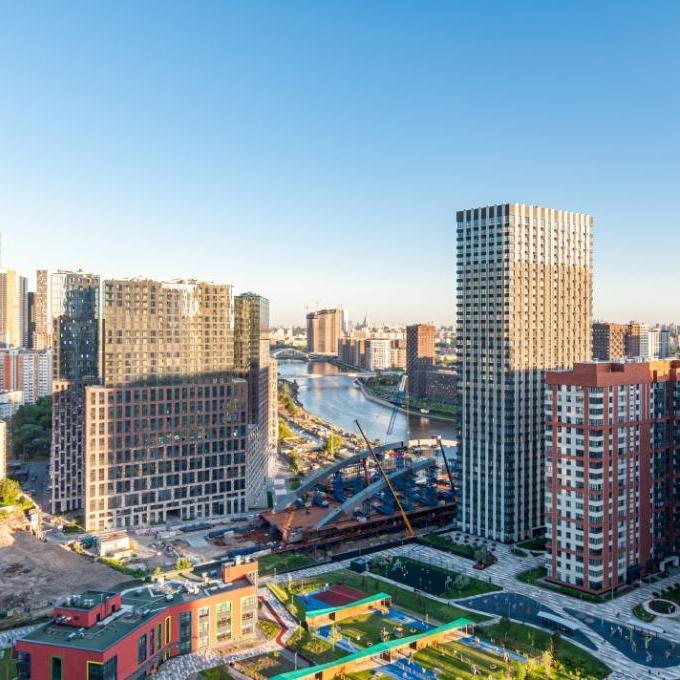
Subsidized Mortgage Lending Canceled: Likely Hardships For Russian Real Estate Market
- Subsidized mortgages were canceled in Moscow on July 1. Why, do you think, the authorities took this step?
- Higher housing availability was one of the key targets of the subsidized mortgage program. However, instead of this the program made housing less affordable, since it had contributed to more aggressive growth of the newbuild square meter price. The subsidized mortgage program was introduced as an anti-crisis measure under the COVID restrictions in 2020, but it ultimately led to a housing market crisis threat. The famous quote “We wanted the best, you know the rest!” by Viktor Chernomyrdin immediately comes to mind.
Over the period of its duration, from April 2020 to June 2024, the subsidized mortgage program caused a lot of trouble: it had not only stimulated soaring housing prices, but also generated a huge gap between new and existing home market prices — about 40%. This program contributed to growing deficit of public coffers.
According to the Ministry of Finance of Russia, in total from 2020 to June 1, 2024 over ₽453 billion had been paid from the federal budget to finance the subsidized mortgages. Though the subsidized mortgage program is over, the state will have to subsidize interest rates on the existing subsidized mortgages for many years to come, and these expenses increase with the rising key rate.
— If things are this bad, who is primarily responsible fоr the current housing market situation: the government, specific agencies or the Bank of Russia?
— It is very unlikely that someone will be held personally liable for the colossal damage, inflicted upon the state by the ill-conceived subsidized mortgage program. It is easy to guess who laid this delay action mine under the state — these were financial and industrial groups, including major banks and developers, who became the primary beneficiaries of this “feast of life”. This is evidenced by record high profits of key mortgage market players. Huge profits from the program were reaped by speculators due to a low interest rate and growing housing prices.

— It has been two months after the cancellation of the subsidized mortgages. What does the Russian real estate market look now?
— Drastically contracted mortgage issue volumes were an immediate reaction to the completion of the subsidized mortgage program. The latest publications by the Central Bank say thast the July mortgage volumes in line with expectations went down by more than two times, down to ₽356 billion from ₽788 billion in June. And state-subsidized mortgage issues have gone down by almost four times (from ₽179 billion to ₽679 billion in June). According to official data, the average weighted mortgage rates at the TOP -20 banks both for newbuilds and existing homes went up to 20,8% per year as at the end of August.
— At the same time other state support housing programs, though with adjusted conditions, are still active in the country. For instance, there are family and IT mortgages, Far East, Arctic and rural mortgages going on now.
— It is true. But along with rising market mortgage rates, banks are tightening conditions on other government-subsidized mortgage programs as well. Major banks have already significantly increased initial payments for such subsidized mortgage loan applicants.
— Tougher requirements to borrowers lead to market cooling, lower demand, ultimately bringing down the square meter price. Could this beneficial for a certain part of Russians, ready to buy housing?
— This is correct. The second, currently less obvious consequence of the subsidized mortgage program and of the change of conditions under other state-supported programs on the housing market is exactly lower housing prices.
The Moscow real estate index had gone down from its historic maximum value ₽304,0 thousand per square meter, achieved on July 17, to ₽295 thousand per square meter on August 21 (The Moscow Exchange has been publishing this index statistics since 2016). It is expected that the gap between the newbuild and the existing housing markets will contract.
— At the same time developers complain of a significant growth of housing construction expenses. According to them, construction materials prices for a number of positions in the first half of 2024 increased by 50%. Simultaneously, labor force expenses grew by 15-20% as well. All these factors will prevent housing prices from going down in the future. And here it seems that the subsidized mortgage lending cancellation will be useless, because the square meter price will not go down.
— I am sure that the strong process of sliding demand for newbuilds due to the cancellation of the subsidized mortgage program will overcome the effect of growing construction industry costs. And the price for newbuilds will ultimately go down.
— How will the cancellation of subsidized mortgages affect the construction industry on the whole in the near future?
- Lower volumes of construction could be expected in our country.
According to Rosstat data, housing commissioning in 2023 amounted to 110,44 million square meters, which is an absolute record for Russia. This is 7,5% higher than the figure for 2022. A sharp cooling of the overheated mortgage market will inevitably lead to a slowdown of the construction industry. There is a greater probability that these large-scale changes will leade to a housing market crisis.
— Should we prepare for high-profile bankruptcies of major developers, or will there be other processes in this market: for example, large companies will start taking over their smaller competitors?
— Both options would be rather natural consequences of crisis processes in the industry. Weaker players go bust under pressure from major negative shocks. When a market narrows down, competition gets stronger and naturally, larger players start taking over smaller ones.
— And what happens in the banking sector?
— Banks have reacted to the cancellation of subsidized mortgages by more active marketing efforts — they are trying to press mortgage loans on with various adjustments, aimed at less financially literate customers. For example, some banks have started actively promoting the so-called tranche mortgages. These differ from regular mortgages in being issued in small parts, and not as a lump sum.
— Which strategy should be chosen under these conditions by people, willing to buy an apartment, but falling out of any subsidized borrower categories?
— As I see it, there is no need to rush things with mortgages, market-based or state-subsidized, because housing prices could go down. It would make sense to wait at least till the next year, when the real estate market situation more or less settles down after the cancellation of subsidized mortgages. But of course, there is a risk that the key rate will continue climbing, dragging up mortgage rates. So a decision whether to get a mortgage loan or to wait should be made at one’s own risk and peril, - says expert Maxim Osadchy.
Anna Solntseva