

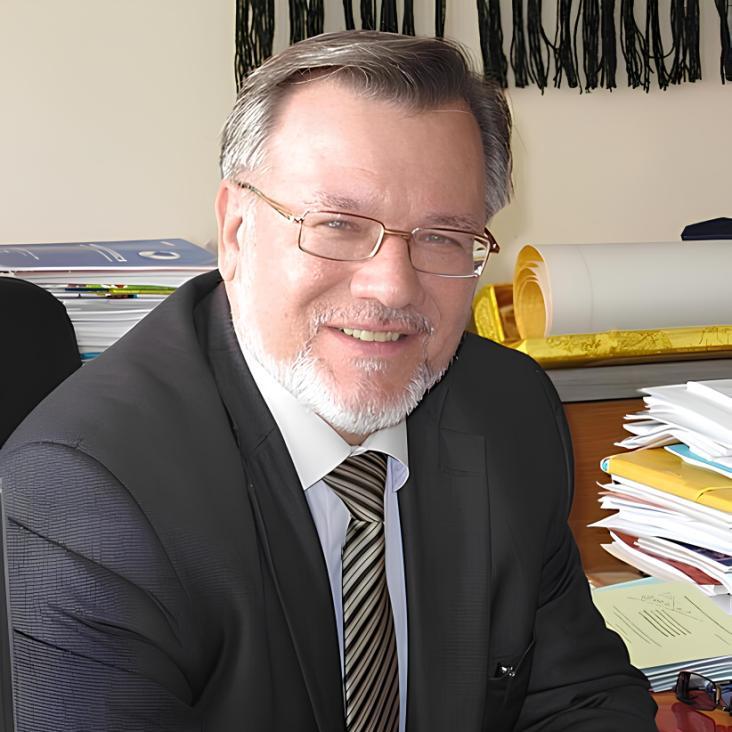
Sergey Luzyanin: "Mongolia, Which We Almost Lost"
- Is it true that during the Brezhnev era, Mongolia, following Bulgaria's example, asked to join the USSR?
- As far as I know, in the 1970s, Yumjaagiin Tsedenbal, the General Secretary of the Mongolian People's Revolutionary Party and de facto head of state, repeatedly approached Leonid Brezhnev with requests to consider incorporating Mongolia into the USSR. However, the Soviet leadership rejected the Mongolian initiative. They believed that the Mongolian People's Republic's (MPR) independent status at the time, combined with its positioning as a "country of victorious socialism supported by the Soviet Union," was internationally the ideal scenario for both Moscow and Ulaanbaatar. Moreover, Mongolia's economy was already an unofficial part of the Soviet national economy. Apparently, Bulgaria was turned down for the exact same reason.
- What does the Mongolian economy look like today?
- According to legend, Erleg, the god of the underworld, generously endowed Mongolia with mineral resources. Geological surveys confirm this: the underground vaults of the Land of the Blue Sky hold more than 80 types of minerals, placing the country in the top three in Central Asia by this metric.
According to estimates by the US Geological Survey, Mongolia's proven reserves include over 400 million tons of iron ore, 55,2 million tons of copper, about 190,000 tons of uranium, around 54,000 tons of molybdenum, and 2,500 tons of gold.
Mongolia is also among the world's top ten countries in terms of coal reserves. It is enough to say that 12 coal basins with a proven volume of 32,6 billion tons are located across different regions of the country.
The primary consumer of this solid fuel is the Chinese metallurgical industry. Mongolia supplies more than a third of China's demand for coking coal. And by all accounts, Mongolia has no intention of losing its position, as coal exports are considered the key source of revenue for the state budget.
The second most critical sector of Mongolia’s economy is trade and services. Agriculture accounts for roughly 12% of the GDP.
Based on the results of the first half of 2026, Mongolia’s economy grew by 7.7% year-on-year. In the first quarter, growth reached 7.9%, marking the strongest pace since the beginning of 2024.
The country's foreign trade turnover reached $17.6 billion in the first six months of 2026, a 35.9% increase compared to the previous year. Exports surged by 57.5%, while imports rose by 10.5%, resulting in a record trade surplus of $4.5 billion.
Mineral products served as the primary engine for exports: coal shipments increased by 51.9%, while copper ore and concentrate deliveries skyrocketed by 89.7%.
According to data from September 2026, trade turnover between Russia and Mongolia totaled $1.57 billion in the first half of the year, representing an 18.1% increase.
Today, more than 70 Russian regions actively cooperate with Mongolian partners.
Mongolia is a leading global producer of cashmere, commanding approximately 30% of the world market. Cashmere stands as one of the country's primary export commodities, second only to mining sector products. The country's revenue from cashmere exports in 2025 amounted to $335 million.
The primary buyers of Mongolian cashmere have traditionally remained China, Italy, the United Kingdom, and seven other nations.
- Many experts say that today Mongolia is drifting towards the West…
- The Mongolian leadership began building bridges with the West back in the 1990s. At that time, I wrote an article titled 'The Mongolia We Lost'. However, few people listened to me: the new Russia had plenty of its own problems.
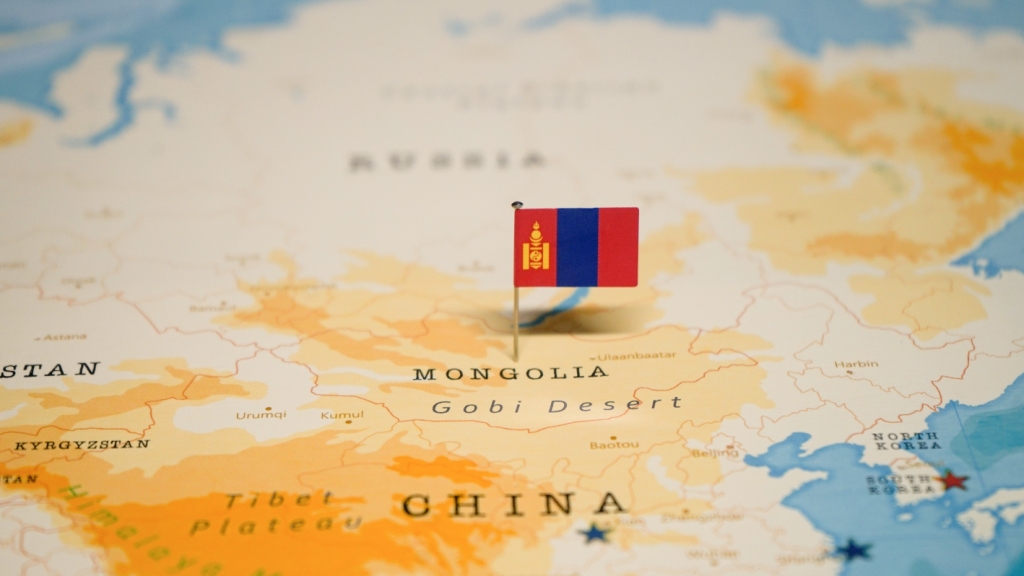
In my work, I noted that a conceptual framework had formed in Mongolia around the theory of the so-called 'third neighbor.' What does this mean? Geopolitically and historically, Mongolia has always had two main neighbors—Russia and China—which for centuries exerted a major influence on their 'younger sister.' In reality, this determined which course Mongolia followed—the Soviet one or the Chinese one.
In 1991–1993, Mongolia gained a collective "third neighbor"—the United States, the European Union, South Korea, and Japan. The Mongolians officially formalized this strategic course by incorporating the necessary language into their foreign policy and national security concepts. According to the authors, the new strategy chosen by Ulaanbaatar is intended to counterbalance Russian and Chinese influence through the West.
Frankly pro-Western politicians emerged within the country's ruling circles, openly claiming, for instance, that the Soviet Union had supposedly completely enslaved Mongolia, while China had prevented it from developing freely. This, they argued, was why the Mongolians needed the West with its market economy, freedom, and lifestyle.
The 2000s marked the beginning of Mongolia's integration into virtually all Western and East Asian projects (such as the Asian Development Bank, the IMF, and the WTO). In 2012, the United States invited Mongolia to participate in NATO's "Partnership for Peace" program. NATO standards were swiftly introduced into the military. Videos can be found online showing Mongolian soldiers, dressed in NATO uniforms, practicing German military drill steps.
Few people know that Mongolian military personnel, as UN peacekeepers, participated in US operations in Iraq and Afghanistan.
However, credit must be given to the Mongolian leadership: despite this new course, official Ulaanbaatar has managed to maintain a balance—or, better yet, neutrality—between Russia, China, and the "third neighbor".
Following the election of the current President, Ukhnaagiin Khürelsükh, in 2021, the tilt toward the West was corrected. In principle, Mongolia is now maintaining a golden mean. Politically, the country does not wish to align itself with any of the three poles, thereby preserving its internal autonomy.
- Is Mongolia still a strategic partner of Russia?
- In 2019, Moscow and Ulaanbaatar signed the Treaty on Comprehensive Strategic Partnership, thereby elevating the level of relations between the two states. This served as a kind of deterrent for the "third neighbor"—Western countries—and rebalanced the tilt that had emerged. Now, a gradual pivot toward Russia is observable: negotiations have taken place at the level of heads of state and government, and Mongolia has signed an agreement on preferential trade arrangements, tariffs, and the creation of a free trade zone with the Eurasian Economic Union. A number of important trilateral documents have also been signed regarding the Russia–Mongolia–China transit economic corridor. In this sense, the value of the Russian-Mongolian strategic partnership has not only held firm but has actually strengthened.
During a recent meeting with Mongolian Prime Minister Nyam-Osoryn Uchral on the sidelines of the Eastern Economic Forum in Vladivostok, Vladimir Putin stated that relations between the two countries have reached the level of a comprehensive strategic partnership. The President noted that interstate ties between Russia and Mongolia are cemented by the "blood of ancestors"—they fought together for Mongolia's freedom and independence during the Great Patriotic War and at Khalkhin Gol.
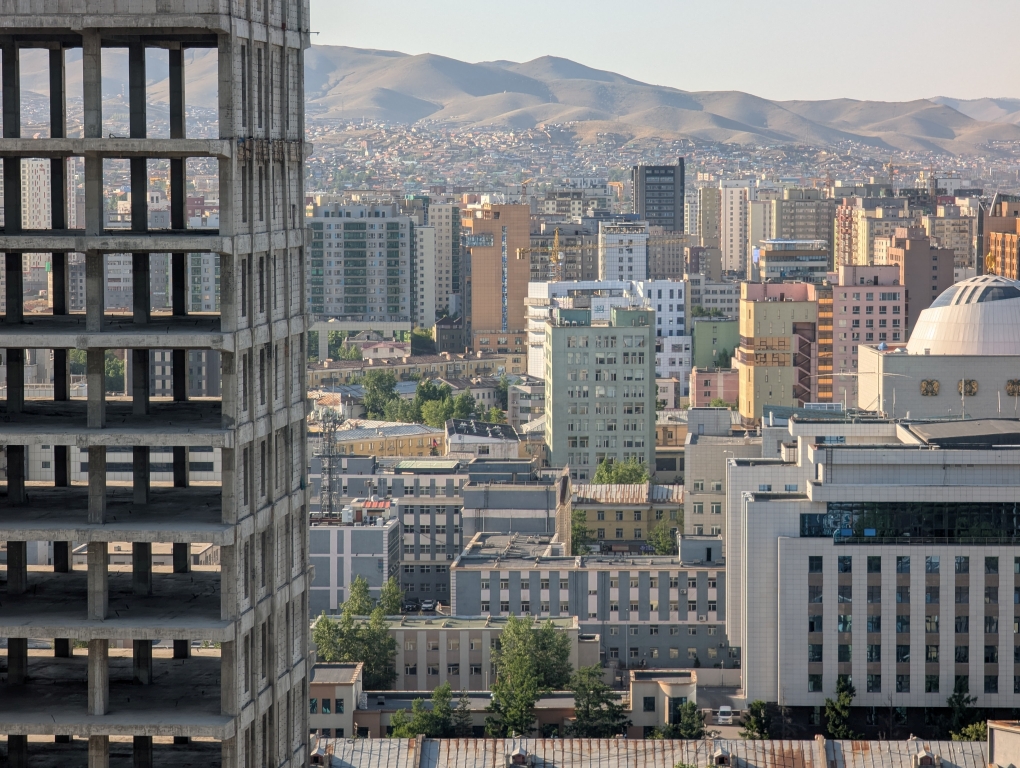
- In 2003, Russia wrote off $11.1 billion of Mongolia's debt, and in 2016, it sold its 40% stake in Erdenet, Mongolia's largest mining and processing plant. Looking back from today's perspective, was this a gesture of goodwill by the Russian government, or was it a mistake?
- This move by the Russian leadership was aligned with the Kremlin's broader policy of forgiving former Soviet debts—totaling around $60 billion—owed by Arab, African, Latin American, and other developing nations.
However, many experts argue that Mongolia should have been treated differently. It is quite obvious that by keeping the accumulated debt on the books, the Russian leadership could have retained a powerful lever of influence over Ulaanbaatar to use whenever necessary. Take China, for instance: the Mongolians owe Beijing $40 billion, yet China has no intention of canceling this debt, regardless of how long or short its history may be. Granted, China restructures the debt, grants concessions and preferential terms to the Mongolians, and defers payments, but it always acts strictly in its own self-interest. We chose a different path. In any case, I believe that the $11 billion gift was, and remains, a sincere and brotherly gesture of goodwill—one that the Mongolian people will never forget.
Regarding the sale of the Soviet-Mongolian Erdenet Mining Corporation, in 2016 Rostec did indeed sell this vital asset to the Mongolian government through a local intermediary firm. Moreover, this sale included not only Erdenet, but also Mongolrostsvetmet—a mining enterprise established in 1973 under an intergovernmental agreement between the USSR and the MPR (Mongolian People's Republic).
During the Soviet era, the Erdenet and Mongolrostsvetmet plants operated entirely for the benefit of Soviet industry in terms of exporting copper, molybdenum, and copper concentrate. In return, the USSR provided Mongolia with a full supply chain covering practically all commodity sectors. Such was the Soviet-Mongolian model of economic cooperation.
In the 1990s, Russia downgraded the level of its relations [with Mongolia] from strategic to local and regional (Mongolia – Buryatia - Irkutsk Oblast, Tuva). However, the Erdenet enterprise continued its production, only now the supplies of copper and molybdenum flowed to external markets rather than to Russia. At the same time, the controlling stake (51%) still belonged to the Mongolian side, while 49% belonged to Russia. As a result, it turned out that we, effectively remaining the primary investors, ended up with absolutely nothing instead of the traditional exports! Meanwhile, all supplies went to China, South Korea, and European countries. It was impossible to change anything—the hand of the "third neighbor" was clearly felt.
Erdenet was sold, and the attention of the Russian leadership has already shifted to several main areas of the Mongolian economy where we still maintain and strengthen our positions to this day—namely transport (the Ulaanbaatar Railway) and the supply of hydrocarbons and oil, lubricants, and grease, which account for 90% of all Russian exports to Mongolia.
Additionally, Moscow and Ulaanbaatar plan to construct the "Power of Siberia 2" trans-border main gas pipeline to China. Projects are also being discussed to build new railway lines to major mineral deposits in Mongolia to provide Mongolian raw materials with access to global markets, including transit through Russian territory.
In terms of investment contribution to the Mongolian economy, Russia currently ranks only 15th.
- Sergey Gennadievich, what, in your opinion, prevents Russia and Mongolia from successfully developing trade and economic cooperation?
- Mongolia is persistently expanding its cooperation with Western countries, counting on foreign investment, financial aid, the creation of joint ventures, and a stable Mongolian emigration to these nations.
Russia and the Russian economy are far less attractive to Mongolia and Mongolian society. This is happening, among other reasons, because the economic sanctions imposed by the US and Western countries against certain large Russian companies and banks make cooperation with them a "toxic" and unpromising direction for Mongolian entities in the industrial, banking, and financial sectors.
Today, the main obstacle to the development of business ties between the two countries remains "economic asymmetry" in terms of commodity structure and mutual trade opportunities.
Furthermore, until recently, the development of our cooperation was hindered by corruption, which flourished in Mongolia during the 2000s. It is no coincidence that a few years ago, a scandal erupted involving the embezzlement of coal intended for export to China through the Erdenes Tavan Tolgoi company. Its shares are owned not only by the state but also by about 2.5 million people (approximately 70% of the country's population).
Information appeared in the media about a discrepancy in coal trade statistics with China: the volume of coal imported by the Chinese side was 6.4 million tons higher than the export volume declared by the Mongolian side.
The scandal turned out to be monumental! Ordinary citizens took to the streets in protest, demanding their money back and the punishment of the thieves. Following an investigation, criminal cases were initiated, and the heads of ministers and many officials rolled. There have been many such scandals in Mongolia over the past decades. In Moscow, of course, they closely watched all these showdowns and drew conclusions.
A major factor in the weakening of Russian-Mongolian relations prior to 2024 was the frequent turnover of Mongolia's political elite. Today, we are witnessing a scenario where former political rivals—the Democratic Party and the Mongolian People's Party—are pursuing the same political course, adhering to the principle of deepening relations with Russia and China while maintaining ties with the "third neighbor".
Gradually, the generation of political figures, bankers, businessmen, and scientists who were educated in the USSR and Russia is passing, which could ultimately weaken Russian-Mongolian economic, political, scientific, and cultural ties.
- How have the relations between the two capitals, Moscow and Ulaanbaatar, developed in recent years?
- In September 2022, in the capital of Mongolia, the mayors of Moscow and Ulaanbaatar, Sergey Sobyanin and Dolgorsürengiin Sumiyaabazar, signed a Cooperation Program for the coming years. It included such areas as trade and economic cooperation, development of road and transport infrastructure, interaction in the field of industrial development and innovation, education and healthcare, sports and tourism.
Today, the Cooperation Program between the two cities is supported by concrete actions: professional development events have been organized for Russian language teachers in Ulaanbaatar, and the exchange of experience in the development of new educational technologies, digital learning tools, and student upbringing continues. From time to time, internships are held for Mongolian medical personnel to improve their qualifications—including infectious disease specialists, pediatricians, general practitioners dealing with children's diseases, and IT specialists in the field of telemedicine.