


Russian fish export flows are heading towards China
The "Pivot to the East" of the Russian fishing industry was clearly manifested by the composition of national expositions at the Exhibition of the Fishing Industry, Seafood and Technologies held parallel to the forum in St. Pete. Partners from China, India, Saudi Arabia, Turkey, Oman, and other countries demonstrated their products, their know-how and "best practice" portfolio.
The central thesis that defined the spirit and letter of this flagship event of the year for the fishing industry was the title of the plenary session: "Fisheries in the era of innovation. Technologies of the future" – it read.
For Russia, Dmitry Patrushev, the Minister of Agriculture, Ilya Shestakov, the head of Federal Agency for Fishery (Rosrybolovstvo) presented their insight on the issue and specifically noted that establishing a balance between achieving technological sovereignty and concurrently developing partnerships with friendly countries is institutionalized as one of the main directions of industry development. In the category of friendly nations, a prominent place belongs to the People's Republic of China.
The Chinese claim, and apparently with good reason, that their history of marine fishing dates back 2,800 years, and the chronicle of freshwater aquaculture begins 2,500 years ago. For centuries, industrial fishing of such fish species as pollock, Pacific cod, sima, king mackerel and sea bass has been conducted in the waters of the Heilongjiang River, the Yellow and East China Seas. However, recently there has been a sharp reduction in industrial catch, which has affected the level of consumption of fish and seafood.
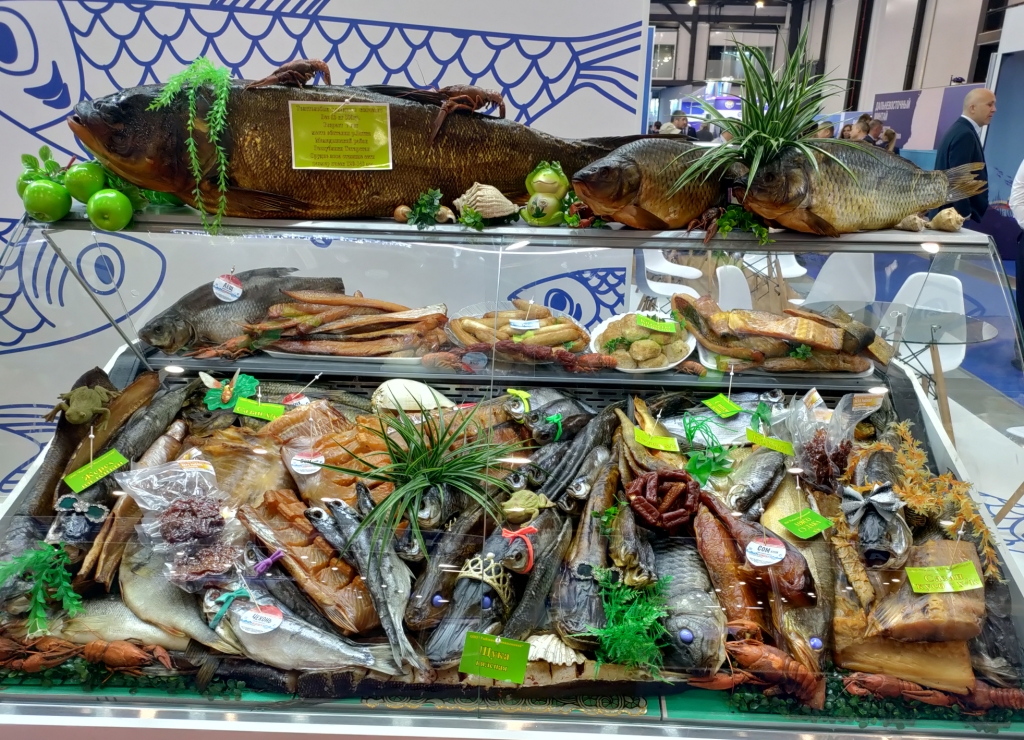
China currently ranks number one among importers of fish products such as live lobsters, crabs and shrimps, as well as frozen warm-water shrimp and cold-water shrimp. For this reason, Chinese experts regard as a positive trend the news that the quota for catching Kamchatka crab, as well as snow crab, has been increased by Russia.
For domestic fishermen, it is no secret either the phenomenal “strategic depth” of China's domestic market, or the challenges of entering and settling in this market marked by 1 billion 400 million consumers. The sheer number of consumers and, accordingly, potential customers for the Russian fishing industry supports the interest and stimulates aspiration of those sectoral companies that have something to offer for export.
In the news flow, you can find information that Kamchatka crabs can be delivered to the Hengsha fishing port for further sale all across such a giant urban agglomeration as Shanghai, as early as three days after catching, while the survival rate of these creatures will be guaranteed to be high.
In 2023, compared with the previous year, Russian crab exports to China increased by 74.8% in quantitative terms, and by 42.5% in value terms. Specifically, in 2022, the Chinese companies imported 20,090 tons of crab, and the next year they imported 30,105 tons, which amounts to an almost explosive growth of almost 50%. Domestic companies generated $978 million in sales in 2022 and $978 million in 2023. Over the past year, the volume of fish and seafood supplies has increased by a third.
"The growth is constant: new provinces (in China) are opening up, which also want to consume Russian products from aquatic biological resources, including crabs," said Ilya Shestakov, head of Rosrybolovstvo. Now, boiled and frozen crab is "making its way into the tightly regulated Chinese market." The import of frozen cod and pollock by our eastern neighbors is also on the rise.
As a matter of comparison, the top five countries in terms of production of industrial fisheries products include: China (14.3%), Indonesia (8.0%), India (6.0%), Peru (5.8%), Russia (5.4%).
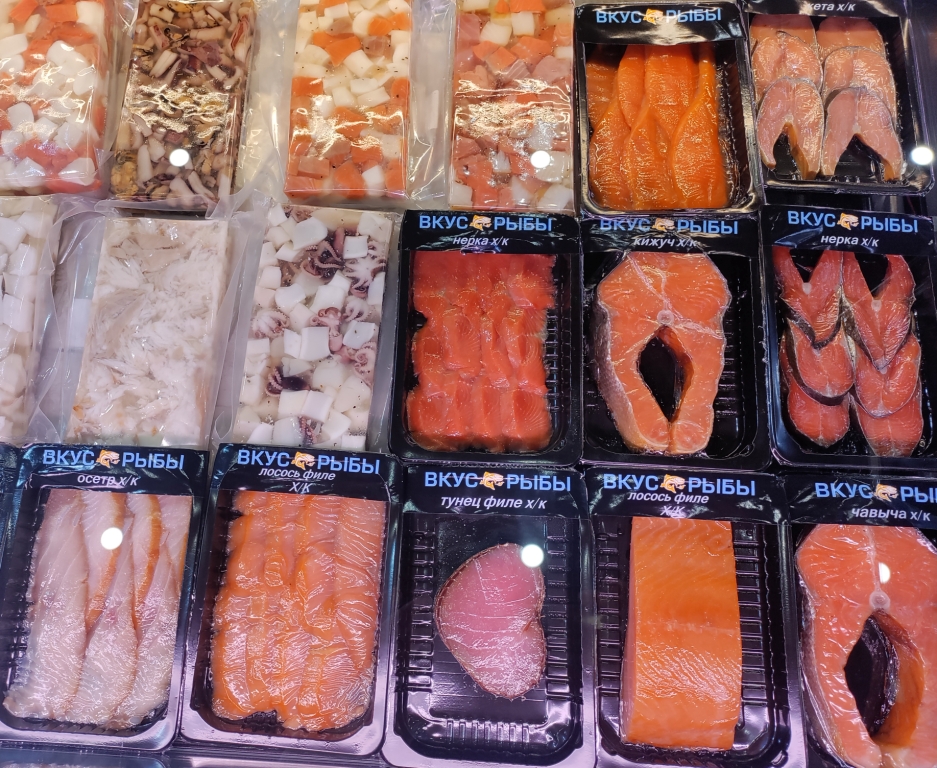
According to the FAO forecast for the development of fisheries and aquaculture for 2022-2032, the consumption of food from aquatic animals per capita in 2032 will amount to 21.3 kg. The forecast is based on taking into account three factors: an increase in household incomes and ongoing urbanization; modernization of approaches to post-field processing and distribution; and changes in the dietary preferences of the population.
In addition to fishing within the Exclusive Economic Zone, Russia is fishing in almost all of the world's oceans. The fishing industry has a real prospect, given the large-scale shipbuilding and fleet modernization program, to increase the catch of aquatic biological resources in the “seven seas” by 200 thousand tons within 3-5 years. According to experts from the Russian Federal Research Institute of Fisheries and Oceanography (VNIRO), it will be possible to increase this yield to one million tons. This means that Russia will be able to saturate both the domestic market and increase its export potential.
* * *
The Chinese have a reputation for being difficult trading partners. As the Siberian Cossack Ivan Petlin, who visited at the beginning of the XVII century at the behest of the city of Tobolsk mayor Prince Ivan Kurakin on an introductory mission to the Middle Kingdom, correctly noted, "people in the Chinese state are not military-minded: their great capacity is talent for trade."
It is significant that for 15 years China has been trading on every point of the deal on accession to the General Agreement on Tariffs and Trade (GATT), renamed the World Trade Organization (WTO). The tenacity with which the Chinese scrupulously squeezed out preferences for themselves from 1986 to 2001 has not gone away.
The more valuable are the cases when it has been possible to find and achieve a compromise solution. Previously, unloading of vessels with products of domestic fishermen was conducted only if scanned copies of certificates were provided with mandatory sending of originals with attached receipts with the date of their dispatch. This being a prerequisite and a complicated bureaucratic procedure slowed down the delivery of goods routine.
It has become known that since September 1, a pilot project has been launched to issue electronic certificates of origin of marine resources for export to China. This document confirms the legality of the extraction and production of fish products, which is a prerequisite in accordance with the bilateral agreement on cooperation in the field of prevention, containment and elimination of IUU fishing.
Reminder: IUU fishing stands for illegal, unreported and unregulated fishing of biological resources on an industrial scale. The volume of IUU fishing reaches 30% of the total industrial catch of certain species of valuable fish.
Digitalization of the fishing industry is not intended exclusively for "export" – this process is unified. As Ilya Shestakov underlined, "an electronic fishing register is put in place allowing all inspection services to analyze fishing data. The service is integrated with the Mercury system. Thus, when issuing a veterinary certificate, information about the legality of the extraction of aquatic biological resources is confirmed. The process is automated and is being continuously improved."
* * *
China accounts for about 14% of the total global consumption of fish and seafood (the United States is still in the lead with 17%). The difference, however, is slowly but surely decreasing. One of their key reasons is that in China there is a steady growth in the welfare of citizens, the middle class is expanding and displaying fine-tuned demand for quality nutrition. Many are switching to more expensive and high-quality varieties of fish and seafood.
A positive role is played by public educational and awareness-raising programs aimed at explaining the benefits of fish products, which results in naturally increases of domestic demand. This is confirmed by statistics on the fast-growing segment of premium fish products.
"This creates unique opportunities for Russian producers," Oleg Kobiakov, Director of the FAO Liaison Office with the Russian Federation, noted in his speech at the St. Petersburg forum. – Given the difficulties of entering the Chinese market, it is advisable to focus on supplies specifically in the premium product segment. Russia has every chance to occupy this niche by offering high-quality seafood that may be of interest to the ever more demanding Chinese consumer."
An example of such a successful entry into their domestic market is the trial delivery of fish in September by transport aircraft from Murmansk to China. "This shows, Oleg Kobiakov commented, that despite the existing barriers, Russian manufacturers can find effective ways to sell their products."
It cannot be said that domestic fishermen and exporters are starting from scratch. Russian crab producers have been building business relationships with Chinese contractors in the HoReCa segment (Hotel, Restaurant, Catering/Cafe – "Hotel", "Restaurant" and "Catering/Cafe") for 15 years – and they do it very successfully.
The Russians, according to sources in VARPE (the All-Russian Association of Fisheries Enterprises, Entrepreneurs and Exporters), financed "the promotion of standards for the consumption of crabs extracted by restaurant customers themselves from aquariums (such practices were familiar to the Japanese and Korean culinary traditions, but they turned out to be a novelty in the Middle Kingdom)." The result of targeted efforts was an increase in crab imports to China from 18 thousand tons to almost 41 thousand tons.
"China is an important trading partner for us: it accounts for 50% of exports. We supply 1.3 million tons worth 3 billion US dollars to China," concluded Ilya Shestakov, head of Rosrybolovstvo.
Cooperation in such areas as aqua and mariculture, where China is considered the undisputed champion, is no less promising. Russia could, in Pushkin's phrase, "appropriate someone else's mind to itself" if it learns and accommodates the practical methods of organizing fish farms and advanced digital solutions used in the breeding, maintenance and cultivation of fish and seafood.
However, despite the importance of the export component in the development of the fishing industry in Russia, two priority areas remain intact: The increase in the volume of production of deep-processed fish products and the increase in fish consumption in the domestic market.
Vadim Vikhrov
St. Petersburg – Moscow.