

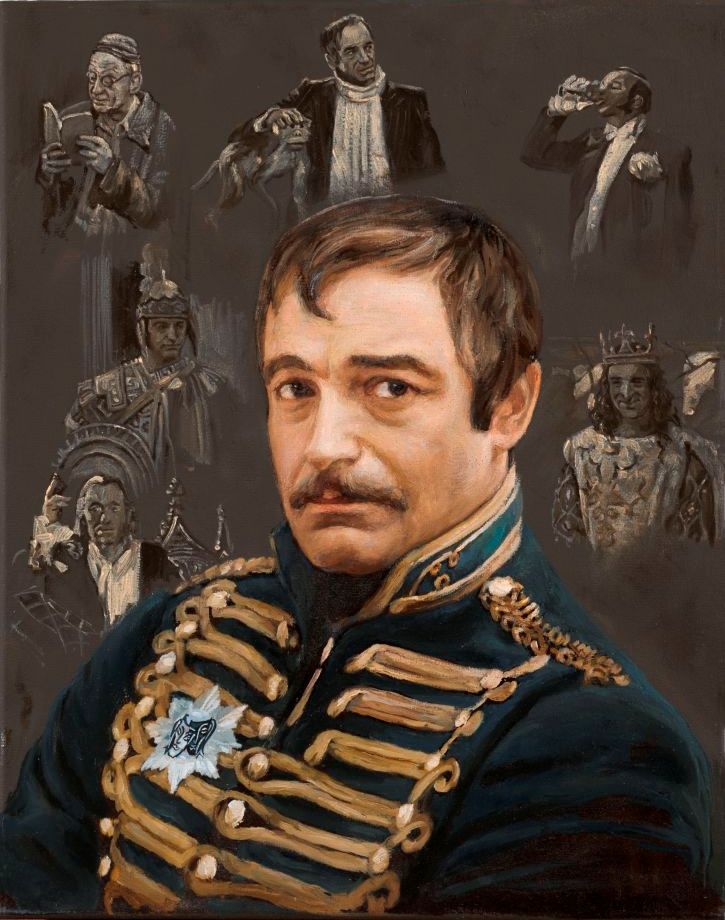
Nikas Safronov: "Moscow is a never-ending feast"
The renowned brush master kindly agreed to answer questions for the Big Moscow's readership.
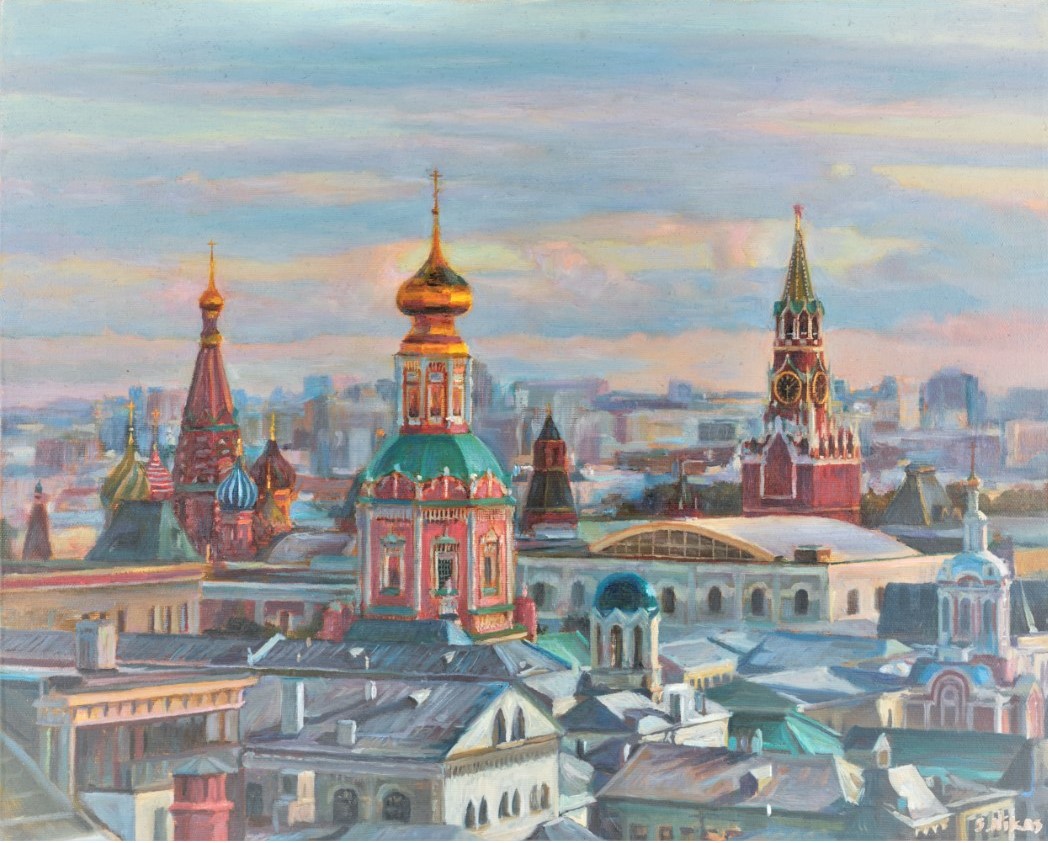
What place does Moscow occupy in your work and life trajectory?
I was born in Ulyanovsk, lived in Rostov-on-Don, in Panevezhys, a city in Lithuania, it is the birthplace of my mother. I settled down in Vilnius for a while and, by the way, everything was going fine for me there. My Moscow friend Vladimir Mittelman once gave me this advice: "Nikas, if you want to succeed as an artist, then move to Moscow."
At that very moment, Moscow was a rather distant and alien city for me, but over time I came to trust it, even changed my Vilnius apartment for a room in a Moscow communal apartment in the Teply Stan (Warm Camp) district. Only a year later, I experienced the fresh winds of spring streaming through this distant outskirts, while inhaling nightingales’ songs right outside my window. I suddenly discovered Moscow anew and realized that this indeed was my city as for now.
Later, I moved to the Malaya Gruzinskaya street, where my acquaintance with a completely different, “big world” has started. That is the discovery of the heart of Moscow. Yet, the original happy feeling of finally finding your true and main city in life has remained with me ever since.
I have been traveling across the world for a long time, but invariably whenever I returned back home to Moscow, I enjoyed the thrill of a comeback. Hemingway called his book with memoirs of Paris "A Moveable Feast." For me, Moscow is also a never-ending feast.
Nikas, do you still share the popular Russian assumption that "Beauty will save the world"?
I strongly believe that beauty will really save the world, but not all by itself, but indirectly. People are intuitively drawn to beauty and try to preserve it, and for this purpose peace and harmony are essential since any conflict annihilates beauty in the first place. However, beauty is not always a thing of the obvious, therefore, in my opinion, we need an artist (in the broadest sense of the word) who would reveal it in his creations and convey it to people. As a result, beauty may save the world, but mainly through the mediation of art.
What kind of ordeal an artist faces in our challenging times?
In both ordinary and severe times, you need to remain an artist if God blessed you with this gift. At the same time, it is necessary to remain true to yourself, not to be compromised by fits of momentary emotions, not to get involved in any opportunistic affairs and undertakings in order not to feel ashamed of yourself later.
Today, you need to decide which side you are on – that's the main thing. I am in Russia, I am with Russia and I am for Russia.
In general, it seems to me that the expression "difficult times" can only be evaluated properly through comparison to "ordinary or simple times". When I think in this format, I come to realize that there have never been “simple times” in my life, for example. There was always attending to business matters, settling problems, and mapping plans, all the time. Perhaps, this is what happiness is about.
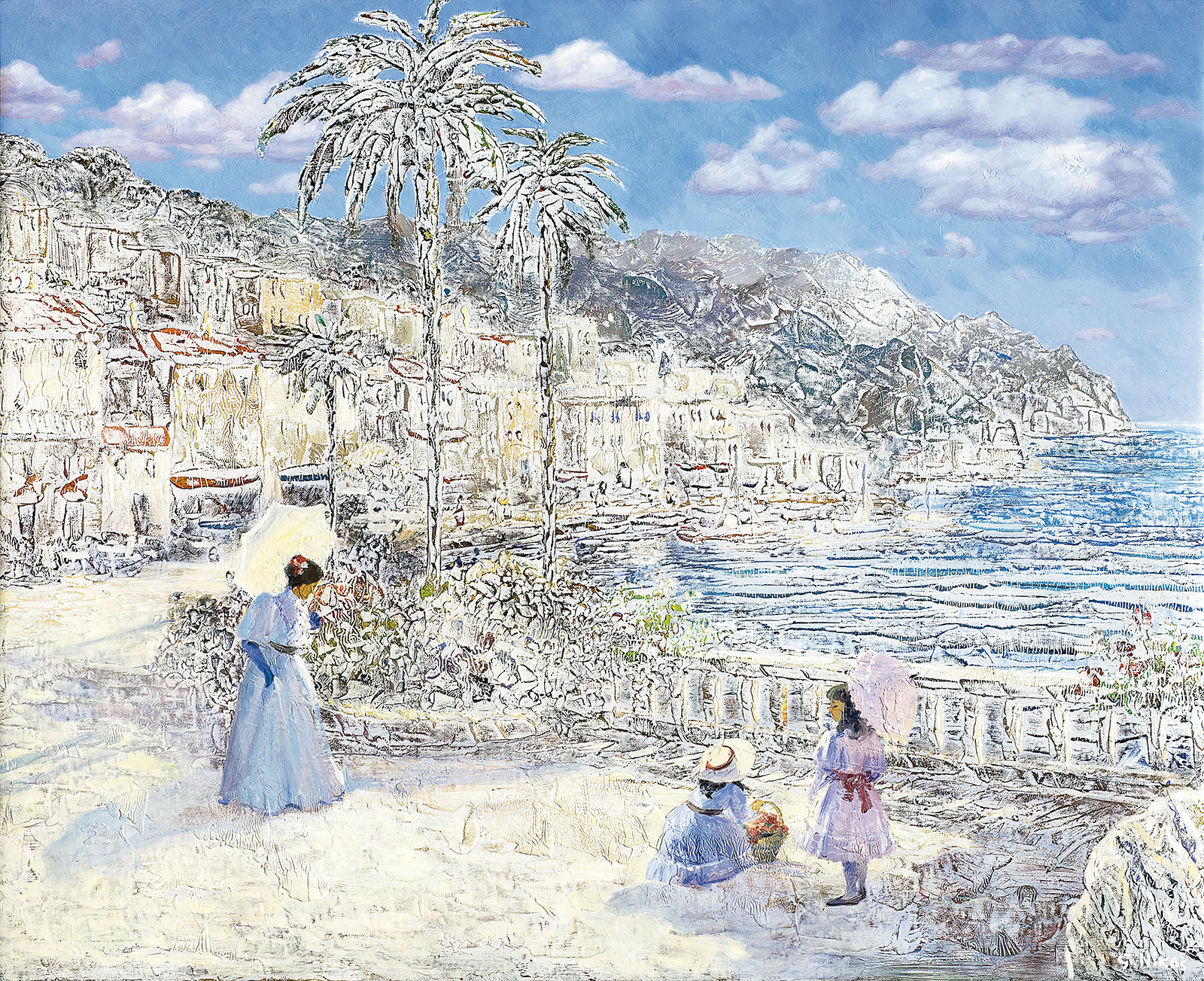
There is a lot of talk among artists and art lovers in Moscow about your branded Dream Vision style, which, as you once put it, should become a new "trend in art." Would you please explain what is it.
I coined this brand metaphorically or, as they say, in a jiffy. In general, in the history of painting, we are unlikely to find precedents when an artist or a group of artists consciously created a specific direction in art. It all occurs naturally. Impressionism is a vivid example. Artists with similar views, manners, styles first meet, get acquainted, exhibit. They are gaining followers. A kind of "social relay race" is emerging. Whether it would happen as well with the Dream Vision style, it is impossible to predict with certainty, as of today. This will become clear only after many years have elapsed.
Since we're talking about Dream Vision, I can admit that this style appeared as if by accident, although nothing happens by chance in my profession... The first impetus was an incident during my trip to Italy. I arrived in Pompeii, detected right on the ancient walls a half-erased painting, and then we heard a child crying. Everyone thought those were cats screaming, but the Italian tour guide revealed it was actually a cry of a baby. When Vesuvius erupted some 2,000 years ago, this child accidentally fell into the corridors of time and now, we sometimes hear this weeping going up into the skies from the ancient ruins.
It had an indelible impression on me! When I returned to Moscow, I tried to present the mural I had seen in Italy on canvass, but in my own technique of painting. Later, this story was supplemented with new shades of meaning, which eventually turned into a painting.
I have a son named Stefano, he was born in Venice, but has been living in London since he was six months old. He and I often used to visit his grandmother in Venice in the summer. We flew to Vienna — I from Moscow and my son from London — and then took a train to Venice. The train arrived at 5 a.m., and at this hour we always found a light fog rising from the water. I really liked the view of this misty morning Venice.
The simplest thing that could be done by depicting what we saw was to paint a realistic landscape. Then buy a white art spray in the store, spray this white paint on the canvas — so that clear lines will "float", thus remotely preserving the original contours.
But then I thought it was too easy for an artist of my class, and subsequently decided to complicate the technique of conveying my impression. At first, I began to make the landscape pasty, then lather, cover with a new layer of paint, peel it off, then lather again. That's how this technique, which I call Dream Vision, appeared at the end of my experimental efforts.
There are rumors that Nikas Safronov is preparing a sensational exhibition of his paintings in the Dream Vision style in Switzerland. Is this possible during the current period of a sharp cool-off of relations between Russia and Europe?
Such an exhibition is indeed being prepared, but it is not a project for today. There are some agreements, but mostly made verbally. There are people who would like to arrange such an exhibition and even financially participate in its sponsorship. Yet, it's definitely too early to talk about it, including for superstitious reasons. I don't want to scare it off, as they say, or start a chain of undesirable developments, which does not exclude possible provocations.
How open do you think the West is to Russian art now? After all, there have already been attempts to ban Tchaikovsky, Tolstoy, and the Bolshoi Theater.
Our enemies have a wide range of cancel tactics, from silencing to outright bans on everything related to Russia. Paradoxically, it is easier to ban the Bolshoi Theater, if you keep in mind its performance tours, than Tchaikovsky and Tolstoy. The names of our great compatriots are part of the world culture, they have entered into its core values, and therefore some cases of culture prohibition look awkward and just stupid!
Attempts to "islandize" (i.e. turn it into an isolated island) Russia, which is the target of numerous Western sanctions and other unfriendly actions, would be futile.
To eject Russia and its rich culture out of the world legacy is nothing more than a hysterical whim by some not quite adequate politicians in the West. Russia's influence on many aspects of the development of European culture and science is so profound that it cannot be "cancelled" by someone’s folly.
Mikhail Chekhov is behind Hollywood’s grandeur and this is already a fact of history! Lomonosov, Tchaikovsky, Stanislavsky, Pushkin, Tsiolkovsky, Repin, Sikorsky, Pavlov, Mendeleev, ballet Prima Donna Pavlova… Russia has enlivened the global cultural domain with great artists. Most importantly, these creative geniuses have largely determined the progress of Western culture and science for many decades to come. Even the fragrance that was later used in the composition of Chanel No. 5 perfume was originally created by a Russian royal perfumer. At one time, he sold it to Coco Chanel in a bottle, which she then resold for $120.
There is a common expression: "Art is eternal." Any political turbulences , no matter how long they might last, is a sheer moment in comparison with the time-honored and centuries-long Russian art.
Which of the contemporary artists had a strong influence on your working technique and style? Are there any masters whose creations make you feel envious or, conversely, delighted?
The influence of other artists on someone else, including my own work, is a very subjective moment, a matter of opinion. For me, these are mostly artists of the past – distant and recent past. As a child, I got my hands on a book with illustrations by Gustave Dore. I had redrawn them and extracted an exquisite pleasure from this experience. Psychologists use the term "imprinting", i.e. fixing in memory a certain impression of childhood, which determines a lot in the life of any person, including the perceptions of the world around them. Later, as a revelation came Albrecht Durer. Later on, it was the discovery of Brueghel the Elder, then Corot and, of course, the great Turner. Perhaps, under their influence I became an artist.
I studied the works of these and other grand masters in various museums and galleries around the world. They all shaped my personality in some way. So, I would not be able to determine who exactly influenced me and in what way. This is rather the task of art historians.
What do you respond to critics and detractors who label you a "commercial artist?"
I don't respond to anything of this sort, because to answer these category of critics means to downshift to the level where envy, vindictiveness and other vile things dominate. My opponents who thrive in this field are obviously stronger than me. I'm simply doing my job.
Now, talking about commerce. It depends on what is meant by this term? Painting has been a craft since its inception. Then it became art, but it remained the source of artist's existence. Works should be exhibited, sold, etc. Today, if paintings are successfully sold, then detractors call the author a "commercial artist". Centuries go by, some paintings start to cost millions of dollars and the question of commerce somehow melts down. Time will judge who is who.
I will say more, 90% of the artists from the past who have weathered the ordeal of times and became an integral part of the world culture were "commercial" during their lifetime and at the same time very famous! These are Velasquez, Rubens, Raphael, Michelangelo and Leonardo da Vinci... Even Rembrandt, who is often believed to have died a beggar. That's true, that's true! At the end of his life, the great master started selling tulips and eventually went bankrupt. But before that, Rembrandt was considered one of the richest and most famous person in Amsterdam.
You once told reporters: "I don't like to draw ripped bellies." Did you mean the war?
It's not about the war. I'm just not a social artist or event recorder. I do not load paintings with social content, like Ilya Repin, for example, or depict keynote events, as in the famous painting “Morning of the Streltsy Execution” (Streltsy – Russian firearm infantry soldiers from the 16th century to the early 18th century). If I am impressed by some events, then I often convey it in an extremely allegorical form.
The painting "The Meeting of Barbara's Spirit with the keeper of the castle", for example, depicts one of the most romantic and tragic love stories that often unfolded behind the impregnable walls of European castles. One glance at the canvas is enough to understand — here is a castle, a man and a woman, but they are already in different worlds. What really happened there? Who was Barbara? And why do we care about this story? If the artist was able to intrigue the viewer and encourage him to start reading historical literature, this is already a big deal.
Nikas, you have painted dozens of portraits of presidents and major politicians. And yet, which of the powerful leaders of this world would you like to portray?
To be honest, it's easier for me to list those of them whom I would definitely not like to see on my canvases. I have always been interested not in the powerful rulers per se, but in their inner world, will, mind, and how they cope with their loneliness. A big man is always lonely.
It seems to me that today the "personalistic" landscape of Europe and America, in terms of political leaders, is unusually impersonal and poor. There were lumpy politicians and I enjoyed painting their portraits: Fidel Castro, Daniel Ortega, Mohammed Bin Zayed Al Nahyan, Silvio Berlusconi. This list could be continued. Now, as it seems to me, sand has replaced boulders in the West. Alas, there is no one to write to…
It is no coincidence that the cartoonists have become animated. Western publications are full of images of politicians, including presidents, presented in clumsy backgrounds and with very funny looks. However, this is not my playground.
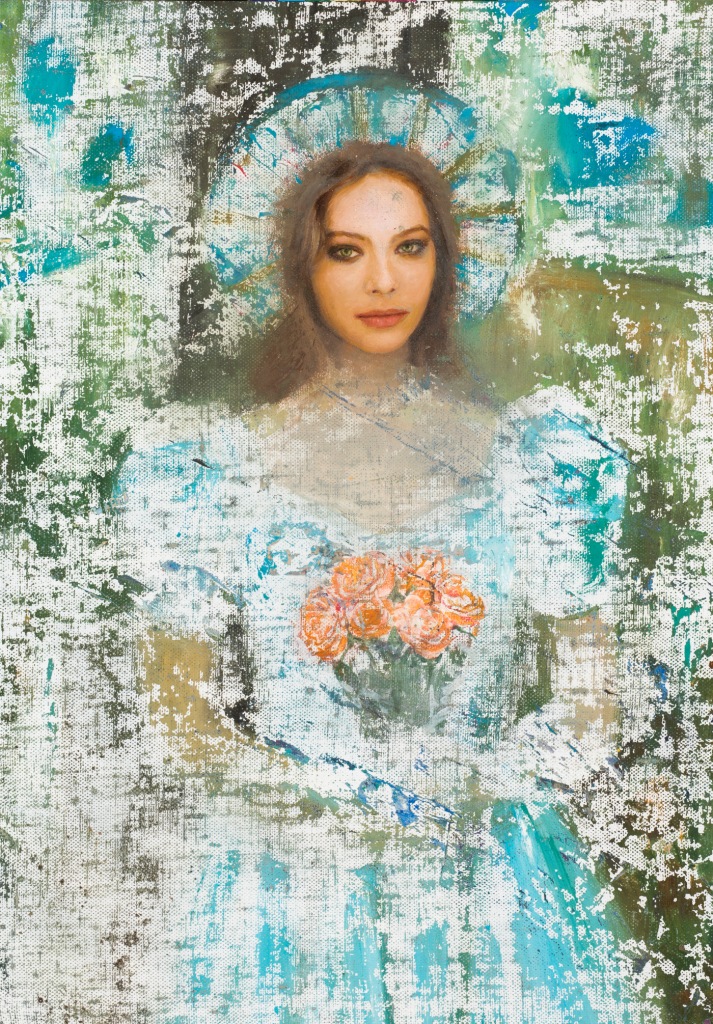
Is it true that you have been friends for a long time with the Italian film star Ornella Mutti, who flew to Moscow a couple of years ago to pick up a portrait of her beloved cat made by you?
-Yes, it's true. In fact Ornella flew to Moscow for two of her scheduled performances. We met, and she reminded me of my promise to draw her cat. At that moment, sadly, he was gone. It was important for Ornella, looking at my painting, to remember her beloved younger friend. Since the cat was red and very fluffy, I painted it against the background of the Russian winter. Ornella was delighted.
Today, it has been revealed that Ornella Mutti has Russian genetic roots. But a little earlier, she specially flew to my solo exhibition in Moscow. Then, I remember, Mutti's arrival coincided with the New Year, and we celebrated it together at my house with my close friends.
Is it true that in your native Ulyanovsk there is a school named after the artist Nikas Safronov?
- A little more than twenty years ago, I learned that a secondary school with focus on humanitarian disciplines in Ulyanovsk was named after me. I met with teachers and students, thanked them for the honor, and now I help them as much as possible. Today, it is branded the Nikas Safronov State Gymnasium.
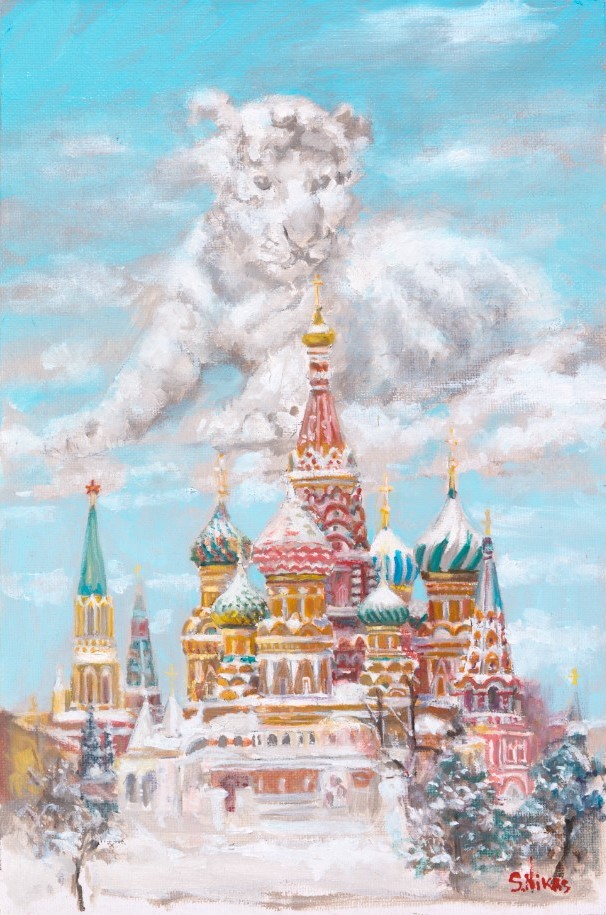
I wonder for what purpose your paintings take part in space flights ("Winter Moscow in the Year of the Tiger", for example)?
Indeed, cosmonauts take my paintings with them into orbit. The canvases fly over millions of kilometers and return to Earth. I am sure that they are also charged with cosmic energy. This is felt as soon as the owners of the canvases hang them on the wall.
Why did Jean-Paul Belmondo, when he saw his portrait made by Nikas Safronov, want to beat you?
Our first meeting took place in his theater. Belmondo was then preparing the premiere of a new play. And whenever I tuned in to a full-fledged job, he jumped out of his chair and ran to the stage to give the actors his directorial instructions. I managed to make some pencil drawings, and only of his face.
Belmondo had left urgently that day. But we agreed to meet the next day at our mutual French artist friends' place at 5 p.m. I arrived on time and waited for him. In order not to waste time, I began to paint his face in oil on the already stretched canvas from my pencil sketches. Time passed. But he still did not turn up. My friends couldn't reach him all evening. Just in case, I came the next day at 4 o'clock. Realizing at that moment that when he comes to pose in the studio, most likely, he will need a different angle and different clothes.
My French friends, having previously visited Moscow, bought a reproduction of Ivan Argunov's "The Lady in the Cocoanut" in the Tretyakov Gallery, which they hung on the wall. The picture was in front of my easel. While waiting for Belmondo, I was thinking about how to make a more effective portrait of the actor. I decided to introduce elements of women's clothing from the same painting brought from the Russian capital. I thought this way: when I see Jean-Paul, I will cover up this impromptu. Of course, it was an artist's joke.
On the third day, it turned out that the actor had urgently left for London for filming and would return to Paris only a month later. I flew to Moscow and completely forgot about the funny portrait of Belmondo. My French friends, working with Belmondo in the theater on the set design of his play, took and showed him this work of mine without my knowledge. He got very angry and said: "I accepted him as a human being, and he offended me so much! I am of a traditional gender orientation! If I meet him again, I'll beat him up!"
This story happened in the early 1990s. A couple of years later, Pierre Richard came to Moscow for the first time. I was introduced to him, and he kindly agreed to pose for me. During the session, I told him about the Belmondo scandal. Richard was very surprised by such a violent reaction from his friend: "If I had been painted like that, I would have appreciated the joke."
Back in France, Richard met Belmondo and told him about my sufferings caused by this misunderstanding. Belmondo replied: "Don't let him worry, of course I was joking too. I will be happy to meet Nikas when he is in Paris and is ready to set aside time for posing." Which is exactly what happened. It turned out to be a classic picturesque portrait of Belmondo. Later, our good relations remained intact until the end of his life.
Nikas, you have authored several autobiographical books and published collections of your short stories. But many of your fans consider collaboration with Valentin Gaft to be the most interesting work, when he wrote poems to accompany your paintings, and you painted pictures to illustrate his epigrams. A few words about this unusual project.
This book emerged very naturally. Valentin Gaft and I have been friends for many years, we often had dinner together in a restaurant, at my place or at his house, showed each other our creations: his were poetic exercises, and mine were pictures. At some point, we began to see a certain harmony of motives, plots, and tonality of our works. For example, the poem "Pasternak" and the portrait of Boris Pasternak appeared at different times, but turned out to be congenial in the full sense of the word (con - "coincidence", genius – "spirit").
Then, there were some paintings that I painted based on Gaft's poems, and he began to write poems that were inspired by my canvases.
The first joint book with solely poems transcribing my paintings was published in 1995. Later, in 2014, the second one was put into print with plenty paintings inspired by his poems and some epigrams. In 2018, the third book was published where, at his request, I specially made over 30 paintings based on the favorite epigrams of my good friend Valentin Gaft.
As a result, we have put together books that are difficult to attribute to a certain genre.
There is a so-called "zebra mystery". Its essence is that no one can prove what a zebra is: a black horse with a white stripe, or a white horse with a black stripe. So here, it is impossible to say unequivocally – this is an art album with poems, or a poetry collection with artistic illustrations by Nikas Safronov. But both Gaft and I, and all our fans, truly appreciated our creative works. And thanks to these books, fans of Valentin Iosifovich discovered Gaft not only as a great talented writer, but also as a great poet.