

New World Order Lab
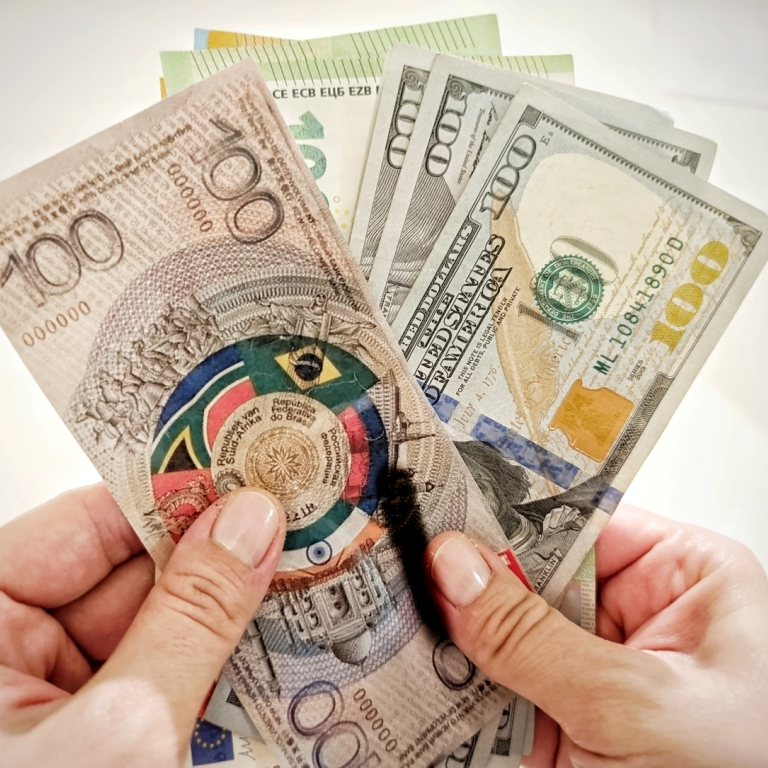
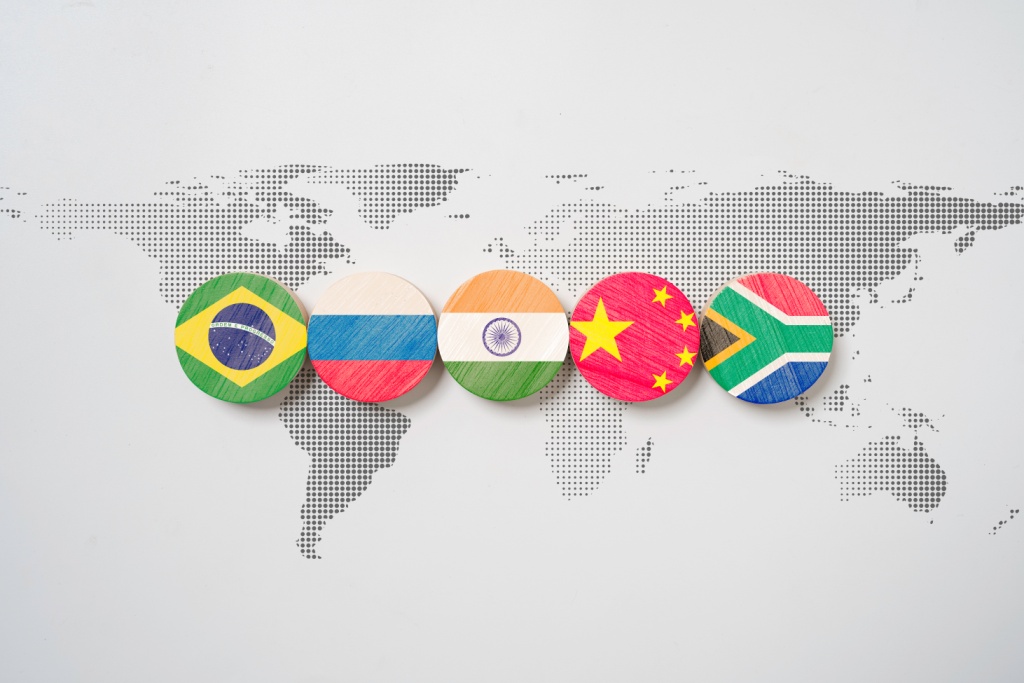
This June marks the 20th anniversary of the founding of BRICS. This association was conceived as an informal economic club to coordinate the actions of countries with the fastest-growing emerging economies. Russia, China, India, and Brazil, and later South Africa, set out to make the world a more equitable place and to offer an alternative to the West's dictates within the system of liberal globalism it created.
Union of Global Majority
Reforming the international financial architecture, innovation and technology—including leveraging the opportunities of the Fourth Industrial Revolution—as well as sustainable development, bridging social and economic inequality, and stabilizing trade and economic cooperation have emerged as top priorities for discussion and mechanism development.
These topics proved so pressing for most of the world that the five-nation organization began to expand.
The climate of uncertainty that emerged by 2017, caused by Western sanctions led by the United States, contributed to the success of Chinese Foreign Minister Wang Yi's initiative. He put forward the idea of creating the BRICS+ framework. "We will expand the BRICS circle of friends and turn it into the most influential platform for South-South cooperation in the world," he said at the time.
Beijing, which held the BRICS presidency at the time, with the consent of other member organizations, invited representatives of emerging markets from around the world, in particular Mexico, Tajikistan, Thailand, Guinea, and Egypt.
For the following year, the South African government had invited countries that chaired key regional and global organizations: Turkey, as the Chair of the Organization of Islamic Cooperation (OIC); Jamaica, for the Caribbean Community (CARICOM); and Argentina, the chair of the G20 platform at the time.
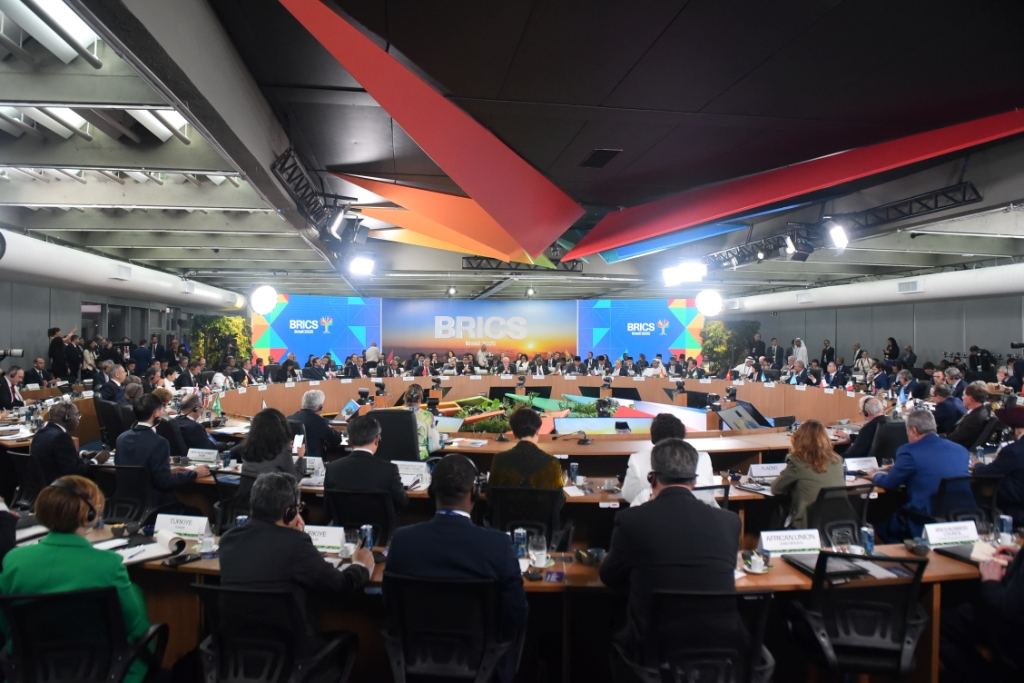
Besides the expansion of the core BRICS, which now includes Brazil, Russia, India, China, South Africa, Egypt, Iran, the UAE, Ethiopia, Indonesia, and Saudi Arabia, ten other countries—Belarus, Kazakhstan, Uzbekistan, Cuba, Bolivia, Malaysia, Uganda, Nigeria, Thailand, and Vietnam—are planning to join the association.
Today, BRICS has transformed into a powerful geopolitical bloc seeking to reshape the global financial system and promote multipolarity. The combined nominal GDP of BRICS nations stands at approximately $32 trillion, accounting for over 40% of the global product in terms of purchasing power parity.
Industrial output has exceeded 50% of the global total.
Thus, the level that was projected to be reached by 2030 has already become a reality.
The economies of the BRICS countries are also showing steady annual growth, expanding at a rate over one and a half times faster than the global average.
No Dictate
The results are impressive considering that BRICS and BRICS+ are not vertically structured, formally organized structures like, for example, the European Union or the United States-Mexico-Canada Agreement (USMCA), or any other block for that matter.
The fundamental difference between BRICS and other blocs is that all international institutions are a means of organized domination by a narrow group of countries or even a single power, whereas BRICS represents an institution of a new type. It cannot have a single leader, and its internal structure and direction are not the result of an overpowering agreement among the most powerful participants.
“In essence, this group is not a formalized international organization with any delegated supranational powers," said Georgy Toloraya, Deputy Chairman of the Board of the National Committee for BRICS Research. – Rather, it can be called an interest club. However, the Global South now, more than ever, needs a structure or organization through which it can, if one may put it so, negotiate the terms of a multipolar world, establish the rules of the game, and take collective action. The Group of Twenty (G20) is not suitable for this role, as almost half of its seats are occupied by the collective West, which refuses to recognize new realities and the interests of others. Therefore, BRICS is the only and unquestionable candidate to serve as a transitional structure toward a multipolar world. This is especially true now that, following its expansion, it includes key countries in Asia, Africa, the Middle East, and South America”.
For the benefit of everyone's development
Naturally, cooperation within BRICS and BRICS+ is more difficult to organize than in a vertically structured organization, where decisions are made by a body with delegated powers or dictated by a leading power.
Furthermore, BRICS+ states have divergent perspectives and characteristics in terms of trade and investment, and they are at different levels of socio-economic development.
However, a powerful unifying factor is the commitment of states to ensure the development interests of the member countries in the broadest sense. BRICS+ is designed to create such external conditions that will allow states to fully realize their own potential.
Building a more just, multipolar world order is one such condition, but progress toward this goal, in accordance with BRICS principles, cannot contradict the current interests of each participating country. Therefore, the overriding principle operating within BRICS is voluntarism. No one forces anyone to take any agreed-upon steps.
“A new model of economic cooperation is being created, which is inclusive and, consequently, more sustainable. It is also an attempt to develop a new paradigm of South-South economic cooperation that could effectively support the modernization efforts of developing economies," stated Igor Makarov, Head of the World Economy Department and Director of the Institute for Environmental Economics and Climate Change at the HSE University.
The integration opens new paths to global economic development and higher economic growth. By strengthening ties between BRICS partners and the rest of the developing world, more channels are emerging through which growth impulses from the largest economies reach the majority of developing nations.
FTA as way to build free trade zones
The search for new channels of interaction is underway in all directions. Among them are already proven methods being joined by more and more countries: the use of national currencies in mutual settlements, and the expanding membership of the BRICS New Development Ban.
There is a growing number of free trade agreements (FTAs) between individual BRICS+ members.
Today, the BRICS countries are not yet ready for the idea of creating a unified free trade zone. However, some of them are willing to conclude bilateral agreements. For example, Russia, as part of the Eurasian Economic Union, is already participating in free trade agreements with three BRICS countries: the UAE, Indonesia, and Iran.
Thus, the UAE has reduced its average import tariff rate from 5% to 0.6%. A duty-free regime is being introduced for Russian agricultural products, the metallurgical industry, and the chemical industry.
And Indonesia, in accordance with the FTA, will zero out duties on 90% of Russian export goods.
With these agreements, Russia is strengthening its economic positions in the respective regions — in the Middle East, Southeast Asia, and East Asia.
“This is of particular importance in the context of the fragmentation of the global economy," says Andrey Slepnev, Member of the Board in charge of Trade of the Eurasian Economic Commission (EEC, the executive body of the EAEU). – The agreement with Iran is of particular importance for the EAEU as a whole and for Russia as its member. This country is not a WTO member; therefore, the concluded FTA is the only document regulating trade and, broadly, economic relations between the partners”.
In addition to the three executed agreements, negotiations are underway with Egypt and India. An FTA with Egypt, for example, will help increase Russian exports of agricultural products, as well as other goods such as railway cars, automobiles, and products of the energy and pharmaceutical industries.
And since Egypt is one of the key participants in the African Continental Free Trade Area, it can serve as an additional link between Russia and African states. Furthermore, access to the Suez Canal will provide an additional boost to the development of transport and logistics infrastructure in this region.
Thus, the policy of concluding bilateral free trade agreements with BRICS countries effectively transforms the association into a platform for forming a free and secure trade zone.
“This policy will have a positive impact on bilateral trade between the countries, which is especially important given the high turbulence of international trade during periods of economic and geopolitical crises," notes Natalia Stapran, Director of the Third Rome Center for Cross-Sectoral Expertise. - As practice shows, free trade agreements serve as a kind of "shock absorber" during periods of global economic slowdown. Even if trade volumes between partners decline, this process occurs significantly slower than the contraction of global trade as a whole. Furthermore, through the practical implementation of achieved bilateral trade liberalization agreements, the BRICS countries will gradually shape shared approaches toward FTAs and international trade in general. If this practice is implemented by all BRICS members, the resulting "spaghetti bowl" — numerous bilateral free trade agreements — will lead to the development of common trade norms and rules within the bloc in the form of general principles for regional trade development, and, in the long term, towards a common free trade area“.
“In essence, BRICS+ is becoming a laboratory for building the future development trajectories of the association, - says Georgy Toloraya. – Integration within BRICS helps protect against Western-controlled institutions of global governance and creates a polycentric system without colonies and hegemons. In its place, it fosters new international institutions that take into account the interests of the global majority”.
“We are currently at the stage of shaping a new, just, multipolar, and genuine globalization, where the distribution of both costs and opportunities will be as equitable and even as possible, taking into account the real economic standing of new leading countries," believes Natalia Stapran. "The new globalization—and we cannot do without combined efforts and specialization—will take into account the interests of the global majority”.