

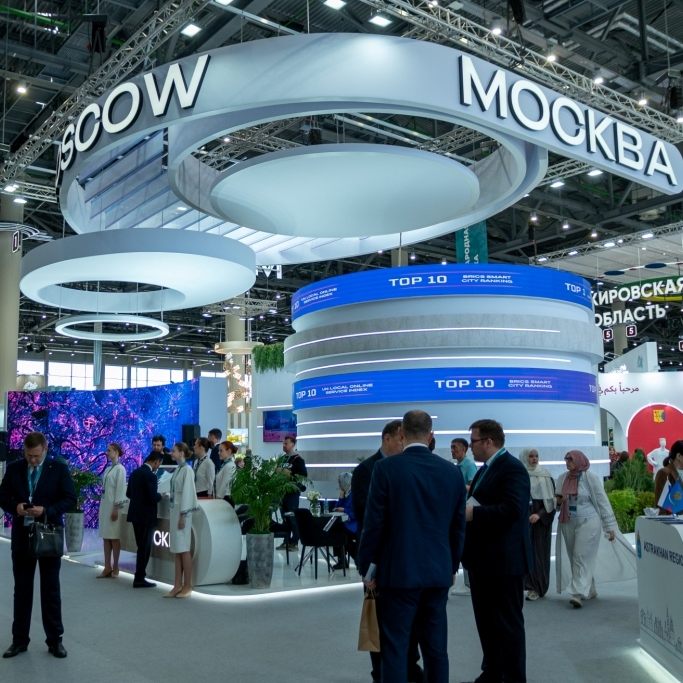
Moscow Presented Digital Solutions For Smart Cities At KazanForum 2025
At the international exhibition Russia Halal Expo under the auspices of the KazanForum 2025, the Moscow Government stand became a central spot for the business program. The stand was visited by Marat Khusnullin, Deputy Chairman of the RF Government. Sergey Cheremin, Minister of the Moscow Government, Head of the Department for External Economic and International Relations of Moscow, presented the key areas of Moscow’s cooperation with Islamic World countries — development of trade and economic relations, implementation of joint technology projects, exchange of experience in digitalization and sustainable urban development. The Moscow stand featured “smart” city innovative solutions and achievements of the capital city in tourism, investments and urban infrastructure. The exhibition demonstrated Moscow’s readiness for international cooperation and expansion of partnership ties.
With the use of multimedia technologies, Moscow delegates displayed to their Islamic World partners the economic potential of the Russian capital, demonstrating specific projects and programs, implemented by the city in the area of urban infrastructure solutions, development of the innovations and technology sphere, improvement of urban environment and preservation of historic buildings in Moscow.

The program of the Forum featured a broad range of topics, including Islamic finances, the Halal industry, industrial cooperation, logistics, trade, investments, innovations, digital technologies, education, culture, sports and tourism. Special attention was paid to expanding export opportunities and implementation of modern solutions into urban management.
One of the key sessions featured a discussion, themed “Exports of digital products for smart cities: from idea to global market entry”, it was participated by top government officials, businessmen and industry experts. The speakers at the session included Sergey Cheremin, Minister of the Moscow Government Delegation, Head of the Department for External Economic and International Relations (DEEIR) of Moscow, Sergei Katyrin, President of the Chamber of Commerce and Industry of the Russian Federation, Vladimir Platonov, President of the Moscow Chamber of Commerce and Industry.
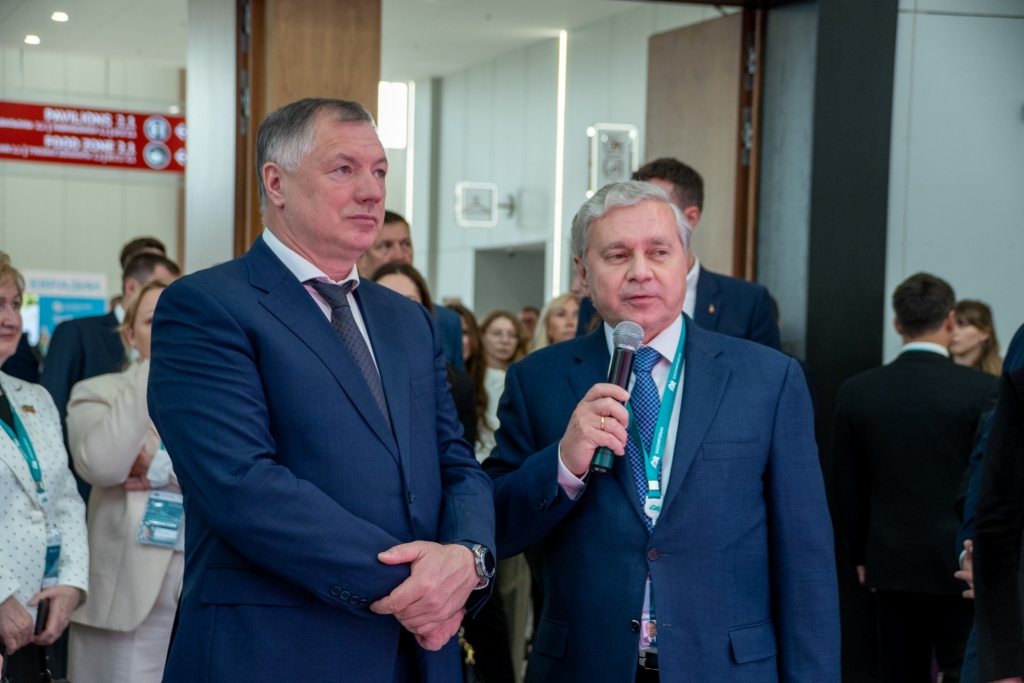
Sergey Cheremin presented the key digitalization achievements of Moscow. According to him, the capital city has successfully implemented over 100 digital initiatives with the use of artificial intelligence technologies — from telehealth and digital education to intellectual control of utilities and transport system. This has enabled Moscow to take leading positions among the smart cities of the world and confirm its high level of technology maturity in international ratings. One of the presented flagship projects was the “Moscow Digital Twin” — an integrated platform, collecting and analyzing urban infrastructure data. The system provides for efficient planning of territorial development, distribution of power resources and transport network development, improving controllability of the metropolitan city. Participants of the session also discussed the potential for digital solution exports, including video surveillance and recognition systems, which are already in demand abroad. As noted by Cheremin, Moscow is creating a comfortable ecosystem for development of tech companies, supporting start-ups and investing into development of techno-parks and innovations clusters.

The Forum featured a special session on Russian-Malaysian cooperation. The session focused on the partnership of Moscow and Kuala-Lumpur in the areas of transport, digitalization and urban infrastructure. By results of 2024, the bilateral trade turnover reached up to $1,2 billion, and development of joint innovative clusters and localization of advanced solutions were highlighted as prospective areas. Sergei Cheremin also emphasized, that Moscow’s economy in 2024 grew by 5,5%, and the gross regional product over five years has increased by 26%. Today the share of Moscow in the country’s economy is almost 20%, at the same time the city maintains financial sustainability and a low level of government debt.
Chang Lih Kang, Minister of Science, Technology and Innovation of Malaysia, confirmed high interest in expansion of the bilateral cooperation, especially in such strategic areas as nuclear technologies, energy industry, healthcare and joint research and development projects. According to him, innovations are becoming a key driver for sustainable development both for Russia and Malaysia.