

Key Rate Passions
The discussion has gone nationwide and is unprecedented in its intensity, it features heads of state-run corporations and private companies, industrialists and bankers, experts and journalists, laymen and government officials. There is ongoing, though yet unsuccessful, search for an answer to the main question: could there be a compromise between economic growth stimulation and strict anti-inflation measures of the monetary policy?
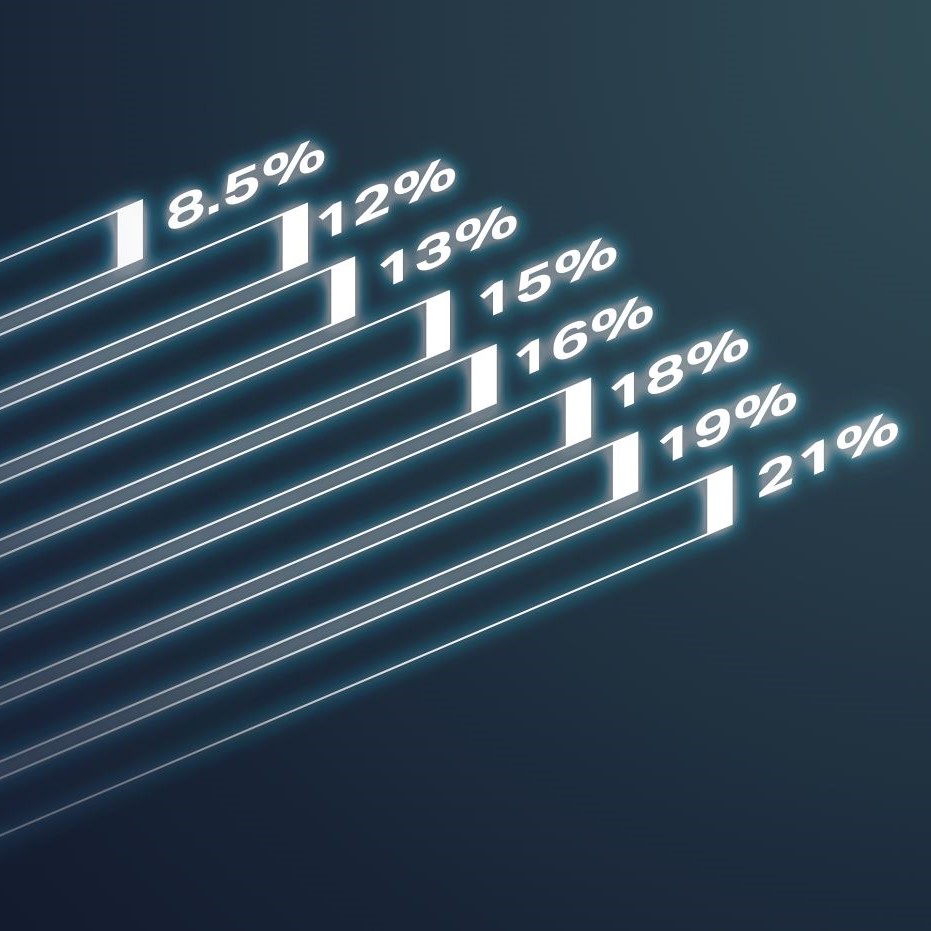
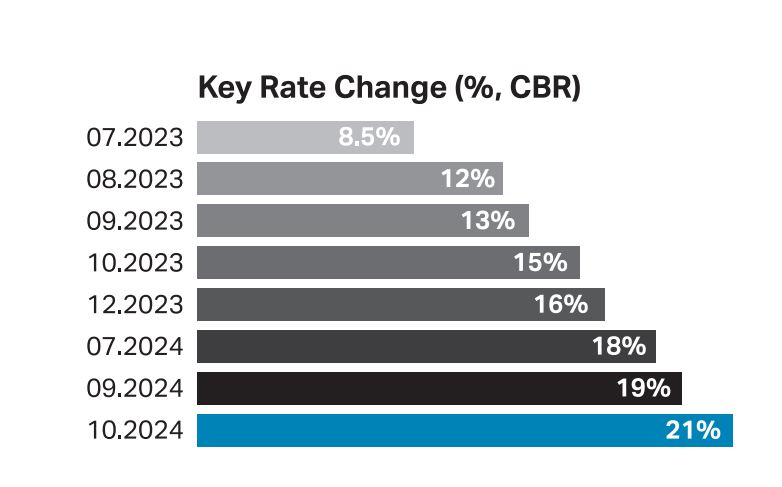
The Bank of Russia considers a key rate raise at its December 20 meeting as “highly probable”. Since in October the key rate climbed for two percentage points at once, from 19% to 21%, a most likely scenario is viewed as up to 23% and even, in a “hardcore” case, up to 25%. It is also noteworthy that the regulator stepped away from its previous target values, for example, the 4% inflation target was moved from 2025 to the first half of 2026. It is clear that under these conditions availability of investment financing programs from all sources is dramatically reduced. The position of the large businesses was voiced by Alexander Shokhin, head of the Russian Union of Industrialists and Entrepreneurs (RUIE). According to him, many companies are already postponing their investment projects till the next year, because the CBR has made it quite clear: there will be no easing of the monetary policy before the second half of 2025 and if inflation remains rampant.
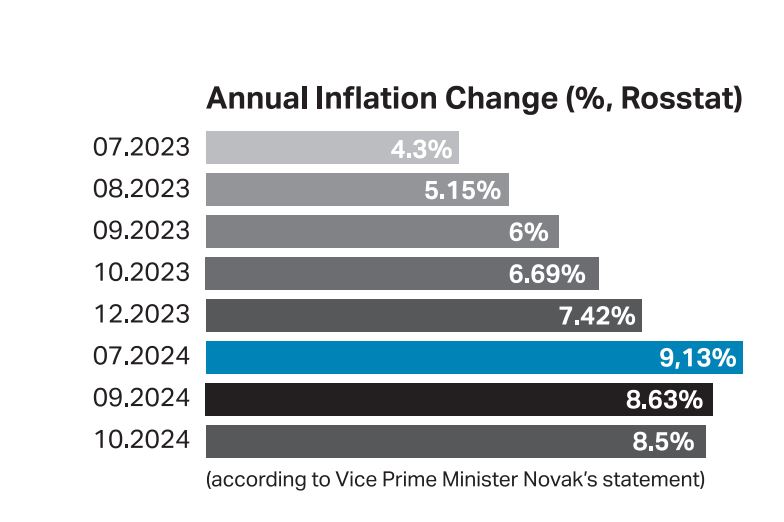
The situation poses a colossal dilemma – this is the essence of a recent statement by Mikhail Zadornov, former Deputy Finance Minister of the RF in 1997–1999. He believes the main flop of this year is the fact that they have failed to bring the inflation down to at least 5,5–6%. The economist said that the gap between the annual inflation value of 9% and the key rate of 21% was extraordinary. Zadornov explained the gap by the CBR’s attempts to limit demand growth, “making it harder for banks to grant loans, primarily consumer loans, even apart from mortgage loans”. The former head of the Finance Ministry also noted that just due to the inflation and the high key rate in Russia in 2025 the government debt payments will go up by about 1 trillion roubles (as compared to 2024).
Current Situation Origins
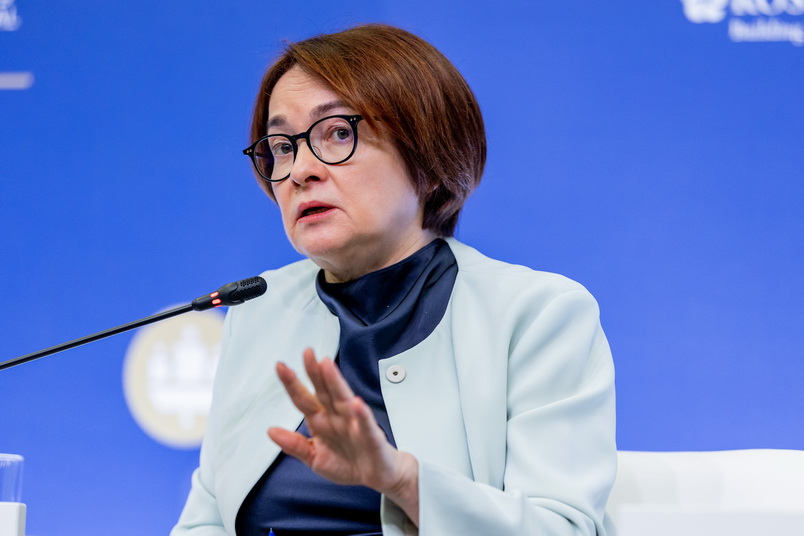
At the level of laypeople judgements (and not only at this level) it would be easy to blame everything on the top management of the Central Bank. There is a traditional rebuke: the monetary policy of Elvira Nabiullina’s team is shutting the door on the business, leaving it without long-term cheap loans, and robbing the whole economy of its future and development options. There are also voices saying that Nabiullina should stop complaining about production capacity shortages as the key economic problem. Where would this capacity come from, if the Central Bank prevents companies from getting loans, thus cutting off equipment procurement?
In reality the origins of the current real sector situation go even deeper: it has not been shaped by monetary activities of the regulator alone. It’s just that the Central Bank is always in the limelight, playing its historic role of everlasting “inflation watchdog” and being an actual lightning rod. The Bank, using its limited means, tries to eliminate consequences of structural non-monetary issues. But the root causes are far beyond the mandate of the CBR. Particularly, parameters of the budget and of the so-called budget momentum are in the domain of the government and the State Duma. Moreover, today the economy is clearly divided into market-driven industries and industries, actively stimulated by the government. The latter, naturally, are far less sensitive to the impact of the key rate. The Bank of Russia will never be able to provide equal operating conditions for these two baseline layers of the economy, and a part of the business community realizes this. Speaking at an economic forum in Chelyabinsk this November, Alexander Kalinin, head of “OPORA RUSSIA”, called upon his colleagues to accept expensive money as a given and to look for alternative sources, up to optimizing administrative expenses and non-tax payments.
In the meantime, today every fifth company in the processing sector on the average experiences issues with loan repayment, according to the Center for Macroeconomic Analysis and Short-term Forecasting (CMASF), a government-affiliated think tank. In the woodworking sector this share is about 22–24%, in the leather and paper production sector it is 29–34%, and in the ship-building and aircraft-building sectors this value is as high as 57%. As per CMASF estimates, enterprises have to spend every fourth rouble of their profits on paying interest, and this is the maximum level over the latest five years. Dmitry Belousov, deputy director of the Center, says that the situation with the key rate is leading to a gradual expansion of the range of civil industries, where business profitability is lower than costs of risk-free money holding (OFZ bond yields). This makes private investment into these industries irrational.
“I am especially worried, - says Vladislav Antonov, BitRiver financial analyst, - that there is a skew towards short-term loans for working capital financing versus long-term investment loans. The business has to borrow money just to “stay afloat” – to cover rising logistics and payroll costs. There is no chance for any development under these conditions”.
As debt market players, polled by Expert RA, say in their turn, in 2025 the economy will be flooded with a wave of defaults due to high loan rates: 35% expect this to happen in the second half of the year, 27% - in the first half, and only 18% do not expect anything of the kind.
Classic Conflict
There is also a number of reasons to doubt high efficiency of cooperation, coordination of activities between the Central Bank and the government, whether the parties inform one another of their every step. Particularly, as Kirill Tremasov, advisor to the CBR Chairman, said in early October, “the budget has a few unexpected items, which may require adjustment”. He was referring to a measure, outlined in a standalone draft law, submitted to the State Duma on September 30 as a part of the “budget package”. The final budget expenditures for 2024 were increased by 1,5 trillion roubles up to 39,4 trillion roubles, which is 22% more than last year. A fair share of funds was allocated to financing two budget items: military needs and subsidies for mortgage and other preferential programs.
“Our interaction with the government is very constructive, we hear each other, in any case, our relevant coordinate systems are clear to the other party, - said Elvira Nabiullina at a meeting with journalists in response to the question, how much the coordination of activities of the CB and the Finance Ministry was “hampered by unexpected events, such as this year’s surge of expenditures, which has popped up just recently”.
According to the CBR Chairman, many decisions on additional expenditures are adjusted at the last minute and verified. This is why the regulator learns the final numbers only when they are approved within the government.
“One thing is certain: inflation in Russia is becoming more unbearable for the economy, - says Nikita Maslennikov, leading expert at the Center of Political Technologies. – In ancient China they used an execution method, known as “death by a thousand cuts”. In our case inflation is fueled by multiple drivers. Among other, there is upcoming indexation of public utilities rates up by 11,9% and railway transport rates. I presume that this measure is justified: elevator equipment, for example, needs upgrading. But why raise the car disposal fee by 70-85% from October 1, when their share in the consumption mix is only 4,6%? Couldn’t it wait?”
These two measures – indexation of public utilities rates and car disposal fee raise – provide one percentage point sharp of annual inflation gain in 2025. And there are other upcoming pro-inflation novelties. Particularly, as Maslennikov reminds, the Ministry of Industry and Trade plans to raise the fee for agricultural equipment disposal by five to ten times, despite sliding profits of agricultural businesses. One could criticize the Central bank for the high rate all day long, but the regulator has no other tools. If it starts bringing the key rate down now, it would send the inflation freewheeling, creating an even more dire situation both on the consumer market and in the broader economy.
“Today government-funded enterprises with state-subsidized rates get a clear advantage, - notes Vladislav Antonov. – And private business will have to phase down production or transfer its assets into more profitable financial instruments. This may increase the inflationary pressure due to insufficient product and service supply. By all means, the Central Bank realizes consequences of its steps for the industry, but now it is between a rock and a hard place”.
On the one hand, inflation needs to be contained, because it devalues savings and destabilizes business planning. On the other hand, growing government expenditures and consumer demand continue to drive prices up, and the Bank of Russia has to take tough measures to prevent the inflation spiral from going off. This, according to Antonov, is a classic conflict between short-term stabilization and long-term development.
Government Support Measures
The conceptual dispute currently ongoing in Russia is reminiscent of the everlasting chicken and egg paradox. Which came first: economic issues caused by the high key rate or the high key rate as a response to inflation, rising government expenditures and consumer demand?
Tough monetary policy is not a fad, but an inevitable response to the events in the economy, said Nabiullina at the State Duma, at a meeting of the Financial Markets Committee. The key message, addressed to the critics of the Bank of Russia: structural risks are not related to high rates. Correspondingly, the regulator will continue to use this tool as it deems appropriate. As the Head of the Central bank commented, “many countries had gone through this, before they achieved sustainably low inflation”, making business loans and market-based mortgages affordable. A tough monetary policy “is not in contradiction with those economic development tasks, which are currently worked upon by the government”, the policy “protects wages, pensions, allowances and savings from growing prices”.
At the same time, Nabiullina emphasized, the business is suffering from high inflation no less than people are, because its growing expenditures are “largely a manifestation of the very same inflation”. “This is a reflection of the acute struggle of companies for scarcer production resources: labor, materials, new equipment”.
But there is also another absolute givenness: however hard the regulator tries to manage consumer activity with its rate, and through them to affect business activities, some real things will remain out of its reach. Speaking in late October at a congress of the Federation of Independent Trade Unions, Vladimir Putin acknowledged that there were “issues and imbalances persisting” in the domestic economy. The President said that these “were primarily caused by those complicated conditions, under which we are ramping up the industrial, agricultural, financial potential of the country”, including labor shortages (an acute deficit of blue collar specialists), external sanctions and domestic structural limitations. Earlier, in his address to the Federal Assembly Putin mentioned the need to increase investment volumes in the key industries of the RF by 70% by 2030.
Back then, in February of 2024, the key rate was 16%, which was quite a lot too. But by today it has become totally prohibitive in nature, and this status increasingly switches off market regulation mechanisms in the country, putting the country on the rails of direct government control. Where would the situation go? In the opinion of Alexei Vedev, Director of the Center of Structural Research, RANEPA, the inflation will keep on accelerating, because it is not contained by the high rate, but only provoked by it.
“Corporate lending will continue growing, and its higher costs will be passed on, - says the economist. – And the population will mostly stick to a savings mode, taking most of their money to banks and borrowing as little as possible. GDP growth rates will be below 1,5% per year, and the OFZ long-term bond yields will surge to record 16-18%. This is very costly to finance a budget deficit”.
What does business have to do in the current situation? Vladislav Antonov believes now it is critical to search for ways to optimize costs and increase efficiency. Probably, it would be good to consider establishment of partnerships and consortiums for joint implementation of projects, to distribute risks. It is also important to closely monitor government support programs; it is likely the government will have to expand its rate subsidies for priority industries.
“Interested companies could apply for both financial (billions of roubles allocated!), and non-financial support measures, - says Oleg Kalmanovich, Neomarkets chief analyst. – The first measures include tax preferences, options to get subsidized loans through development institutes, apply for grants or subsidies. These programs are designed both for large businesses and systemic industries, and for small businesses. There are active federal and regional programs. For instance, an individual entrepreneur or socially-oriented companies may apply for a grant of up to 0,5 million roubles (up to 1 million roubles in the Arctic zone). The second tier programs feature information and consulting support through “My Business” centers and also the Russian Exports Center (REC) —for those businessmen that want to take their products abroad”.
Georgy Stepanov.