

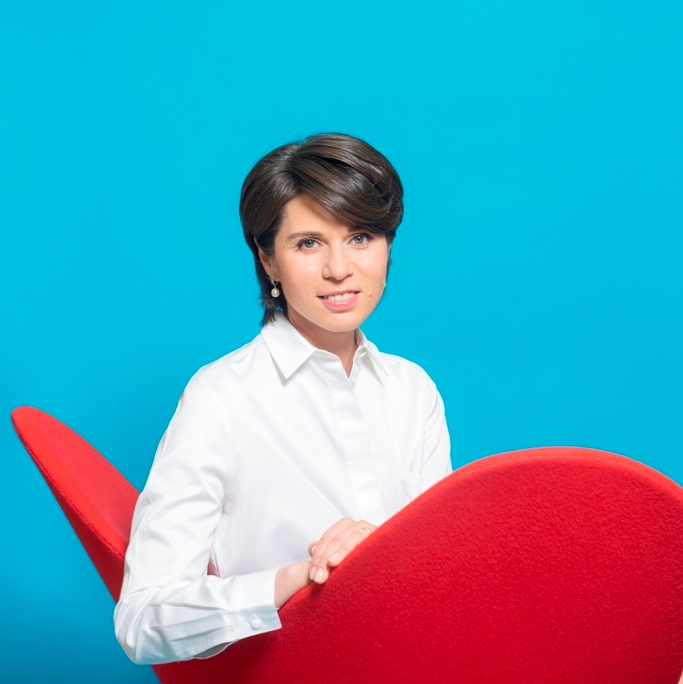
Irina Nikulina: “Boiron has been creating “Blue Ocean” for itself for 90 years”
- Irina, please tell us of the challenges the company has had to face lately and how you manage to deal with these?
On the one hand, most of the challenges of recent years are not unique to our company – all businesses have faced these: logistics, financial operations, personnel issues, publicity and positioning. On the other hand, if you work in healthcare, then every decision you make will have a significant impact, not just on your team and partners, but on hundreds of thousands of patients. A medicine is not some “product” that can just vanish.
We have been trying not to take any steps that could hurt people – raise prices, quit on more complicated supply or imports of rare medicines, abandon our social obligations. And we have strived to take maximum care of the people within our sphere of influence: we improved our partner educational programs, support programs for employees and their families. We only provided those “tools” that were attractive “there and then”, indisputably beneficial for people: a hybrid work schedule and simplified business processes, regular meetings with support specialists: psychologists and conflictologists, nutritionists and aromatherapists, sports trainers, ecologists etc. We've found that the value of these options for people is just as important as the amount of pay in their work contract.
By results of 2024 our staff turnover was only 3,1%, and the company evaluation by employees based on the HappyJob Index for the last two years – 2023 and 2024 – was close to the absolute maximum value: 98% of employees showed high engagement and an equal level of satisfaction. This puts Boiron company in the top 20% Russian companies and 5% pharmaceutical companies, leading the index. And as a result, our business performance was excellent. It's always a great feeling when people from other companies come up to me at conferences to compliment our team or ask about job openings.
- Despite the worldwide disputes about homeopathy, Boiron maintains strong positions on the Russian market. What, in your opinion, is the core value of your products for modern consumer, becoming more conscious and restrained, and how do you conduct a dialogue with them?
Consumers, just like their approaches to health, are very different. And homeopathic medicines stand out from the crowd of most mass-produced goods and services, filling the modern world of conveyor belt consumption. It is a world where it's easy to shift responsibility for your well-being to the first specialist you come across at a pharmacy or clinic, to a smartphone tracker or a fast-acting pill. Urban infrastructure helps us avoid physical activities: every day I see young people reluctant to walk 300 meters from a metro station to their workplace – they ride scooters, they do not shop for groceries – they get their prepared food delivered to them. Many people transfer this same idea of convenience to treatment: they think, that bad consequences of years of unhealthy habits can be corrected in two to three weeks. And that this can be done with minimal personal involvement: it's enough to choose the right protocol, pill or surgeon. If this does not work – change anything from the abovementioned or altogether.
We try to counter these myths and return patients' focus to their feelings and habits. This is required by homeopathic medicine properties: if a person cannot describe the conditions under which their state changes and how it changes, if he does not remember what medications he is taking or has taken, if a person is not ready to change their lifestyle, offering a personalized solution is extremely difficult! We also focus on educating people, fighting old, “automatic” habits – many people cannot even explain the origins of some or other of their choices. For example, many mothers use lidocaine teething gels on their children, because they do not understand the impact of this manipulation on the child's microbiome, on further body development. And adults often use decongestant nasal drops simply because they want to quickly get rid of discomfort, failing to realize that this destroys local immunity and compromises nasal breathing for the rest of their lives. By the way, 5–9% of people live with this problem today, according to different data. We offer more environmentally friendly and gentle solutions for these and many other issues – for instance, Dantinorm Baby, Coryzalia and 195 more products.
- A doctor's recommendation remains a key factor in choosing a medication. Do you see a generation gap in views on homeopathy among doctors?
Indeed, there is a large gap with doctors, though it depends not only on the generation. Therefore, one should not be overly swayed by superficial statistics. Medical specialty (a surgeon, for example, may not prescribe any drugs whatsoever), professional experience and maturity, healthcare institution specifics matter a lot.
It sounds like a paradox, but according to VTsIOM, the people who are most loyal to homeopathy aren’t rookies or C students, but are practicing doctors with 5-10 years of experience or more. These are doctors who have accumulated experience with unresolved clinical cases or decisions with which they were dissatisfied. They didn't like the side effects of the prescribed treatment or having nothing to offer to recurring patients with same issues. For example, children can only be prescribed with literally 10% of the existing medicine range. And this range could be exhausted very quickly! This dead end sends doctors back to seeking new knowledge beyond the university curriculum or standard protocol guidelines. And most often these doctors are pediatricians, physicians, otolaryngologists, neurologists, many of whom have degrees and numerous certificates of advanced training. This is why I can assure you: if a doctor or pharmacist recommends a homeopathic medicine, this is not due to the lack of knowledge. Just the opposite – this is a sign of broad-mindedness and the presence of advanced training diplomas, it is also an attempt to treat you as carefully as possible.
- Boiron is from the very start a private family company with a unique philosophy, what makes it stand out from the crowd of large pharmaceutical holdings. What advantages and possibly, difficulties does this status bring for doing business in Russia? And how does your independence affect your long-term strategic decisions?
Boiron has been creating a “blue ocean” for itself for 90 years, first in France and then step by step, in every new branch. There are 21 branches today. Staying successful on this path is an “extra credit task”: owners not only build an effective business but also remain true to their philosophy, literally putting their family name on it. This company would never “juggle” its obligations or products to please the market: our portfolio has brands that are almost custom-made – because there are homeopathic doctors, who consider these medicines vital. And their relations with the company may be almost personal and go back for several generations. There were cases where due to Arnica montana crop failure in France we had to suspend production of a medicine, and this would be a year’s supply for several countries of our presence! We do not buy Arnica from third parties, because we are not ready to risk our quality with new feedstock, we never violate this rule, even when we take losses. I admit that this can cost marketers and even directors many sleepless nights. Moreover, not all employees, coming to work for us from major holdings, are capable of “changing their settings” and fit in with the company. But the good thing is that many of our people who have left at one time, return later. I think this is due to the fact that they not only get paid and receive work experience at Boiron, but have a chance to contribute to the common cause. We are not only making medicines; we create solutions for improvement of our environment. Since 2021 we have been supporting the Ekofarmatsevtika project (https://ecopharm4you.ru/), focused on disposal of expired medications. In 2024 we started supporting a unique Inclusive Yoga project (https://dostupnayayoga.ru/), which helps people with CP levels 1 and 2 to practice yoga. Our business results show that this approach helps us to resolve this “extra credit task”.
- The demand for preventive medicine and a comprehensive approach to health is growing. Which opportunities does this unlock for Boiron on the Russian market? Which self-organization and wellness trends do you consider the most promising for your products over the next 3 - 5 years?
This trend is really inspiring for us, because it aligns with our values very well: be mindful of your health and your body, treat a person as a whole and don't wait until you get sick to start taking care of yourself. We want this trend to become widespread, but we still have a lot of room for improvement. Only 30-40% of Russians stick to a healthy lifestyle (in deed, not in word), and many of us tend to overstate our own health, normalizing things that aren't healthy. I think there will be more products that cater to the demand for personalization and status tracking: diagnostics systems, physical state monitoring systems, telemedicine services and AI solutions.
- Health digitalization and remote consultation trends are changing the pharmaceutical market. How does Boiron adapt its communications and products to these changes? Do you have any plans to develop digital tools for educating doctors or for direct contacts with consumers?
Naturally, we are studying and implementing this trend too. For example, we have already released our “Sleep Diary” app, and now we are working on a “Pain Diary” app, where people could monitor their health status and receive useful tips on reducing inflammation with a healthier diet, improving their health with body tempering and proper physical exercises. At the same time the app will help select “offline” activities – training or master classes, specialist visits. It is this holistic approach that is the core of our expertise, when we do not just take a pill when we feel pain, but we focus on developing personalized treatment protocols and adjusting lifestyles.
Moreover, we plan on using artificial intelligence to relieve routine workload from employees. We already have digital avatars for our employees who make invitations to conferences, send messages on pharmacy discounts. For a person, such monotonous work contributes to burnout, while a robot simply transmits information. At the same time, we encourage employees' creativity and unconventional ideas and would like them to have more time for this.