

Information Technology: The New Face of Moscow and Its Economy
Three Factors Behind the Breakthrough
There are several main reasons for this breakthrough. First and foremost is the constantly growing demand for information technology within Moscow itself and across Russian regions.
"Modern Moscow ranks among the world leaders in the deployment of information technologies, artificial intelligence, and big data," says Dmitry Ontoev, Advisor to the Head of the Department of Information Technology of the City of Moscow.
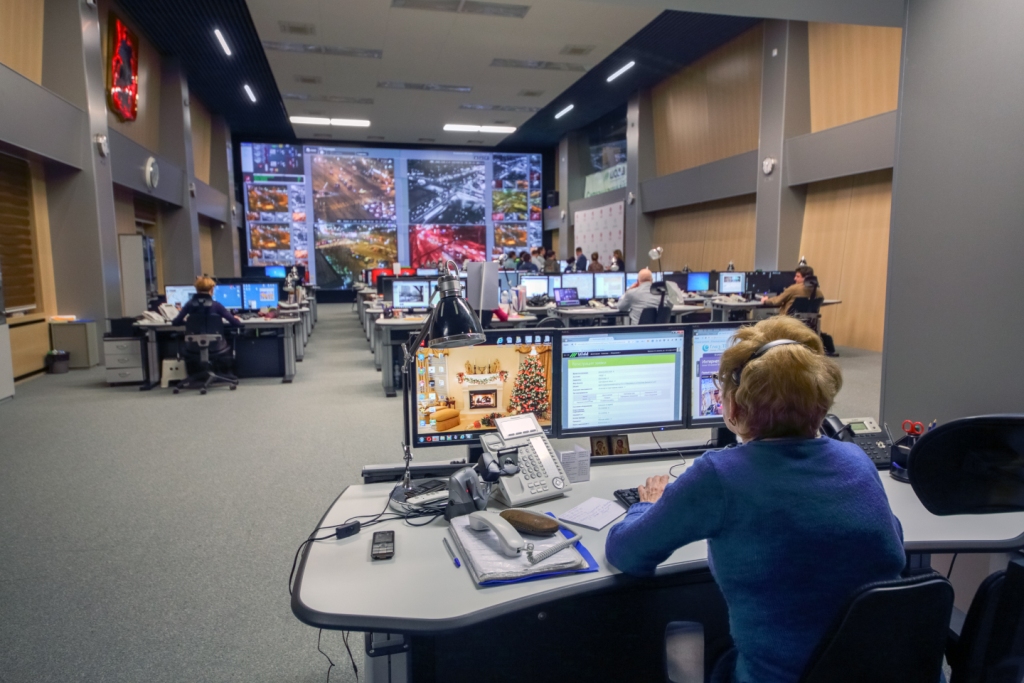
The functionality and efficiency of these technologies can be experienced firsthand in virtually any sector: healthcare, education, megacity management, urban planning, transportation, and ensuring the safety of city residents.
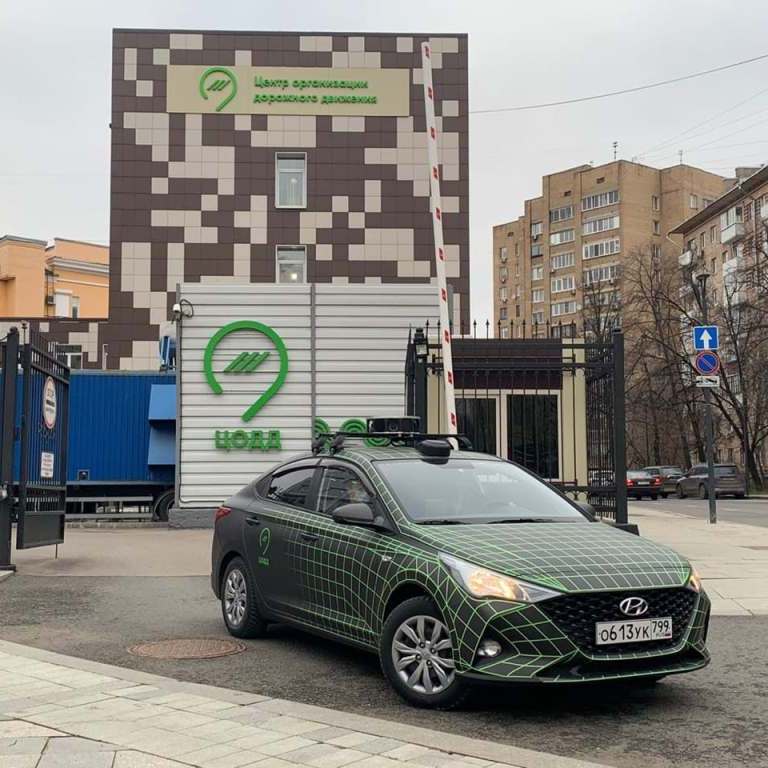
Autonomous trams, a driverless subway train (testing of which began this year), and the integration of AI into traffic management.
In education, it is now impossible to imagine how people used to get by without the "Moscow Electronic School".
In healthcare, the Unified Medical Information and Analytical System (EMIAS) operates with great success.
Furthermore, more than 75% of Russian regions already utilize the "MosMedAI" platform, which offers 17 services to accelerate and improve the accuracy of analyzing CT scans, X-rays, mammograms, and fluorographies.
Through digital services, Moscow residents actively participate in city life. They have the opportunity to monitor the implementation of urban projects and submit their own ideas. To facilitate this, portals such as "Our City," "City of Ideas," "Active Citizen," and several others have been established.
More than 9 million people participate in Moscow's digital projects. In other global megacities – even leaders like Seoul and Paris – no more than a million people take part in similar initiatives.
This exceptionally high level of engagement among Moscow residents is due to the fact that the city authorities actively listen to the opinions of citizens. Through the "Our City" portal alone, approximately 12 million issues raised by Muscovites have been resolved over the course of its existence.
One of the city's key achievements is the "Digital Twin of Moscow" – a unique 3D model of the capital that is actively utilized in construction, planning, and megacity management.
Thanks to large-scale digitalization, Moscow ranks among the top 10 smart cities within the G20 and BRICS member states.
The strengthening of Russia's technological sovereignty in strategic sectors is another vital factor. Russia is successfully developing its own high technologies, ensuring that no outside interference can obstruct or disrupt cooperation between Moscow companies and their foreign partners.
In the Russian capital, high-tech industries are concentrated in the "Technopolis Moscow" Special Economic Zone (SEZ). More than 220 enterprises and four intersectoral clusters operate here: pharmaceutical, electric vehicle manufacturing, photonics and microelectronics, and unmanned aerial systems.
In addition to this, the city features 46 technoparks (ranking second globally), three innovation clusters, and over 150 coworking spaces.
Finally, there is the third critical factor driving up demand for Moscow's IT developments abroad. It was articulated by Anna Fedyunina, Deputy Director of the Center for Structural Policy Research at the National Research University Higher School of Economics: "Russian developers favorably distinguish themselves from Western competitors, who are focused on market dominance, by their commitment to building full-fledged partnerships. Russian companies are aimed at solving business problems with measurable results, with equal participation from all sides: the Russian vendor, its local market partner, and the client company".
Wide-Range Software Programs
Moscow’s security technologies and intelligent automation tools are experiencing growing demand. These include software platforms for business process management, corporate training, and HR management, as well as tools for financial analysis and performance monitoring. Additionally, there is interest in warehouse automation systems, HR-tech solutions, scheduling software for educational institutions, and products for calculating fire risks and building categorization.
Significant interest is also aimed at digital solutions for the catering sector, including computer vision-based platforms. These systems can instantly recognize dishes and accelerate guest service.
Moscow's foreign partners are also highly interested in the IT solutions implemented within the city itself. Last year alone, four international cooperation agreements were signed in the information technology sector, notably with a state-owned company and tech operator in São Paulo, Brazil's largest city and economic center.
NtechLab, a company specializing in artificial intelligence and biometric identification-based video analytics technologies, supplies its products to several dozen countries, including Bangladesh, Indonesia, and Qatar.
Neuromarketing research by the company "Neurotrend" is in demand in Kazakhstan, Iran, and Brazil.
The Moscow-based company "Antiplagiat" has created software to detect textual plagiarism. Last year, it signed major contracts to provide user licenses with partners in Kazakhstan, Uzbekistan, Kyrgyzstan, and Tajikistan.
Digital products designed for software protection and licensing are operational in the United Arab Emirates (UAE).
Philippine companies use Moscow software to automate business-to-customer interaction processes.
In 2025, Moscow companies also supplied foreign partners with cloud infrastructure, cybersecurity, artificial intelligence, and unmanned systems solutions, as well as business process automation software and other products. It would be next to impossible to list the entire range of products.
Among the key consumers of Moscow IT services are the Philippines, with deliveries to this country accounting for about 30% of the total volume, as well as Oman, the UAE, Kuwait, and Kazakhstan.
A New and Promising Market
"In recent years, we have been actively developing the video game industry and have already achieved substantial results," Moscow Mayor Sergei Sobyanin said recently. "It is no exaggeration to say that the city is now among the world's centers for video game development".
"Video games are one of the most promising export-oriented creative industries. More than 80,000 games are released globally every year. Out of these, 6,200 are made in Russia. Notably, 98% of them are indie games, meaning they are created by independent developers," said Gyulnara Agamova, Head of the Creative Industries Agency. "Today, Russia ranks thirteenth in the world in terms of video game spending. In the future, the growth rate of spending is estimated at 11% per year. The national market is growing rapidly.
What is also highly significant is that the Russian language has risen to third place in popularity and prevalence among foreign players on the Steam platform".
Viktor Zvyaginsky, CEO of Terrabyte Games, shared that Russian simulators and games with simple design and art styles are particularly popular on the global market.
"Nobody designs game mechanics better than Russian programmers. Even Nintendo understands this, which is why many expats from Russia work at the Japanese giant," said Viktor Zvyaginsky. "Japanese companies suggested that we adapt our game 'Run Away from Me, Alexandra' for the Nintendo Switch console, while Indian partners proposed bringing it to mobile devices and smartphones".
A Unique Development Center
The Moscow Video Game and Animation Cluster recently opened its doors. This innovative, full-cycle production platform for animation and video game content has no global equivalents.
It is equipped with the most advanced technology and is already home to more than 50 video game and animation studios. Their teams are currently developing nearly 170 projects for both the domestic and international markets.
"The main competitive advantages of Moscow-developed games on the global stage are original mechanics, Russian culture, and history, the popularity of which is growing particularly fast in Asia and Latin America," noted Gyulnara Agamova. "Last year, we launched the Moscow Game Export program, operating out of the Moscow Video Game and Animation Cluster. Thanks to city support, Moscow-based development companies signed 36 export contracts with partners from China, Japan, South Korea, India, Indonesia, and other countries. Another 15 contracts are currently under preparation".
Alexander Vasiliev