

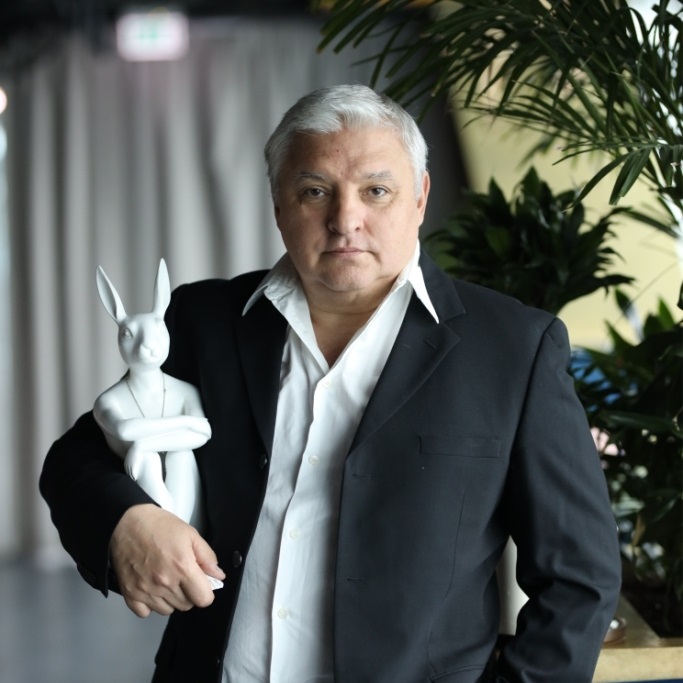
Igor Bukharov: “Name Five Reasons Why I Should Come Back To You”
Mr. Bukharov, just recently you have participated in the SPIEF forum. What are your impressions of the sessions dedicated to the tourism and hospitality industry?
I have noticed that not everyone correctly understands what is tourism industry. Many think that tourism means hotels. It is a common opinion that building hotels would be enough to develop this industry and rake in profits. But this is not so. If you talk, for example, to people from the ministry of culture (which used to be the ministry of culture and tourism), they would tell you how important it is to open museums. But this is not enough too. Today providing communications, internet connection options (this is an absolute must) is no less important; roads and opportunities to get to a destination quickly and comfortably are also important. The issue of tourism development is a comprehensive one. When I travel around the country, I always ask people to give me ten reasons to come back to you again. People freeze and cannot give an answer on the spot. And this is an absolute necessity to clearly realize these things, if you want to attract tourists. I also ask to give me five reasons to come back to you … What does a traveler need?
- comfortable transfer;
- comfortable accommodation. Everyone has an individual understanding of comfort: some need a large room, some need a small one; some require daily room cleaning, some don’t; but any demand for comfort must be satisfied;
- affordable food. Food is also subject to individual perceptions: some need a supermarket, a canteen, a fast-food joint, some need a haute cuisine restaurant;
- point of attraction: what could one see, what could one do?
- overall ambience at the location you arrive to, its pulse.
These are the very same five reasons for a person to come back to. Many tourism professionals fail to understand this. The hospitality industry is broader than just tourism.
What is the problem with southern destinations? It lies in seasonal nature of tourism, meaning that every year there are new employees and non-guaranteed service quality levels. Seasonality is yet another challenge for the hospitality industry, which needs to be taken care of.
All of the above issues cannot be resolved under the ministry of tourism alone and enthusiasm of hoteliers. Cooperation of authorities (Ministry of Economic Development, Ministry of Industry and Trade, Ministry of Agriculture etc.) and a strategic territory development plan are required, so that tourists would not complain of bad roads, good communications and proper food are needed. A territory development plan should also take into account interests of locals and prevent human-induced damage to local nature.
Locals usually dislike outsiders roaming their territory. How could conflicts with locals be resolved?
Major businesses, coming into a region, must do everything to develop local businesses so that local residents could also make money. This will reduce social tensions.
Forbes states that the key issue of the hotel and restaurant business this year is the shortage of manpower. What’s your view of this issue?
This is indeed a serious issue. Today we as an industry are facing the fact that some people have gone to the frontlines, some have left to industrial enterprises of the MIC, and some have joined marketplace delivery services (this is about as many as 800 thousand jobs).
Could this issue be resolved with robotization?
If we look at the experience of Starbucks or China, when a cup of coffee and sandwiches are delivered to you by a robot, or when a cocktail or udon soup are prepared by a robotic arm, then this is possible. But for now it still looks like a show. Mechanization, automation, robotization and industrialization should be our final goal, based on the food security doctrine, which stipulates: “economic and physical availability of food products”.
What about haute cuisine?
Does an average Russian go to restaurants often? No, he does not. There should be multiple offerings and solutions, meeting requirements of various layers of the population. Why are coffee shops so popular now? They have started rapidly developing due to new mass demand for them, given unaffordability of restaurants for the majority of the population.
How does the purchasing power of the Russian population change in your experience of customer management?
This power is not growing. Inflationary processes are ahead of salary growth.
In this case, are there many restaurants closing down?
During a crisis some become richer and some become poorer. Currently there are rapidly developing coffee shops, burger and doner joints, which are convenient and inexpensive. They are more competitive.
Could you explain why Italian, French and Japanese cuisines have become so immensely popular in Russia?
First, the restaurant business is prone to fashion. Restaurateurs travel around the world to look for new trends and ideas. Second, only specifically targeted areas enjoy sustainable development. The Italians, the French and the Japanese had whole companies with state support coming here to promote their cuisine and technologies. They brought food products to Russia, took chefs and restaurateurs to visit various restaurant business events abroad, spent money on advertisement and marketing. I had a French cuisine restaurant, Nostalgie, opened in 1994, and I took Russian teams to international competitions. I was even awarded with a Merit Agricole order (order for agricultural achievements) for promotion of the French cuisine and French food.
Now we are proposing to promote Russian regional cuisine. This area needs attention. In Saint-Petersburg there is already active development in this field: now there are “Saint-Petersburg Cuisine” and the Petersburg Breakfast.
I know that more and more people on their trips choose renting apartments over hotels. How strong is the impact of this trend on the hotel business? Are there any new solutions to attract tourists to hotels?
People choose private homes, rooms and apartments because it is cheaper. Those who rent apartments will never stay at a five-star hotel, and the other way around. I believe people should always have a choice. It is just that private apartment owners should be taken out of the grey area. The state needs to improve controls in this area, regulate it and make landlords diligently pay their taxes, meaning that this sector must leave the gray area.
The domestic tourist traffic in Russia is increasing. Are restaurateurs and hoteliers keeping up with the growing demand?
We are once again coming back to the subject of conscious hospitality. Let me repeat myself, we need to develop attractiveness of regions across all of the abovementioned points: roads, transfers, communications and understanding of what would be attractive for tourists are important. Moreover, local restaurateurs and hoteliers need to be “homegrown”. A Moscow restaurateur would not bother to open a restaurant at Kamchatka. A territory master plan is crucial for tourism development. There has to be an understanding of what local authorities are doing for people to come to them. Besides, it is important to conduct efforts, coordinated with neighbor regions, to avoid unnecessary competition for one and the same guest. In other words: there is no sense in building identical aqua parks at adjacent territories. There has to be synergy between regions.
There are many tasks.
We are still at the outset of our journey, and global experience will lend us a hand.