

How Will Tourism Business Develop In Russia Up To 2030?
The Department you are leading has been operating in CMWP for 10 years already. What are the specific activities of your employees these days?
Hospitality business and tourism are the primary area of our operations. We are supporting those investors who look to get financed by banks. Moreover, officers of the Department work with government authorities, administrations at different levels, prepare master plans for development of tourist territories.
Our field of expertise encompasses services for a wide range of tourist infrastructure assets, from infill development projects to systemically important tourist clusters. At the Russia and CIS tourism market we operate with all asset types, not only with hotels but with other tourist infrastructure elements as well – aquaparks, theme parks, congress centers, ski resorts etc.
There is a paradoxical situation now: Vladimir Putin has set a task to double the tourist traffic in the country, and Russian airlines and Russian Railways, according to Rosstat, this year raised ticket prices in the cheapest segment – airline and railway economy class tickets by 32% and 37% correspondingly. How could we develop domestic tourism under these conditions?
This issue was discussed, among other forums, at the Tourism Council meeting of the State Duma. Sergei Shpilko, Honorary President of the Russian Tourism Industry Union, in his speech at the event stated that the summer season had already started, and train and airplane ticket prices rocketed up, calling for urgent measures!
But there are external reasons here – more expensive fuel, shortage of spare parts. And previously there were subsidies for the most popular destinations, for example, for the Far East. There was a great idea to launch a charter development program, but it was essentially wrapped up after its successful takeoff in 2022.
As I see it, it is important to use well-tested tools: one of these tools is the proven efficient state program of tourist cashback for children.
Do you see any major changes in tourist traffic in Russia over the latest years?
The current conditions of the tourism industry in Russia could be characterized as buildup and establishment. Events of the latest two years have reversed the flow of tourists, traditionally going abroad for their vacations, back into the country, and correspondingly, cash flows are “flowing” the same way. A unique situation has emerged, and it needs to be used for actual improvement of domestic tourist product quality.
A lot of issues, distorting the actual picture, arise with statistics calculations. Here are a few examples. A “grey” market continues to thrive in the southern Russian resorts. “Wild tourists”, as they used to be called in the Soviet times, prefer staying at private homes rather than hotels, they stay with their friends, relatives or pitch tents. This group of “tourists” cannot be counted in any way and is not captured in any official statistics.
When our experts use mobile operator data to refine Rosstat’s statistics, then, generally, they encounter a mess, which, once again, distorts statistics. Let’s say there is a convoy of trucks coming in from Georgia. At the Lars border entry point, the only operating border inspection post at the Russian-Georgian border, those trucks are stopped by border guards or customs officers, which seem to have a delay of sorts. Truck drivers are forced to “sit on their hands”, all the while they are registered as foreign tourists by a mobile operator, because drivers have their mobile phones with SIM cards of a foreign state. Over the next year the situation at Lars improves and there aren’t any jams any more. A mobile operator issues a report that shows a decline in the tourist traffic from a neighbor state.
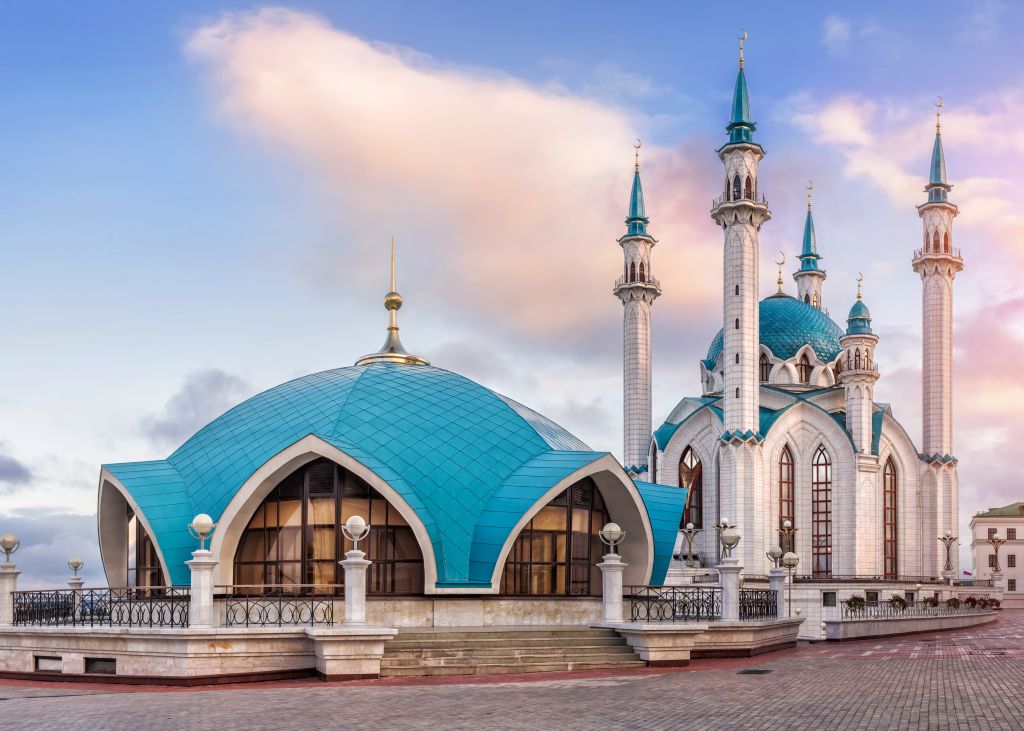
On the other hand, now there is a unique situation for actual improvements to the domestic tourist product quality. Our plus sides include diversity of resources, most of which have not been yet tapped by the tourism industry. A lot has been done to develop new tourist centers – these are Krasnodar Krai, Altai, Primorye Krai. These are becoming new regional points of growth, not mentioning increasing potential of Moscow, Saint-Petersburg and Kazan.
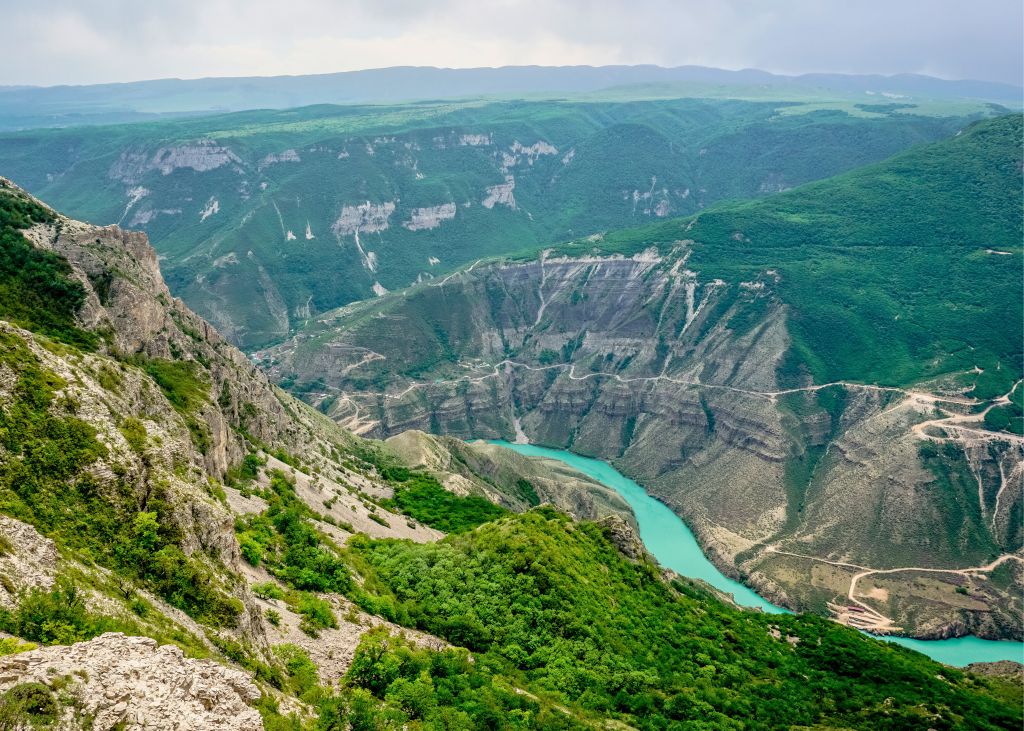
If we look at the official statistics, then the tourist traffic has changed, but not in any major way. In 2023 the cumulative gain amounted to about 10-11% for overnight accommodation and guest numbers. A similar upside trend has been registered in 2024. If we look at regions and routes, we get quite a long list of resort destinations, which have had a significant upward traffic shift, for instance, the Caucasus region. Over the latest two years the growth of tourist numbers in Dagestan amounted to 340%! Notably, the republic attracts Russians not only with its Caspian beaches, but also with well-thought through guided tours with a broad range of tourist attractions. The Sulak Canyon has become a real bestseller. Scenery and landscapes across Dagestan have turned into a major tourist attractor.
By all means, the Caucasus wins over tourists with its hospitality. However, there are opportunities for further development, for example, service. Speaking of overall service, it is our weak spot, because tourism, despite being designated as a priority economy sector, was essentially undercapitalized. Very often it led to private entrepreneurs taking the lead, and they often did it with low checks and sector entry thresholds. Many small hotels were built without any system, occupying the best spots, thus damaging landscapes and even tourist destinations.
One cannot compensate lack of professionalism in tourism business just with hospitality alone. If there are no roads, if water and power are supplied irregularly, then it would be impossible to provide high-quality and comfortable recreation.
What is the current situation with tourism development in those regions that are traditionally popular with Russians – Stavropolsky Krai, Kabardino-Balkariya, Karachay-Cherkessia?
These regions for now cannot boast high tourist traffic rates as can their Dagestan neighbors. Nevertheless, the tourist traffic growth over the latest two years there has amounted to 40-50%.
At the same time, we see that over the latest year Krasnodar Krai has lost about 10% of tourists. According to official statistics, the increase of tourist traffic in Crimea in 2023 was just 2%, which could be explained by the current situation
You haven’t mentioned the Far East and Siberia.
The Far East and Siberia are also displaying tourist traffic growth. The Primorye Krai also started its rise with domestic and regional tourism. Russians are primarily attracted, of course, by the Pacific Ocean and the beautiful city of Vladivostok – the political, cultural, research and education economic center of the region. The city is also justly considered a major business hub in the Far East. It should not go unmentioned that over the latest years our tourists fell in love with Khabarovsk Region, the Amur River. And then again, for Khabarovsk residents China is just next door. But group tours, which were permitted by the Chinese side in 2023, have yet to reach up to the volumes we had expected. It should be remembered, that the pandemic in the PRC raged longer than in the rest of the world. The country effectively banned trips abroad for its citizens. And when they gradually eased up the restrictions, then naturally, their tourist traffic initially began circulating within the Celestial country. The Chinese dropped foreign travel on their own because they were afraid of getting sick.
How can you explain lower tourist traffic to Kazan?
Last year Tatarstan displayed growth of 2% only. The explanation is simple – Kazan, the main tourist Mecca of the republic, due to strong tourist traffic kept raising hotel and service prices. Some categories of our citizens started experiencing financial issues, because many could not afford staying for two-three extra nights in the capital city of Tatarstan.
Before February 2022 Russia was visited by large numbers of foreign tourists. Is it true that today the tourist traffic from abroad has plunged to zero?
Yes, there have been far fewer European and American tourists, but now in Moscow and Saint-Petersburg there are more tourists from South-East Asian countries. Guests from the UAE, Iran, Turkey, India, Saudi Arabia are actively coming to visit. By the way, Saudis previously used to totally ignore Russia.
There is still some tourist traffic from the Western countries, but of course, it’s not as strong as it used to be. It is likely that most guests come to Russia to take care of some personal issues or on business. Though many tourists, just like before, are travelling across our country. This shows that the interest of the world in Russia has not gone down to zero.
According to statistics, overall Russia is annually visited by several dozen thousand foreign tourists, including Western tourists. In 2024 5 million foreign tourists are expected to come.
Last year France’s income from tourism amounted to over $65 billion. In 2023 in Spain the tourism industry accounted for over 12% of the country’s GDP. It could be incorrect to compare these countries to Russia, but nevertheless, I would like to know what share of the GDP is contributed by tourism in our country today?
In 2022 the Government planned that tourism would bring about 3,9% of the GDP, which amounted to around ₽148 trillion (about $2,1 trillion – Editorial Comment). The direct effect of tourism is ₽5,8 trillion (about $85,9 billion– Editorial Comment). As you can see, there is a lot of room for improvement for us to develop and grow our tourism.
Speaking of other numbers, brought by tourism into the coffers of the state, I would like to mention that in 2023 the total annual turnover of tourist money during their travels across Russia reached up to ₽1,8 trillion (about $20,9 billion – Editorial Comment). The leaders by volumes of money, spent by tourists, are Moscow, including Moscow Region, Saint-Petersburg together with Leningrad Region and also Krasnodar Krai. Tourists spent in each region on the average over ₽100 billion (about $1,1 billion - Editorial Comment).
As for Moscow, then according to Moscow Government data, last year the city was visited by 24,5 million tourists, of which 22,2 million were Russians. Tourism brought to the city budget ₽178 billion (about $2,07 billion. – Editorial Comment). This is by 1,5 times higher than the year before.
The tourist season is in full swing. What is the hotel occupancy rate in Moscow?
Over the five months of this year the occupancy rate in Moscow amounted to 73% (57% over the same period of the last year). Even the luxury segment has demonstrated growth of more than 10 percentage points. This is a very high figure. Overall, the occupancy rate for Russia in terms of rooms is about 40-45%.
Can you name any regions, apart from Moscow, where everything is OK with hotels?
It’s Yekaterinburg, for instance. In 2009-2010 the situation in the city was not so good, because the city had started rapidly ramping up its hotel room capacity, and consequently the occupancy rate plunged to about 45%. Now the average occupancy rate is above 70%. It is quite a high figure for a provincial city.
We are used to evaluate hotels by the number of stars: five stars – a grand scale vacation, four stars – to have a good time, two stars – just to stay overnight. How are things in Russia with hotel star ratings?
In 1989 the World Tourism Organization adopted a hotel rating declaration in the form of a five star scale, familiar to us. The document was non-binding and of advisory nature, that’s why now there is no common system, recognized universally. In Paris a five-star hotel, for instance, could be without elevators, and rooms can be smaller than 16 meters.
Our experts evaluated hotels in various Russian regions, managed by professional operators. These hotels make up about 20% of the total hotel room capacity. Overall, about 40% of hotels in the country are three- to five-star hotels.
Do all Russian hotels have star rankings?
Far from it. Essentially, there is a resolution on mandatory classification, and there are facilities that cannot be ranked – spa retreats, government agency hotels – all other hotels have to go through a star ranking procedure. Operations of uncertified hotels are supervised by Rospotrebnadzor, which protects our consumer rights.
Matching stars to the actual level could be very subjective. Each country has its own individual approach and its own understanding of comfort. And there are always deviations from the industry standard.
Is there future for Russian tourism?
Of course, there is. Dmitry Chernyshenko, Deputy Prime Minister of the Government of the RF, speaking about the development prospects of the tourism industry in the country over the next five-six years, noted that the government and private business are ready to commit to construction of highways and railways, utility networks, coastal protection facilities and public amenities, and also to resolve environmental protection and conservation issues. It is also planned to build hotels with 75 thousand rooms, to create over 100 thousand jobs. Moreover, the volume of private investments will amount to ₽1,5 trillion (about $17,5 billion – Editorial Comment ). More than ₽300 billion (about $3,4 billion – Editorial Comment ) will be allocated by the state under various programs, the funds will be used for building hotels and amenities.
Overall, a lot has been done in our country over the latest years, especially in big cities. You know, an acquaintance of mine once came from the USA and after a walk around Moscow exclaimed with delight: “Incredible! You have internet connection available in the subway, at bus stops, you can see your streetcar coming on your smartphone screen”.
As you can see, this looks fantastic for Americans. This means we are earning our keep!
Interviewed by Ivan Pospelov