

Gediminas Taranda: "There were no failures except funny happenings"
You come from a military family – your father Leonas Taranda, a Lithuanian by birth, was an officer in the Soviet Army…
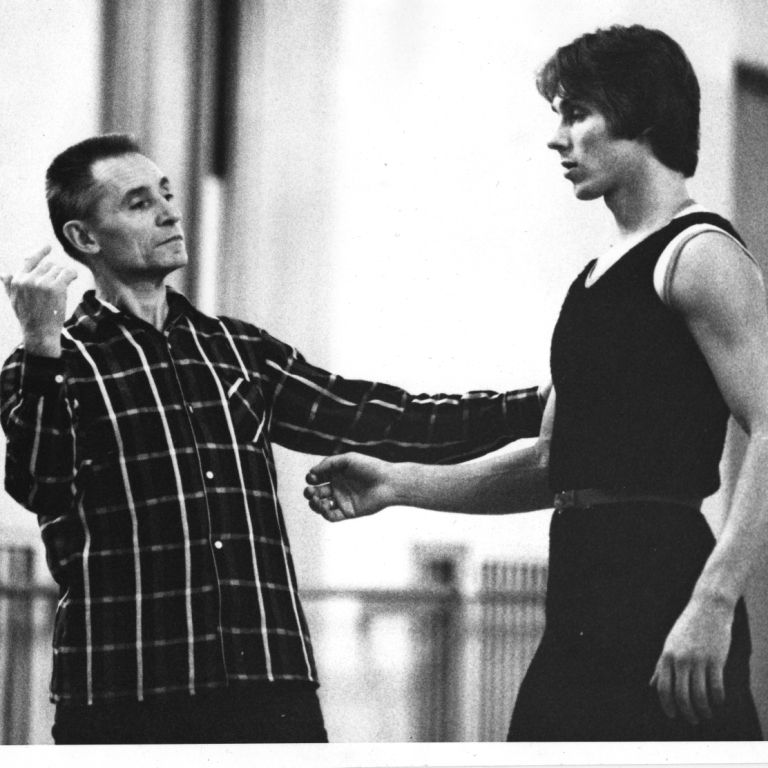
I will tell you a story. We were living in the city of Kaliningrad at the time. My father was the head of an intelligence battalion in a tank regiment. One day, a five-year-old Taranda, that’s me, stood in the ranks and watched my father teach soldiers to lie down under a tank, then emerge from under it and throw a training grenade. The servicemen were all young boys, it was a little scary for them to climb and find themselves between the tank tracks.
Suddenly my father ordered: "Taranda, get out of line!" He took my hand, we lay down under the tank that passed over us, after that we stood up and threw a grenade. It was a game for me! But following suit, young recruits bravely lay down under the tank on the commander's order. This has been repeated more than once. But when my mother saw this, she grabbed a stick and chased my father around the parade ground, crying out loud, "Come here!" And my father had already a rank of a captain. I remember him running and shouting: "Galya, come to your senses! The soldiers are watching, I'm the commander!" "I'll show you the commander! Mom threatened.
Nevertheless, the soldiers had an empathy for my father. And, apparently, I developed the same attitude towards them. Now, I understand that a subordinate should, first of all, respect you, and not be afraid. When I became a sort of a chief officer myself with the Ballet regiment at my command, I often remembered my father's lessons.
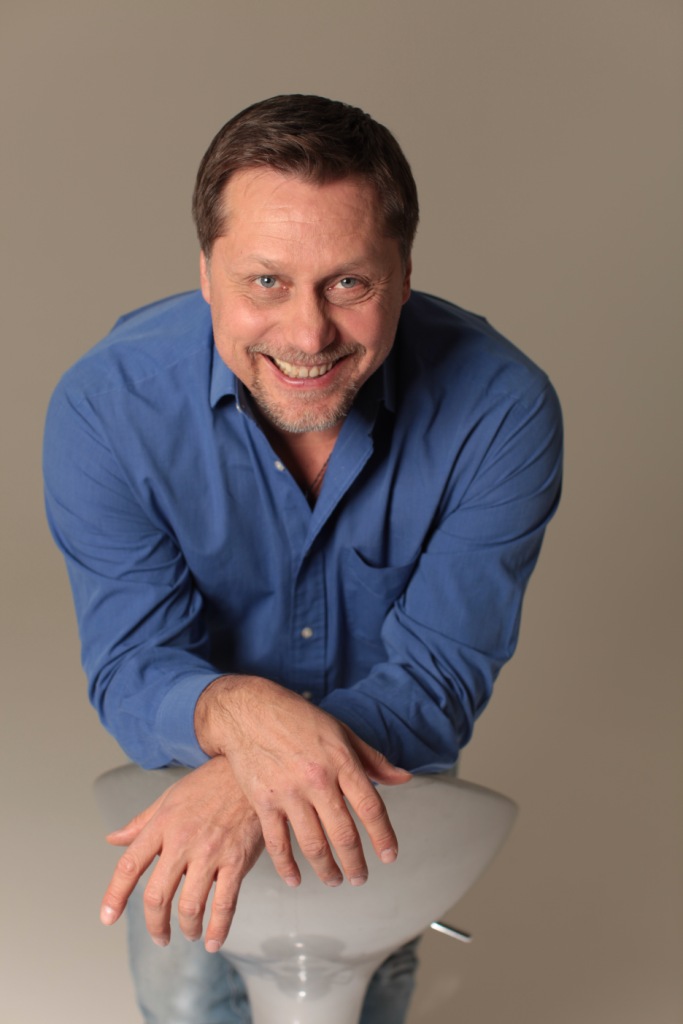
You once said that as a child, your Greco-Roman wrestling coach, Alexander Ivanovich Batishchev, taught you the most important thing: if you fall down you must then get up. Did it come in handy in life?
The athletics and physical exercises taught me another lesson. No matter how painful is your fall, your task is to get up! You might be thrown to the ground again, but you must get back on your feet and continue to fight. My favorite coach instilled in people like me the "tenacity of a winner", and thus he strengthened the unmature child’s characters.
My dismissal from the Bolshoi Theatre in 1993 was a real "downfall", after which it was very difficult to get up. By 1991, a very dire atmosphere has engulfed the Bolshoi Theater. There was practically no rigid and effective vertical of power. The troupe was still managed by the brilliant choreographer Yuri Nikolaevich Grigorovich, who by the early 1990s had fired a whole galaxy of "retired" stars from the theater, including Maris Liepa, Vladimir Vasiliev, Ekaterina Maksimova, Maya Plisetskaya. They were replaced by the so-called "young ballet" artists, which were kept under the patronage of Grigorovich.
Were you already seriously engaged in becoming a ballet company producer in your own right?
Yes, I took the Bolshoi Theatre to Australia, Germany, Greece. Many art officials were very annoyed by this: "Who did it? Ah, Taranda did it! But he was not allowed to travel, and now he is traveling, and even, you know, he is grabbing power within the theater!" I was not “grabbing” anything, I simply suggested new ways to popularize Russian art abroad. In addition, it provided the artists with the opportunity to earn money to feed their families.
The moment came when Grigorovich, the "owner" of the theater, suddenly became interested: who, without his knowledge, dared to organize a foreign tour. "Why is Taranda doing this!" the choreographer was indignant. I want to make a reservation right away: It was Grigorovich who paved me the way to the stage of the Bolshoi Theater at the very beginning of my creative career. After the final exams at the Moscow Academic Choreographic School, I received an invitation from Yuri Grigorovich. He said, "That's it, I'm taking this guy!" Then, I was engaged in his legendary performances like "The Golden Age", "Raymond", and many others, where the Master entrusted me with the main roles.
In 1993, we went to London. We were sitting vis-à-vis with Yuri Grigorovich when he asked: "Gediminas, how will we collaborate?" I answered, "I am always ready to work in your team. But you know that I'm producing now. I can arrange any performances of the Bolshoi Theatre abroad." In the end, Grigorovich said: "Gediminas, you are just an artist, we will work with you further on. But if you continue in the same way – taking the theater touring back and forth, we will have to part with you. So, think about it." I refused to comply, and was soon fired with a scandal.
You were then declared almost a saboteur who tried to disrupt the premiere!
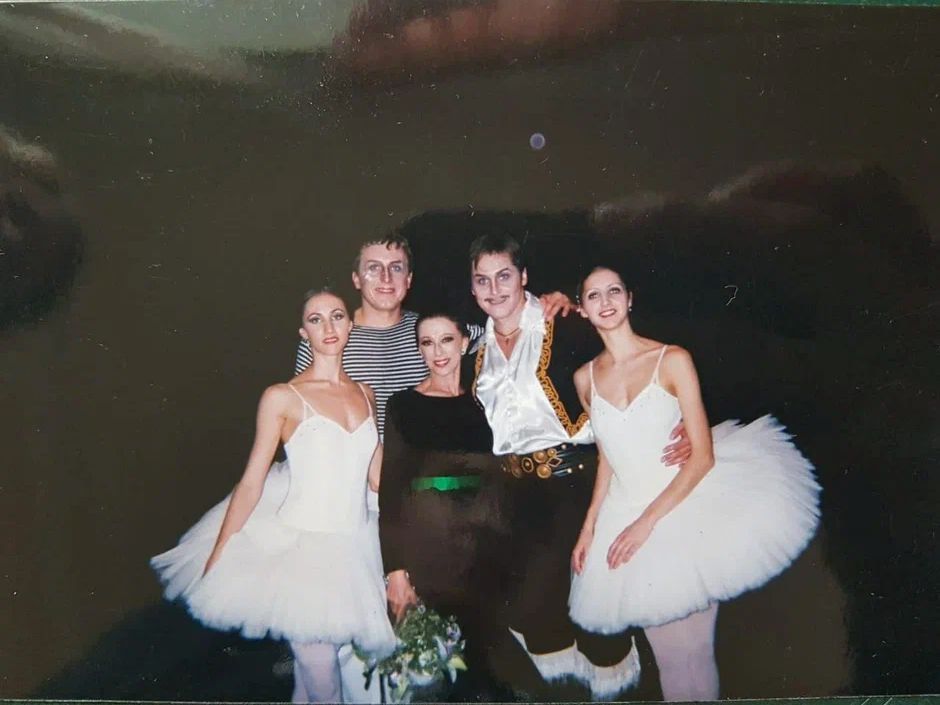
To put it mildly, I was treated unintelligently, meanly. That very evening there was a general run of the ballet Le Corsaire, where I was supposed to dance the leading role, although, mind you, I was already out of favor with the theater management. As soon as I went into the dressing room, changed my clothes, the head of the troupe called me and said: "Taranda, you are not dancing today! You don't dance at all anymore - you're fired!"
It happened just before the premiere, literally a day in advance! I was completely knocked out, disarmed. Suddenly, I remember, something so adventurous clicked inside. I only managed to tell my brother, who was standing next to me: "I'm off. Cover your back!" He went out into the hall. The audience was perplexed, because the program says: Taranda is dancing. And Taranda appeared in a civilian suit on stage. The conductor raised his hands and then lowered them…
Addressing the audience, I said: "Dear friends, I want to say that bureaucrats now rule the Bolshoi Theater, and we, the artists, just as before, we remain for them – nothing! I thank all the firefighters, all the make-up artists, the orchestra, the conductor, the ushers for being part of the family all these years, for creating a wonderful performance. And, of course, I thank you, the audience, because if it weren't for you, our theater would not exist in principle. Therefore, I bow low to you and say goodbye!"
Did your words cause a dead silence in the hall?
On the contrary, a terrible noise arose, there were shouts: "What is he saying?! Call the administration!" Security was called but the guards, knowing me well, refused to use force. The performance was then delayed for 20-30 minutes…
But you've caused a scandal yourself, haven't you?
No, it was an emotional reaction to the disrespectful attitude towards the artist. By the way, the administration interpreted my action as a direct call from Taranda to start a rebellion (Gediminas laughs).
I said everything I wanted to say and left the Bolshoi Theatre on my own. But then, for another five years, when I came to the performances, someone from the administration would come up and ask: "Gediminas, aren't you going to be a nuisance this time too?"
Time has passed. And a year after my dismissal, Yuri Grigorovich left the theater with a scandal. Finally, he stated: "I will not cross the threshold of the Big One (Bolshoi theatre)!". The part of the troupe that supported him staged the first strike in the history of the theater: the artists took to the stage and announced to the audience that the performance of "Romeo and Juliet" was canceled in protest!
After Grigorovich left, you didn't want to return to the “Big One”. Why?
The trade unions called on me: "Gediminas, we will now restore you through the court, you will have back your diplomas, awards, you must return to the Big One!" By that time, I already opened my own theater, the Imperial Russian Ballet. Before the first premiere, I gathered the artists, to whom I said: "We are going to conquer the world!"
Is it true that since childhood you dreamed of doing folk dancing, not ballet?
My parents divorced, my mother and I moved to her native city of Voronezh. She got a job as an accountant at a local opera house. I often came to her place of work and watched operas, operettas, ballets. But I absolutely did not like ballet: boys are running around the stage in stockings! The opera was also not impressive for me. But I really liked the operetta.
I went to the wrestling sports club. The guys from the bloc did choreography and could watch movies for free. I had to beg 25 kopecks from my grandmother or mother to go out with them in the evening. In the end, my friends said: "Why do you need this? Let's go and see what choreography is, you'll enroll, and we'll go to the movies together." Thanks to these free tickets, I got into the ballet domain.
I really liked the Big Ballet Hall then: the girls are beautiful in skirts, and then there were mirrors, and music. In short, not a routine life, but a never-ending holiday! I was watched by some teachers, to whom, at their request, I showed a "squat" dance. They liked it, and they took me in. From then on, I acquired the privilege to watch movies for free.
I had a fantastic teacher, Vladimir Vladimirovich Sokolov, who after a few years (I was already 14) said: "You have got a talent! Go to a choreographic school." Well, I entered the Voronezh Choreographic College. Moreover, I wanted to go to the folk dance department, but there were only four boys at the classical class, so I was accepted to the classical. I said, "I don't want to dance your ballet in your stockings, I want to join the Moiseyev ensemble!" They vowed: "In a year we will definitely transfer you to the folklore dance department." They deceived me! I had to forget about Moiseev…
It was rumored that after performances at the Bolshoi Theater, you often worked as a loader at freight stations.
This lasted from 1984 to 1988. It was a wonderful time!
So these were the years of your creative heyday! Why was it necessary to waste energy on bags of potatoes?
There was chronically not enough money even for food. At the Bolshoi Theater, I received 100 rubles a month and almost all the money went to pay for a rented apartment in the Moscow region. I just don't understand how we survived back then! You come to the theater hungry and work hard like Papa Carlo. Therefore, I decided to work part–time at night as a loader at various vegetable and fish bases. I unloaded cargo wagons. A wagon consists of ten rows of boxes weighing 45-46 kg each. You take such a box, and it collapses in your hands because it has rotten due to dampness. Frozen crucians spill on the floor. You pick them up and put them back. I still can't bear the look of frozen fish, it just makes me feel bad! But the most disgusting was the herring: the barrels stood high and when they fell down, the cork flew out, the brine spilled, and hands became soaked with brine. My hands turned yellow and smelly to such an extent that when I came to the theater, to a rehearsal, it was impossible to stand next to me. There was nothing to wash off this brine!
Once at the warehouse base, I asked to join a group of drunks. I wanted to understand how they manage unloading so deftly. I am a healthy young guy, I unloaded about a third of the car and was already dragging my legs from fatigue. And they came up, they would substitute an arm, then a hip, a knee – and no fatigue. It was a formidable science! With these simple 45-year-old men, I quickly learned how to throw around boxes. But all the same, that job was one of the hardest in my life! When the movers found out that I was a ballet dancer, they were shocked! They helped me a lot.
Were you paid at least ten rubles per shift?
They also gave me a five-ruble bill, because when they saw how hard I was working, they felt sorry for me: "Young man, five boxes fell down in the warehouse. You need to handle them." I handled five boxes, and they issued me a document: "Unloaded 10 tons in a warehouse."
Apparently, you got tired of carrying barrels of herring and, without leaving the stage, you got a job at a Fashion House and started tutoring models…
I met a friend once, and she recommended me to work with models in GUM (Department Store number 1 in Russia). Then I found myself at Slava Zaitsev's model agency, at the Russian Fashion House, at the Youth Fashion House. I showed the girls how they should walk, how to dress, how to take off gloves, how to sit, what is a business walk and what is a walking gait, how to wear a hat, how to wear this, how to wear that. At present, many of my students have opened their own private modeling or theater agencies.
So, it would be fair to say that I was at the roots and origins of the Russian modeling business. Although, of course, it was different in the Soviet times. It was not 16-17-year-old girls who worked there, as they are now, but adult women 26-30 years old who were fluent in foreign languages. It was a very interesting job, and I really liked it.
Gediminas, admit it, have you had any failures on stage?
Rather, there were funny happenings. I was just starting my career at the Bolshoi Theatre. The troupe went on a tour. The remaining artists were supposed to perform "Don Quixote" in a week. I danced one of the eight bullfighters in the corps de ballet. For example, on September 6 – one "Don Quixote", on the 7th – the second. And suddenly there is no main bullfighter for the second performance on September 7! The performer of this role fell ill, they did not find a replacement for him.
Anatoly Simachev, my teacher, comes up to me and says: "Taranda, your only chance is to dance the main bullfighter tomorrow." Can you imagine? This is the leading role in the ballet "Don Quixote"! The leading role after just a week of joining the troupe! I was approved as a bullfighter, I rehearsed with the legendary Lyudmila Vlasova, on the 6th I danced in the corps de ballet, and on the 7th I became a bullfighter, a leading dancer.
The 6th day is coming. My mother gave me goat's woolen stockings, long stockings that warm the muscles of the legs. Before the performance begins, I put on a bathrobe, woolen shirts, bullfighter boots with heels, tie my shoelaces into two knots. Veteran dancers warn me: "Taranda, take off your robe, it's time to go on stage." I take off my robe, start taking off the woolen coats but they don't come off! They are sewn very thinly at the ankle and do not pass through the shoe, because there is a heel there. I pull them – but nothing works!
At this time, the whole ballet goes on stage, and I stand backstage, because the woolies are not being removed. I stand and cry. My teacher, my dresser, run up to me and cut these woolen things. That's it, I'm free! But by this time, I should already be on the other side of the stage. I run around backstage with a knife, with my cap askew, I'm about three minutes late.
Finally, I jumped out from behind the scenes, slipped and drove to the middle of the stage right on my “fifth point”, on my behind. I got into a pose and shouted: "Ole!" Here, of course, all the artists who were on stage collapsed with laughter: Taranda rolled out into the stage on his ass, and he is supposed to be the main bullfighter tomorrow! The conductor dropped his wand and laughed until he lost his pulse. Then, there was a pause and the audience burst into applause. After the performance, the top manager of the troupe comes up to me and says: "If I had the opportunity to fire you, I would, but, unfortunately, there is no one to dance the main bullfighter tomorrow."
The whole staff of the theater came to watch the performance, opera singers, orchestra, even firefighters. They whispered to each other: "Yesterday's clown will dance the main bullfighter.” Of course, I didn't sleep that night, which is to say – they never gave me two chances at the Bolshoi Theater.
So, here I have to enter the stage as the main bullfighter. I take off my robe, go on stage, and after that I didn't see anything, didn't hear anything, and, frankly, I don't remember what was happening. Only the footlights and the enthusiastic voices of the seven bullfighters. It was my first resounding success, after which the veterans of the corps de ballet came up to me and patted me on the shoulder: "Young man, well done! To be accepted by the Bolshoi Theatre after just a week is worth a lot!"
How did you meet Maya Plisetskaya?
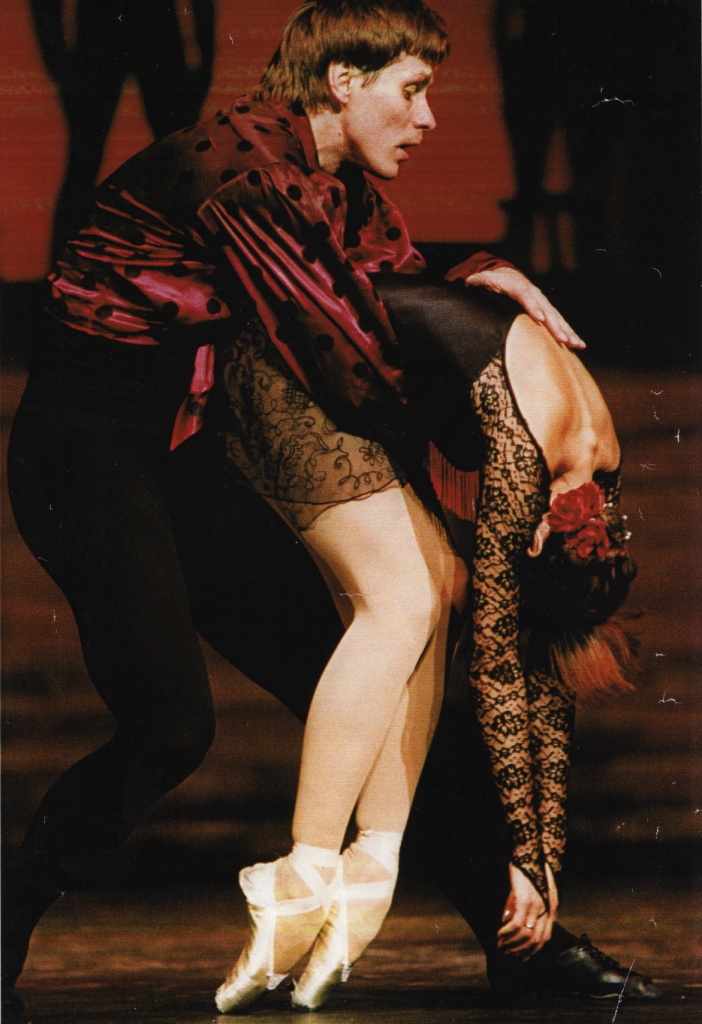
This is unforgettable! Literally a month after my debut, Assaf Messerer comes up to me and says: "Gediminas, would you like to dance Carmen with Maya Mikhailovna? Come to the rehearsal." It was my first meeting with Plisetskaya. She said: "I've heard a lot about how you danced." "About the woolies," I clarified, "or about the bullfighter?" - "About both."
She rehearsed with me as an equal. It was a delight! And then I danced the ballet Carmen with her. It happened five months after joining the Bolshoi Theatre! What could be better? What else can a young artist dream of? And the day after the premiere, I was standing in the crowd again.
The Imperial Russian Ballet, which you created, used to travel endlessly around the world. Are your dancers performing today?
Since February 2022, all borders of Western countries, Japan, and South Korea have been closed to us. We felt a sharp change in attitude towards us, towards Russia, on the part of the local authorities. Although thousands of our fans around the world continue to hope for a change for the better.
Of course, there are, say, Mexico, Brazil, and Argentina. But they don't enjoy a very stable financial situation. Nevertheless, our small team, consisting today of 25 ballet dancers, often tours in Belarus and other neighboring countries. Today, we are expected with special interest in China, where we have been working at various sites for 20 years. But there we show not only ballet performances, but also we do great joint projects for children. We visit schools, talk about Russian culture, history, and conduct master classes.
Most recently, I held talks with Chinese partners on the establishment of a Russian-Chinese center in Sichuan Province. The Ballet Academy, the Academy of Music and Painting will be located in a huge complex with an area of five thousand square meters.
In addition, we plan to build the same cultural center in the Kaluga region. According to the plan of one of the best architects in Russia, Andrei Savin, it will be an urban miracle. I don't want to reveal all the secrets, but we believe that our cultural center should focus on ballet and space.
In Russia, if you take the last six months, in which cities did the artists of your theater perform?
At present, we travel a lot around the country: Nizhny Novgorod, Penza, Kirov, Samara, Saratov, Voronezh, Lipetsk, Pskov and other cities of Russia. As before, we are in great demand from the audiences. After all, the core of the Imperial Russian Ballet team consists of graduates of Russia's leading ballet schools. The company's repertoire combines classical ballet productions ("Don Quixote", "Carmen", "Swan Lake") and modern programs.
Do you dance or direct yourself?
I haven't danced for a long time, old injuries are still felt, and the age is not quite suitable (laughs). However, four months ago, Farukh Ruzimatov, in the recent past the premier leading soloist of the Mariinsky Ballet, forced me to go on stage and show a class. It was at his anniversary celebration, and I couldn't say no to a friend.
Sergey Kron