

From Idea to Mass Production: How Moscow is Building Its Technopark System
Viktor Ivanovich, the Directorate of Technological Infrastructure of Moscow was established in 2025 as a unified city operator. Why was this specific structure created?
In 2024, Moscow Mayor S.S. Sobyanin approved a strategy for the development of Moscow's technological infrastructure. By 2030, the total area of technology parks will reach 5 million square meters. This expansion will allow them to accommodate twice as many technology companies—5,000 compared to more than 2,400 today—and ensure the creation of 150,000 new jobs. The Directorate of Technological Infrastructure of Moscow was established in 2025 specifically to achieve this goal.
The Directorate is focused on creating a favorable environment for technology companies to foster their growth and integration into the city's economy. Therefore, our activities are centered on several key areas.
First and foremost, the Directorate facilitates the expansion of Moscow's technological infrastructure by supporting technology park development projects at all stages—from concept design to commissioning facilities and attracting residents.
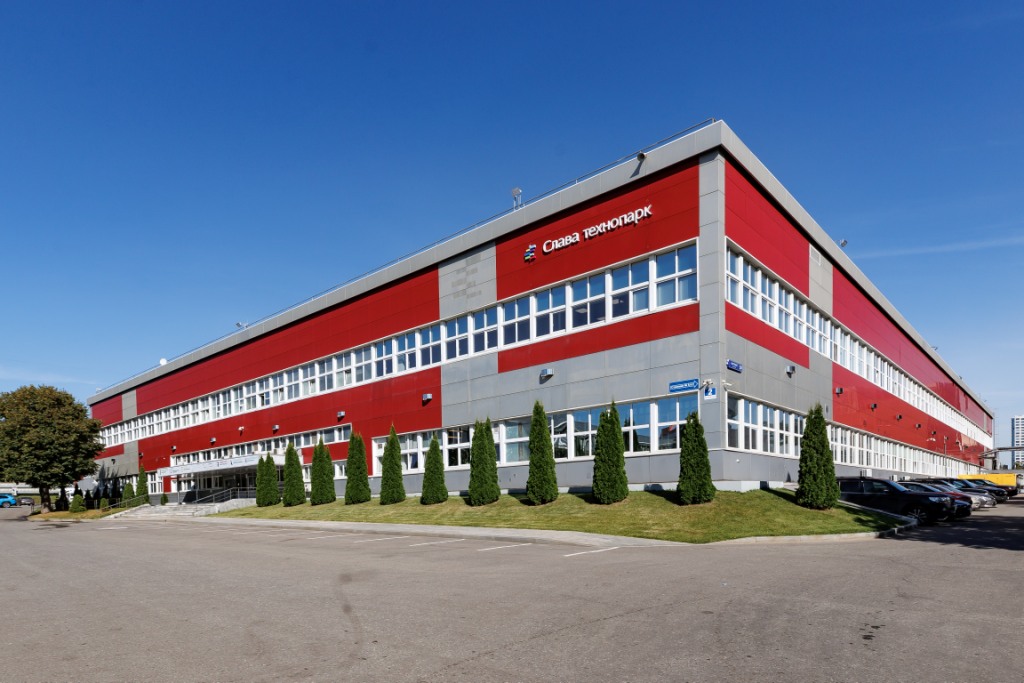
In addition, we support the infrastructure development of existing technoparks. The Directorate serves as the management company for the Mosgormash Technopark, as well as the unified operator of the city's innovation sites. These include Slava and Mosmedpark technoparks, Strogino innovation сenter, and STMP-Zelenograd.
Another vital area of focus is supporting small and medium-sized innovation companies in the capital. One of the key tools for this is the city's rental service, which aggregates company applications for premises and helps them select a suitable location. For developers, this service works in reverse by helping them find tenants for existing or under-construction facilities. The second tool is the Technomarket platform—a free digital service that helps find partners at any stage of product creation, whether it is finding a developer, conducting necessary testing, or organizing pilot or mass production.
This broad scope of activities allows businesses to advance through all stages of development within a single ecosystem, while enabling the city to systematically build its technological potential.
Speaking to an international audience, can the Directorate's model be described as a "One-Stop Shop" for investors, developers, and tech companies?
Yes, absolutely. The Directorate operates as a true one-stop shop for investors, real estate developers, property management companies, and technology businesses. Acting as a strategic partner for developers and investors looking to launch projects in Moscow, the Directorate accelerates project delivery and seamlessly integrates them into the city’s innovation support ecosystem.
We do more than just consult; we bridge the gap between diverse stakeholder needs to build viable, high-impact projects. Our hands-on support spans the entire project lifecycle—from initial concept definition to final site commissioning. We help developers secure anchor residents for their properties, and we guide tech companies in finding the ideal spaces tailored to their manufacturing or laboratory needs. For the city, we ensure that new technology parks are developed exactly where they are needed most, driving sustainable economic growth.
Today, Moscow views technoparks not merely as real estate for innovative companies, but as a core element of its new urban industrial policy. How would you define the role of technoparks in developing the capital's economy?
The capital's technopark program, launched in 2012, directly implements the goal of increasing the tech sector's share in Moscow's economy. In this partnership, the city acts not just as a regulator, but as a partner creating conditions for business. Through this mechanism, the city solves systemic tasks: it develops high-tech manufacturing, creates jobs, attracts investment, and builds an environment for tech companies to grow.
At the same time, a technopark is an investment product with a high socio-economic impact. Unlike standard commercial real estate, its benefit to the city is measured not only by rental income, but also by residents' tax contributions (5.7 roubles in taxes for every 1 rouble of tax benefits), the volume of attracted investment (13 roubles per rouble of tax benefits), and the creation of highly skilled jobs (over 78,000 jobs to date).
In recent years, technoparks have become one of the most prominent forms of urban technological infrastructure. What do you think was the main factor behind this growth: demand from businesses, city policy, changes in the manufacturing model, or the general technological shift in the economy?
The popularization of technoparks is no accident: several factors converged here, but the key one, in our view, is the growing demand from businesses combined with systematic city policy.
On the one hand, the demand for localizing technological manufacturing is growing year by year—in 2025, the demand for localization increased 1.7 times compared to 2023: from 496,000 square meters in 2023 to 857,000 square meters in 2025. In total, for 2024–2025, applications for localization from technology companies totaling more than 1.5 million square meters were received through the city rental service. At the same time, the commercial real estate market does not yet fully meet this demand: the existing supply is largely represented by offices, whereas businesses need production facilities with specific characteristics.
On the other hand, the city consistently establishes conditions that make it highly profitable for developers to enter such projects. Tax incentives, interest rate subsidies on loans for creating and developing technoparks (up to 300 million roubles per year), and access to land on preferential terms all reduce capital expenditures and boost the investment attractiveness of technopark construction.
Thus, the growth of technoparks is a direct response to both market demand and city support measures that make these projects financially viable. While demand sets the direction, municipal tools provide the means to realize it.
Would it be accurate to say that Moscow is currently bringing manufacturing back into the city, but in a completely new format—one that is compact, high-tech, eco-friendly, and integrated into the urban environment?
Manufacturing and technological enterprises are indeed returning to Moscow, but in a new capacity. Instead of large industrial zones, compact technological sites are emerging, naturally integrating into the urban environment and coexisting with residential areas. This process has become possible, in part, due to the Integrated Territorial Development (KRT) program. Since 2021, technology parks have been integrated into KRT projects—both as small, targeted facilities and as part of large-scale developments across entire districts, where a technology park becomes part of an industrial or business cluster.
An additional boost to this development is provided by the program encouraging the creation of employment hubs. For the city, this is a tool for balanced development, while for investors, it offers a long-term incentive that directly improves project economics. Thanks to this approach, production facilities are integrated into the urban fabric, and residents get jobs close to home.
Which industries are driving the main demand for technoparks today: microelectronics, pharmaceuticals, medical technologies, IT, instrumentation, robotics, or unmanned systems? Where do you see the fastest growth? And which industries would you like to see more active in technoparks than they are now?
The primary demand for technoparks today comes from industries actively localizing their production in Moscow. According to data from the city rental service, food industry companies lead with 22% of inquiries, followed by machinery and equipment manufacturers at 20%, and developers and manufacturers of medicines and medical devices at 12%. Unmanned aerial vehicles (UAVs) and robotics represent a notable segment at 9%, and this share is expected to grow. Crucially, these companies look for specific parameters: premises with reinforced floors, high ceilings, sufficient electrical power, and efficient logistics.
We are witnessing the fastest growth in segments tied to import substitution and technological sovereignty: microelectronics, medical technologies, and robotics. These industries are currently experiencing a surging demand to establish their own manufacturing facilities, making technoparks a highly promising platform for their deployment.
Overall, the industry-specific approach to developing technology parks is becoming dominant, with over 60% of Moscow's sites currently operating in this format. Developers gather inquiries from companies as early as the design phase and integrate specific solutions tailored to industry needs into the overall concept.
The Directorate serves precisely as the connecting link between all parties in this process. We monitor real corporate demand based on industry, technical specifications, and timelines. Guided by this data, we can recommend to developers and investors which tech park formats will be in high demand, which industries new sites should be designed for, and where stable market deficits still exist. This approach ensures the construction of high-demand infrastructure that already features a pre-established pool of potential tenants.
How is the profile of a Moscow technopark resident changing? Is it still predominantly startups and small innovative companies, or are we increasingly seeing mature technology manufacturing enterprises transitioning to mass production?
Today, more than 2.4 thousand companies operate within Moscow's technoparks. These are primarily small and medium-sized businesses, which make up over 90% of the residents. They range from small startups to companies that have already reached mass production and continue to scale up.
Their core areas of operation include research and development (R&D), information technology, telecommunications, and industrial manufacturing. They create tens of thousands of jobs and shape a diversified structure for the city's innovative economy.
At the same time, we can see a shift in demand from companies that are only planning to localize within technoparks. Most often, these are not just office tenants, but manufacturing enterprises that require specific conditions: small production and warehouse spaces ranging from 500 to 2,000 square meters, a floor load capacity of at least 1 ton per square meter, ceiling heights of 5 meters or more, and an electrical power capacity starting from 150 kW. This demand reflects a general trend—a transition from pilot projects to mass production, showing that businesses are ready for further development and scaling.
There are also companies that eventually outgrow technoparks and are ready to expand to their own dedicated sites. For instance, Parus Electro—a resident of the technopark of the same name and a Russian developer and manufacturer of uninterruptible power supplies, electric vehicle charging stations, and other power conversion equipment—has evolved from a resident into the technopark's management company. Initially entering the technopark as a standard resident, the company subsequently increased its production capacity, achieved the status of an "anchor resident," and, since late 2025, has become the technopark's management company.
How do technoparks help Moscow compete with other global megacities for technology companies, engineering teams, and investments?
Today, Moscow remains one of the key centers of attraction for the technology business. A comprehensive ecosystem has been built here for the development of innovative companies: a strong scientific foundation, highly qualified talent, a mature research infrastructure, and systemic support from the city. Most importantly, the city offers entrepreneurs and investors transparent and lucrative conditions. Technoparks are precisely the tool for this: they create an environment where a startup can scale into a major technology corporation, and a scientific development can transform into a market-ready product.
Today, a comprehensive ecosystem has been created in the capital to support technological businesses at all stages of development. The Government of Moscow provides tax incentives, grants, subsidies, educational programs, and consultations. In particular, innovative companies can take advantage of grants for pilot testing of innovative solutions and for patenting developments, an export grant, and also receive a subsidy for employee training. For those entrepreneurs who have already developed their business and are ready to enter the international market, but do not know how to take the first step, the Government of Moscow offers special concessional lending for exporters up to 100 million roubles.
The investment attractiveness of the capital's technoparks, meanwhile, is driven by several key factors. First, it is the guaranteed demand for these sites – the vacancy rate of the capital's technoparks is less than 2%, which indicates a colossal demand and high competition for a space. It is also important that residents often enter a technopark as early as the design stage, which gives developers confidence in the fast payback of projects.
Secondly, the technopark program is implemented through a public-private partnership model based on the principle of 'benefits in exchange for investments.' Along with the technopark status, the city provides developers and investors with a set of substantial financial and non-financial advantages. These include a reduction in the tax burden by up to 25%, a subsidy of up to 300 million roubles per year to compensate for loan interest payments, benefits under the program for creating places of employment, and the opportunity to obtain land plots on preferential terms.
As a result, Moscow holds a leading position: in terms of the number of technoparks, it is second only to Beijing.
Which elements of the Moscow technopark system might be of interest to international investors and technological companies?
The Moscow technopark system offers foreign investors a ready-made, proven, turn-key model. For them, this is not just about leasing real estate, but about comprehensive project support: from site selection and determining industry specialization to filling the venue with residents. Essentially, we are offering a long-term partnership with the city rather than a one-time transaction, where all administrative and legal matters are resolved, including through the Directorate's "one-stop shop".
At the same time, specific rules apply to companies interested in obtaining the status of a technopark or an anchor resident. To qualify for these statuses, a business must become a member of the Moscow Innovation Cluster. For foreign entities, this requires compliance with established criteria: in accordance with Moscow Government Decree No. 435 dated April 25, 2019, "On Measures Aimed at the Functioning of the Innovation Cluster of the City of Moscow," the legal entity must not be controlled by companies from offshore zones or states included in the list of unfriendly countries.
In addition, we are creating conditions for Moscow's technoparks to become an entry point for foreign tech companies. A full line of services is available to them: from selecting a site based on industry specialization and assisting in production layout through the rental service, to finding partners among the residents. This is supported by the "Technomarket" service—a platform where you can find a contractor for any task, from prototype development to organizing mass production. For a foreign company, this is an opportunity to quickly enter into Russian cooperation without a long search for contractors.
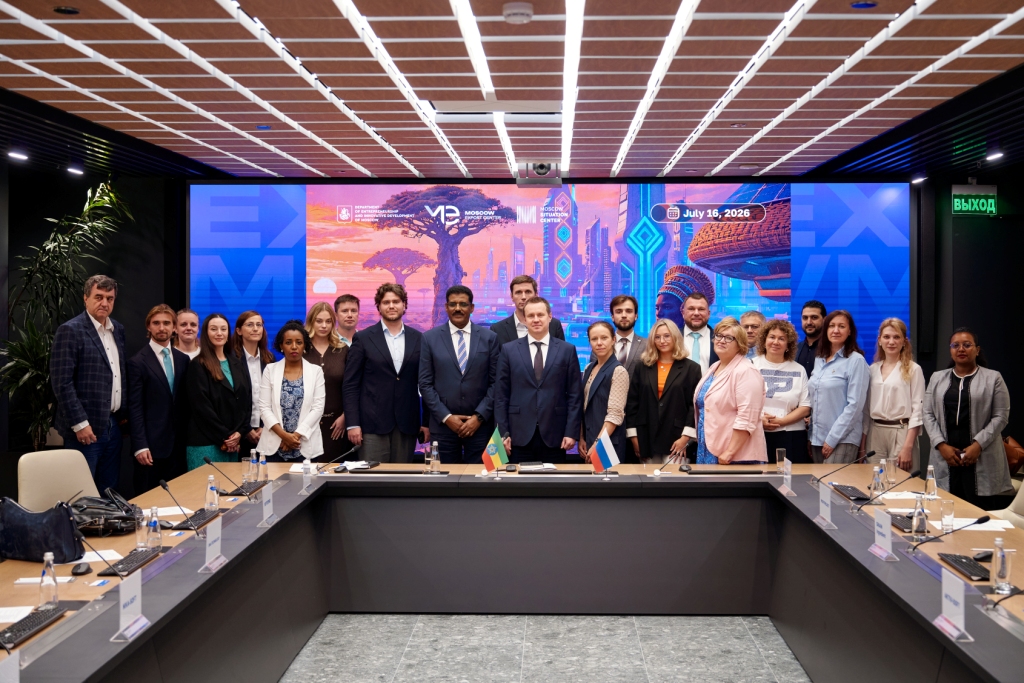
Beyond this, we are ready not only to welcome investors in Moscow, but also to help them adapt in Russia, as well as replicate our experience in foreign markets. This includes advisory support at all stages—from the creation to the management of a technopark—as well as organizing business missions for exchanging experience. For tech companies, this means an opportunity to localize production in the country's largest innovation center with clear rules and advanced infrastructure, and for developers, it provides access to government support tools.
In conclusion, I would like to know what you consider to be the main indicator of the Directorate's success in five years?
The main indicator of success for us is achieving the goals for which the Directorate was created. By 2030, Moscow should have 5 million square meters of technological infrastructure. At the same time, 5 million is not just about constructed buildings, but about sites filled with residents (we are aiming for an occupancy rate of at least 95%), where technologies operate, products are developed, and companies grow. We were established as a tool to implement this strategy, and in five years, I would like to see that the plan is being successfully executed.
At the same time, success for us is not just about the numbers. It is important that by this point, the Directorate becomes a center of excellence for technological infrastructure, to which people turn for expertise and solutions.