

Development Prospects For International Transport And Logistics Corridors For Russian Foreign Trade
The International North-South Transport Corridor (INSTC), connecting Russia with Iran, India and countries of the Persian Gulf, is the most promising project in the near-term. The corridor has three branches: the Western branch (via Azerbaijan), the Eastern (through Kazakhstan and Turkmenistan) and the Caspian branch (ferry lines).
In 2024 the INSTC cargo traffic amounted to about 26,9 million tons, growing by 19% versus 2023. Of this amount, more than 12,9 million tons were carried by rail. This clearly confirms the growing demand for the route and its competitiveness with the traditional Suez Canal and Black Sea routes.
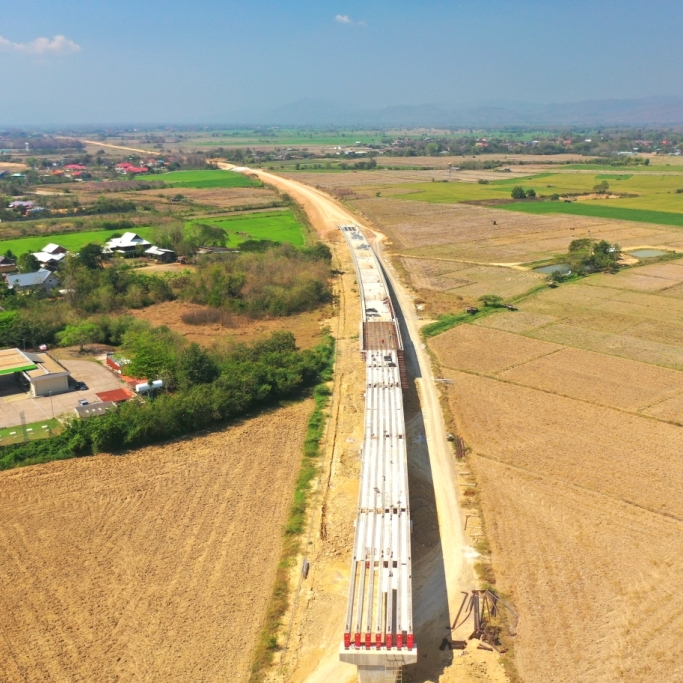
The key remaining bottleneck is the infrastructure in the Iranian territory, especially lacking a full-fledged railway connection between the cities of Rasht and Astara. This 162 km long section is being built with the financial support of Russia (about €1,6 billion, of which €1,3 billion have been provided as a loan). Completion of the project would allow to conduct uninterrupted rail service from Russia to the Iranian seaports in the Persian Gulf, drastically reducing the dependence on automotive transportation and logistics costs.
It is forecasted that upon commissioning of the Rasht–Astara railway line and upgrades of Caspian ferry terminals, freight traffic along the corridor could reach up to 35–40 million tons as soon as by 2030. For Russian companies, this would mean a shorter cargo delivery time by 7–14 days for deliveries to India versus the Suez route, and also an opportunity for more flexible diversification of exports of oil chemistry products, metals, grains and timber.
The Western INSTC branch merits a separate note: Russian forecasts for cargo traffic increase up to 35–40 million tons by 2030 are largely based on an expansion of this very Western route. The deterioration of the relations of the RF and Azerbaijan will reduce development rates down to 25–28 million tons and extend the payback period for infrastructure investment. However, if Baku were to restrict cargo flows or raise tariffs, some exporters would be forced to switch over to the Eastern branch through Kazakhstan–Turkmenistan or use the Caspian Sea line more actively. This will increase costs and delivery timelines by 3–5 days. If the logistics through Azerbaijan are down, then Turkey could offer transit through its seaports (Mersin, Istanbul), making Russian exporters more dependent on Turkish operators and Ankara’s tariff policy.

The second important route is the Trans-Caspian International Transport Route (Middle Corridor, or TITR). It connects China and Central Asian countries with the South Caucasus, Turkey and Europe, bypassing Russia. For Russia, this route is of interest as a means to enter markets of Turkey and Southern Europe, and also as an “insurance” channel for exports, when other destinations are overloaded or disrupted.
In 2024 this route transited about 4,1 million tons of cargo, which is 63% more than the year before. Container shipments reached up to 50,5 thousand TEU, and the total throughput capacity of the corridor is estimated at 6 million tons per year. However, there are objective restrictions of the TITR still in place: high transit costs, seasonal dependency of Caspian transit and the need to connect various transport modes. This is why it would hardly be in high demand with Russian exporters, but it could be used for high-value cargos or perishables, where time and reliability are more important than costs.
The Northern Sea Route (NSR) is gradually transforming into a strategic tool, ensuring Russia’s control over Arctic transit. In 2024 the NSR traffic volume amounted to record 37,8 million tons, and there were 92 transit voyages. The bulk of the traffic is made up by commodities — LNG, oil, coal and cargo for Northern Russian regions.
Despite higher figures, wide-scale use of the NSR for container shipment is restrained by a number of factors: limited icebreaker fleet, seasonal navigation and issues with insurance and high risk premiums. In the mid-term, the NSR will remain a niche channel, focused on commodities and special projects, and full-scale container transit through the Arctic could become a reality by 2030s.
The Far East seaports — Vladivostok, Vostochny, Nakhodka and others are no less important for Russia’s foreign trade. These seaports transit key cargo volumes on their way to China, South Korea, Japan and South Asian countries. In 2024 the Far East topped the Russian container market, but the infrastructure of the region is operating at maximum capacity, which is obvious due to terminal overload during peak months.
Additional opportunities are offered by International Transport Corridors "Primorie-1" and "Primorie-2", connecting China’s Heilongjiang and Jilin provinces with Russian seaports. Their development will allow for a significant reduction of Chinese cargo delivery time to external markets via Russian terminals, but this would require investment into transport and border infrastructure, as well as simpler customs processing procedures.
Special attention should be paid to the Eurasian railway route, linking China and Europe through the territory of Russia. Despite political risks, in 2024 this route carried over 372 thousand TEU, worth $29,4 billion — which is 85% more than the year before. This confirms the fact that the Russian territory remains significant as a transit corridor for trade between Asia and Europe.
However, even the most promising routes are facing the issue of settlements and insurance coverage. For example, the trade with India, a major buyer of Russian oil, is dominated by spot transactions paid for in roubles, rupees and dirhams, which causes difficulties in cross-border settlements and integration of payments into logistics arrangements. Similar risks arise during insurance at transit routes with high sanction pressure. This forces market players to develop alternative payment arrangements in advance and book insurance coverage with local or regional providers.
It is obvious that over the next few years the INSTC could become a growth leader, where key investment projects are concentrated and sustainable cargo traffic is already being generated. The Trans-Caspian Route will be a backup route, ensuring flexibility and insurance. The Northern Sea Route will be developed as a strategic resource for commodity flows and in future as a global transit channel. The Far East seaports will require further capacity expansion and simplification of procedures to provide for further efficient integration of Russia into trade with Eastern Asian countries.
For business, this means necessary diversification of logistics strategies: distributing volumes between several transport corridors, active use of containerization, negotiating through rates and SLA with cargo carriers, and also accounting for currency and insurance risks at delivery planning stage. This approach will not only help minimize operational expenses, but will also ensure sustainability of foreign trade under highly turbulent global trade conditions.
For Moscow-based companies, development of international transport and logistics corridors will unlock a number of strategic advantages. First, new routes will significantly reduce costs of cargo delivery to key partner countries, minimize delays and diversify risks. Shorter transit times via the INSTC and larger capacity in the Far East will create opportunities for greater flexibility of export lot planning and higher capital turnover velocity. Second, development of sustainable channels, connected to India, countries of the Gulf, Turkey and South Asian countries will open new sales markets for Moscow companies. Moscow and Saint-Petersburg are bringing together a significant part of non-commodity exports of Russia — from machinery and electronics to pharmaceuticals and food products. Stable and predictable logistics are critically important for these industries, which means that investments into corridors are directly contributing to higher export revenues and stronger positions of Russian companies on global markets.
Leonid Shurilinov,
Infranews Agency Expert