

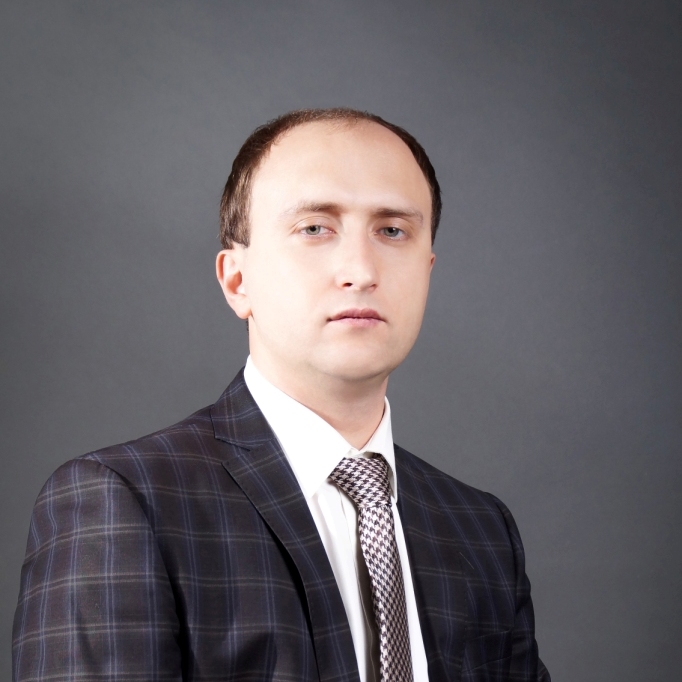
Denis Dudkin: “Itelma Autopilots Conquering Russian Agro-Industrial Complex”
- Our flagship Itelma research and production enterprise has become an anchor resident of the ZIL technopolis. Currently Itelma products are widely known on the market of IT technologies, including multiplex, telematics, radar and navigation technologies. Our holding develops and manufactures comprehensive solutions, including power unit controls, onboard electronics, emergency response systems, display instruments, information flow routing instruments, machine vision, video recording, autopilot and a number of other systems. Naturally, this will be a highly valuable input of Itelma companies into development of a new Moscow technopark.
After the opening ceremony for the first phase of the new complex, the latest innovative developments for various industries of the economy, including agriculture, were demonstrated to Sergei Sobyanin.
- In the past our agricultural producers largely relied on foreign software solutions. How are things now at the market of precision farming systems after the exit of Western companies, such as JD Link, Trimble, Raven and others?
- After the exit of the global giants from Russia, Chinese players started developing our market. It should be noted that they were present here when Trimble and John Deere still were, but today their business is much more visible. At the same time, Russian companies have also stepped up, including Itelma SP. We have developed our proprietary domestic competitive product.
It may be said without any exaggeration, we have become more confident. Russian products now look very competitive, and in some cases even much better than those made by our Chinese partners.
- You use data from several satellite constellations at once - GLONASS, GPS, Beidou, Galileo. How do you manage to achieve accurate calculations with such different inputs? Wouldn’t it better just to rely on the Russian GLONASS system?
- You are correct; we accept signals from any available satellite systems. How do we manage to maintain accuracy? Our team is made up of developers with quite a long track record in high accuracy positioning. Moreover, we ensure accuracy of calculations on the basis of our in-house unique developments.
I won’t disclose all the secrets, but I would say that we have our proprietary Itelma Quadro technology and a proprietary “high accuracy positioning” engine.
Could we rely on the Russian GLONASS system only? It all depends on a specific agricultural operation. Let us assume, if we are speaking about row-crop planting, then probably no, we can’t rely only on the Russian satellite navigation system. If we are speaking about such agricultural operations as fertilizer application, spraying, tilling, plowing, harrowing, then in this case we could count on GLONASS.
It should be kept in mind that from time to time there could be static. In this very case, according to experts, GLONASS performs better, and this is when you should use the Russian system.
- What are your thoughts about the current agro-industrial complex in terms of technological effectiveness and artificial intelligence?
- Speaking of modern technology implementation rates, the agro-industrial complex is one of the leaders. For example, Itelma Agro software for agricultural enterprise management enables digitalization and analysis of complete agricultural activity information. This software could be used for planning activities, calculating costs and profitability, seeding quantities and fertilizer treatment volumes, area planted, seed consumption and many others. Itelma Agro provides for online monitoring of equipment, tracks downtime and fuel consumption, designated area limits and travel speed. You would agree that this makes agricultural work significantly simpler and helps achieve higher profitability levels.
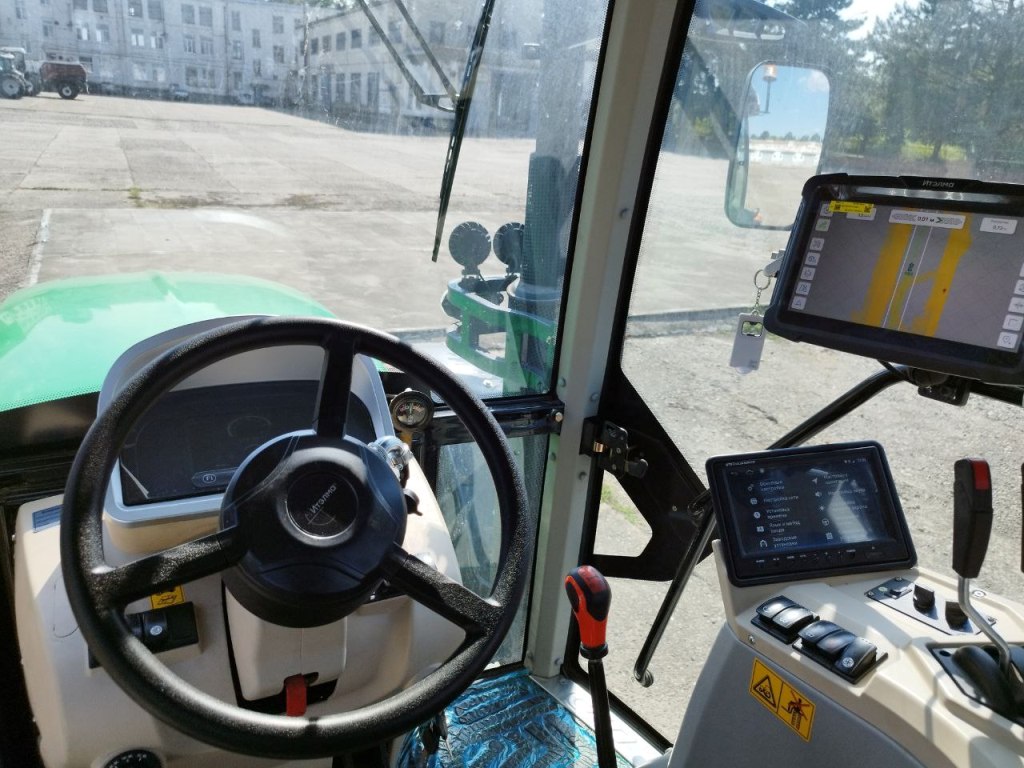
- It is well-known that Itelma SP has developed its own autopilot long ago. Who are your closest competitors and what are the advantages of your invention?
- Our primary competitors are Chinese manufacturers. Our key advantage, first and foremost, is determined by the fact that this is an entirely Russian product. We, being a Russian team, know and understand better than anybody else the needs not only of Russian agricultural producers, but also of farmers from neighboring countries, such as Kazakhstan, Belorussia, Uzbekistan. From the very start we have been making products, “tailored” to our requirements. And naturally, we have taken into consideration our previous work experience with Trimble and use their high standards.
Today there is domestic, Russian software for agricultural enterprise management available, or an agricultural management system. The system is developed based on any and all possible requirements of Russian agricultural producers. This is a matter of principle for us! At the same time, we are much more flexible and quicker in responding to queries from end customers.
- What is the demand for autopilots now at the agricultural equipment market in Russia? What are the dynamics of transition to unmanned solutions?
- Let’s look, for example, at fully autonomous equipment. I should point out that for now neither the USA, nor China or Russia produce such models on a commercial scale. Experts think that the limiting factor here are incompletely tested technologies for field work. Moreover, no country in the world has any legal regulations for unmanned equipment in place.
As for classic autopilots, they are everyday practice for agricultural workers. Modern farmers no longer buy tractors or combines, especially energy-intensive, without an autopilot. They just take it for granted.
- What is the level of localization in Russia of parts and software that you use?
- Itelma SP is a Russian manufacturer, and that’s why its software is 100% Russian. We depend on ourselves only, all technological chains are completely ours: from the software, designed for end users of the agricultural management system, to the software that operates in our autopilots.
There are critical technologies, there are also critical system elements, without which it wouldn’t work in the event of some global issues. All these critical elements are in Russia. We are the only ones in the country to develop our own GNSS module (installed in a GNSS receiver, which can be mounted on the roof of any car). Anything else that is on offer on the market, even something promoted as an allegedly domestic autopilot, these are either Chinese products or Trimble product imitations. Itelma has its own unique technologies for development of Russian autopilots. We have replaced more than 40 types of sanctioned products, such as the combination of instruments, window lifts, headlamp control modules and many others. Of course, there are parts we cannot replace due to specific circumstances.
Now Itelma is switching over to domestic hydraulics, we have started making our own displays. But the most important thing is that we have gone over to a sanction-proof component mix. This enables us to consistently manufacture all required electronic items for our customers. The top management of the company realizes the importance of access of the country to cutting-edge electronic solutions and does everything it can to cover this need.
- What can you say about the current investment climate for Russian high-tech companies?
- The climate in the agricultural industry is very tough. It is impacted by many factors, such as inflation, the key rate and issues, related to falling incomes of the agricultural producers due to higher production costs, certain exports limitations etc.
If we look at development of high-tech companies in Russia, then here the climate would probably be more favorable. After the exit of Western companies there were niches, taken over by Russian companies. There are investments both from the Russian state and private business. However, previously companies used to operate Western software and equipment, machine tools. Now we can completely rely on ourselves.
- Does Itelma SP have any plans to expand to markets of other countries?
- We are quite active in reaching out to the markets of Belorussia and Kazakhstan. We have plans for cooperation with other countries as well.