

BRICS+ nations as potentially the main breadwinners of humanity and for humanity
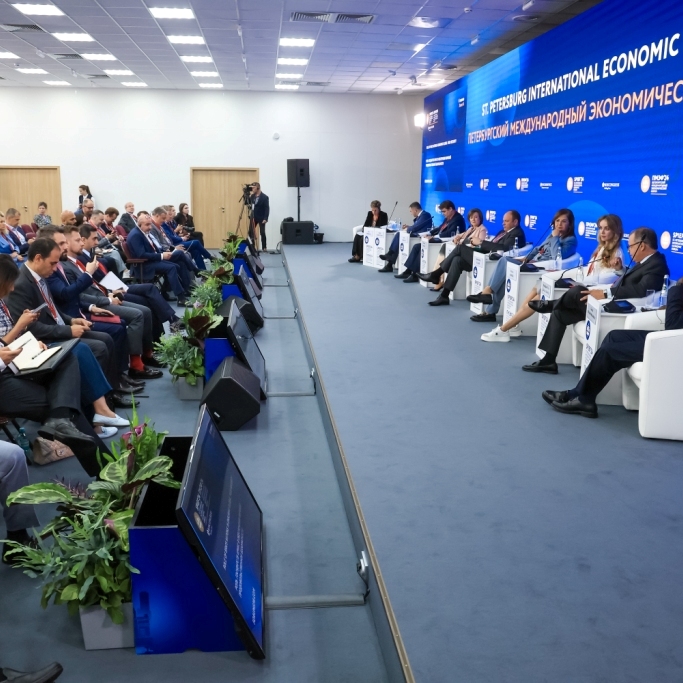
A panel session at the St. Petersburg International Economic Forum (SPIEF 2024), entitled "The Role of the BRICS states in ensuring world food security", was devoted to this bread-and-butter issue.
BRICS+, with a population of 3.2 billion people in the old composition and more than 3.5 billion in the new configuration, is gradually turning into a locomotive (driver) of the reconstruction of the old, West-centric and thoroughly unfair world order.
For the inhabitants of our planet, where over 700 million people are still going to bed experiencing acute hunger, the fact that BRICS countries account for about a third of global agricultural production is of fundamental importance. BRICS is becoming an increasingly weighty and well-stocked "food basket" for them. The contribution of this association to ensuring food security is a key factor in achieving the UN Sustainable Development Goals.
Will the BRICS countries be capable of assuming a leading role in providing food to the countries of the Global South in the context of the transformation of the world order, which is taking place right in front of our eyes? What council and mechanisms this alliance, including new members – Iran, the United Arab Emirates, Saudi Arabia, Egypt and Ethiopia, could offer to ensure food security?
The BRICS expanded composition, according to Professor Irina Abramova, Director of the Institute of Africa of the Russian Academy of Sciences and moderator of the SPIEF-2024 session, indicated that the association "mainly focuses on the countries of the Global South that at the same time bear the brunt of the food problem."
The emergence of this problem, the expert stressed, "along with such objective factors as climate change and the covid pandemic, is due to illegitimate sanctions that have made it difficult to supply food to the markets of these countries."
Is it possible within the framework of the BRICS to overcome trade, infrastructure, and logistical problems related to food supplies to the world market? Is it possible to build an alternative financial infrastructure that would facilitate smooth transactions between countries, including payment for food products? By outlining these issues Irina Abramova set the tone and vector of the discussion.
"Russia is certainly ready, as colleagues from the Ministry of Agriculture assert, to be the guarantor of food security. And we, as the Ministry of Industry and Trade, confirm that Russia is certainly ready to be the guarantor of its technological foundation," said Vasily Osmakov, First Deputy Minister of Industry and Trade of the Russian Federation. "In terms of the most important types of agricultural equipment, such as tractors, combines, specialized watering machines and so on, Russia is a technologically sovereign country that produces and improves all these machineries."
Russia is the world's largest producer of such a valuable input resource (precursor) as fertilizers. Domestic nitrogen, potash and phosphate fertilizers play an important role in global agriculture, as they allow the cultivation of natural products rather than those genetically modified.
One fifth of the total volume of fertilizers is earmarked for the Russian agricultural sector, one tenth is intended for use in industry, and 70% fills up the export basket, Vasily Osmakov noted.
There is an approved plan to launch new investment projects in this segment of the agro-industrial complex, and therefore, as Osmakov informed, "we can afford massive humanitarian supplies."
Information for consideration: In the BRICS+ countries, over 40% of all fertilizers are produced, and it ensures that over 4 billion people are guaranteed proper food and nutrition.
"Over the past two years, we have seen how quickly and cynically all signed international agreements collapse whenever it becomes unprofitable for some of the parties," Veronika Nikishina, Director General of the Russian Export Center (REC), emphasized. "Russia is ready to share technologies and supply equipment that will help countries systematically create and strengthen their food sovereignty."
Russia, Veronika Nikishina noted, "has always positioned itself as a breadwinner, not only for itself, but also for its friends." Even 15 years ago, for Russian grain producers, entering export markets was equivalent to an unprecedented breakthrough. But since 2016, Russia has become a world leader in wheat exports: 138 countries buy Russian grain.
About 10 years ago, Veronika Nikishina added, "fat and oil producers got a taste for exports, and now they are champions." The fact that Russia went up to the 18th place in the ranking of food exporters by the end of 2022 is already taken for granted. Russia holds a share of 20% of the global wheat export market. In addition to this crop, there is an increasing export potential for producers of barley, corn, oats, and peas.
"Among our priorities, the head of the REC detailed, is to expand the range of agricultural products that are in demand on world markets and attain such production volumes that will allow us to feed not only ourselves, but other countries too."
Critical dependence on Russian grain supplies, which cover 70% of demand, persists in a country that served as a breadbasket for the Roman Empire in the ancient times. Ms. Hala Helmy el-Said, Minister of Planning and Economic Development of the Arab Republic of Egypt, recalled in her speech that food security issues often "become the object of political manipulation."
In order to increase the level of self-sufficiency in the context of food security, Egypt with a population of 106 million people needs, Egyptian Minister noted, the introduction of "innovative solutions" to mitigate and neutralize negative external factors, including climate change.
In the framework of BRICS+, it is advisable, according to Hala Helmy el-Said, "to invest more in scientific research and to promote the exchange of knowledge and know-how. The emphasis, of course, is on upgrading infrastructure, improving logistics chains and irrigation systems."
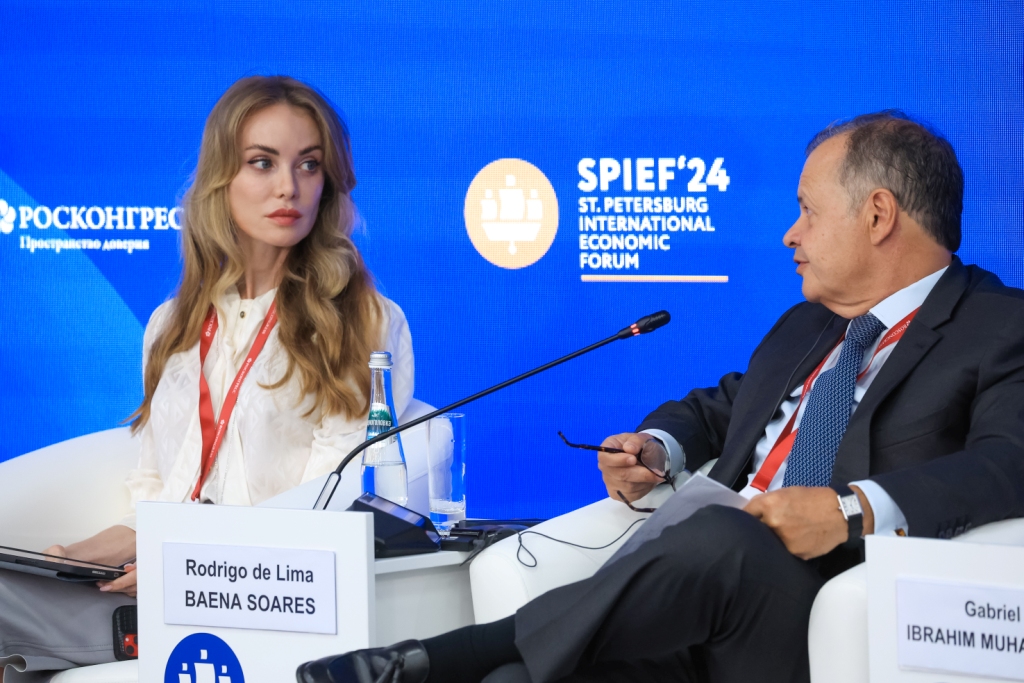
"In the time period between 2000 and 2019 in Brazil, the productivity of labor in the agricultural sector grew at a rate of 33.1% per year. The volume of agricultural products increased by 57% from 2002 to 2020," said a well-known diplomat in the Russia’s media space, Rodrigo de Lima Baena Soares, Ambassador Extraordinary and Plenipotentiary of the Federal Republic of Brazil to the Russian Federation. "We are proud that we actually feed almost one billion people on the planet."
To note: Brazil receives 24% of all imported fertilizers for its agricultural sector from Russia.
"One of the main goals for us, of course, is to guarantee the quality and safety of food, promote the idea of inclusivity in the fight against hunger and malnutrition, as well as the reform of global governance institutions," the Ambassador of Brazil stressed.
Karen Hovsepyan, Managing Director of the New Land Grain Corridor Company, shared his thoughts on the synergy of the BRICS countries' efforts to ensure food security. The concept of what is called the Food Security Belt initiative goes against Western models, when "some countries assumed that they had a priority right of access to resources. This is a dangerous game."
The idea of a grain corridor, detailed by Karen Hovsepyan, was supported by Russia's partners in China, as well as in the countries of Central Asia and the Middle East. They all share the fundamental principle of coexistence, Karen Hovsepyan emphasized: "Food should not be used as a weapon."
One of the key areas of the company's activity is the creation of a logistics infrastructure of land corridors and terminals, when as a result "special containers will go one way with grain, and in the opposite direction with consumer goods."
"If we take the growth rates of the agrifood sector, which, in addition to agriculture, livestock, crop production, fruit growing, also includes the fishing industry and forestry, as well as non–food products of the rural sector, then it should be taken into account that this industry in the BRICS countries is developing at a faster pace than in the rest of the world," said Oleg Kobiakov, Director of the FAO liaison office with the Russian Federation.
"The expansion of the BRICS alliance, when five net food importing countries joined the original five founding states, multiplied the number of challenges," continued the head of the FAO Moscow bureau. "Along with countries where food security is provided in excess, take Saudi Arabia, the United Arab Emirates, there is also Ethiopia and Egypt marked by a noticeable imbalance between the production of agricultural products and their consumption.
Nevertheless, it should not be forgotten that vigorous agriculture originated in the Nile Valley. And this is a guarantee that in the coming years it will be the BRICS countries that will lead the way out of our planet's protracted crisis, which is personified by 700 to 800 million people affected by hunger.
Already today, BRICS," concluded Oleg Kobyakov, "is a zone of trust. This is a no-sanctions zone. This is a zone in absence of internal conflicts. BRICS is already a stabilizing factor in global food production and global consumption."
* * *
It should be added that the BRICS+ interstate association is currently one of the most powerful global economic locomotives with a virtually equal balance in production (1.23 billion tons per year; 44% of the world) and consumption (1.22 billion tons per year; 44% of the world) key crops within the group. Moreover, 32% (0.5 billion hectares) of the world's arable land is concentrated in the BRICS countries.
BRICS has a huge potential for further development of the agricultural sector. At the same time, each country has its own distinctive features and advantages. Thus, China, being both the largest producer and importer of agricultural products, creates stable solvent demand and stimulates food production in other countries of the world.
India is the main producer of milk in the world, paying no less attention to the cultivation of rice, wheat, millet, cotton and sugar cane. In turn, Brazil is steadily coming out on top in terms of exports of agricultural products such as soybeans, coffee, and meat. At the same time, the agricultural sector in Ethiopia accounts for an impressive 47% of GDP.
A special role is played by Russia with its huge land resources and whose agro-industrial complex has been developing rapidly over the past decades.
* * *
A simple enumeration of the special sessions devoted to this association that took place over three days leads to quite obvious conclusions: "The expansion of the BRICS. New opportunities for business cooperation"; "Transitional financing: opening up opportunities for energy transition to the BRICS"; "Development of cooperation between the BRICS countries in the diamond industry"; the above-described multilateral dialogue on the topic "The role of the BRICS states in ensuring world food security"; "The climate agenda of the EAEU, SCO, BRICS: partnership for sustainable development"; "At the beginning of the future. How the cooperation of funds contributes to the growth of the potential of the BRICS countries"; "Using the human resources of the BRICS countries for the development of the Russian economy"; "Drug safety in the BRICS space".
It would not be an exaggeration to claim that at SPIEF 2024, the BRICS+ alliance, which expanded this year, became almost the main subject of discussions, and the focal point in the search for intersections of common interest and in the process of drawing up roadmaps for the future.
Vadim VIKHROV
St. Petersburg – Moscow.