

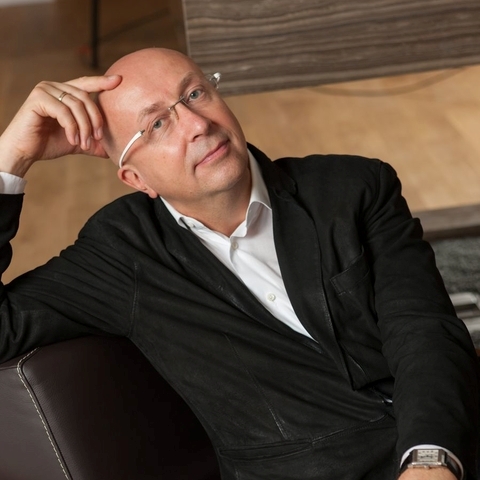
Boris Uborevich-Borovsky: “I love Moscow for its blend of different architectural styles”
- Translated from Ancient Greek, the word "architect" means "chief builder." So, who are you: an architect or a builder?
- An architect is someone who leads a large number of people creating buildings, neighborhoods, or entire cities. The future of the entire construction project depends on their thought, sketch, and word. However, a single lifetime is not enough for one person to first conceive everything and then bring it to fruition. That is why an architect is never alone; they surround themselves with like-minded people who help them: some draw facades and sections, others design doors and windows, and still others work on layouts and details. Architecture is always a collective effort.
Furthermore, I would say that the profession of an architect is a kind of social service, whether you like it or not. A high-flying service. This is because an architect is a creator, an artist creating a work of architecture, but doing so on commission—either for a private client, the state, or society.
At different times, the chief architects of St. Peter's Basilica in Rome were Raphael and Michelangelo. They worked by order of the Pope. The Pontiff would bring a bag of gold coins and ask, 'Build me the dome of St. Peter's Basilica!' Now that is the noble mission of an architect! But, of course, an architect does not always work for a client of such high rank. At the same time, I want to note that architecture is, above all, an opportunity for individual creators to build something grand and significant for centuries to come.
- How do modern urbanists get along with architects?
Quite well, actually. Everyone shares the same goal—to make cities more comfortable and livable. Although I personally prefer the term "town planning".
I understand why urbanists care less about what building facades look like and more about a well-functioning urban structure, which requires high-quality services, efficient transport infrastructure, a proper water supply network, and organized recreational areas for citizens. I am not saying this is bad. However, amid all of this, people sometimes forget the significance of architecture itself—a vital component in the entire process of creating a block, a district, or a city as a whole! The popular expression "architecture is the mother of all arts" highlights the leading role of building design among other arts, as well as its key purpose in shaping the space for human life.
Take Kutuzovsky Avenue in Moscow, for example. Eighty years ago, it was designed by prominent, remarkable architects with great taste. Its distinctive reputation is built on several key factors: relative proximity to the Kremlin, grand architecture, an absence of industrial zones, and an abundance of parks surrounding residential buildings with lush, green courtyards.
On Kutuzovsky, you can find both remnants of a bygone Soviet era and the latest achievements in real estate development—such as the new premium residential quarter, "Vesper Kutuzovsky.".
Every stroll down Kutuzovsky Avenue feels like a true celebration. There is the iconic skyscraper of the Hotel Ukraina, and a bit further along, the Triumphal Arch—milestones without which it is impossible to imagine Moscow today. The avenue is lined with beautiful buildings featuring flawless proportions and exquisite details. Ultimately, this is what matters most to people, because a city like Moscow is experienced, above all, visually. It is the architecture that truly delights our eyes!
- How do you feel about the idea of Mayor Sergey Sobyanin to turn Moscow into a comfortable city for living?
- First and foremost, the Mayor thinks about how to improve life in the city, and this is his absolute priority! It is gratifying that this is not a one-time campaign, but a systemic course that Sergey Semyonovich consistently promotes in his public speeches and in the concrete actions of the Moscow Government.
The Mayor emphasizes that the city must be human-centric. This means that all decisions—from courtyard improvements to major construction projects—must be measured against how well they meet the needs of Muscovites. "The focus must be on the Person!" Sobyanin says.
I have been to Tokyo—one of the largest cities in the world—several times. It has clean sidewalks and asphalt, modern cars, and taxi drivers in white gloves… yet there is a smell of sewage in the air! That is when you realize the city's utility networks are in a deplorable state.
This naturally brings to mind architects. They do not just piece together the thoughts of their colleagues; they also coordinate them with the work of professionals from other fields—structural engineers, specialists in water supply, sewage, heating and HVAC, electrical systems, facade glazing, and so on. It is crucial to integrate everything seamlessly so that one person’s work does not ruin the efforts of the rest. After all, a building, a neighborhood, or a city is a massive, complex engineering system.
It has always been this way, even 2,000 years ago during the construction of the Colosseum. One might think things were simpler back then since there was no electricity and, therefore, no electrical systems. However, there were other systems to consider. For instance, the center of the Colosseum could be turned into a pool, meaning the architects and engineers had to figure out how the water would get in. Or take the temporary awnings at the top that protected spectators from the scorching sun: they had to decide how to secure them. There were countless challenges just like that.
- Is anyone in Moscow really experiencing any discomfort today?
- I have been to many major cities abroad and, believe me, I have something to compare it to. Moscow is one of the most comfortable capitals in the world because the city authorities pay immense attention to transport infrastructure, ecology, and safety. Look at how rapidly the Moscow Metro is developing; it has already outgrown the city, and its rails have expanded beyond the metropolis!
I have heard Muscovites say more than once that it has finally become easier to breathe in the city. Yes, that is true! There are electric buses and electric vehicles on the streets, and former tram routes have been restored. Furthermore, major enterprises and industrial zones have been moved outside of Moscow. It is unbelievable, but just some 25 years ago, factories were smoking in Moscow, steel was being smelted, and a nuclear reactor was operating right in the city center!
I live in a building on Dorogomilovskaya Street, and my family experienced firsthand all the "charms" of an industrial city when fumes from a chemical plant located not far from my house, on Berezhkovskaya Embankment, used to drift through our window vents.
Today, these problems no longer exist. If there are any industrial zones left in Moscow, they have been upgraded to meet new environmental standards.
Unlike New York, London, or Paris, Moscow is a completely safe city. Foreigners envy us: Muscovites can walk peacefully through the streets and parks without being harassed by beggars, and there are no hooligans. This is another achievement that can be credited to the Moscow authorities.
- There is such a concept as the architectural code of a city. What can be said about this in relation to Moscow?
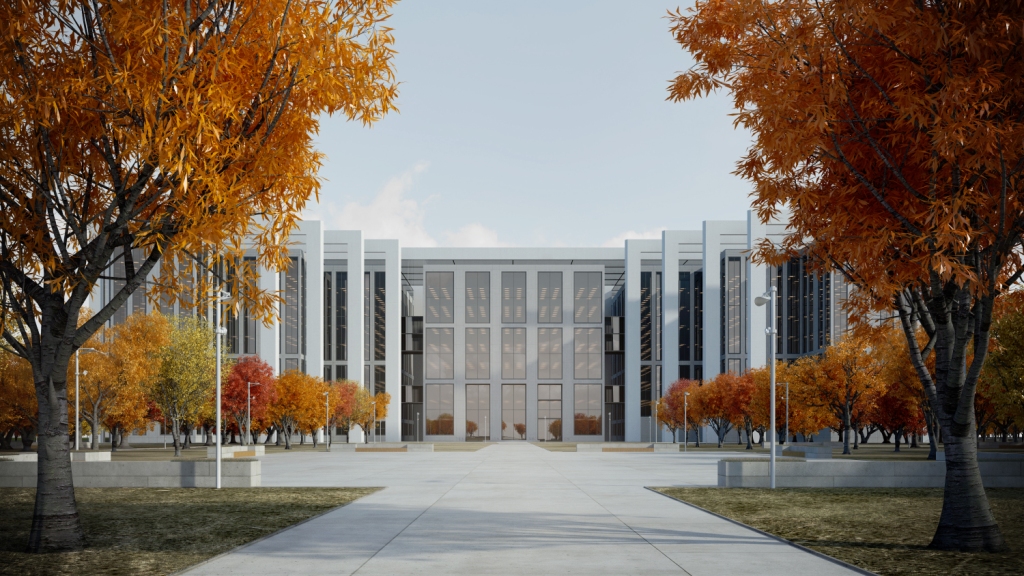
- The concept of an architectural code applies directly to Moscow. First, there is the element of proportional scale. This manifests across different historical eras and urban planning approaches—from monumental Stalinist skyscrapers to modern multi-story complexes. These projects do not simply alter the city's skyline; they shape its contemporary identity.
Second, there is the coexistence of diverse architectural styles. Walking down the street, you can see a Soviet Modernist building right next to a Neo-Russian revival house. For instance, on Myasnitskaya Street stands the "Tea House"—as Muscovites call it—built in 1893 in the finest traditions of Chinese architecture. Right across from it is a 1906 Art Nouveau building designed by architect Fyodor Schechtel. The two coexist beautifully on the very same street. It is exactly this blend of different architectural styles that makes me love Moscow.
- Are modern architecture and mass housing construction compatible concepts?
- Mass construction is a very complex topic, and the process does not always go smoothly. It is highly challenging to combine the very concept of 'building a million square meters of housing' with making it beautiful from an architectural and urban planning perspective!
The scale of residential construction in our city remains large. However, we are not spoiled by interesting architecture in the new neighborhoods! Therefore, I believe that in any city, including Moscow, more attention must be paid specifically to architectural design. I would introduce a rule for developers: if you want to build a million square meters, you must announce an architectural competition!
I would suggest that the city authorities consider reinforcing the Department of Urban Development Policy of the City of Moscow with an architectural council. Architects love discussing projects—truth is born in arguments! I believe this would be extremely beneficial for the city. Moscow's architecture developed very well during the years when such a council was active.
I can clearly picture a photograph of the council that operated in the 1960s and 1970s. Sitting in the front row are Chechulin, Posokhin, Rychegov, Sheverdyaev, Mdoyants, Belopolsky, Rosenfeld, Polyakov, Mezentsev, and Gelfreikh—these were the architects who did a great thing for Moscow, shaping the modern image of the city that is loved not only in our country but all over the world!
- Do you think that Russia does not take very good care of its historical heritage?
- Currently, a difficult situation has developed in Moscow regarding the protection of historical and cultural monuments. On July 1, 2025, an article of the law on cultural heritage sites came into force. Its main point is that nearly 1,500 objects that were previously listed were excluded from the register of identified monuments. As a result, by the specified deadline (July 1, 2025), only about 120 buildings out of approximately 1,600 passed the expert evaluation in Moscow. The remaining 1,480 objects lost even temporary protection. Now, no special approvals are required for their demolition.
Among those affected by this decision is, for example, the Moscow Electric Lamp Plant. Like many architects, I believe that this building must be preserved for history, along with many others!
- Every building is a monument to its era. Which ones in Moscow, in your opinion, could claim to become symbols of the 21st century?
- I highly appreciate the projects of Vladimir Plotkin, a practicing architect. His buildings perfectly correspond to their time and place, organizing space in a fundamentally new way and establishing a convenient system of coordinates within it. His architecture is rigorous and precise, like a mathematical formula. The geometry utilized by the master's team is multidimensional despite its outwardly simple and efficient forms, simultaneously solving many different challenges—engineering, urban planning, social, and aesthetic.
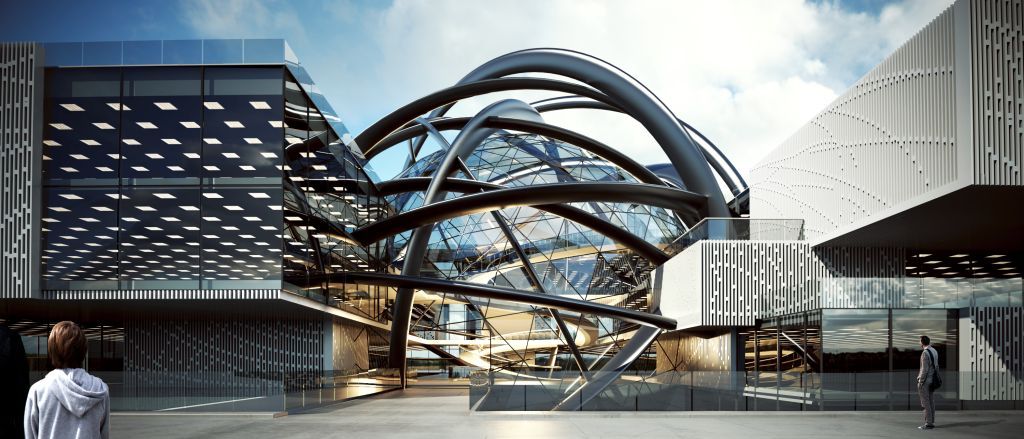
Vladimir Ionovich is responsible for many striking projects and successful completions. Plotkin and his team built the Arbitration Court building, the Aeroflot headquarters, the VTB Arena Park multifunctional complex, the hospital with a maternity ward in Kommunarka, the History Museum of the Novodevichy Convent, and many other structures in Moscow.
- Boris Olegovich, you have participated in the design of numerous architectural projects in Moscow: the Severnoye Chertanovo residential district, the building complex on Paveletskaya Square, the development of Khodynka Field, and the Moscow House of Photography on Ostozhenka. This list could go on and on. Which of your works do you consider the most interesting?
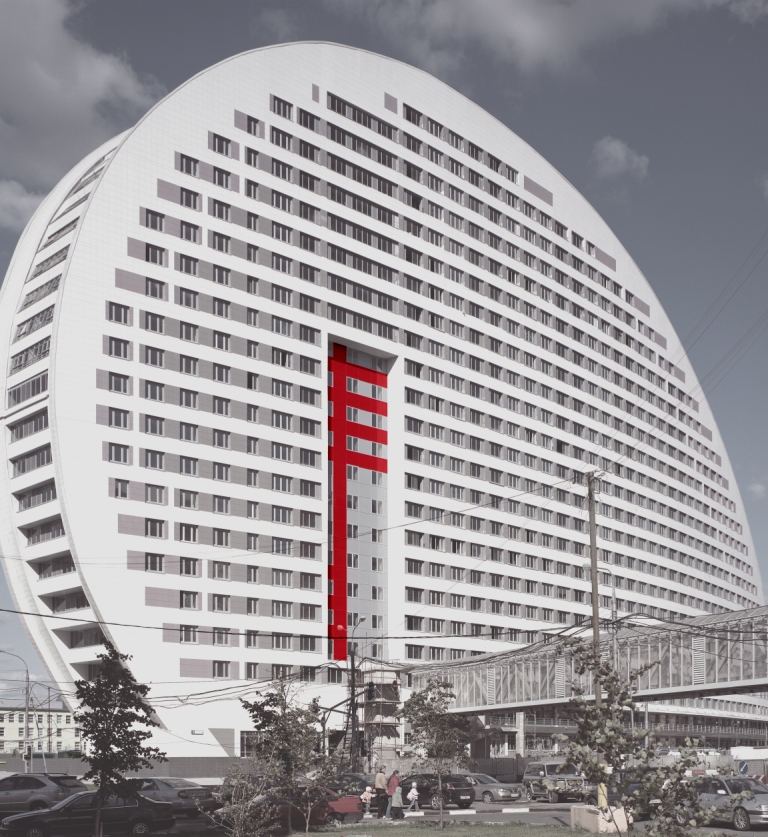
- I really like our "Sail House" (Dom-Parus) project, built on the territory of Khodynka Field—the former Frunze Central Aerodrome. The building's name comes from its unusual shape, which is formed by two arcs of different radii and resembles a sail filled with wind. Residents of the neighborhood and journalists compare the building to a whale, a snail, a drop, a wave, or even... an ear.
Admittedly, the shape of the "Sail" was partly inspired by the contours of Dubai hotels, but implementing it as a residential building required a completely different approach from the architects.
I feel that the 'Sail House' truly adorns our city, especially since there is almost no fluid bionic architecture in Moscow today. I am proud of this project, and of course, I would love for Muscovites to associate the 'Sail House' with the architecture of the 21st century.
- It would also be interesting to know the fate of the 'Steven Seagal International Martial Arts Center' project?
- This is a personal commission from the Aikido master—or, as he calls the discipline, 'dojo.' To realize it, the client's construction company leased an 8.2-hectare plot of land located near the village of Gorki-10 on the Rublyovo-Uspenskoye Highway. The planned two-story sports complex features a martial arts training hall, a gym, a conference hall, and an exhibition space. At the client's request, we also designed a large hotel and a house for Seagal and his family. The project is currently underway.
Steven turned out to be a highly fascinating, erudite individual, and an excellent conversationalist. Truth be told, I love working in direct dialogue with the client. After all, the most important thing for an architect is to feel their leading role in creating the architectural project, achieve mutual understanding with the client, and truly comprehend their point of view.
- You are the founder and head of the UB DESIGN architectural and design studio. Tell us about this private company of yours and the people who work with you.
- Do not be put off by the phrase "private company." The fact is, most projects in the world are designed by private studios. In the USSR during the 1930s, a system of design organizations called "Mosproekt" was created, through which the state took full control of design and construction. Mosproekt's work was also funded by the state. Today, this organization operates under the Department of Urban Development Policy of the City of Moscow.
Currently, the revamped Mosproekt design institute is located on Brestskaya Street, employing around 1,500 people. This organization—where, by the way, I also began my career as an architect—designs the buildings commissioned by the Moscow Government: schools, residential buildings under the renovation program, hospitals, clinics, police stations, and so on.
However, today in the capital, 80% of all facilities are built by private organizations, and they are designed by private architectural studios. The exact same practice is followed worldwide.
UB DESIGN is a workshop that I sometimes refer to as an architecture studio. Working shoulder to shoulder with me are young, talented architects and designers. Most of them are former MARKHI (Moscow Architecture Institute) students and trainees of mine. By the way, I have been teaching architectural design at MARKHI for 35 years now!
On September 1st of this year, a new group of students will join my classes once again. Over the next three years, we will be designing various buildings for the city. For instance, last semester, these future architects worked on a major reconstruction project for the Museum of Decorative, Applied, and Folk Arts in Moscow.
I should note that we have not yet received an official commission for the museum's design work. At our own risk and expense, we have created models, which are currently on public display at the Central House of the Architect in Moscow. A competition for the best reconstruction project of the museum will take place soon, and we fully expect to win it!
Prior to this, my students developed projects for cities like Pskov and Novgorod. The heads of local administrations often approach MARKHI for urban renewal projects, and we never turn anyone down. Ultimately, I invite my most talented students to join our team at the Workshop!
Our architectural studio also specializes in interior design. Recently, we completed a design project commissioned by Sergey Zhukov, the frontman of the band "Ruki Vverh!". The musician purchased the entire second floor of an old, two-story mansion in the center of Moscow, and our architects created the interior design project for his new creative space. However, a massive amount of work still lies ahead for the builders and restorers. After all, this is a classic building featuring columns and intricate ceiling moldings. Additionally, the floors, heating, doors, lighting, and other systems must be completely overhauled.
In addition to this project, we are working on the reconstruction of the Beijing Hotel, one of Moscow's most iconic landmarks. The building is well known to both residents and visitors of the capital. It is not just a hotel, but a vital part of the city's visual identity and architectural history. Therefore, working on such an object requires an exceptionally careful yet modern approach.
The hotel building requires extensive renovation and restoration work. Our task, however, extends beyond merely updating the existing interiors and engineering systems. It is vital to preserve the hotel's character, recognizable appearance, and architectural identity, while simultaneously creating a modern environment that meets today's demands.
A hotel of this caliber must comply with the highest international standards—both in terms of architectural and interior quality, and regarding comfort, functionality, and spatial organization. Therefore, we must work in several directions at once: treating the building's historical component with the utmost care, seeking modern solutions for its renewal, and ensuring that the new architecture does not destroy its unique character.
For our architects and designers, this is a highly interesting project precisely because you cannot simply use a 'start from scratch' approach here. On the contrary, it is essential to understand the building's main virtue, preserve it, and carefully complement it with modern solutions. As a result, the hotel should achieve a new level of quality while remaining a recognizable part of Moscow.
Today, the UB DESIGN studio is working on a whole range of large and exciting projects. However, I must admit that as a third-generation Muscovite, I find it particularly interesting to work on city-scale projects—those capable of influencing the capital's architectural image and the quality of the urban environment. I would like to see more such objects among our future works: large-scale, significant for the city, and built to last!