

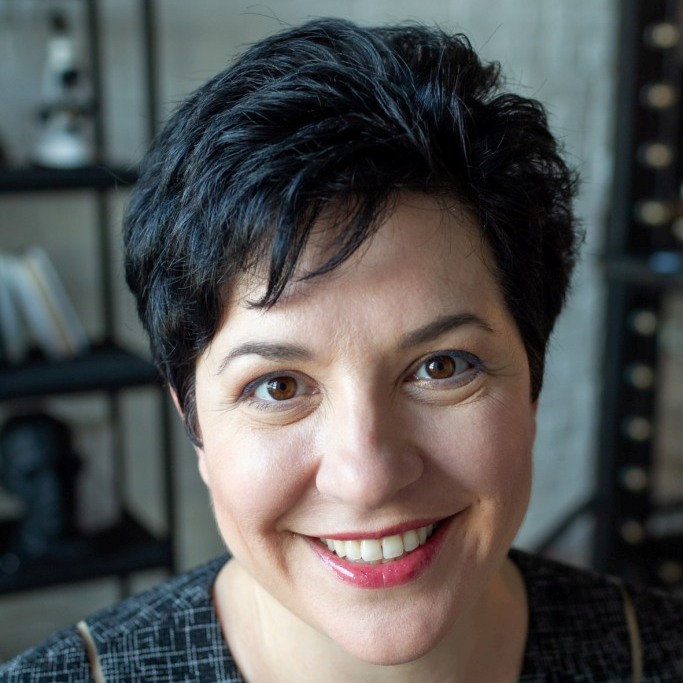
Anna Vovk: “Moscow remains the primary focus for foreign investors”
- Investments in Moscow's economy have exceeded 9 trillion roubles for the first time in history. What is the share of companies from the so-called 'unfriendly countries' here??
- Moscow Mayor Sergey Sobyanin, who announced a record volume of investment in the capital's economy by the end of 2025, was referring to domestic investment. Since 2022, Western companies have not participated in major investment projects in Moscow. Where big politics comes into play, doing honest business is difficult. What happens in reality and must remain in the shadows is a different story. This is because if joint projects are announced to the whole world, they will ultimately end up in the next package of anti-Russian sanctions.
- What do you think is the secret behind the success of Moscow, whose economy, according to European strategists' calculations, was supposed to collapse three years ago?
- All the country's financial flows pass through Moscow. In addition, our capital serves as a unique "entry point" to the markets of Russia and the CIS countries. Investors gain access to highly qualified personnel, as the city concentrates significant educational and scientific potential. Under the current leadership, the city has transformed into a real industrial cluster.
Furthermore, consistent work to create comfortable conditions for business—from reducing bureaucratic procedures to implementing digital tools and expanding the support system—brings tangible results for the capital's economy.
Around 70% of investments are traditionally directed toward the development of advanced technologies, industry, transport and digital infrastructure, the expansion of production capacities, and the creation of new jobs.
Knowledge-intensive sectors play a key role in the industrial sphere: microelectronics, the space and radio engineering industries, as well as medical device manufacturing and pharmaceuticals.
According to the Mayor of Moscow's forecast, by 2030, half of all products manufactured in the capital will be linked to innovation and modern technological solutions. To achieve this goal, the city actively utilizes public-private partnership (PPP) mechanisms; currently, over 750 such projects are being implemented in Moscow.
- Many experts note that Moscow currently has a leadership capable of reaching agreements. Do you agree with this?
- Let me give you just one example. The Integrated Territorial Development (KRT) program is being successfully implemented in our city. The mechanism built into it makes it possible to develop and build up areas where the property rights holders are either unprepared or unwilling to do so themselves.
KRT allows us to plan the ecosystem of a large area right from the start, ensuring that social infrastructure is not overlooked during housing construction and is built ahead of schedule. It also ensures that, alongside shops and cafes, modern high-tech production facilities can be established there, creating new jobs.
All of this has played a decisive role in making the capital's industry a cut above the rest of Russia, setting the pace for the entire country.
- You mentioned that special, highly favorable conditions have been created today to attract business to Moscow. Could you tell us more about that?
- A great deal is being done in our metropolis to ensure that businesses can feel confident about tomorrow. There is a specific regional program designed to support industrial companies that have joined Moscow's technology parks and clusters. They receive significant tax incentives.
For foreign investors, there is a large quota for bringing in their own staff from abroad. Without any hassle, you can bring the necessary equipment with you to Moscow and contribute it to the authorized capital. This cannot be achieved through regular channels!
Crucially, entrepreneurs in Moscow can lease land plots for constructing industrial, scientific, and innovative facilities without going through an auction process.
- Do you think European companies still want to do business in Russia?
- It all depends on the companies. If you are asking about mid-sized businesses—whose minds aren't yet completely cluttered with propaganda—they would gladly return to the Russian market. That said, we need to distinguish between Western and Eastern Europe; they are vastly different when it comes to doing business.
Eastern Europe lives on subsidies from Brussels, having successfully destroyed its own manufacturing a long time ago. If, say, Romania or Bulgaria were to suddenly stop receiving this "Brussels teat," it would be the end of them! That is why Eastern Europe is terrified of making independent decisions, fearing they might lose their promised subsidies.
The economy of Western Europe, on the other hand, is still breathing somehow. However, company owners there are constantly looking over their shoulders at the EU leadership. Even so, from the very first day anti-Russian sanctions were introduced, Western companies have been trying to bypass restrictions and bans by any means possible. Except, of course, for the largest corporations, which are completely dependent on Washington's influence.
When my Russian colleagues and I communicate privately with Western firms, we clearly see that these people understand everything perfectly and assess the complex situation in a balanced way. To save their business, they are forced to bypass sanctions, constantly devising new gray schemes.
Having studied transnational corporations for many years, I have a clear understanding of how Western business operates. The top management level of every company includes a representative from a corporation like BlackRock.
I think many have heard of BlackRock. It is not just the largest investment company—it is a financial giant whose scale allows it to influence the economies of entire nations. In essence, it acts as a true global government.
BlackRock has become the invisible lever of today's global market, its shadow stretching across virtually every sphere of life and the Western economy as a whole.
You cannot chop wood with a penknife! Even if a company holds 90% of the shares and BlackRock owns just 6%, the decisions will still be made by the main shareholders of this financial monster—top management and private individuals, many of whom dream of a defeated Russia. Whatever they say, everyone else must follow.
- Which "friendly countries" are present on the Russian market today?
- Among those who actively want to do business themselves and are investing their own funds into the Russian economy are the United Arab Emirates, Kyrgyzstan, Kazakhstan, Uzbekistan, and, of course, Belarus—we couldn't do without them!
- What about China? Are they refusing to invest in Russia on principle?
- Overall, as of July 2026, there are around 15,500 companies operating in Russia with founders or co-founders from the PRC. About half of them are concentrated in Moscow and the Moscow Oblast. However, Russian entrepreneurs who work with Chinese businesses claim that it's not all that simple. And it is not at all about major Chinese banks refusing to accept yuan payments from Russia due to the risk of falling under US sanctions.
China is extremely meticulous when it comes to investments. While applying this approach worldwide, it generally maintains stable funding across just a few specific sectors. First, there are energy resources. In Russia, significant capital investments from the PRC are tied to foolproof projects such as Yamal LNG and Arctic LNG 2.
Second, outside its borders, China invests billions into well-established brands. For instance, they acquired Volvo in Europe and IBM's PC business in the United States. In this regard, Russia has little to boast about, as it practically lacks national brands of a comparable scale.
Third, China is eager to invest in transport infrastructure, such as railways, but only on the condition of maintaining total control over them. But the Russian side simply cannot accept such terms.
- Our entrepreneurs say that the Chinese have their own unique way of doing business and a specific mindset that differs significantly from the European one.
- In Chinese business culture, stability and long-term cooperation are valued far above short-term profit. A contract is often viewed as the foundation for future relations rather than the final point of negotiations.
This situation repeats itself time and again. At first glance, the Chinese seem ready to close a deal, but before taking the first step toward their partner, they will stall for time and beat around the bush, making the opposite side nervous. Unlike the European model, which is often dominated by a top-down, single-commander management style, decisions in China are usually made after internal company discussions or with the involvement of the party leadership. This can significantly drag out the negotiation process, as approvals are required at various levels. And by no means everyone, including Russian industrialists, can withstand these "Chinese twists and turns".
In addition, at certain moments, a kind of internal brake kicks in for the Chinese—they are ready to say "no" to themselves. During negotiations, you might hear phrases like "we will think about it." This does not necessarily mean agreement; it is often a polite way to say "no" without putting the partner in an awkward position.
During the coronavirus pandemic, I communicated a lot with representatives of China's state corporations. The country needed to purchase large shipments of food at the time, and Beijing turned to many countries for help, including Russia. During the negotiations, both sides assured each other that they were acting based on the principles of trusting, good-neighborly relations. In other words, there were virtually no communication barriers between the Russian and Chinese negotiators. However, we never reached a sustainable, long-term result—there was only a single shipment. Meanwhile, Chinese media published reports about the successful execution of yet another commercial deal with Moscow.
- According to foreign media, 90% of millionaires and multi-millionaires in Vietnam have a Soviet background and Soviet education. Why, then, don't they invest their money in Moscow? Could it be that they are afraid of sanctions?
- Vietnam is often called the 'new Asian tiger' because it outperforms even China in many economic indicators. However, Vietnamese businesses are not yet investing money in Moscow, although my impression is that they really want to. For now, the Vietnamese are actively interacting with the Ministry for the Development of the Russian Far East and Arctic. A number of agreements have already been signed, for example, with Sakhalin State University and JSFC Sistema on the joint development of hydrogen UAVs with higher payload capacities and long-range flight capabilities.
It is no secret that within the framework of the Russian Chamber of Commerce and Industry, the Vietnamese side is negotiating how to establish a foothold in the Central Federal District, with an eye on Moscow. However, they have not yet put forward any concrete proposals; everything remains at the level of discussions.
I held talks with representatives of the Vietnamese business community, and they confirmed their desire to cooperate with Russia. They need wheat, vegetable oil, and nitrogen fertilizers—and we certainly have something to offer our potential partners. Unfortunately, nothing is working out so far: Russia currently lacks proper logistics and is physically unable to deliver these specific commodities to the consumer.
Hypothetically speaking, if an urgent need arises tomorrow to transport grain or fertilizers to Vietnam from the Far East, Krasnodar Krai, or Siberia, Russian Railways will face a total collapse. The capacity of our railway system, to put it mildly, leaves much to be desired. Nevertheless, negotiations are ongoing as both sides look for a way out of the current situation.
Meanwhile, Russian tourism to Vietnam is actively developing. According to the country's General Statistics Office, Vietnam welcomed over 1 million Russian tourists in the first eight months of 2026, which is a 165.7% increase compared to 2025. This growth is driven by the restoration of direct flights and the visa-free regime between our two countries. It shows we can achieve great results when we put our minds to it!
- You mentioned the United Arab Emirates. Why are they interested in the Russian market?
- They are actively deploying their capital to meet Russian needs. The UAE has developed its own specific industry investment and development strategy, which they follow strictly. Russia is one of the countries where UAE businesses are ready to keep investing their money. They have more than enough financial resources for this.
Moscow is at the center of attention for Emirati investors. According to the Central Bank of the Russian Federation, cumulative investments from the UAE into the capital's economy amounted to around $362 million in 2022. By 2025, investment cooperation between the two nations had strengthened, focusing on joint projects in energy, transport, tourism, and IT.
In August 2026, the Agreement on Trade in Services and Investments between the UAE and the Russian Federation came into force. According to many analysts, this could drive the growth of future investments in Russia.
Furthermore, Emirati businessmen are closer to Russia in terms of mentality compared to their Chinese counterparts. They navigate situations quickly and make decisions without looking back at the West. While the UAE possesses robust financial institutions and public-private funds, these entities can be large and slow-moving, mirroring the state machinery itself. However, at the level of specific businesses, private capital, and state-backed projects, everything is fast, straightforward, and concrete—at least from our perspective.
- There are reports on social media that in 2026, entrepreneur Anna Vovk no longer owns any major operational businesses and has shifted her focus from corporate management to expert consulting and investment activities. How would you comment on this?
- In the past, I did indeed manage trading and manufacturing companies. For instance, I served as the Chairperson of the Board of Directors at 'Petrovsky Trading House', which specialized in food distribution across Russia and the CIS. However, by 2026, due to sanctions, I sold off all my trading assets. Additionally, from 2002 to 2023, I represented the PHILADELPHIA brand in Russia, which is owned by the American multinational Mondelēz International—one of the world's largest manufacturers of confectionery, snacks, and beverages.
Currently, my primary professional activities center around expert consulting and investments, and I also serve as a board member for several Russian and international companies.
My family owns A.Consult, a firm that assists both Russian and foreign entrepreneurs with business strategy, marketing, legal and tax advisory services, HR consulting, and accounting.
As a passion project, I also run a cheese manufacturing enterprise in Kyrgyzstan.
- Anna Martinovna, how did it come about that you joined the Board of Trustees of the Russian Powerboat Federation?
- Arkady Anatolyevich Novikov, our famous restaurateur, used to tell me a lot about this spectacular and romantic sport. I have always wanted to be connected with and support people of strong character and athletic discipline who defend our country's honor abroad. And the one who got me involved in this story was the President of the Powerboat Federation, Yunis Khalitovich Lukmanov, with whom I have been friends for many years.