

Three Keys to India
India represents a vast, promising, and reliable economic partner for Russia, capable of strengthening global stability, according to Eduard Grekov, Chairman of the Forum " From the Volga to the Ganges" and President of BIREX. In his interview to BM Moscow foresight he outlines the key opportunities, existing challenges, and practical strategies for Russian businesses entering the Indian market.
They say that Indians are very tough negotiators. How did you find the key to the Indian business community?
Indians do indeed bargain hard; they can take a long time to respond, and then ask for a discount at the very last moment when everything has already been agreed upon. However, the key to partnership is simple: you have to understand that India is not just about the market, it is about relationships. Indians invest in long-term connections rather than quick deals.
The secret to my successful contacts with them lies in three things. First: patience. The Indian market requires time and consistency; there will be no quick results. The rhythm of life here is completely different. Second: personal presence. In India, you cannot work through "occasional visits" — you need to immerse yourself in the culture, understand what drives your partner, their family, and their history. Third: respect for status and hierarchy. Academic titles, positions, and honors mean a great deal here.
And there is one more nuance: Indians say "yes" when they mean "maybe," and "maybe" when they mean "no." This is not deception; it is politeness. You have to learn to read between the lines and not rush things. As a good Indian friend of mine once told me: "India teaches you patience".
If you take this specificity into account, Indians are highly reliable partners.
You are the Chairman of the "From Volga to Ganga" Forum and head of the International Council for Strategic Partnership between India and Russia. Could you tell us about the objectives of these organizations and whether they duplicate each other?
These two entities do not duplicate each other; rather, they complement one another like two hands of the same organism.
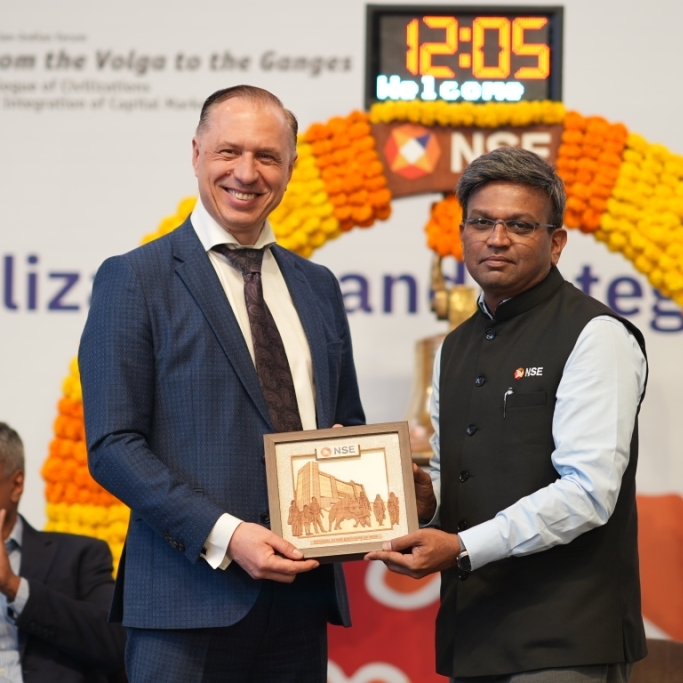
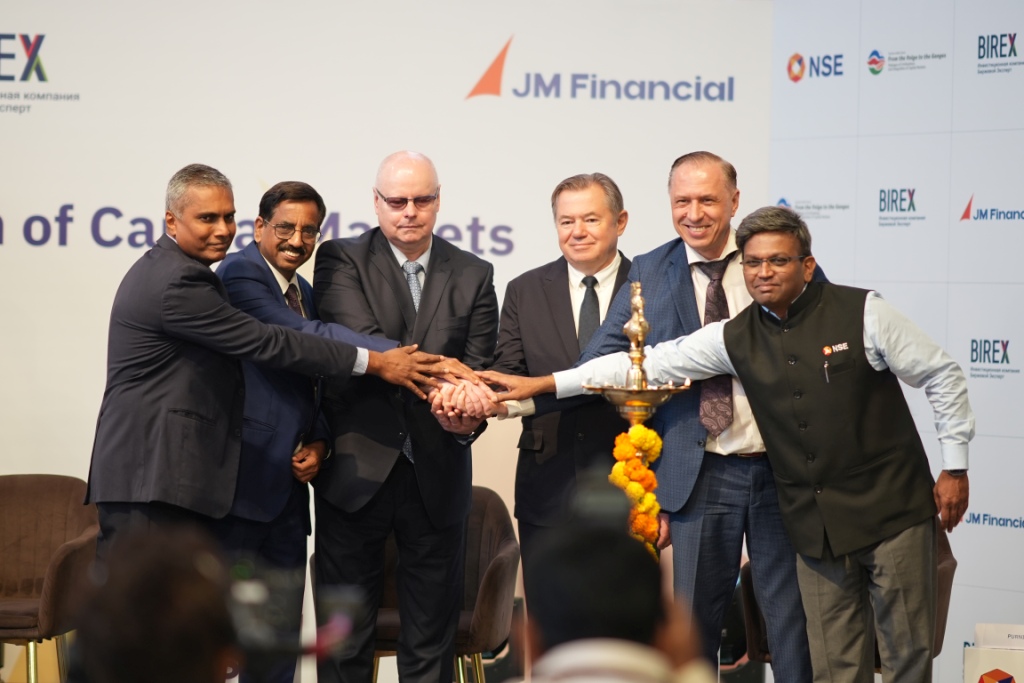
The "From Volga to Ganga" Forum serves as our public platform and showcase. Its primary task is to bring people together, foster an environment for open dialogue, and present tangible results. To date, we have successfully organized three forums: in Delhi (JNU, February 2025), in Moscow (RIA Novosti, November 2025), and in Mumbai (NSE, March 2026). The fourth forum is scheduled to take place on November 18, 2026, in Moscow.
The International Council is a working mechanism. It was established on the basis of the International Research Institute for Advanced Systems (IRIAS), an organization based in Moscow but possessing intergovernmental status and international legal personality recognized within the UN system. The Council is not about one-off meetings, but rather continuous coordination: working groups on education, finance, culture, transport, energy, and technology. It is the Council that prepares concrete decisions, which are then presented at the forum.
Our task is to create a strategic alliance of countries. We interact with top executives of financial institutions, the scientific community, and think tanks.
In the long term, we are considering the possibility of involving Iran. A strategic alliance between Russia, India, and Iran (the North-South axis) will make it possible to achieve global harmony: it will be a force capable of balancing geopolitics and geoeconomics.
Your investment company, BIREX, helps address the issue of ‘trapped’ rupees. What are the possible solutions here?
The situation improved significantly in 2023–2024: 96% of payments are processed in the rouble-rupee system, and 90% of transactions are completed within 10 minutes. However, the problem of accumulated rupees has not been fully resolved. We work with the remaining niches. First, we help Russian exporters reinvest rupee revenue into Indian assets—stocks, bonds, and infrastructure projects. Second, we structure import deals from India so that rupees do not sit idle but are converted into goods. Third, we utilize clearing mechanisms that allow us to bypass the US dollar.
The Moscow-based investment company BIREX can be compared to an icebreaker clearing a path for the entire Russian business community. We have already achieved something no one else has: we secured the first-ever credit rating for a Russian issuer—MGKL (which grew from "Mosgorlombard" into an entire resale ecosystem)—from an Indian rating agency. This is not just a matter of "negotiations"—it is a breakthrough. The pathway to the Indian capital market is now open. We are currently preparing a bond issue. Once we clear this "Window to India," the Russian economy will receive a massive influx of investment. The capitalization of the National Stock Exchange of India (NSE) is approximately $5.5 trillion.
How difficult is it for Russian companies to gain a foothold in India?
It is difficult, but possible. And the difficulty lies not in sanctions, but in expectations.
The main mistake Russian businesses make is attempting to enter the market in "one single leap"—arriving, quickly cutting a deal, and starting operations within six months. It doesn't work that way in India. Even signing an agreement is a distinct milestone that takes months to reach.
What are the actual obstacles? First, bureaucracy. Regulations exist not only at the federal level but also at the state level, and it is not always clear who gives the green light. Second, customs barriers: importing goods from Russia follows the "Chinese model"—you can export anything, but you can only import what India actually needs; everything else is subject to high duties. Third, the cultural factor: you need to be physically present in the country and immerse yourself in the environment.
However, there is good news: the free trade agreement between the EAEU and India is on the horizon, and it will provide a major boost to small and medium-sized businesses.
How is cooperation in the field of digital financial services developing, and are central bank digital currencies (CBDCs) being used in cross-border trade?
Digital financial services represent both the most promising and, at the same time, the most complex direction. India is leading the way here: UPI (the Indian instant payment system), the digital rupee (e-Rupee), and a powerful fintech ecosystem. Russia has its digital rouble and its own payment solutions.
What actually works today: settlements in roubles and rupees through traditional banking infrastructure. This accounts for 96% of payments. While reliable, it is not fast for everyone and is not cheap for SMEs. The infrastructure of digital wallets and QR-code payments is currently developing.
As for CBDCs: for now, these are just experiments. India has launched a digital rupee pilot, and Russia has introduced a digital rouble pilot, but a cross-border mechanism between them does not yet exist. The main barriers are regulatory: approval from the RBI and the Bank of Russia is required, as well as platform compatibility and a legal framework. Furthermore, it is necessary to consider that we continue to report the movement of both fiat and digital currencies to FATF—an international body whose decisions are largely shaped by the stance of Western countries, which does not aid our fight against sanctions.
At BIREX, we look at new mechanisms with interest, but we build our operations on what is available right now: clearing platforms, payment agents, and multi-currency instruments.
Are there any developments in the evolution of digital platforms?
Yes, there are developments, but there is still some way to go before a full-scale launch.
At the Council, we view digital platforms—and there are several of them—as a strategic prospect, but in BIREX's day-to-day operations, we currently rely on what works today: bilateral settlements, clearing mechanisms, and payment agents.
I consider UFT to be the most promising, and we are closely monitoring their development.
Could you tell us about the role of GIFT City in global financial flows and its prospects for the development of Russian-Indian cooperation
GIFT City is arguably the main entry point for Russian capital into India in the coming years. What is GIFT City? It is the Gujarat International Finance Tec-City, a hybrid model combining Dubai's DIFC and Singapore's MAS. It operates under a special regulatory framework that differs from the rest of India: foreign banks, funds, and insurance companies can function according to international standards, bypassing typical Indian bureaucracy.
Russian banks can open subsidiaries there and operate through them with Indian partners, while Russian companies can list on the GIFT City stock exchanges to raise Indian capital. Furthermore, private equity funds are being established there to finance infrastructure projects.
At the 3rd NSE Forum, the Chief Operating Officer of the NSE explicitly proposed setting up a working group and called for the opening of a Russian bank office in GIFT City. This represents an excellent opportunity that we are actively capitalising on: BIREX is creating a "single window" for Russian businesses in the Indian capital market, providing comprehensive end-to-end support—from listing to settlements.
How promising is cooperation in the field of AI with India?
It is highly promising, but with certain caveats. India is one of the world leaders in engineering talent and IT services. Russia, on the other hand, excels in fundamental mathematics, algorithms, and applied solutions in the fields of security and industrial AI.
In the Council, we have created a working group on technology and innovation. Its task is to identify niches where Russia and India do not compete, but rather complement each other. The Council's working group is developing specific areas of focus: industrial AI, predictive analytics, and edge data processing. I believe that AI is a sphere where Russia and India can establish a third pole of technological development—not by copying China or the West, but by offering their own path.
In conclusion, I would like to say that India is not only a massive market, but also an amazing, vibrant country with a deep, ancient culture that is in many ways close and understandable to the Russian people. It is precisely on this foundation of mutual respect that we are building our business bridges.
Interview by Yekaterina Borisova
*Photos provided by BIREX press service