

The Russian Car Market Completes Its Asian Pivot
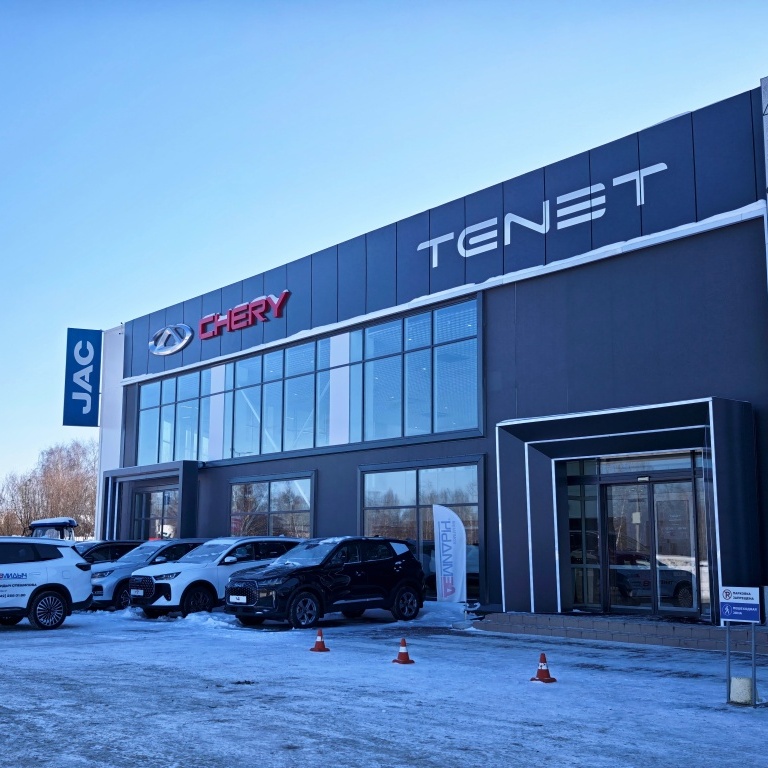
The Russian automotive market is undergoing a second phase of tectonic transformation within the last four years. While direct Chinese imports rushed into domestic dealerships between 2022 and 2024—crowding out European, Japanese, and Korean brands—this scenario has run into rigid fiscal and regulatory barriers by 2026. Today, direct expansion has been replaced by a massive shift in corporate identity: Chinese automakers are hastily localizing production and transitioning to new "national" brands. However, behind brands like Tenet or Jeland lies not so much a breakthrough in domestic engineering, but rather a forced economic adaptation to a progressive vehicle scrapping fee (utilization tax), the Ministry of Industry and Trade's import substitution points, and ongoing sanctions risks
Camouflage Architecture: Why "Pure" Brands Are Vanishing
Formally, the Russian automotive market appears saturated: according to the analytical agency Avtostat, 123 brands were present in the market between January and August 2026. However, about 73% of sales in August were accounted for by just ten brands. This means that beneath the outward diversity lies a high concentration of demand and dealership resources around the largest players.
The observed transformation of the market is linked to the economics of imports. Since 2026, China has tightened its export regulations, and the Russian vehicle recycling fee (utilization fee) on imported fully-built cars has increased on average by 10–25% depending on the vehicle's specifications. As a result, direct shipping of cars from abroad is becoming increasingly unprofitable, whereas localized models—even those built on Chinese technological platforms—gain a more favorable status and access to industrial support measures.
This is precisely why experts view the emergence of brands like Tenet and Jeland as a logical trend rather than an accident. A portion of Chinese models is being transferred to Russian factories and sold under new brand names: Tenet is linked to Chery, and Jeland to Jaecoo from the same group. The UMO 8 electric vehicle is built on the platform of the Chinese GAC S7 crossover, the Esteo Exlantix hybrids are based on models from the Chery group, and this list could go on.
"A shift in legal and marketing packaging is taking place in the Russian automotive market," notes Dmitry Baranov, a leading expert at Finam Management. According to his estimates, the share of "pure" Chinese brands dropped from a peak of 58% in 2024 to 41% in the first half of 2026, while the aggregate share of new Russian brands built on Chinese platforms grew from 2% to nearly 16%.
Beyond purely customs and tax mathematics, this rebranding is driven by two fundamental motives. First, it reduces sanction risks. The direct legal and technological presence of Chinese automotive giants in Russia exposes them to the threat of secondary sanctions in their key markets across Latin America, Southeast Asia, and the Middle East. Introducing models through formally independent local legal entities and new brands eliminates this political vulnerability.
Second, marketing and psychological adaptation is crucial for the domestic auto market. A significant portion of the conservative audience perceives a Russian or Belarusian name as more stable in terms of warranties, catalog part availability, and long-term servicing, compared to yet another obscure, short-lived Chinese sub-brand.
This is not classic import substitution in the traditional sense. Instead of fully built vehicles, components are increasingly being imported into Russia and then assembled at local facilities. The technical foundation remains Chinese—only the storefront changes.
According to Vladimir Chernov, an analyst at Freedom Global, local production does provide genuine advantages if it lowers costs and shortens delivery times for spare parts. If current policies persist, the expert expects this trend to continue. However, the success of each brand will ultimately depend on price, quality, and service, rather than the mere presence of a Russian name.
What the Buyer Chooses
For the mass car enthusiast, as well as for the corporate client, the decisive factor remains not the origin of the brand, but the total cost of ownership. The buyer analyzes the showroom price, down payment, monthly payment, insurance, maintenance "bookkeeping," and the probable profit from resale.
According to Dmitry Baranov's estimate, only 8–10% of Russians plan to purchase a car within the coming year. Therefore, choice is shifting toward models with a clear total cost of ownership, while credit terms and the availability of savings influence the choice of brand more heavily than its image characteristics.
Maxim Chaika, head of the company "Nevapravo," also considers the Russian consumer to be pragmatic. In his experience, the defining factor is almost always the balance of price, quality, and features. However, the decades-long reputation of Toyota, Volkswagen, Honda, Mazda, and other global manufacturers still holds weight: buyers understand the operational nuances of these cars and have a rough idea of their residual value.
At the same time, belonging to a Russian brand is rarely a deciding factor on its own. "If two cars are technically comparable, but one is 200,000–300,000 roubles cheaper, most customers will primarily focus on the price difference," the expert notes.
Maria Ermilova, an international financial advisor and associate professor at the Department of Sustainable Development Finance at Plekhanov Russian University of Economics, adds that rebranding can serve as an additional factor of trust, but only if it is backed by clear warranties, available spare parts, and real domestic production. Otherwise, a new name alone will not drive sales.
Limits of Localization
Local assembly creates real, but currently limited, value added. It varies by the degree of depth. Launching production generates jobs, tax revenues, plant utilization, and orders for Russian suppliers. There are already very good examples: for instance, AGR facilities in Shushary and Kaluga are implementing projects that involve not only the final assembly of vehicles but also deeper operations—body welding and painting.
However, experts agree on one thing: assembling a car inside our country cannot be equated with full-fledged Russian automotive manufacturing. If an enterprise predominantly "pieces together" a vehicle from imported components, a significant portion of the value added is still generated outside of Russia.
Dmitry Baranov divides localization into three fundamental technological stages. The first is Final Semi-Knocked-Down/Disassembled Knocked-Down assembly (SKD/DKD), which creates minimal domestic added value, where the plant acts merely as "hands" bolting wheels and seats onto a finished body. The mid-level stage is Complete Knocked-Down assembly (CKD) involving body welding, cataphoresis, and painting, while engaging local suppliers for simple components. This level ensures the preservation of industrial infrastructure and employment but does not provide technological independence. The third and most advanced localization format is the production of engines, transmissions, electronic control units (ECUs), sensors, chips, and proprietary software development. This is the only level that generates a true technological premium and ensures business sustainability.
"The real depth [of localization] is determined not by a 'Russian VIN' or the brand, but by the origin of the most expensive and critical components: the engine, gearbox, electronics, control units, software, and key materials," the expert emphasizes. For now, most new projects remain a transitional model: they preserve industrial potential but do not guarantee technological sovereignty.
The government's strategic goal is to increase the localization of passenger cars to 80%, and trucks, buses, and LCVs to 90% by 2030, with Russian companies maintaining control over key designs and documentation. However, achieving this will be difficult without major investments in electronics, transmissions, materials, and R&D.
The Economics of Import Persists
Despite the state's emphasis on localization, imports remain a prominent segment of the market. According to data from the analytical agency Autostat, 301,000 new passenger cars were imported into Russia between January and September 2026—marking a 25% increase compared to the same period last year. Meanwhile, used car imports reached 334,300 units, a 4% growth. China remains the primary supplier of new vehicles, while Japan dominates the used car segment.
Interestingly, localization does not always guarantee a price advantage. Maxim Chaika provides an example: a new Chinese-built Nissan Qashqai with a 150 hp engine is offered by Easy China Cars on a "turnkey" basis, including delivery to Chelyabinsk, for approximately 2.35 million roubles. This price point is comparable to, or even cheaper than, several officially represented and locally manufactured Chinese crossovers.
Consequently, the expert notes that a steady segmentation of automotive brands based on target consumer audiences is forming in the market. Localized "new brands" compete for corporate fleets, car-sharing services, government procurement, and retail customers who prioritize having a direct dealer warranty "next door". Direct parallel imports of the mass-market segment (up to 160 hp) attract budget-conscious pragmatists who are willing to forego a factory warranty in exchange for a proven global brand and savings of hundreds of thousands of roubles. Premium-class imports remain an irreplaceable channel for the wealthy audience; buyers of BMW, Mercedes-Benz, or Porsche are not ready to switch to local novelties, even despite significant increases in the recycling fee (utilization tax).
Not Everyone Will Survive
However, the automotive market as a whole is moving toward consolidation. With an annual sales volume of around 1.3–1.5 million new cars, it is economically impossible to ensure sustainable demand for all the brands available at dealerships. "Buyers do not need dozens of names for virtually identical cars," notes Maksim Chaika. "They need clear, recognizable models, competitive prices, and confidence in future maintenance and servicing".
There is no single official "survival threshold" for a brand in the Russian market; it depends on profit margins, fixed expenses, inventory turnover, cash flow, the number of models, and the cost of the dealership network. However, experts offer rough baseline ranges.
According to Dmitry Baranov, sales of fewer than 5,000–7,000 cars per year place an independent mass-market brand in a high-risk zone. A volume of 10,000–15,000 cars a year suggests relative stability, especially when sharing infrastructure with other brands. He considers 20,000–30,000 vehicles annually to be a reasonable benchmark for investing in deep localization.
Maksim Chaika provides similar but more conservative benchmarks: fewer than 3,000–5,000 cars a year is a risk zone, 10,000–15,000 indicates a more stable position, and 20,000–30,000 or more is the level at which a brand can count on a confident presence in the mass market segment.
Investments in full-scale automotive production can require tens of billions of roubles, especially when it comes to manufacturing engines, gearboxes, assemblies, and components. With low sales volumes, the payback period for such projects becomes a serious challenge.
Additionally, the Ministry of Industry and Trade's escalating localization requirements will act as a filter: 3,500 points in 2027 and 3,700 points in 2028 for the most heavily regulated segments. Any brand that fails to meet at least two of the key criteria—sales volume, funding, localization, or service network—is highly likely to be acquired, restructured under a different distributor, or exit the market entirely.
Prices Will Continue to Rise
The cost of a car remains one of the primary constraints on the development of the domestic vehicle market. According to Autostat Info, the volume-weighted average price of a new passenger car in Russia stood at 3.374 million roubles in September. Keeping it within the range of 3.6–4 million roubles by the end of 2026 is possible, but not guaranteed.
Dmitry Baranov considers a range of 3.7–3.8 million roubles to be more likely, and does not rule out the price approaching 4 million roubles if price growth continues to outpace inflation alongside another hike in the vehicle utilization fee (recycling fee). Maksim Chaika also sees no prerequisites for a drop in car prices, noting that the market heavily depends on government fees, exchange rates, and imported components.
The drivers behind the rising costs include not only inflation but also logistics, currency risks, expensive financing, increasing warranty and service expenses, as well as the rising utilization fee. Starting January 1, 2027, its rates could increase by 10–20% depending on the type of vehicle. As a result, the minimum fee for imported cars, according to Baranov's estimate, could approach 1 million roubles.
Curbing prices without harming manufacturing investments is possible by expanding output and factory utilization, fostering competition, reducing component costs, and improving the efficiency of local production. While subsidies and subsidized loans help the buyer, without an expansion of supply they could lead to the opposite effect: rising demand would allow sellers to reduce discounts and raise prices.
Conservative forecast
Alexey Kalitsev, Chairman of the Automobile Manufacturers Committee of the Association of European Businesses (AEB), previously projected that new passenger car sales in Russia would reach 1.4 million units in 2026, marking a 2.5% increase over 2025. This figure remains an achievable goal but requires acceleration. According to the Ministry of Industry and Trade, 960.4 thousand cars were sold in the first nine months of 2026, while Autostat’s updated estimate puts the figure at around 967.8 thousand. This means that about 440 thousand vehicles, or approximately 147 thousand per month, need to be sold in the fourth quarter, compared to 114.4 thousand in September.
Reaching 1.7 million vehicles by 2028 looks significantly more ambitious. This would simultaneously require a noticeable drop in interest rates, growth in real incomes, a softening of the recycling fee (utilization fee), or a substantial expansion of the available supply.
Therefore, the baseline scenario for most experts is that the market will remain within the corridor of 1.3–1.5 million new passenger cars annually over the next two to three years. Dmitry Baranov allows for 1.32–1.35 million by the end of 2026 and a corridor of 1.35–1.46 million in 2027–2028.
The main indicators for the development of the domestic automotive market in the coming months will be the key rate of the Bank of Russia, auto lending dynamics, real disposable income, the rouble exchange rate, dealer inventories, and the volume of government support. While loans remain expensive and household incomes grow slowly, a sustained breakthrough should not be expected.
The Future in a Fog of Hopes
The Russian automotive market of 2026 is a market of survivors and those who have adapted. It is now entering a phase of consolidation and reformatting. The government is successfully incentivizing the relocation of production facilities inside the country, but is doing so by artificially inflating the cost of finished imports. "The winners are large joint ventures with control over the platform, Russian plants with manufacturing depth, and distributors capable of providing service and spare parts," emphasized Dmitry Baranov.
The authorities are betting on local production. Chinese concerns are adapting to the new rules through Russian brands and local factories, while independent importers search for niches where well-known global brands can still compete on price.
In the medium term, local brands will likely secure their positions in the mass and budget segments, while original Chinese brands will retain their footing in the middle class, premium, hybrids, and electric vehicles—areas where technology, image, and a more complex product matter, Dmitry Chaika is confident.
However, the main question for the coming years is not the number of new badges on car hoods, but the industry's ability to transition from assembly to the production of critical components. If this does not happen, the Russian market will remain Chinese in terms of platforms and components, just with local signage. If, however, the country manages to build its own supply chains, develop engineering expertise, and establish a competitive component base, the current restructuring could lay the foundation for more sustainable development of Russian automotive manufacturing in the near future.
NATALIA TRUSHINA
* Photo credits: Shutterstock, Getty Image