

Oleg Kobiakov: "Fish is expensive only until
Global production of fisheries and aquaculture products has reached a record high of 235 million tons. The aggregated volume embraces 195 million tons of animal food from aquatic bioresources and 40 million tons of algae. World production of animal species in aquaculture for the first time ever has exceeded the symbolic milestone of 100 million tons, which amounted to an increase of 8.4% compared with the figure recorded two years earlier. These ample statistics are contained in a biennial report prepared by experts of the Food and Agriculture Organization of the United Nations (FAO), entitled "The State of World Fisheries and Aquaculture" (SOFIA - 2026).
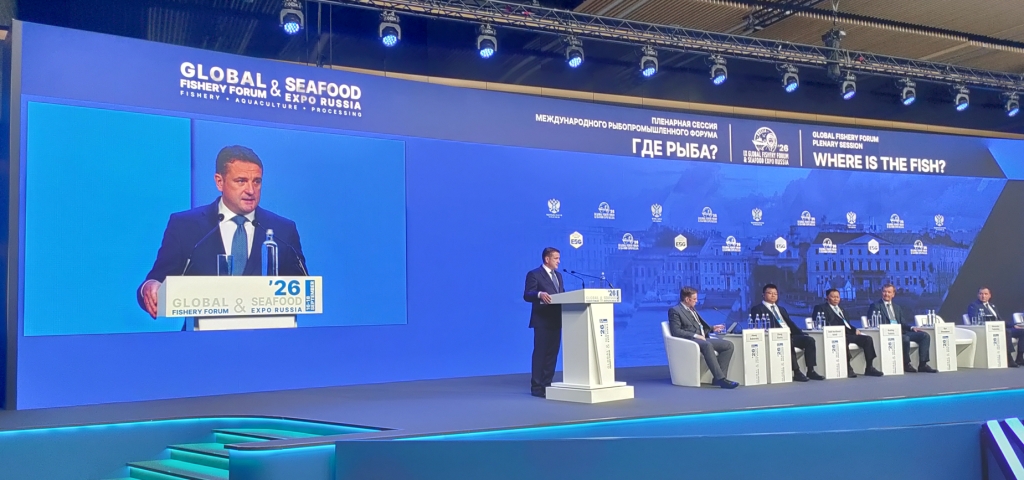
On October 16, FAO celebrated its 81st birthday, also marked as the World Food Day. Within the framework of the IX Global Fishery Forum & Seafood Expo Russia 2026, held in September in St. Petersburg, a conversation was held on this topic with Oleg Kobiakov, Director of the FAO Liaison Office with the Russian Federation.
- Are there limits to growth potential in wild catch and aquaculture production? In what way do these two segments of fishery balance demand?
If we focus on industrial fishing, then its true that the world has come close to the natural limits of growth. In 2024, the global catch of sea-born animals amounted to about 92 million tons, and over the past three decades, the global catch has generally remained stable and close to this figure. According to the FAO forecast, by 2034 the global catch will increase only from about 92 to 95 million tons, that is, only a 3% increase. This is not so much due to technological limitations as to the biological capabilities of marine ecosystems. FAO notes that much of the fishery resources are already being used at levels close to sustainable. Growth prospects still exist, but they are primarily associated with the restoration of overexploited stocks, reducing losses and improving fisheries management.
A completely different trend is observed in aquaculture. In 2024, global production of aquaculture products reached a record 141.6 million tons, including 102.7 million tons of aquatic animals. For the first time in history, aquaculture accounted for more than half of the world's aquatic animal production, and its share of human consumption exceeded 59%. According to the FAO forecast, by 2034 the production of aquatic animals in aquaculture will go up to 119 million tons. In other words, about 84% of the total surge in global production of fish and other aquatic animals in the next decade will be provided by aquaculture.
Therefore, aquaculture today is the main mechanism for balancing the growing global demand for food protein. The world population continues to increase, fish consumption has already reached about 21.3 kg per person per year, and without the expansion of aquaculture, this parameter would begin to decline. It is aquaculture that allows simultaneously maintaining food security, ensuring the availability of fish and preventing excessive pressure on wild stocks.
- Can aquaculture close the global shortage of fish products and protein?
FAO estimates that in order to maintain the current level of fish availability by 2050, the global supply of food products from aquatic animals should increase by about 33 million tons compared to the level of 2023 (i.e. over the next 27 years). At the same time, in the period from 1996 to 2023 (i.e. over the past 27 years), the increase in supply amounted to about 81 million tons. Almost all of this growth was provided by aquaculture.
FAO explicitly notes that further increases in global supply will come primarily from aquaculture, as opportunities for amplified industrial fishing remain limited by the natural potential of marine ecosystems. However, it is important to underline that aquaculture will not automatically solve the existing deficit in every region of the world.
For example, Africa has the largest unrealized aquaculture development potential, but so far produces less than 2% of the global aquaculture yield. Therefore, even with the rapid development of aquaculture in this region, international trade will continue to play a significant role in providing fish products to the population of the continent.
Thus, aquaculture is able to handle the global supply deficit, but only in combination with the development of international trade, investment in logistics and modern technologies, and also sustainable management of natural resources.
- Can aquaculture smooth out price peaks for wild catch products? What types of aquaculture in Russia could become a price stabilizer and in what areas?
Yes, aquaculture already plays the role of a kind of "price shock absorber" in the global market. Prices for wild catch products are often subject to sharp fluctuations due to natural factors: stock status, weather conditions, El Niño phenomenon, fishing restrictions, sanctions risks, and logistical disruptions. Aquaculture allows for a more predictable supply since production is human-controlled and less dependent on fluctuations in the natural environment.
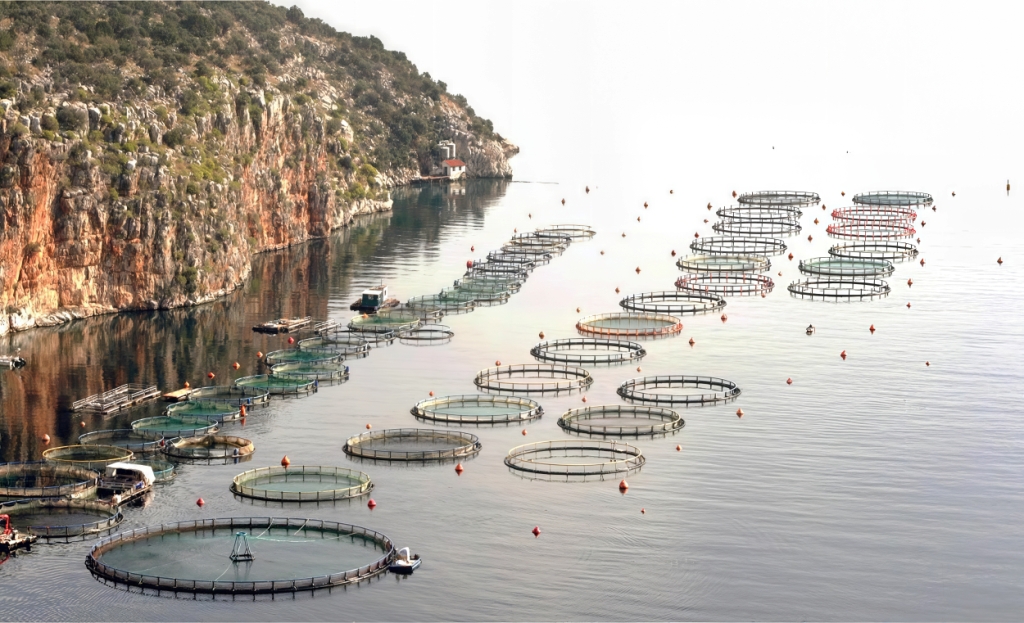
The global salmon market serves as a classic example. Until 40 years ago, salmon was almost exclusively an object of fishing and belonged to the premium segment. Today, the bulk of the global supply is provided by aquaculture in Norway, Chile and other countries, and subsequently it has significantly expanded the market and made products more accessible to the mass consumer.
However, aquaculture does not always pushes down prices. Rather, it limits the scale of the price growth and reduces volatility. If demand grows faster than supply or feed and energy costs go up, prices begin to climb up anyway. But without aquaculture, the price spikes would have been significantly steeper.
For Russia, the following directions may become the most promising price stabilizers.
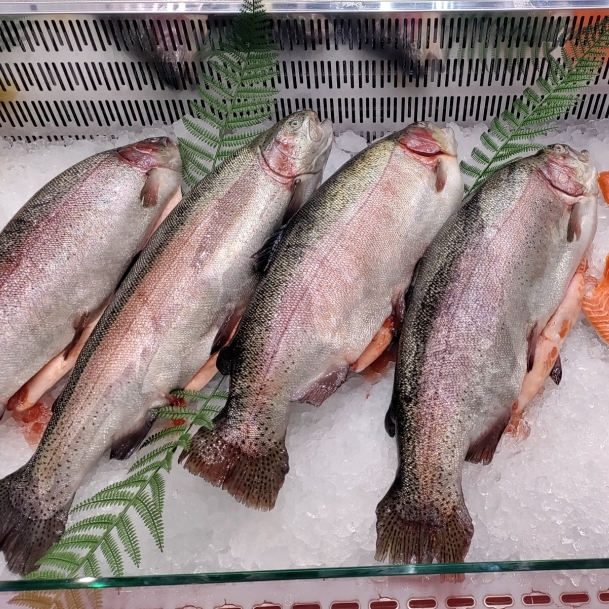
Salmon (trout and Atlantic salmon). It is this segment that already today partially replaces imports and reduces the dependence of the domestic market on external supplies. The increase in trout production makes it possible to smooth out price fluctuations in the chilled red fish market.
Carp species (carp, silver carp, grass carp). In terms of food security, they have the greatest potential. These species are relatively inexpensive to produce and can provide affordable fish protein for the mass consumer.
Catfish and Claria catfish. In many countries, these products are seen as a replacement for more expensive marine species. For Russia, this is still a niche segment, but its potential is significant due to the high cultivation productivity.
Sturgeon and caviar. Although this is a premium segment, the development of aquaculture has already made it possible to practically relieve pressure on wild sturgeon stocks and stabilize the supply of products on the market.
Mussel and oyster mariculture. For the south of Russia, this is a promising avenue of development that can expand the supply of protein without significant consumption of feed and energy resources.
It should be borne in mind that aquaculture will not be able to replace wild catch products completely. Pollock, cod, herring, mackerel, sardine and many other mass species remain the backbone of the global fishery and will continue to provide the population with affordable protein.
FAO emphasizes that sustainable industrial fisheries will retain a critical role in food security and livelihoods for millions of people, and aquaculture will be the main source of additional supply, balancing demand and reducing price volatility in the global fish market.
- How are foreign markets of fish products developing? Which markets will play a pivotal role in tightening competition for aquatic biological resources?
If you look at the horizon up to 2035-2050, then the main trend amounts to toughening of global competition for fish and other aquatic biological resources. The reason is simple: the global population continues to grow, incomes in many developing countries are on the rise, and the possibilities for expanding wild fishing are almost exhausted. At the same time, international trade is already playing a critical role in balancing supply and demand, especially for countries that do not have a sufficient raw material base of their own. FAO predicts further growth in global fishery production and trade, although this growth will slow down as supply becomes saturated and domestic consumption keeps growing in producing countries.
The most significant factor will be the further growth in demand in Asia. Already today, this region produces and consumes the bulk of the global fish products. In 2024, Asian countries accounted for about 89% of global aquaculture production and the bulk of global fish consumption.
It is especially important to consider such factor as China. Even with the stabilization of economic growth, the Chinese market remains the largest in the world. The growth of incomes of the population has led to a significant change in the structure of consumption: demand is shifting from cheap types of protein to more expensive and premium seafood. A case to pinpoint: there is a soaring demand for crabs, salmon, shrimp and live produce. It is the Chinese market that already today has a significant impact on global prices for many types of aquatic biological resources. In addition to China, India, Indonesia, Vietnam, the Philippines and other Southeast Asian countries are recording rapid growth, with simultaneous upsurges in population, urbanization and middle-class incomes.
The most underappreciated factor is Africa. FAO notes that it is Africa that has the largest unfulfilled potential for aquaculture development, but fish production volumes are still relatively low. At the same time, it is Africa that will account for a significant part of global population growth in the coming decades. Therefore, even with the development of their own aquaculture, many African countries will remain large importers of fish.
In this regard, international trade and imported fish products will play a critical role in ensuring food security of the region. This means the formation of a new major center of global demand, which will compete for supplies with Asia, Europe, and the Middle East.
High incomes of the population and limited own water resources make the Gulf countries stable importers of fish products. In Saudi Arabia, UAE, Qatar and Kuwait, seafood consumption is growing faster than domestic production. Even despite the active development of local aquaculture, the region remains dependent on imports. This is especially noticeable in the markets for premium products: crabs, shrimp, salmon and high-value bottom fish.
From the point of view of Russian exporters, the most significant increase in competition for its aquatic biological resources will occur from: China; Republic of Korea; countries of Southeast Asia, and the states of the Middle East. This is especially true for pollock, herring, mackerel, crab, salmon and other commercial species, which are already globally traded goods.
The key conclusion is that fish is becoming not just a food, but also a strategic protein resource.
The world population continues to grow, the volume of global catch is practically stagnating, and the main surge in supply is provided by aquaculture. At the same time, increased prosperity in Asia and other developing regions is stimulating demand faster than supply is growing. China, Southeast Asia, Africa and the Middle East will increasingly compete for limited wild catch. Under these conditions, aquaculture is becoming not just an industry, but also a key tool for ensuring global food security and curbing the rise in prices for fish products.
- Where would you draw the critical red line beyond which the rise in world prices for fish raw materials begins to irreversibly displace fish from the basket of the mass consumer in favor of cheaper proteins (poultry and pork)?
There is no universal price edge here. It is not the nominal price of fish that is critical benchmark, but the ratio of the price of fish protein to alternative sources. Historically, it is chicken that is the main competitor of fish in the mass consumption segment. Poultry is cheaper to manufacture, easier to prepare, supplies are stable, and it is more, shall we say, comprehensible to the consumer in almost all countries of the world.
When fish price goes up faster than the disposable income of the population and faster than alternative proteins, the consumer changes the “structure of consumption.” Usually, he or she does not give up fish completely, but begins to buy it less often, moving from the category of regular consumption to the category of periodic purchase.
This is especially noticeable among young people. Currently, there is a global trend of declining interest in fish among young consumers largely due to the popularity of ready-made food and fast food. For the young, not only price is important, but also the convenience of consumption. Therefore, the main risk is not so much that the fish will become expensive, but that it will cease to be perceived as a product of daily choice.
In this sense, the global market has already passed the point when fish was considered exclusively as a cheap source of protein. Today, fish is increasingly positioned as a product of health, quality of life and disease prevention. That is why the task of the industry is not to fight for the minimum price, but to justify the added value of the product. Therefore, the critical border or ”red line” is drawn not when and where the fish becomes expensive, but when the consumer ceases to understand what he is paying for.
- Men and women, are there differences in consumer behavior? Maybe men would eat more fish if it were easier for women to cook it?
Such differences exist, and are supported by studies of consumer behavior in many countries. In almost all regions of the world, women are more likely to make decisions about buying food for the household and act as organizers of family meals. At the same time, women in the modern world are often forced to work on an equal basis with men, so the issue of fish consumption is often associated not only with taste or price, but also with convenience and speed of cooking.
Fish preparation is linked to certain barriers: the need for cutting, the presence of bones, the smell when cooking, the risk of spoiling the product, as well as limited culinary skills, especially in young families. The modern consumer compares not just the cost of a kilogram of products, but the total time that needs to be spent on its preparation. And from this point of view, the main competitor of fish is often not chicken or even pork, but ready-made dishes.
- What can shift the perception of fish products from price to value?
There are three key areas for changing the perception of fish products. The first is to accentuate the discourse not on price but on the notion of health care. When a consumer buys a gym membership or pays for the education of a child, he or she rarely is focused solely on the price tag. The priority is the value of acquisition. The same approach must be practiced regarding fish. Fish products contain high-quality protein, omega-3 fatty acids, iodine, selenium, vitamin D and other micronutrients, which are directly associated with reducing the risks of cardiovascular diseases and improving the quality of nutrition.
The main thesis may be phrased in this way: "Fish is expensive only until we start counting the cost of health."
The second remedy amounts to making fish convenient for consumption. It is necessary to sell not raw materials, but a solution. The consumer wants the answer to the question: "What will I cook tonight in 15 minutes?" Therefore, the future belongs to fillets, portion formats, fish snacks and products for a youth audience. Poultry and meat processing industries managed to achieve success precisely due to the maximum simplification of the product. The fishing industry is now moving in the same direction.
The third option is to make fish part of the modern way of life. Younger generations respond much better not to product advertising, but to lifestyle promotion. In many places around the world, messages like: "Fish for an active lifestyle," "Fish as an element of proper nutrition," "Fish as the best natural protein" are becoming more and more effective. This approach is fully consistent with the global trend, which proposes a transition from the perception of "expensive fish" to the perception of "healthy and tasty fish." Since fish will not win competition from other proteins when it becomes cheaper. It will benefit when the consumer realizes that its value is higher than its price.
- What are the basic principles of water biological resources management adopted by the international community represented by FAO? Do all countries adhere to them or are there significant deviations?
Your question is key to understanding the future of global fisheries. The international community has long reached a consensus on how to manage aquatic bioresources. The problem today is not so much the lack of rules and regulations as the differences in the quality of their application. Some countries have already learned how to manage resources based on scientific data, while others continue to manage them on the principle of obtaining short-term benefits. The future of world fisheries will be determined by the quality of management, not the volume of remaining stocks.
The modern world fisheries management system is built around several key international documents.
FAO Code of Conduct for Responsible Fisheries (adopted by the FAO Conference in 1995). This is the basic document of world fisheries, which for the first time ever formulated the principles of sustainable use of stocks, scientifically based setting of quotas, conservation of ecosystems, responsibility of flag states, combating IUU fishing, and setting norms of responsible aquaculture. In fact, all subsequent FAO international recommendations develop the provisions of this particular Code.
International Plan of Action for the Prevention, Containment and Elimination of IUU Fishing (adopted in 2001). Today, it is the main international document to combat illegal, unreported and unregulated fishing. Almost all modern traceability and control systems are based on the provisions of this document.
Port State Measures Agreement (PSMA) - (adopted in 2009, entered into force in 2016). This is the first legally binding international agreement aimed at combating IUU fishing. The main idea is to prevent the unloading and sale of illegally caught fish in ports. Today, the agreement is considered the most effective international instrument against illegal fishing.
Voluntary Guidelines for Securing Sustainable Small-Scale Fisheries (adopted in 2014). For the first time, issues of fisheries, food security, employment, and poverty reduction were linked. For many developing countries, this is one of the most important FAO documents.
Finally, these are the FAO Guidelines for Sustainable Aquaculture (approved by COFI in 2024). This is the first global tool specifically dedicated to the sustainable development of aquaculture. It defines principles for environmentally sustainable cultivation, biosecurity, feed management, social standards, and adaptation to climate change.
The foundation of the modern management system embraces four key principles.
Sustainability of resource use. The catch should not exceed the ability of stocks to naturally reproduce. That is why FAO places particular emphasis on regular stock assessments, scientific justification of quotas and long-term resource management.
Science-based management of fish stocks. Decisions on catch volumes should be made on the basis of scientific evidence, not short-term economic interests. That is why successful fishing powers invest heavily in stock research, fishery monitoring, statistics collection, and digital fleet control. Moreover, if scientific information is not enough, this is not a reason to increase the catch. On the contrary, in the face of uncertainty, governance should be more conservative.
Ecosystem approach. Modern fishing does not consider a separate type of fish, but the entire marine ecosystem. Food chains, bycatch, the impact of fishing on bottom ecosystems, climate change and marine pollution must be considered.
Control of IUU fishing. In many parts of the world, IUU fishing remains one of the main threats to resource sustainability. Therefore, the international community pays great attention to product traceability, export control, port measures and international information exchange.
- Do all countries adhere to these principles?
Unfortunately, no. According to the FAO, in 2023 only 62.4% of the world's marine reserves were in a biologically sustainable state. This means more than a third of stocks are still experiencing over-exploitation problems. At the same time, sustainably exploited reserves account for about 72.6% of world discharges, since the largest fisheries are usually better regulated. In other words, the situation around the globe is heterogeneous.
As a rule, the most effective management systems are formed in Norway, Iceland, USA, Canada, Australia, New Zealand and a number of EU countries. These jurisdictions are characterized by strict scientific recommendations, strict control of quotas, high level of monitoring and effective counteraction to IUU fishing. That is why many reserves in the North Atlantic and North Pacific Ocean show a stable or recovering state.
The main risks are observed where there is limited scientific data, weak management institutions, insufficient fleet control and high levels of illegal fishing. Problems are especially noticeable in a number of tropical areas, parts of developing countries and selected open areas of the oceans, where management is more complicated to organize on an international scale.
The good news is that international rules do work. FAO notes that wherever effective management systems are in place, many stocks show recovery and high sustainability rates. That is why the world's largest fisheries provide a disproportionate share of the world's catch with a relatively good resource potential.
However, it must be borne in mind that in the context of population growth and rising demand for protein, pressure on resources will increase. Therefore, the quality of fisheries and aquaculture management is becoming not just an environmental issue, but also a food security issue.
- In this context, how would you assess the provision of millions of potential consumers in such a metropolis as Moscow with fish products?
We at FAO note a positive trend in the consumption of fish products in Russia, which has reached the minimum WHO recommended annual rate of 22 kg per person per year. The next task is to bring the consumption of fish to an optimal 28 kg per person.
Although Moscow is called the "port of the five seas," it feeds on wild catch, mainly from the Far East - from Kamchatka and Sakhalin Oblast, Khabarovsk and Primorsky Krai, as well as from Kaliningrad, Murmansk regions and Karelia.
The role of aquaculture is growing in the Moscow region, where both traditional carp (carp, crucian carp, grass carp, silver carp) fish and more exotic trout and claria catfish are successfully farmed and sold.
Significant production facilities for the processing of fish raw materials are also concentrated in Moscow and the Moscow region, especially canning and smoking enterprises. This undoubtedly reduces the transport leverage and reduces the final price of finished products for Muscovites.
I want to remind you that fish contains a full-fledged and, what is important, easily digestible protein with a full set of essential amino acids. Fish protein is absorbed by 93-98%, which is significantly more than meat. Muscovites come to realize that fish and seafood are a storehouse of useful nutrients.
Accordingly, the demand for these products is growing. I believe that the cumulative effect of the popularization of a healthy lifestyle also affects, which implies a more careful and, one might say, conscious attitude to one's food diet.
Vadim Vikhrov
*Photos by Vladimir Mikheev