


Legalized piracy and the crisis of international maritime law
Senior Research Fellow at the Institute of Oriental Studies
of the Russian Academy of Sciences,
Ph.D (History)
Western countries have launched an unprecedented campaign to forcibly seize commercial vessels suspected of transporting goods in violation of sanctions, the legitimacy of which is questioned by other nations. What began as targeted inspections has escalated into a systemic attempt to reshape the fundamental principles of international maritime law. At stake is the freedom of navigation, a cornerstone of global trade. Furthermore, this freedom is under pressure not only through the blockade of vital shipping arteries—straits—but also through the revision of legal norms previously recognized by the international community.
For decades, international maritime law has been built around a simple principle: a state cannot, at its own discretion, stop, board, and seize a foreign merchant vessel on the high seas. Today, this principle is facing one of its most severe tests.
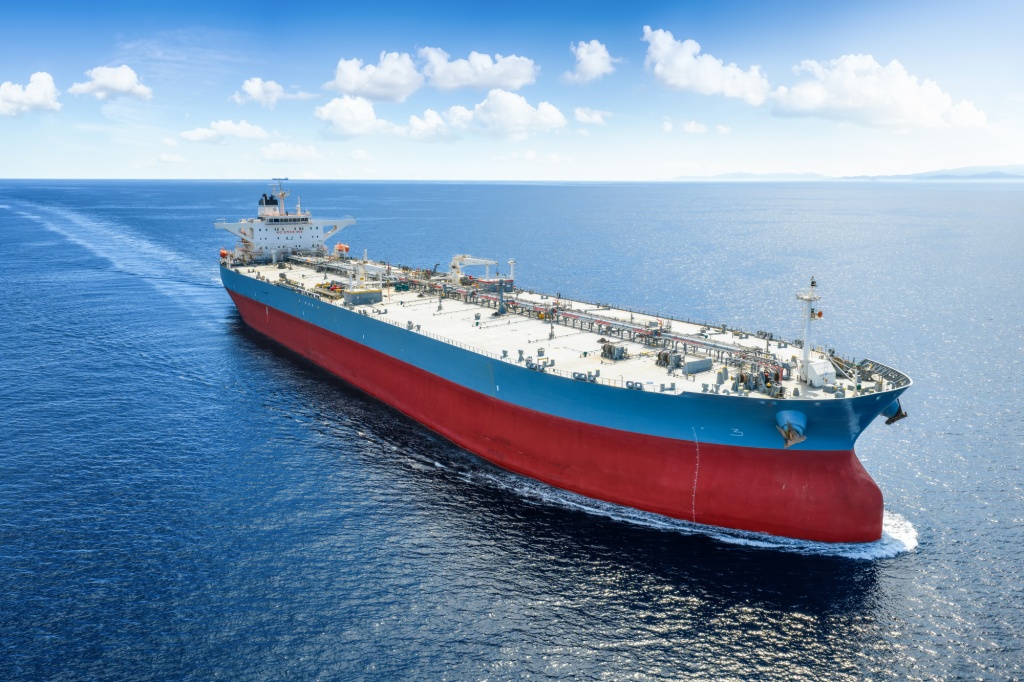
The active revision of these norms in Europe began with French President Emmanuel Macron's appeal to EU countries in October 2025 to jointly intercept Russia's "shadow" fleet vessels, detain them for several days or weeks, and thereby disrupt Russian supplies, depriving Russia of export revenues. By that time, the French had already tested the feasibility of applying this practice by seizing the Benin-flagged tanker Boracay carrying Russian oil, after forcing it into French territorial waters where French special forces boarded the vessel. The grounds for detention were suspicion of flying a false flag. The captain of the tanker was arrested, but only for refusing to follow the orders of the French Navy boarding team. The vessel was released following sharp statements by Russian President Vladimir Putin, who characterized the seizure of the tanker as piracy. However, the EU did not abandon the tactics proposed by Macron. In 2026, the frequency of seizures increased, and the French once again proved to be the most active. In January 2026, the French Navy (with British support) seized another tanker, Grinch, carrying Russian oil, in international waters; like the Boracay, it was eventually released. The formal grounds were the same—a false flag—but this time the detention period lasted three weeks instead of a few days. Furthermore, the cargo owners were forced to pay a fine. Later, the Swedes, Belgians, and Estonians also distinguished themselves in seizing vessels carrying Russian products. The British initially refined their seizure tactics during several joint operations with the French, and by mid-June 2026, they conducted their first independent forceful operation. Royal Marines boarded the tanker Smyrtos (sailing under the Cameroonian flag from Ust-Luga) from helicopters in the English Channel. Denmark, which controls the passage from the Baltic to the North Sea, is not yet obstructing navigation, but Danish special forces are already practicing the seizure of oil tankers.
Events surrounding the "arrested" Russian merchant ships signal attempts by Western countries to test the boundaries of established norms of international law and dilute them in their own interests. First, sanction regimes appeared that extended far beyond the territory of the state imposing them. Then came the direct stopping and seizure of tankers in areas where the seizing state formally lacks territorial jurisdiction. The next stage is testing the possibility of cargo confiscation and revising national legislation to achieve these goals.
In early June 2026, European Union countries officially authorized their vessels in the Mediterranean Sea, as part of Operation IRINI, to conduct forced boardings and inspections of foreign tankers that the EU considers part of Russia's "shadow" fleet. Shortly after, in July, as part of the 21st package of sanctions against Russia, the European Union approved a mechanism allowing member states to sell crude oil and other goods seized from sanctioned vessels detained at sea. The European Union is also considering the creation of a dedicated naval mission (similar to Operation IRINI currently operating in the Mediterranean) to detain sanctioned Russian vessels in the Baltic and North Seas.
It is important to note that the EU naval mission IRINI, operating in the central Mediterranean Sea, was established in 2020 on quite legitimate grounds—namely, to implement United Nations decisions. Its purpose was to ensure compliance with the UN arms embargo on Libya, combat oil smuggling, and counter human trafficking. According to the Convention on the Law of the Sea, a vessel may be detained and inspected if there are reasonable grounds to suspect it is involved in illicit activities, such as piracy, the slave trade, drug trafficking, or smuggling.
From this perspective, inspecting "shadow fleet" vessels carrying Russian hydrocarbons is unlawful, as the restrictive measures imposed against Russia by European countries and the United States were not endorsed by the UN. Furthermore, suspicions regarding the use of a false flag do not, in themselves, grant the right to seize a vessel and its cargo. The Russian Ministry of Foreign Affairs, along with Nikolai Patrushev, Assistant to the President of Russia and Chairman of the Maritime Board, are convinced that EU nations invented the term "shadow fleet" to engage in piracy along maritime communication routes. The concept itself does not exist in maritime law.
Under the pretext of combating the so-called "shadow fleet," attempts are being made to erode long-standing norms and return to a principle that justifies the "might makes right" approach toward the merchant fleets of other nations. In essence, we are witnessing the formation of state-sponsored piracy, where a powerful state claims the right to unilaterally decide which foreign vessel is permitted to operate in global trade and which can be plundered through the confiscation of its cargo.
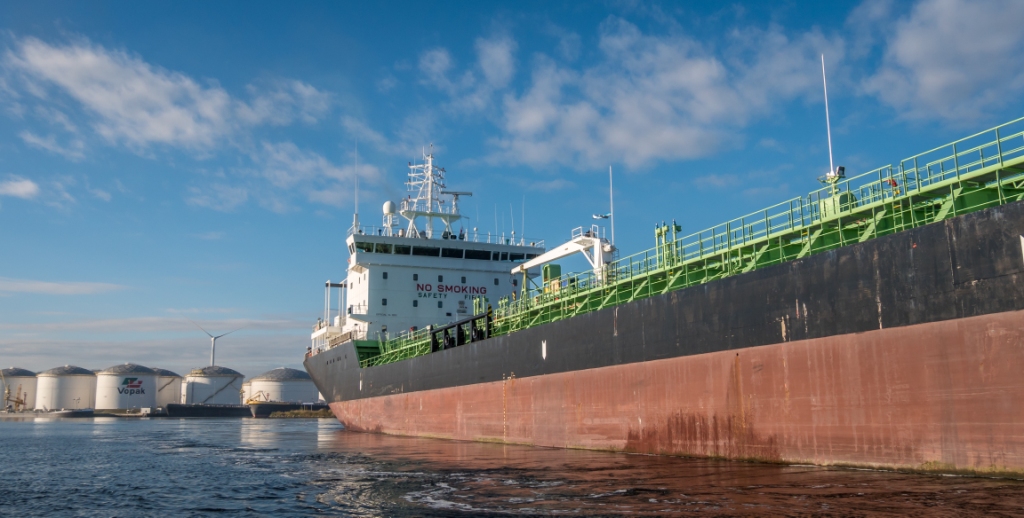
Both the European Union and non-EU nations, such as the United States and the United Kingdom, are asserting claims to sanctioned oil through seizure. At present, London is considering the possibility of selling Russian oil seized from the tanker Smyrtos, while the United States is reviving so-called prize courts—an institution of maritime law (naval tribunals) widely used in the 18th and 19th centuries that declared seized enemy and neutral vessels as spoils of war. Following the Spanish-American War of 1898, which saw the widespread involvement of buccaneers, this mechanism practically fell out of use. The US Department of Justice is already developing a mechanism to apply this tool against Iranian tankers. The procedure allows them to bypass civil forfeiture, which tends to get bogged down in third-party lawsuits, and to expedite the transfer of oil to the US Treasury. The U.S. Attorney for the Southern District of Texas, Aaron Reitz, explicitly states: "Our national interests may require the military to seize vessels supporting an enemy. If that happens, our courts must be ready to determine the fate of those vessels and cargoes".
In late August 2026, during an EU naval operation, another tanker linked to Russian trade was seized. According to Kaja Kallas, the head of European diplomacy, the MV SUN became the sixth "shadow" fleet vessel inspected by EU forces in recent months. "The oil tanker MV SUN, suspected of flying a fraudulent flag in violation of international maritime law, was boarded on August 30 in the Mediterranean Sea by forces of Operation IRINI for a flag verification," Kallas stated in a post on one of her social media accounts.
Despite the reference to international maritime law, the actions of Western nations do not align with its standards.
The United Nations Convention on the Law of the Sea of 1982 (UNCLOS) remains the foundation of the modern maritime order. Article 87 establishes the freedom of the high seas. Article 90 recognizes the right of states to navigation. Article 92 stipulates that a ship is under the jurisdiction of its flag state and, except in exceptional cases, is subject to that specific jurisdiction on the high seas. At the same time, Article 110 provides a very narrow right for a warship to board and verify a foreign vessel on the high seas. This applies to suspicions of piracy, slave trade, unauthorized broadcasting, absence of nationality (no flag), or situations where the vessel is of the same nationality as the warship.
Violation of national sanctions per se is not listed in Article 110 as a ground for intercepting a foreign vessel on the high seas. This is precisely where one of the main legal fault lines of the current standoff lies. If the legislation of a specific country prohibits its resident companies from purchasing and transporting oil restricted by that country, this does not automatically mean that a warship gains a universal right to intercept a third-country tanker in international waters, escort it to its own territorial waters, and confiscate its cargo, even if the vessel is sailing under a false flag.
Furthermore, Russia, China, India, the Persian Gulf states, and ASEAN are intensifying efforts to create parallel maritime law and insurance institutions to protect their interests from the extraterritorial application of Western laws. Thus, today’s struggle over several dozen tankers holds much greater significance than the value of the oil in their holds. It determines whether the world ocean will remain a unified legal space or be divided between competing systems.
* Photo credits: Shutterstock, Getty Image
* Photo from Yekaterina Borisova’s private archive